Finding Your Way Out

 Edna St. Vincent Millay

The critical issue many face is trying to survive the next episode of depression or mania.  Somehow I think that cohabiting with something that is trying to kill you is especially disturbing.  Depression is my mortal enemy and here I am, giving in and actually allowing it to destroy me. How crazy is that?

Some of us get absorbed into a dark melancholy. We instinctively carry despair and despondency wherever we go. It’s hard, but I really believe it’s crucial for afflicted believers to begin to worship again (and again, and again).

I’m totally convinced that the Holy Spirit absorbs much of the venom Himself.

When my depression slumbers, life proceeds fairly well.  I can play with my kids, and be a good husband, friend, and neighbor.  Everything seems quiet and normal.  But when the dragon awakes, watch out, there’s going to be ‘hell to pay.’ 

There were many terrible, dark days that I simply couldn’t get out of bed. I was plagued with awful, dark thoughts. Meds didn’t seem to help me. I felt completely lost.

Depression might strike at any time, and exactly when, you can never be too sure.

“How will I handle it next time? Will I be in shape for Christmas, or will I lose it again this year? I just don’t know.” That’s the depressive way. But you know, the Holy Spirit ministers yet, and He will touch my heart again. He gently cares for the depressed.

2 Corinthians 7:6, AMP

My wife and I were missionaries in Mexico for almost three years.  We lived in a “burnt out” and very small trailer, with very sporadic electricity, and no running water. We had a 55-gallon drum for our drinking water, and we tried our best to avoid the mosquito larvae. And part of that time we had to park on the slanted slopes of a dormant volcano.

Sometimes it feels like that, I’m just waiting for the next eruption.

I am glad that God decided to intervene in my life.  Without question, I need Him to watch over me. I have to believe that He will keep rescuing me over and over. As a believer in Jesus, I know he has put his hands on me.  He shields me from the dragon. 

And I have to believe that He protects me from the worst of it. 

Front and Center

John 8:3-11

Then the scribes and the Pharisees brought a woman caught in adultery, making her stand in the center. “Teacher,” they said to him, “this woman was caught in the act of committing adultery. In the law Moses commanded us to stone such women. So what do you say?” They asked this to trap him, in order that they might have evidence to accuse him.

Jesus stooped down and started writing on the ground with his finger. When they persisted in questioning him, he stood up and said to them, “The one without sin among you should be the first to throw a stone at her.” Then he stooped down again and continued writing on the ground. When they heard this, they left one by one, starting with the older men. Only he was left, with the woman in the center. 10 When Jesus stood up, he said to her, “Woman, where are they? Has no one condemned you?”

11 “No one, Lord,” she answered.

John 8:3-11

I remember how Jesus defended me. I had been led through the crowds. The temple was filled with people who were there for the festival. It was a time of joy and feasting, but not for me.

Especially not for me.

The temple police escorted me to Jesus. I was now the focus of everyone’s attention. I felt dirty and ashamed. Standing there I could feel the lustful looks from the Pharisees; but there was something else as well, a look from Jesus that I had never seen before. There was compassion there, something quite extraordinary.

I’m ashamed, I committed adultery, I had slept with another man who wasn’t my husband.

I was to be stoned, to have hard rocks thrown at me by “holy” men. The Law had pronounced my guilt, and I knew how I was to be punished. And I deserved it. Yet the man who I slept with was never charged, he escaped and it was I that would be put to death. I didn’t blame him.

My shame was now public knowledge–everyone knew, the Pharisees made sure of that.

They put me front and center. They were going to test Him. They were going to destroy me.

These men who brought me had ulterior motives, they desperately hoped Jesus would stumble. I think they wanted to prove once and all to the crowds that were watching that Jesus really wasn’t the Messiah. They wanted to trap him.

Jesus seemed to understand the implications of this satanic effort.

Only Rome had the power of execution, and yet the Mosaic Law declared that I was to die. I stood waiting, expecting the worst. What else could I do?

It’s funny, but Jesus understood all of this. He seemed to look right through this theological trick, and He responded in a way that really shocked everyone. He never spoke, but bowed low and began to write in the dirt with his finger. Amidst their vicious accusations, they pressed their case.

Jesus bent down again, and he wrote some more.

I never knew what he wrote–but I had to believe it must have been something that revealed the sin in the hidden hearts of the men who were accusing me. In that moment, they quickly dropped the case against me. They all filed out, one by one, in dramatic fashion. I now stood alone with Jesus.

And it was then that Jesus looked directly at me.

I was still afraid, but it was strange, I felt a wave of peace as well. I quietly waited, not knowing what He was going to say to me. I suppose I half expected the worst.

Yes, he did confront me. But He wanted me to acknowledge that those accusing men had left. I saw it and understood. Jesus was asking me to believe that I was now really free. But then he wanted me to understand something that seemed quite crucial.

“Neither do I condemn you,” said Jesus. “Go, and from now on do not sin anymore.”

That dear one was a powerful moment. He set me free with the understanding that He did not condemn me. But my freedom from judgement came with a catch–sort of. I knew then that my sin must be renounced. My freedom came with a price. But knowing I was completely released, meant I was now a free woman.

At that moment I understood completely.

“God pardons like a mother, who kisses the offense into everlasting forgiveness.”

    Henry Ward Beecher

My Facebook page: https://www.facebook.com/bryan.lowe

Christians in Cages

Psalm 124

We can play “the what if game.” We can think backwards, and hit replay, and pretend alternate realities. What if, I didn’t join the army? What if I died on that last drunken binge, choking on my own vomit? What if I would’ve died on that last suicide attempt?

David asks an enormous “what if” in Psalm 124:1-2

He poses this question. He wants Israel to understand what he is saying. He asks the people to repeat after him. He then re-frames the question in verse 2. “What if God had not stepped into the situation?

David insists that his listeners think this through.

And this trip down ‘memory lane’ examines what would of (or could have) happened if God would have simply taken His hand off Israel as a nation.

I truly believe that we should do the very same today. Just pause to reflect on His grace and care. Simply try to understand that it was God’s hand holding you in place all along. All that He does for us is very good.

There is also can be a sense of being overwhelmed by your enemies.

The malevolent forces of the enemy have a ministry. And that ministry is to ‘steamroll’ and crush out the light. Satan hates the truth and he hates you.

David is a very vivid writer, he had a fantastic gift–a great flair of choosing the best words and images. He weaves a song and we see God intervening, protecting, and preventing Israel from becoming a Satan’s snack.

Psalm 124:6-7

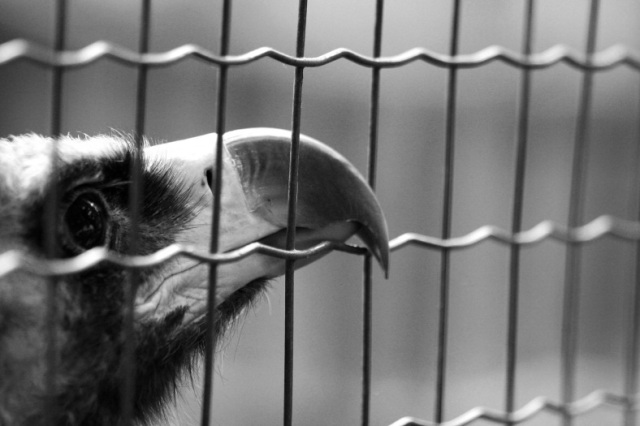
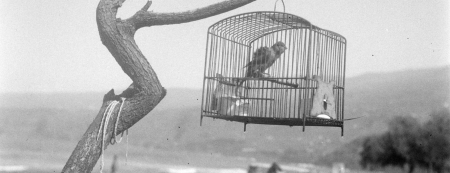
I love these 2 verses. “Escaped” is emphasized twice–the bird catchers have collected many small birds, snared by a little food and a strong net. They keep them in a cage. But wait! Something has just happened, and the birds have somehow escaped!

Have you been wounded inside? Do you struggle hard with depression and loneliness?

There is so much ugliness. The enemy can throw so much at us. Many of us lack the strength to resist him. We can fight and flap and throw ourselves at the bars, but we are trapped. But then Jesus comes, He smashes cages, and frees birds like us.

Verse 8 is the final thought of this psalm.

It sums up everything so wonderfully. There is help. Our Creator deeply cares for us. He has ultimate strength. Put your heart in His hands. We read the last verse…

“Our help is in the name of the Lord,
Who made heaven and earth.”

Psalm 124:8

brokenbelievers.com


Repeat Offenders

“Father, every family has a rascal someone who breaks the rules a juvenile delinquent of untold frustrations and sleepless nights a repeated offender and bearer of sad woe the problem child who needs the most discipline.

Is this why you love me most persistently? When you correct me, is it because I’m the one most contrary?

Or is it that you love me so much?”

 I wrote this thinking about Hebrews 12 and God’s purpose of chastening. I don’t pretend to understand this dynamic completely–all I can say is that my childhood was punctuated by much difficulty. But now, as a father (my two children are now grown), fatherhood has become far easier than my dad had with me.

7 “As you endure this divine discipline, remember that God is treating you as his own children. Who ever heard of a child who is never disciplined by its father? 10 For our earthly fathers disciplined us for a few years, doing the best they knew how.

But God’s discipline is always good for us, so that we might share in his holiness. 11 No discipline is enjoyable while it is happening—it’s painful! But afterward there will be a peaceful harvest of right living for those who are trained in this way.”

Hebrews 12:7, 10-11

I really think we understand our Heavenly Father when we spend quality time with Hebrews 12. We are given insight into His care and into our own issues. It is a good thing He gives us— it enriches our spiritual lives.

It’s never nice to be corrected.

It’s not pleasant. Part of being corrected is being reminded that we’re not as righteous as we think we are. To be corrected strikes us to a reprimand, an admonition that something isn’t right inside of us.

The Father corrects His children–in many ways through a myriad of circumstances. He loves us far too much to allow us to continue in our sin. He’s making us into the image of Christ.

We should welcome His correction. He has a plan for you.

When He disciplines you, it only proves that He is your Father. It’s critical to remember: God’s correction is always for our good. It may be painful yes, but it comes with real hope. It’s not to harm or punish you.

“Father, I’m so sorry that I grieve you as often as I do. I promise to behave. Thank you for being a faithful Father who cares deeply for my soul. Amen.”

 Hannah Whitall Smith.