Blind From Birth

John 9:1-7

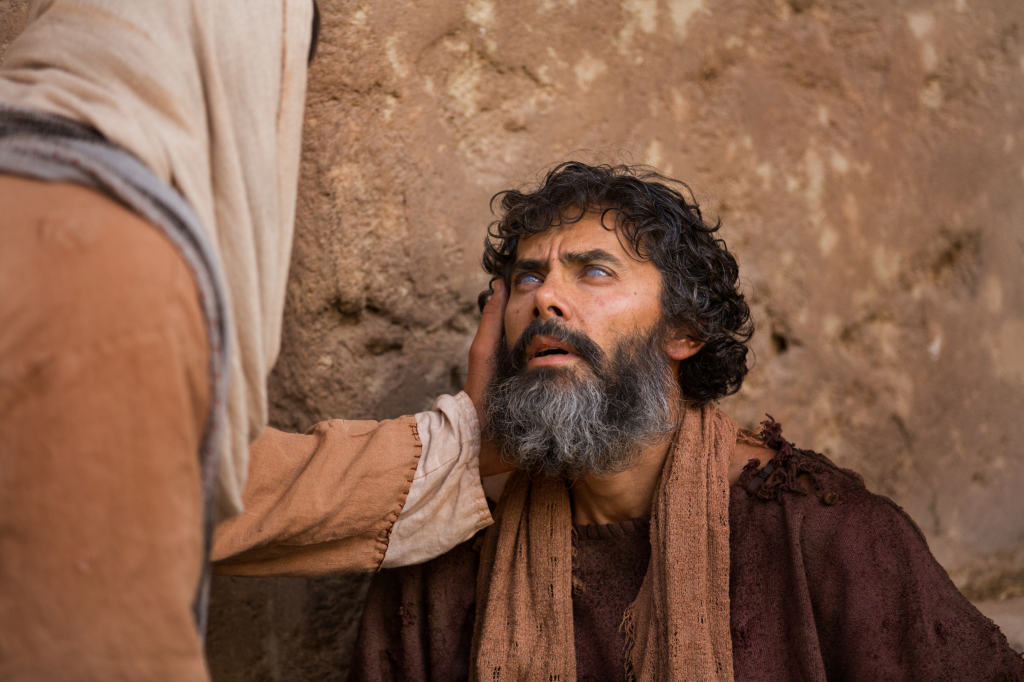
As he was walking along, he saw a man blind from birth.

“Master,” his disciples asked him, “why was this man born blind? Was it a result of his own sins or those of his parents?”

“Neither,” Jesus answered. “But to demonstrate the power of God. All of us must quickly carry out the tasks assigned us by the one who sent me, for there is little time left before the night falls and all work comes to an end. But while I am still here in the world, I give it my light.”

Then he spat on the ground and made mud from the spittle and smoothed the mud over the blind man’s eyes, and told him, “Go and wash in the Pool of Siloam” (the word Siloam means “Sent”). So the man went where nd washed and came back seeing!

Up to now I’ve tried to approach these posts from the first person viewpoint. Ihoped to understand those who met face-to-face with Jesus. I wanted to grasp what they were seeing through their own eyes. But I intend with this post to revert back to a more traditional approach to this passage.

First, we’re introduced to a man who is blind from birth.

I can’t even imagine what that would be like (just as he probably could imagine having sight). I’ve been told that he probably didn’t have a “dream” life–that requires having seen images (a dog, a tree, a mean person) and this wasn’t available to him. He never saw the color red, or seen a mountain. (He didn’t have the circuitry.)

I suppose we can only imagine what blindness like this would be.

Somehow I’ve come to an idea that this represents fallen men–we’re spiritually blind to the workings and truths of Jesus’ Kingdom. It seems a pretty good explanation of each of us–“blind from birth.”

Secondly, notice the response of the disciples who first met this unfortunate man. They don’t see his needs, rather they want to know the theology behind this. Perhaps that’s how we respond much of the time–we don’t see the needs, we only want to know the reasons. We’re not wise or discerning enough to see what’s going on–in short we’re not equipped to love or show mercy. (We haven’t got the circuitry.)

Perhaps this is how we operate as immature Christians.

We don’t engage the need, but rather we like having great theology over understanding compassion. If we really don’t love needy people, we miss so much. We don’t ever grow up. It’s easy to philosophize–it’s hard to get down and serve and really love others.

It’s funny but Jesus declares Himself to be the light of the world while speaking to the man who is born blind.

Third, we discover the gentle mercy that Jesus has when He meets needy people. Now the Lord does accommodate His followers, but not at the expense of engaging the need of the moment. Jesus is full of compassion–most especially when He meets broken people–and as His followers, we must grasp this.

Good theology is not the primary calling of Jesus’ followers.

As I mature in Christ I’m learning (slowly) that people are His real focus. He has come, not to theologize or philosophize, but to meet needs! Sure the reasons why become clearer, but that really isn’t Jesus’ primary goal. People are, not having impeccable theology.

Classes in systematic theology are good, but soup kitchens are better.

The miracle happens, and Jesus’ love and desire to restore this man is ‘front and center.’ The Lord’s methodology is interesting. Spit and mud, wiped on the blind man’s eyes. In Genesis we discover that God made man out of dirt and dust of the ground. Perhaps what He’s doing here mirrors that work.

And it’s also important to understand that Jesus never performs the exact same healing in the exact same way. For some reason He ‘tailors’ His work to the individuals deepest need. I suppose He doesn’t want us to grab a hold of a formula, as that’s what we want to have.

The story is primarily about a blind man’s healing.

It’s not theology, and it certainly isn’t about what is proper and acceptable. We really must understand this, and we really need to understand the tremendous mercy and power of God to both heal and restore.

Image: MCCC. Text from the “Living Bible,” published by Tyndale House

Nothing But Leaves

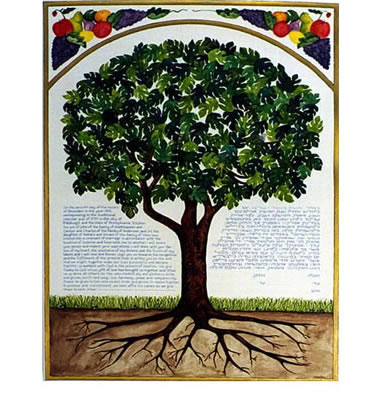
“Seeing at a distance a fig tree in leaf, He went to see if perhaps He would find anything on it; and when He came to it, He found nothing but leaves, for it was not the season for figs.”

Mark 11:13, NASB

Perplexing isn’t it?  I personally have had a certain amount of ambiguity with this passage.  I have questions that I’ve swept under the rug.  Why did that poor tree get cursed?  It wasn’t the trees fault, after all.  And didn’t Jesus realize this?  So why go through the theatrics?

I don’t know if this is the case with anyone else. 

I hesitate to ask around.  But recently have come to a better place about this entire event.  The traditional view is that it comes immediately after “the cleansing of the temple” and that explains a lot.  The fig tree is always emblematic of Israel.  (The Old Testament is well populated with these references.) The disciple Mark adroitly organized his Gospel in order to connect both events.

I assure you, Jesus has no issues or vendettas against trees.  😁

But He does take an issue with things that claim fruit, but really have nothing.  There’s nothing but leaves. I’ve been told that the figs do grow, almost as fast as leaves.  The lush greenness is the prime indicator of the succulent fruit. At least, in theory, it has the potential.

Luke 12:7-9,

Look, for three years now I have come seeking fruit on this fig tree, and I find none. Cut it down. Why should it use up the ground?’ And he answered him, ‘Sir, let it alone this year also, until I dig around it and put on manure. Then if it should bear fruit next year, well and good; but if not, you can cut it down.’”


The beautiful leaves declare its fruitfulness.  This tree was loaded, but had nothing to show but leaves.  Within God’s plan for Israel was for fruit.  Enough to feed the nations that would stream to Jerusalem.  Instead, it was worthless.  There was nothing to be had.  Loads of leaves, and the promise of an incredible harvest, but zilch, zero, nothing.

Hypocrisy is a deadening experience, with a definite sterility.

Israel was finding this out, and Jesus is now declaring it to the nation.  A corrupt temple, and a fruitless tree; this were all indicators of hypocrisy and showiness.  The luxuriant leaves loaded the tree, but ‘where’s the fruit?!’

Sometimes we declare that we are fruitful, on the mere basis of our lovely leaves. 

At times maybe even green?  Leaves are pretty much all we can do.  And we do it quite well. But the fruit is from the Holy Spirit, (Galatians 5:22.)

Israel failed God.  They became religious and neglected mercy, and justice.  Humility and graciousness.  The widow and the orphan were not part of their personal equation.  They produced leaves by the wheelbarrow load, but were missing out on the authenticity to what was true, and what really mattered.

Pharisees will do this all the time.

They turn into hypocrites who do not possess what they profess. A hypocrite values true godliness, but he personally falls short of all those things he admires. But he will never, ever admit it to anyone.  And even we who struggle so, must continually admit that we stumble and falter as we try to follow.

The terrible temptation of this time is to look good without being good.

It’s the awful curse of legalistic religion, and it runs rampant in our nation today, even in our government. The Lord absolutely detests it. God help us understand, and repent from what He shows us.

Personally, I may be a ‘screwy’ excuse of being a disciple, but I have decided I don’t want to deceive people anymore. 

God, help me.

“This year, or this month, or, more likely, this very day, we have failed to practice ourselves the kind of behavior we expect from other people.”  

C.S. Lewis


1brobry-sig4

cropped-christiangraffiti1 (1)

Learning “Persecution Love”

Learning how to forgive

Once I was punched in the face while preaching. At the time I was an evangelist with SOS Ministries in 1987. I was leading a group to Haight/Ashbury St. in San Francisco. I remember it was really busy, and it was a good team, and they were excited to take their church to the streets.

Haight/Ashbury was the place the “summer of love” kicked off, it peaked in 1968. It has a certain sense of notoriety, and even in 1983 it still had a dubious reputation as a center of the counter-culture. “A cult a day is born in San Francisco,” a pastor friend once shared with me.

Normally the neighborhood where I took a team would direct me on how to preach. Tonight I focused on God’s love for sinful people.

That message seemed appropriate for this place, especially on this street. God loves these people very much.

A young man came forward. He told me that he was a backslidden Christian, and his father was an Assembly of God pastor. He had run away from home. Suddenly he began to weep. The entire team seemed to lean forward and I know they were praying earnestly for him. It seemed to me that he was teetering on the brink.

His punch however came unexpectedly.

His fist hit me square in the nose. My eyes began to water. Oddly enough he took a step back and began to really cry out. My team wasn’t quite sure how to respond, but I hoped they prayed even harder. I sort of gasped and tried to shake it off. Someone must have called the police.

The Holy Spirit was very much present, both convicting and comforting each of us.

One or two minutes went by and suddenly he stopped sobbing and he became really angry. He took a step and then tried to kick me in the stomach, but I dropped the mic and caught his foot. I was ready for him this time.

About 20 minutes went by before SFPD showed up and asked if I wanted to press charges. I thought for a bit, but deep down I knew that wasn’t the will of my Father. Maybe I should of, I don’t know. But I thought about my own sin and couldn’t judge no one.

The Father was reaching him while teaching me!

God loves His prodigal children very much, He understands the guilt and shame (and frustration) they feel. The Father however is always watching and waiting. He works through life’s circumstances to lead them home. Each belongs to Him. He continues far past what we think is possible. He will never give up.

“We know what real love is because Jesus gave up his life for us. So we also ought to give up our lives for our brothers and sisters.”

1 John 3:16

I suddenly saw a “wounded” brother, very confused and quite angry. Not with me, the team, or the music–but with God who created him, and died for him.

At that moment I just happened to be God’s love for this prodigal.

“How did Jesus expect His disciples to react under persecution? (In Matthew 5:12 He said), “Rejoice and be glad!” We are not to retaliate like an unbeliever, nor sulk like a child, nor lick our wound in self-pity like a dog, nor just grin a bear it like a Stoic, still less pretend we enjoy it like a masochist. What then? We are to rejoice as a Christian should and even “leap for joy” (Lk. 6:23).”

     John Stott

Cities Without Walls

“A man without self-control
    is like a city broken into and left without walls.”

Proverbs 25:28

The writer of Proverbs can be blunt. He makes the cold observation that people can often be like a city that has no walls.

The city he alluded to was completely defenseless, vulnerable and wide open to a marauding enemy. It no longer is protected. It can be assaulted from outside and is no longer safe. It can be easily defeated by its foes.

The description is used to describe a spiritual condition of danger and defeat. A real potentiality exists of a helpless invasion by evil forces. It has no protection to speak of.

Proverbs uses this imagery to state a fundamental truth about some people.

We live in an age when everything is “open.” Seldom do we see protecting walls around the perimeter of our lives. We are open to the demonic forces of darkness. We move from crisis to crisis because we are not protected.

Nehemiah faced the stark reality of Jerusalem without walls of protection. His first order of business (before anything else) was to rebuild them. He mobilized work crews that immediately went to work restoring the cities safety.

“I went out by night by the Valley Gate to the Dragon Spring and to the Dung Gate, and I inspected the walls of Jerusalem that were broken down and its gates that had been destroyed by fire.”

Nehemiah 2:13

He knew what he was up against; a discouraged people who were extremely vulnerable. It’s also interesting that the cities enemies resisted at this crucial time. They wanted the people to fail so  they would continue to defeat them.

Our culture today is no longer protected by the evil of the day. We’re victims for the most part by Satan’s tactical assaults. A generation has come and gone that has not known the defense of personal walls.

We are desperate of the ministry of Nehemiah. He is a type of Christ. Protection can only come from faith and blood of Jesus. He alone is our safe place. He alone can defend us from this present darkness.

If your life is characterized by oppression I urge you to erect a safe place for yourself and for your family. Being specific in prayer is very often your sheltered place. Take a stand and drive the enemy away. Resist him and he will flee from you.

“The world’s battlefields have been in the heart chiefly; more heroism has been displayed in the household and the closet, than on the most memorable battlefields in history.”

–Henry Ward Beecher