Chosen People of Faith

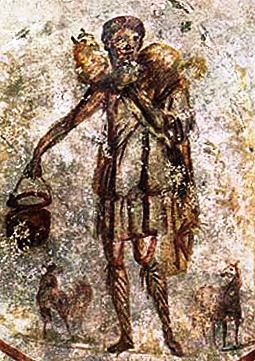
Good_shepherd_02b_close
Shepherd of Hermes, (catacombs c. 160)

The Shepherd of Hermas, written c.125 AD, repeatedly declares that the Church has always existed, since the beginning of creation. The Old Testament believers are joined by those in the New Testament Christians in one single community of faith. Paul asserts that this faith unites us with each other; that we all have a common calling. (Hebrews 11.)

It seems you share a familiar bond, perhaps closer than you think, with Abraham, Noah or Isaiah. All of the OT saints are welded to us as we walk out our faith in Jesus. Personally I find that comforting.

God has always had a people who have been “chosen.” As a broken believer I will take all the godly encouragement I can. We are pulled in so many different directions; it’s hard sometimes to cope. Knowing I walk in an “unbroken line” of the faithful gives me “vim and vigor.”

I can now more deeply relate to guys like Joseph, who faithfully followed God from slave-to-prince. Or the three Hebrew children who walked around in the fiery furnace. By faith we possess the same hope as they did, we have the same God and Father. I believe it wouldn’t be off-base to call them family.

The nuances become clearer as we reflect on our mental illnesses. Noah built an ark. I’m constructing a sane mind. He went through the jeering abuse from his neighbors. I have to decide to get out of bed. All must be done through faith. Faith in God unites us. Faith is that which gives us “a sound mind” (2 Tim. 1:7.) Faith in God connects me with Noah.

“Faith is the confidence that what we hope for will actually happen; it gives us assurance about things we cannot see. Through their faith, the people in days of old earned a good reputation.”

Hebrews 11:1-2, NLT

Hebrews 11 connects our faith with theirs. It even hints that our own faith enhances their own.

“All these people earned a good reputation because of their faith, yet none of them received all that God had promised. 40 For God had something better in mind for us, so that they would not reach perfection without us.”

Hebrews 11:39-40

I didn’t mean to dump a load of “dry theology” on you. But I suspect that there could be healing for us if we venture to take it up. Good theology can be like good hygiene, if you don’t have it you will notice. (So will your friends.) I have come to see that the things we believe, affect us in significant and profound ways.

Your 21st century struggle of faith is as significant as David’s own battle with Goliath. It’s something to consider anyway. Read Hebrews 11.

“Faith makes all things possible… love makes all things easy.” 

D.L. Moody
bry-signat (1)

cropped-christiangraffiti1.jpg

“The Sheep Dip”

sheep+003

“It is not my business to judge those who are not part of the church. God will judge them. But you must judge the people who are part of the church. The Scripture says, “You must get rid of the evil person among you.” 

1 Cor. 5:12-13

a

We live in time of staggering sin.  It’s saturating everything and everybody— the world, and the Church . Our rebellion has gone viral.  We’ve been so inured and taken by it we find we just can’t imagine thinking apart from its influence.  Two generations ago things were astonishingly simple.  Todays sin has gotten superbly sophisticated— or has it?

Paul in his note to the Corinth church was compelled to point out a few things.  The culture in Corinth was like a communal ‘sheep dip’.  Everyone went through it.  It saturated everything— it soaked everyone, from head-to-toe.

This extreme atmosphere of sin pushed Paul to take a stand.  Most likely he would never had to do this.  But, the conditions demanded he respond to the sin that was raging everywhere.  And perhaps by doing this publicly, he could see people saved from feeling ‘the flames’.

The Church in 1 Cor. 5 felt that they were doing the right thing by accepting people living in continuous sin.  It seems as if their liberal hearts were opened to receive sinners of all varieties.  In their thinking, this made themselves as the Corinthian church quite remarkable, maybe even exceptional.

Paul however, will not be manipulated by human logic.  He instead presses us with him, to the good and the true.  He admits (point blank, mind you) that he has no authority over the lost, the secular, and the world.  He has nothing, ‘zilch’ to say about the way the heathen behave.  “It’s none of my business’ says Paul.  And he turns, and walks away.

We Christians, as believers however, are his business.  Paul, like a great ‘lens,’ focuses on you, and on me.  As part of the Church we are brought under its oversight and its direction.  It dictates to us now what is proper for us– acceptable, and honoring.  But the ‘worldling’, he goes free, doing whatever he desires. We however, come into a direct and sure correction of our ways.

What is your sphere of influence, and how far does it extend?  For Paul, he recognized his boundries.  And we must see ours.  The urge to intervene is very strong. We must back off.  But even though we detach from our worldly commitments, we are still to be a strong, sure light in their midst.  But we are not to be the judges of this world system. But the Church is a whole other matter.

bry-signat (1)

cropped-christiangraffiti1.jpg

*

Hardly Indispensable: A Leader’s View

hands1

13″ The next day, Moses took his seat to hear the people’s disputes against each other. They waited before him from morning till evening.

14 When Moses’ father-in-law saw all that Moses was doing for the people, he asked, “What are you really accomplishing here? Why are you trying to do all this alone while everyone stands around you from morning till evening?”

Exodus 18

Often your father-in-law will observe things clearly and honestly. I believe most can perceive situations that our own fathers will overlook. I think this is because our own fathers are often functioning out of their hearts.  They are emotionally attached. But a father-in-law has a different view.

Jethro has come, most likely to escort the grandkids, and his daughter. He is probably quite curious about Moses new direction. Jethro has only known that his son-in-law as a shepherd. But now, things are changing quickly. And Jethro is praising God for what He did over the Egyptians.

Jethro is enthusiastic. But he is also alert and aware. As Moses schedules his day, Jethro sees an inordinate amount of time given to judging, not leading. He watches and than asks some questions. This is the sign of good correction. Moses faces these questions really well. He is a great model for teachability.

Leadership is almost always a shared work.

Many aspects of it should be collaborative and plural. The singular view of leading people– out of my own resources alone, will not end well. Moses was teachable and Jethro needed to share this word of correction. If Moses had not took the wise advice of Jethro, they would’ve died in the desert.

When Moses released these things to others who were qualified, he commences on a new understanding of ministry. He actually becomes a better man because of the advice of Jethro. He must become “expendable.”

24 “Moses listened to his father-in-law’s advice and followed his suggestions. 25 He chose capable men from all over Israel and appointed them as leaders over the people. He put them in charge of groups of one thousand, one hundred, fifty, and ten.26 These men were always available to solve the people’s common disputes. They brought the major cases to Moses, but they took care of the smaller matters themselves.”

None are ever indispensable and no one can do everything. We may try, but that usually is ego. We will do better if we will relinquish control. I think that the Father designs it this way.

Dwight L. Moody once said that he would rather put a thousand men to work than do the work of a thousand men.  I believe that is a Kingdom concept that we should activate.

bry-signat (1)

cropped-christiangraffiti1.jpg

*

Sin Boldly, But Believe in God More Boldly Still

Sinners-Wanted-1024x682

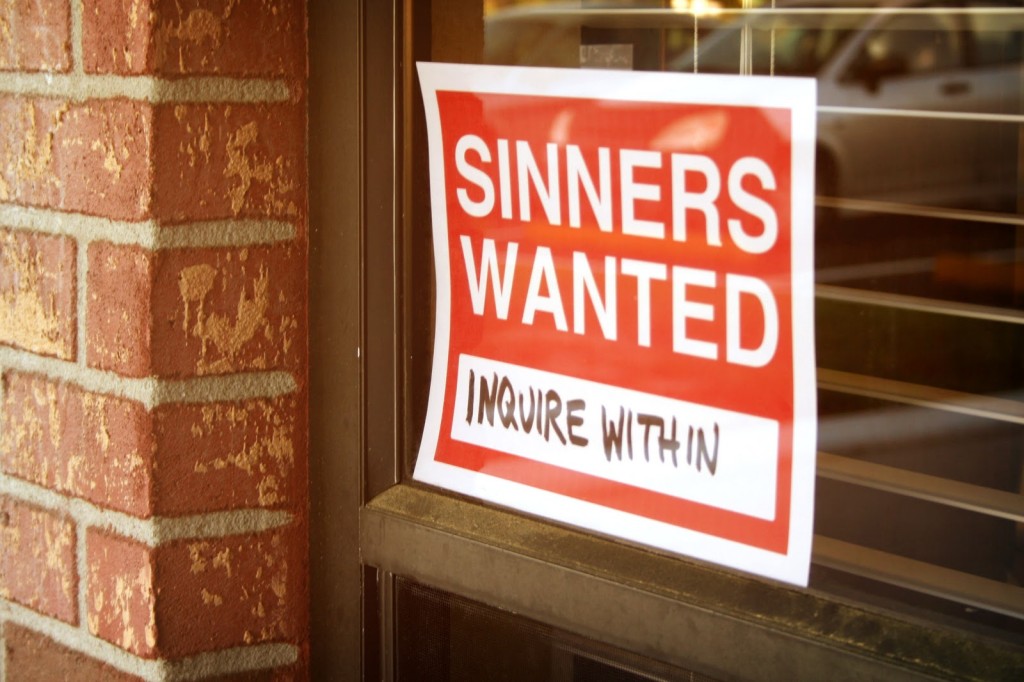
“If you are a preacher of mercy, do not preach an imaginary but the true mercy. If the mercy is true, you must therefore bear the true, not an imaginary sin. God does not save those who are only imaginary sinners. Be a sinner, and let your sins be strong, but let your trust in Christ be stronger, and rejoice in Christ who is the victor over sin, death, and the world. We will commit sins while we are here, for this life is not a place where justice resides.”

Martin Luther, From the Melanchthon Letter no. 99, 1 August 1521

 flourish1

Luther is essentially communicating the things that are real to us.  He takes it down to bare wood.  We are given an understanding of this World, an a sense of what we can expect from the hearts of all those who surround us.  Sin is the issue, and we need to accept that from our brothers and sisters.  We should not be surprised when someone we love intentionally blindsides us with their disobedience to God.

Dramatic words, ‘sin boldly’.  We instantly see this as a way to sin, without restraint.  And let’s face it, sinning is fun.  At times perhaps, even a whole lot more pleasure than walking out godliness.  Luther recognized the inevitably of sin.  As fallen people we should accept that fallenness.  We sin, it’s what we do, and we do that very well. And the Lord knows that.

“If we say we have no sin, we deceive ourselves, and the truth is not in us.”

1 John 1:8

Our ‘religious’ hearts often go into this ‘deception mode.’  We endeavor not give in to the viciousness of sin.  “We will overcome!” And yet we are so infected with sin, and rebellion that we try to minimize the problem.  If the truth be known, we are sick, infested and condemned.  There are no ‘quick fixes’ for us.  Evil runs rampant.  It is the ultimate epidemic.

picture-17
Looking at our salvation

“Let your trust in Christ be more boldly still.’  The Lord Jesus has decisively interrupted our lives.  He has wholesale entered into our darkness and sin.  In a way it’s like a ‘roadside’ bomb, and needs a direct intervention of a specialist to disarm it.  As people who are completely saturated with sin, we need a third party to step-in and to save us from all the embedded darkness.

Often there is a sense of boldness when we completely understand our depravity.  We ‘know’ our sin.  For the most part can grasp its deadliness, and its infectiousness.  The Holy Spirit’s ministry is to bring us to this transparent moment when we can see the darkness and harm we’ve caused.  The fact is, that we are to accept this, it’s all true.  We have been this evil and awful to those around us. Most believers would curiously admit that ‘they have sinned more as a believer’ than before they were first saved.

Luther declares a significant point when he tells us ‘to believe in Christ more boldly still’. Simply, our ‘sin’ awareness must never exceed our Christ awareness.  We must have a stronger sense of Jesus’ victory then our sinfulness.  Our confidence, which has taken a hit on our sinfulness, now shouts ‘hallelujah’ at His victory.

“If we claim we have no sin, we are only fooling ourselves and not living in the truth. But if we confess our sins to him, he is faithful and just to forgive us our sins and to cleanse us from all wickedness. 10 If we claim we have not sinned, we are calling God a liar and showing that his word has no place in our hearts.”

1 John 1:8-10, NLT

“You need not fear because sin still plagues you – instead rejoice that by God’s grace you are on a journey toward eternal life and sin will finally fade into the distant past.”

Luther

“May it be the real me, that seeks and finds the real You.”

aabryscript

Further info, and source:  http://www.scrollpublishing.com/store/Luther-Sin-Boldly.html

http://www.lectionarysermons.com/june_30_02.htm

http://www.internetmonk.com/archive/a-luther-quote-to-wake-up-the-sleepers