The Depression Epidemic

Why we’re more down than ever—and the crucial role churches play in healing.

Dan G. Blazer | originally posted 3/06/2009 at Christianity Today

crossredThe church is God’s hospital. It has always been full of people on the mend. Jesus himself made a point of inviting the lame, the blind, and the possessed to be healed and to accompany him in his ministry, an invitation often spurned by those who thought they were fine as is. We should not be surprised, then, that the depressed populate not only secular hospitals and clinics, but our churches as well. Yet depression remains both familiar and mysterious to pastors and lay church leaders, not to mention to those who share a pew with depressed persons.

Virtually everyone has experienced a “down” day, often for no clear reason. We might say we “woke up on the wrong side of the bed,” are “out of sorts,” or just “in a funk.” Such polite references are commonplace in America. Yet as familiar as melancholic periods are to us, the depths of a severe depression remain a mystery. We may grasp in part the distress of King David:

David
King David putting pain in his Psalms

“Be merciful to me, O Lord, for I am in distress; my eyes grow weak with sorrow, my soul and my body with grief. My life is consumed by anguish and my years by groaning; my strength fails because of my affliction, and my bones grow weak”

(Ps. 31:9-10).

But most of us have no idea what David meant when he further lamented, “I am forgotten by them as though I were dead” (v.12). Severe depression is often beyond description. And when such deep and painful feelings cannot be explained, they cut to the heart of one’s spiritual being.

Humans are intricately complex creatures. When things go wrong in us, they do so in myriad and nuanced ways. If churches want to effectively minister to the whole of fallen humanity, they must reckon with this complexity. Depression indicates that something is amiss. But what? And what should churches be doing about it?

For the remainder of this article:  http://www.christianitytoday.com/ct/2009/march/15.22.html

 

cropped-christiangraffiti1 (3)

Working God’s Night Shift

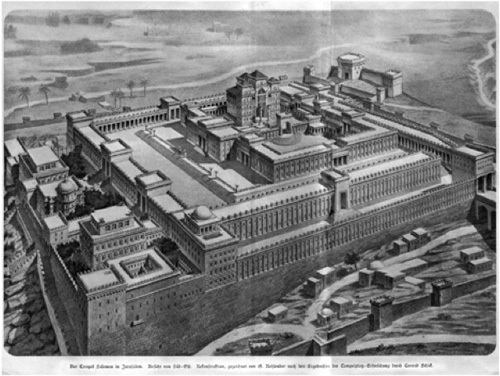
temple-etching
Solomon’s Temple in Jerusalem
A song for going up to worship.

134 “Praise the Lord, all you servants of the Lord,
    you who serve at night in the Temple of the Lord.
2 Raise your hands in the Temple
    and praise the Lord.

3 May the Lord bless you from Mount Zion,
    he who made heaven and earth.”

Psalm 134, NCV

This remarkable Psalm is part of an elite group known as “the Psalms of Ascent.” These 15 were sung as the congregation of Israel went up the steps of the temple in Jerusalem. They would sing each in “rounds” with each other. As you can well imagine, this made the ascent slow, but meaningful.

As you read the three verses, I get a picture of worshipers turning back and blessing the Levites. This takes place at the very end of the day. The Levites, and other godly ones who lived in the Temple, (remember Anna and Simeon, in Luke 2?) They were the support staff for the priests.

Commentary

V. 1, “Praise the Lord, all you servants of the Lord,
you who serve at night in the Temple of the Lord.”

The first significant thought is “Lord” mentioned three times. The word is the recognition of someone’s status and standing. We call Him Lord, because He is that (and more).

The second has to deal with the Levitical “night shift.” They served and guarded the Temple during the wee hours of the night. They probably cleaned, stacked wood, sharpened knives and maintained the Holy Place with its needs.

There was no real glory working the night shift. There were no people to serve. The crowds were for the day shift. (Here’s a weird thought– think “Disneyland at 2:00 a.m.”) There was also a contingent of non-Levite people ministering to the Lord as well. They had no duties, and only the priests could serve through their work.

The Levites working at night were not ‘second best.’ At least, not in the eyes of the Holy Spirit. They were integral in both presence and service to the Lord. To despise them is to reveal one’s ignorance. They definitely mattered.

V. 2 “Raise your hands in the Temple
and praise the Lord.”

I’ve worked nights before. It’s a real adjustment. You never feel like you’ve had enough sleep, and it is really hard to be positive and cheerful.  I could get pretty grouchy at times.

But an exhortation is given, a shout and a blessing as the crowds leave. “Raise up your hands– and praise Him!” It is as the work, although necessary, would be secondary. The worship however, was primary. We need to hear that.

V. 3, “May the Lord bless you from Mount Zion,
he who made heaven and earth.”

To be blessed (literally, made “lucky”) by our Creator and Lord is pretty profound. As a kid who read a lot, I think of ‘fairy dust.’ I know better now, but to be blessed by God is deeply significant.

To summarize, I believe this Psalm is speaking of those in the church who are doing “hidden service.” No one sees them really. They go about there duties quietly, and purposefully. The only recognition is from God– who sees all.

I must encourage you to keep on. There are many more than you think who see your hidden ministry to the Father. You are His ‘night shift.’ You’re seen by few, but Him. He knows what you do.

aabryscript

cropped-christiangraffiti1-2

WWJD?

meat-market-idols
Idol meat at market

“Be careful, however, that the exercise of your rights does not become a stumbling block to the weak. 10 For if someone with a weak conscience sees you, with all your knowledge, eating in an idol’s temple, won’t that person be emboldened to eat what is sacrificed to idols? 11 So this weak brother or sister, for whom Christ died, is destroyed by your knowledge. 12 When you sin against them in this way and wound their weak conscience, you sin against Christ.13 Therefore, if what I eat causes my brother or sister to fall into sin, I will never eat meat again, so that I will not cause them to fall.”

“Others may, you cannot.” There are certain things that other believers are allowed to do that are forbidden for you personally. These are not the “biggies” like adultery, or murder (or anything in the flesh, see Galatians 5:19-21).

However, there are the relatively small things of individual conscience. They are the issues of personal preference. Sometimes a Christian has the liberty to smoke or drink a glass of wine. Since there are nothing specific in the Bible against these, some feel free to exercise a certain amount of liberty.

In Paul’s time, meat that had been offered up to idols was afterwards sold in the markets. Some believers would buy the meat; others stringently objected to this. Their faith wouldn’t allow this.

“All things are lawful, but not all things are profitable. All things are lawful, but not all things edify. 24 Let no one seek his own good, but that of his neighbor. 25 Eat anything that is sold in the meat market without asking questions for conscience’ sake; 26 for the earth is the Lord’s, and all it contains. 29 I mean not your own conscience, but the other man’s; for why is my freedom judged by another’s conscience?”

1 Corinthians 10:23-26, 29

I believe conscience is how we are meant to conduct certain decisions. We’re to always surrender our right to do something that might offend another’s principles. Their faith should never be weakened by your actions or behavior. At that point– it becomes sin.

“Idol meat” (code for things of “individual preference”) should never be a stumbling point for other believers. Some issues of conscience could be:

  • the theatre, ballet, dancing,
  • internet, reading material,
  • sporting events, parties
  • parades, arena performances,
  • movies, TV
  • Halloween, solstice observances,
  • smoking, chewing tobacco,
  • drinking wine or a beer, (but not drunkenness),
  • playing cards,
  • medications, mental health services,
  • rock music, Christmas, eating pork, etc.

Perhaps the real issue to grasp is the manner in which we’ll serve another brother’s faith. I believe that that is the core point. Often the conscience has to be trusted to become the guidance we seek in doing the will of the Lord.

I may have throughly confused you, I pray that I haven’t. Just keep in mind that your conscience should be “tuned in” to the Lord’s Spirit. It is not an infallible guide. Great questions to ask when your wondering if it is right or not:

  • Is it loving?
  • is it God-honoring?
  • is it going to encourage a brother or sister?
  • what would be right?
  • does it edify (build up)?

Follow the Lord’s lead, “WWJD?” It may sound corny, but there is something of value here.

Your brother, Bryan


cropped-christiangraffiti1-2

Dangerous Thinking

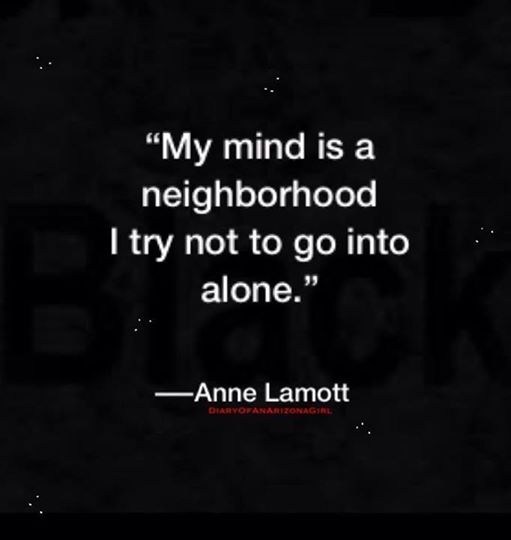
mind

Anne Lamott is a writer and a person who understands mental illness and ‘recovery’ issues.

She is also a ‘brokenbeliever’. I have read several of her books; she writes elegantly on faith and discipleship. She is a rare jewel. She writes carefully and creatively.

Coming across this quote was fortuitous for me, to say the least. This quotation effectively captures a somewhat dangerous mind that prevails among mentally ill people. We should come to the realization that our thinking needs to be ‘supervised.’ I must concur.

I can be patently ‘unsafe’. My thinking will often get distorted. I can get pretty strange at times. The ‘nice people’ who know me first-hand call me ‘eccentric.’ The ‘mean people’ outright ostracize me. Delusions blow through me periodically, with the occasional flare up episode of paranoia. The doctors call this Bipolar disorder.

Like Anne Lamott, I am a Christian believer. But my mind twists things up so much, I must regard it as an enemy. It can be capable of good; but dark things grow there as well. I have given up hope of ever navigating it alone safely. I simply cannot trust it. Mine can be capricious, untrustworthy, and unreliable. I know what it is like to be afraid of your own mind.

“Who is this coming up from the wilderness
    leaning on her beloved?”

Song of Solomon 8:5, NIV

However, if I venture into this steaming fetid jungle, with the Holy Spirit firmly in charge, we can navigate through safely. (But I dare not venture in alone, as things can get ‘scary.’) The Spirit is completely trustworthy and He is always faithful. No matter what I discover, I really try to let Him tell me if the ‘coast is clear.’ Together, we have seen some crazy crap, but He never ever ‘freaks out’ and leaves me alone.

“But when he, the Spirit of truth, comes, he will guide you into all the truth. He will not speak on his own; he will speak only what he hears, and he will tell you what is yet to come.”

John 16:13

Dear afflicted one, don’t venture in alone. Look only to Him. He is ready (up on tip-toes!) to be your guide. You don’t have to muscle through the ‘jungle’ all by yourself. Remember that there are others who can help: a spouse, a pastor, or anyone who understands what you’re up against. Only you can know what your mind is doing, but others can help you.

When you find yourself lost in your wilderness, “lean on your beloved.”

bry-signat-1

cropped-christiangraffiti1 (2)


P.S. Anne Lamott has some very readable books out there. Check her out.