Cities Without Walls

“A man without self-control
    is like a city broken into and left without walls.”

Proverbs 25:28

The writer of Proverbs can be blunt. He makes the cold observation that people can often be like a city that has no walls.

The city he alluded to was completely defenseless, vulnerable and wide open to a marauding enemy. It no longer is protected. It can be assaulted from outside and is no longer safe. It can be easily defeated by its foes.

The description is used to describe a spiritual condition of danger and defeat. A real potentiality exists of a helpless invasion by evil forces. It has no protection to speak of.

Proverbs uses this imagery to state a fundamental truth about some people.

We live in an age when everything is “open.” Seldom do we see protecting walls around the perimeter of our lives. We are open to the demonic forces of darkness. We move from crisis to crisis because we are not protected.

Nehemiah faced the stark reality of Jerusalem without walls of protection. His first order of business (before anything else) was to rebuild them. He mobilized work crews that immediately went to work restoring the cities safety.

“I went out by night by the Valley Gate to the Dragon Spring and to the Dung Gate, and I inspected the walls of Jerusalem that were broken down and its gates that had been destroyed by fire.”

Nehemiah 2:13

He knew what he was up against; a discouraged people who were extremely vulnerable. It’s also interesting that the cities enemies resisted at this crucial time. They wanted the people to fail so  they would continue to defeat them.

Our culture today is no longer protected by the evil of the day. We’re victims for the most part by Satan’s tactical assaults. A generation has come and gone that has not known the defense of personal walls.

We are desperate of the ministry of Nehemiah. He is a type of Christ. Protection can only come from faith and blood of Jesus. He alone is our safe place. He alone can defend us from this present darkness.

If your life is characterized by oppression I urge you to erect a safe place for yourself and for your family. Being specific in prayer is very often your sheltered place. Take a stand and drive the enemy away. Resist him and he will flee from you.

“The world’s battlefields have been in the heart chiefly; more heroism has been displayed in the household and the closet, than on the most memorable battlefields in history.”

–Henry Ward Beecher


Little Sin, Little Love— Much Sin, Much Love


She was forgiven many, many sins, and so she is very, very grateful. If the forgiveness is minimal, the gratitude is minimal.”

Luke 7:47, Message

I have been a disciple of Jesus for over 40 years.  But it seems that I really haven’t been a desperate lover of Jesus until recently.

I have seen a lot of stuff, so I made a quick list–

  • the charismatic movement
  • the Imperials
  • New Wine Magazine
  • “I Found It”
  • Larry Lea‘s Prayer Program
  • the PTL Club
  • the Shack
  • preaching on the streets of San Francisco
  • Jesus’ festivals, Festival of the Son
  • Promise Keepers
  • Anita Bryant
  • the Living Bible, youth edition
  • YWAM teams, the Candle– SF
  • Four Spiritual Laws
  • ’88 Reasons Why
  • “Honk if You Love Jesus”
  • preaching on death row
  • Don Francisco
  • carrying the cross, Arthur Blessit
  • the Hiding Place
  • Watchman Nee
  • Outdoor baptisms in city parks

I’ve been exposed to a lot of winds blowing through, and moving on.  You learn to separate the chaff from the grain.  Much of my life has been spent winnowing out to get to the good stuff.  God, through his word describes a coming “trial by fire” over each person’s works.  Romans 14:12 says,

“Yes, each of us will give a personal account to God.” 

One time I walked as a backslidden Christian. I remember once waking up from a drunken stupor with my t-shirt soaked in blood. That blood was someone elses.  I sobered up really quick.  I had this shadowy awareness of beating someone almost to death.  I still catch myself wondering what exactly happened.  There is so much stuff that will be revealed, and I have done many despicable things.

The judgment seat of Christ, therefore, involves believers giving an account of their lives to Christ. The judgment seat of Christ does not determine salvation; that was determined by Christ’s sacrifice on our behalf and our faith in Him. All of our sins are forgiven, and we will never be condemned for them.

We should not look at the judgment seat of Christ not as condemnation but as love, but rather as the Lord speaking into our lives. Yes, as the Bible says, we will have to give an account of ourselves. Part of this is surely answering for the sins we committed.   

But the One who will judge me is also my Savior. That comforts me.

The Greek word for the judgement of Christians is “bema seat.” It was where the judge sat during athletic contests.  Think of the high chair on which a court official sits during a tennis match.  

The issue will not be our salvation, but our faithfulness.    

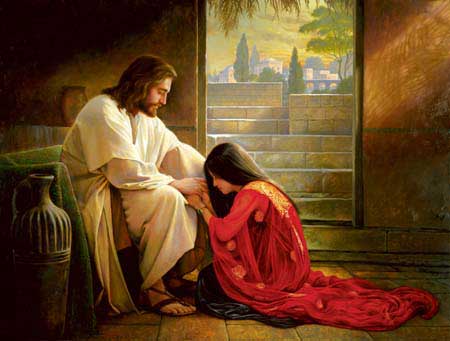
Loving Jesus must become your critical objective for the rest of your days, 1 Peter 4:8, “Love covers a multitude of sins.”  We also read of the sinful woman who washed Jesus feet, “therefore I tell you, her sins, which are many, are forgiven—for she loved much. But he who is forgiven little, loves little.” (Luke 7:47)

Dear one, practice loving him– starting today.  Many are the doers, few be the lovers.  The demanding weight of evangelism and world missions has quadrupled in the last 10 years.  Now is our time!  We love much!  Time is getting very short.


Are You Sick and Tired Yet?

Matthew 11:28-30, ESV

Weariness and burdens are our common plight. We all have them. They are shared as sort of common identity, like eye color or hair color. We all have them, and wish we didn’t. Sometimes we feel like shutting down, it seems too much to endure.

Weariness, that bone-tiredness that sleep doesn’t seem to help.

We seem to be chronically fatigued by life and what it brings us. We have heavy burdens, we carry a load that only gets heavier (and never lighter.) I suppose we adapt, and simply learn to carry it. But that wears thin, and weariness always breaks through.

Money problems, bills that are past due, marriages, straying children, cars that need fixing, family problems, job hassles, health problems… the list goes on ad nauseam. There are far too many issues, too many problems. Perhaps boredom and tedium are added to the list. They only intensify the hopelessness. (Its own special kind of suffering.)

Some will choose to ‘self medicate’ with alcohol or drugs.

They want something more, and find they only create more burdens (not less). Some will become hopelessly addicted, never finding relief from their burdens, but only increasing them. Suicide very often is seen as the only way out. It seems that it’s an option.

But Jesus will never condemn (leave that to the Pharisees) but instead offers a sort of amnesty to the burnt-out and the burdened. Come to me, all of you who are weary and carry heavy burdens, and I will give you rest.” Jesus did not say, “Get away from me, I am holy and you are not.” Rather, He makes himself to be the solution to all those whose life has overwhelmed.

He desperately wants our burdens and absorbs all our weariness. He wants us. He wants to give us peace and rest. Often Jesus offers but we’ll refuse.

An easy trade, especially since we are so desperate. Some have evaluated Jesus’ offer and made the transaction–piling up our burdens at His feet. We might be a little hesitant about the “my yoke” part, but will quickly find that discipleship can’t be compared to the weight we once carried for so long.

Biblical discipleship is relatively easy. It only asks that we surrender–For my yoke is easy to bear, and the burden I give you is light.” Following Jesus becomes the best way to live. We seem to understand, but unless we commit we will just carry our weight. (But it only gets heavier.)

Here’s a few verses from Isaiah that might help you sort this out:

29 He gives power to the weak
    and strength to the powerless.
30 Even youths will become weak and tired,
    and young men will fall in exhaustion.
31 But those who trust in the Lord will find new strength.
    They will soar high on wings like eagles.
They will run and not grow weary.
    They will walk and not faint.

Isaiah 40:29-31

But you need to deliberately choose. You must decide for yourself–what will you commit to? Will you continue to carry your burden, or will you turn to Jesus?

The Deep Pit

“I waited patiently for the Lord to help me,
    and he turned to me and heard my cry.
He lifted me out of the pit of despair,
    out of the mud and the mire.
He set my feet on solid ground
    and steadied me as I walked along.”

3″He has given me a new song to sing,
    a hymn of praise to our God.
Many will see what he has done and be amazed.
    They will put their trust in the Lord.”

Psalms 40:1-3, NLT

Psalm 40 is jam packed with great and wonderful truth. It contains freedom for the Christian– a way out for the broken believer. We do well when we use it, and that’s what it’s there for. The deep pit has been used over many centuries as the way God teaches us to sing certain songs. But that doesn’t make it easier, does it?

Verse 1

I waited patiently for the Lord to help me, and he turned to me and heard my cry.

Waiting is a critical word, it should not be regarded as trivial. In our daily walk we must be patiently seeking the Lord, that comes first. Admitting you need help is the first step. And guess what? You need help. 😁

The word ‘wait’ is special, it’s kawvah in Hebrew. It can mean ‘to bind together by twisting.‘ It can be used with the idea of braiding strands of rope together. It is never a passive act that just happens. Waiting on God is to be done with intentional purpose.

Remember that the Lord is not some distant deity on a hill far away.

He’s not hiding from you. It’s really quite the opposite.

He is closer to you than you think. He is responsive and aware. He hears your cries and wants to act; He is not deaf, but our patience is critical. Waiting on Him is crucial to being free. We must bind and twist our hearts and live our life to His desires.

Verse 2

He lifted me out of the pit of despair, out of the mud and the mire. He set my feet on solid ground and steadied me as I walked along.

The seeable terrain can be awful, with muddy paths and mucky pits. Things that pull you down and suck you in. They’ll trap the traveler. But the Holy Spirit is quite able to lift us out. He picks us up and secures us. He uses the rope of God’s Word.

He is way more willing to save us, than we are to being saved.

Solid ground is where we are meant to be. It’s become a place of firm standing and secure footing. He makes us steady and He keeps us safe. The Holy Spirit now has intimate care over your soul.

Verse 3-4

“He has given me a new song to sing, a hymn of praise to our God.

Many will see what he has done and be amazed. They will put their trust in the Lord.

Some of the greatest songs are the ones that come from those just delivered from the pit.

These are ‘pit songs,’ offered to God from sincere and true hearts that have once been trapped. There’s something solid heard from the hearts of those redeemed from disaster.

These songs no longer sound religious or contrived.

“YOU CAN SEE GOD FROM ANYWHERE IF YOUR MIND IS SET TO LOVE AND OBEY HIM.”

A.W. Tozer

From our deepest pits come our greatest praises.

There is a passionate quality that saturates these ‘pit praises’ that is highly treasured by God, and esteemed and valued by the Church– a sense of authenticity starts to be finally heard. We can finally start to see that our pits become ‘launching pads’ of true songs of deliverance.