Are You Too Righteous?

“Do not be excessively righteous and do not be overly wise. Why should you ruin yourself?”

Ecclesiastes 7:16

I’m thinking out loud about something, so I should alert everyone.  Anyway, I’m thinking about “scruples”.  The dictionary defines scruples as an uneasy feeling arising from conscience or principle that tends to hinder action.”

The malady developed in the middle ages.  Among the saints who were not yet labeled saints, there developed a particular syndrome of hypersensitivity toward sin and holiness.  You might say that they got stuck in the proverbial “hamster wheel” and couldn’t get off.  Run, run, run and they developed an irrational fear of somehow missing God.  Many a zealous saint has turned obsessive and superstitious. Suicide would happen.

Wikipedia says this about “scruples”– –an obsessive concern with one’s own sins and compulsive performance of religious devotion.”   It is essentially the doubt and fear that you will do or say something that is not right.  It locks you up inside to the point you can’t do anything.  Scruples can be one of the occupational hazards of the devout believer.

Ecclesiastes postulates the idea of being overly devout.  “Do not be excessively righteous and do not be overly wise. Why should you ruin yourself?” (Eccl. 7:16) This verse, suggests that one can be excessive, or, too good.  That might rankle some, as it did me.  How can you be too righteous?

Luther once said, “Be a sinner and sin strongly, but more strongly have faith and rejoice in Christ.” That intrigues me. I once heard a sermon entitled, “Does Your Christianity Include You?” (I can remember the title, but not the message.)

I guess we sometimes develop a sense of wanting to please God to the extent of denying our humanity. 

At least that’s where my own battles with scrupulosity originate.  I am thinking that “Pharaseeism” is kind of like its cousin; they are closely related. I think we start to have issues when we start to become obsessive about our holiness and our discipleship.  If a little is really good, then a lot is even better; this is our rationale, but it doesn’t work that way.

There are several examples in the Word.  I think of Jephthah and his over-the-top vow to the Lord.  In Judges 11, Jephthah vowed to God that if he were victorious in battle, he would give to God whoever came through the doors of his house upon his return from battle. In verse 34-35  we read that his only child a daughter came out first upon his return from battle. Jephthah was crushed.

This wasn’t necessary, or even required, but if we look at his life it seems that he had an impulse to overcompensate.  He was blown away by his daughter’s appearance when he returned home.  Saul was another, with Jonathan and the honey.  Just something to think about.

“If there be anything that can render the soul calm, dissipate its scruples and dispel its fears, sweeten its sufferings by the anointing of love, impart strength to all its actions, and spread abroad the joy of the Holy Spirit in its countenance and words, it is this simple and childlike repose in the arms of God. “

S.D. Gordon

ybic, Bryan

 

cropped-christiangraffiti1-2

Pathetic Has an Upside


“And this is the reason: God lives forever and is holy. He is high and lifted up. He says, “I live in a high and holy place…

(pause for emphasis)

but I also live with people who are sad and humble. I give new life to those who are humble and to those whose hearts are broken.”

Isaiah 57:15, NCV

There is no exception, or absolutely no reasoning over this.  Simply put, God is holy and that He lives forever.  That is beyond dispute.  He simply penetrates everything, He is the “first cause” and exercises complete authority over all, and anything that has had any existence whatsoever.  He is all sustaining and completely powerful. This is just basic truth, and these simple ideas woven together, produce some mighty fine theology.

But even with all this, He has a high density love for the desperate.  He searches us out, and tries to find those who know they are pathetically weak.  He has a deep penchant and preference for those who have nothing.  Astonishing?– Yes, but this I admit– stretches me.

When Jesus came, it was not to teach an elegant philosophy, and to be praised by men. But rather it was to find lost people.  He was like a special forces team dropped in a jungle, to rescue prisoners in an evil and dark concentration camp.  He came for anyone who would believe in Him.  Essentially, He provided a salvation for anyone who would take it.  But you have to be desperate, and weak, and pretty much pathetic. The mentally and physically ill are favored by His grace.

He has a high density love for the desperate.

Hearts that’ve been broken have an instant attraction to Him.  You see, He collects flawed hearts, He thirsts for those who have been wounded or ashamed.  If ever you have felt this way, Jesus is already moving towards you, and not away.  The broken and humble of this world will always have a dedicated advocate and Savior in Him.  We only have to ask. He is an excellent public defender.

When we stand in the desperate place, way beyond any kind of help, He comes. And then He exercises real power and authority to release us.  He rescues us when no one, or nothing could.  Some question that all this talk about Jesus, that there might be a sense that it could be overly excessive or misguided.  But when you face the stark reality of being terribly lost, your Savior becomes pretty significant.

I like this verse, it seems to contain much that I need today. It fortifies my soul, and keeps me straight. It’s like God’s multivitamin for my heart. I hope it blesses you as well.

ybic, Bryan


cropped-christiangraffiti1 (1)

*

Paranoia and Delusions, Oh My!

Paranoia-600x379

Didn’t really sleep last night but an interesting day.  Hope it continues to develop in that direction.  I really need a good day to come along right now.

Been thinking about paranoia.  It comes loaded up with delusions.  They are separate words, but when they make that toxic combination it gets strange.  Are people out to get me?  Probably not.  People are by far and away more apt to dismiss me then to plot against me.

Paranoia is the belief in a hidden order behind the visible.

Delusions are a strong belief in something despite superior evidence to the contrary.

I don’t know why this is such a hard concept to hold on.  Paranoia is intensely self-absorbed and egocentric.  Everything is conspiring to destroy me is a very foolish way to live.  In a culture already overheated by egomania, to offend me becomes a declaration of war.  My paranoia makes you a mortal enemy.  But to act from that destroys me.  I only take it deeper and make it easier to slide into the next time.

Paranoia is not rational.  You can not reason with it.  (You certainly have my permission.)  For me, I win the battle over paranoia and delusions by “displacement”, pushing it out by adding in the presence of Jesus. The Holy Spirit fills us and flushes out the bad. At least that is what it feels like.

When I recognize Him to be the good shepherd, He watches over my thoughts like sheep.  He protects me from paranoia’s snares and thorns. I experience peace when He is present. I find Jesus actively helps me in this.

There are times I hear the voices, and “see” the monstrous faces leering out of the wallpaper. But more often I concoct delusions about people who I feel have slighted me. Paranoia provides plenty of grist for me to grind. I’m learning how to recognize the lies, and the liar who speaks them to me.

“For God did not give us a spirit of timidity (of cowardice, of craven and cringing and fawning fear), but [He has given us a spirit] of power and of love and of calm and well-balanced mind and discipline and self-control.”

2 Timothy 1:7, AMP

Often I hear what seems like a telegraph, a varying ‘dot-dash-dot.’ It is very loud and obtrusive, but I know now it’s not real. I read a cool quote, that made me laugh, “I was walking home one night and a guy hammering on a roof called me a paranoid little weirdo. In morse code.”  -Emo Phillips

I hope your day goes good.

bry-signat (1)

cropped-christiangraffiti1.jpg

&

Working God’s Night Shift

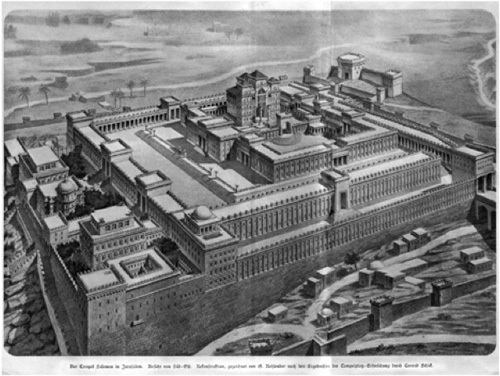
temple-etching
Solomon’s Temple in Jerusalem
A song for going up to worship.

134 “Praise the Lord, all you servants of the Lord,
    you who serve at night in the Temple of the Lord.
Raise your hands in the Temple
    and praise the Lord.

May the Lord bless you from Mount Zion,
    he who made heaven and earth.”

Psalm 134, NCV

This remarkable Psalm is part of an elite group known as “the Psalms of Ascent.” These 15 were sung as the congregation of Israel went up the steps of the temple in Jerusalem. They would sing each in “rounds” with each other. As you can well imagine, this made the ascent slow, but meaningful.

As you read the three verses, I get a picture of worshipers turning back and blessing the Levites. This takes place at the very end of the day. The Levites, and other godly ones who lived in the Temple, (remember Anna and Simeon, in Luke 2?) They were the support staff for the priests.

Commentary

V. 1, “Praise the Lord, all you servants of the Lord,
you who serve at night in the Temple of the Lord.”

The first significant thought is “Lord” mentioned three times. The word is the recognition of someone’s status and standing. We call Him Lord, because He is that (and more).

The second has to deal with the Levitical “night shift.” They served and guarded the Temple during the wee hours of the night. They probably cleaned, stacked wood, sharpened knives and maintained the Holy Place with its needs.

There was no real glory working the night shift. There were no people to serve. The crowds were for the day shift. (Here’s a weird thought– think “Disneyland at 2:00 a.m.”) There was also a contingent of non-Levite people ministering to the Lord as well. They had no duties, and only the priests could serve through their work.

The Levites working at night were not ‘second best.’ At least, not in the eyes of the Holy Spirit. They were integral in both presence and service to the Lord. To despise them is to reveal one’s ignorance. They definitely mattered.

V. 2 “Raise your hands in the Temple
and praise the Lord.”

I’ve worked nights before. It’s a real adjustment. You never feel like you’ve had enough sleep, and it is really hard to be positive and cheerful.  I could get pretty grouchy at times.

But an exhortation is given, a shout and a blessing as the crowds leave. “Raise up your hands– and praise Him!” It is as the work, although necessary, would be secondary. The worship however, was primary. We need to hear that.

V. 3, “May the Lord bless you from Mount Zion,
he who made heaven and earth.”

To be blessed (literally, made “lucky”) by our Creator and Lord is pretty profound. As a kid who read a lot, I think of ‘fairy dust.’ I know better now, but to be blessed by God is deeply significant.

To summarize, I believe this Psalm is speaking of those in the church who are doing “hidden service.” No one sees them really. They go about there duties quietly, and purposefully. The only recognition is from God– who sees all.

I must encourage you to keep on. There are many more than you think who see your hidden ministry to the Father. You are His ‘night shift.’ You’re seen by few, but Him. He knows what you do.

aabryscript

cropped-christiangraffiti1-2