The decision to make decisions that will please God is in itself a monumental step. It means you have come to the place where it matters. It’s coming to the place where I say “Yes” to all that God says yes to and “No” to everything He has forbidden. The willingness to be guided is itself a powerful thing.
A fundamental principle to begin with:Every heart has a throne, the question is– who sits on it?
Step 1: Putting God First.
In part you have already done this just by your eagerness to do His will. You have made a deliberate decision to honor and esteem Him by letting God be completely God. It is likely that God will withhold His direction if you have no real intention of doing it. You will just sputter around in the dark. Your life will be painfully empty.
Step 2: Worship Him willingly.
For me, to commence praise & worship is like firing up the nuclear power plant that I have in my backyard. It is a source of unlimited energy that I have at my disposal, but it’s not about me at all. When I start to worship, it must be all about Him. It’s His character, attributes, love and grace I lift up to be examined by all.
“But the time is coming—indeed it’s here now—when true worshipers will worship the Father in spirit and in truth. The Father is looking for those who will worship him that way.”
John 4:23
Step 3: Read the Word faithfully.
Guidance often comes when we turn to the Bible for light. Each part or style of my “leather bound Book” is a purposeful and deliberate unveiling of truth. After 25 years since I became a Christian, the Bible has shown itself over and over to be important. The Life of David has been rich, and Daniel as well. I needed to discern the difference between:
A moral decision that concerns things that are right & wrong, evil & good.
A non-moral decision that directs me in the areas of preference and direction.
Reading the Bible provides us with all that we need.
“Your word is a lamp to my feet and a light for my path.”
Psalm 119:105
Step 4: Seek out the counsel of elders and veteran saints.
The Church has this big ‘brain-trust’ at her disposal whenever she needs it. There is accumulated wisdom and insight that often is ignored or not even considered. My life has changed because of my contact with these older saints. Most of them never really recognized the imprint they were having on me, my marriage, or my ministry. I realize that I stand on the shoulders of giants, that I only see further because they were willing to raise me higher. We will fail in decision making if we will not involve our elders.
“Plans fail for lack of counsel, but with many advisers they succeed.”
Prov. 15:22
Step 5: Prepare yourself to walk by faith.
The scripture is jam-packed with people who had to have faith. They are everywhere and they are doing everything! But, all through faith. I got to thinking about Noah, and his faith. Directed to construct an ark, which took him years and years.
“It was by faith that Noah built a large boat to save his family from the flood. He obeyed God, who warned him about things that had never happened before.”
Heb. 11:7
Faith is defined as trusting God to carry out His unseen promises.
“Faith is the confidence that what we hope for will actually happen; it gives us assurance about things we cannot see.”
Heb. 11:1
Step 6: Concentrate on eternal purposes.
I have heard it said, that this life is very short, and only what is done for Christ will last. I believe this. Matthew also tells us to seek first the kingdom of God, and everything else will be given to you.
It is the kingdom that must be paramount. The kingdom is carried around in our hearts; it is the place where the King dwells and rules.
These are not just noble and lofty thoughts to be smiled at, humored and regarded as quite quaint. This is for real, these are concrete realities that we choose. God’s will is not some abstract, it is as specific as the believer wants or needs it to be.
Summary
I honestly believe that you and I can know deep inside us what constitutes a Godly decision. It very often is on the path of greatest humility. And when you meet up with humility, you will find faith– and then follows goodness. And as you accrue these qualities it becomes much easier to make Godly decisions.
Recommended Book
“Decision Making and the Will of God,” by Garry Friesen, J. Robin Maxson
For those on the mat and wrestling, things can move very fast. Our own adversary is strong, and he knows us too well. He is quite aware of the sequence of moves needed to pin us to the floor, and crush us. He is spiritually dangerous. He is lethal.
I get bewildered and rattled by his attacks. He knows how to pressure me at just the right time, and he refuses to follow the rules. He is no gentleman, he is both a cheater and a liar.
Of course I am talking about Satan and his team of demons. I will not dispute their reality with you. There is almost as much scriptural support for his existence as there is for Jesus’. His hostility is toward God and His people, and his viciousness cannot be camouflaged. Evil is real, and believe this–
Satan has a terrible, and ugly plan for your life.
As a Christian, who has bouts of depression it quickly morphs into despondency and despair. When I sink to that level I start to lose all hope. It’s like I’m in a lifeboat and decide that I should abandon it and tread water on my own. Despondency is not rational and just a little bit is deadly.
David intimately knew all about darkness and desperation.
He had been chased by his enemies, and maneuvered into the most difficult of situations. To observe him at a distance we would say that“there is no hope for him in God.” Even God can’t save him, for he is reprobate. We would be convinced that there is nothing for him in God’s thinking.
David fully understands how twisted he really is inside, and it’s at that point he composes Psalm 51. It shows us the way to freedom.
David was a moral failure; he was an adulterer and a brazen killer. You can debate this, but it seems that David had sinned deeper and more intensely than Saul ever had. Join with the logic of the crowd, “There is no hope for him in God!” No hope, none, nada, zero.
“Yet I am always with you; you hold me by my right hand.
You guide me with your counsel, and afterward you will take me into glory.
Whom have I in heaven but you? And earth has nothing I desire besides you.
My flesh and my heart may fail, but God is the strength of my heart and my portion forever.”
David defied the theology of his day. He embraced the Lord God with a desperate passion. It was not orthodox or logical. You could say it was disturbing for many who didn’t understand the infinite mercy of God. But David would not let go of God! He hung on, and continued to sing in faith, even though most wouldn’t agree he had the right to.
I encourage you besieged brother, and embattled sister. Hold on to Him, even if it baffles all logic or theology. Renounce your sin, but seek His promises with a fervency, open your heart to Him with a passion. Remember that sin can and will destroy you. It is part of Satan’s stratagem.
Sing in your cave, and never lose hope of God’s love for you.
“The most valuable thing the Psalms do for me is to express the same delight in God which made David dance.”
C.S. Lewis
“Despondency and David’s Theology,” brokenbelievers.com, Bryan Lowe
“When the Japanese mend broken objects, they aggrandize the damage by filling the cracks with gold. They believe that when something’s suffered damage and has a history it becomes more beautiful.”
~Barbara Bloom
Just a short word of encouragement to all my suffering brothers and sisters.
I believe God loves you (it’s not a cliche) and has a tremendous plan for you. Scripture tells us that we will reign with Him (and the last time I looked, there is no disqualification for being mentally or physically ill).
Having suffered through your whole life will be just an enhancement, a bonus when you finally are held by Jesus, and you can rest in His arms.
Those of us who struggle with depression, mania, and paranoia know a lot about cracks and brokenness. Mixed states, anxiety, and social withdrawal all have taken their toll. Some of us hear voices. Addictions and suicide attempts have made up our past life (and even sometimes try to intrude on the present.)
Some of us have physical disabilities. We come to worship from our wheelchairs and walkers. Some of us are deaf, and others are blind. But we come still. Our hope is in the coming King who promises us a new and fully redeemed Kingdom. There will be no more pain.
I once had a dear friend with advancing Alzheimers She understands little of what is happening to her, but she still worshiped God with the rest of the congregation. Before dementia, she was a dynamic spiritual marvel. Without a doubt one of the astonishing women I had ever met.
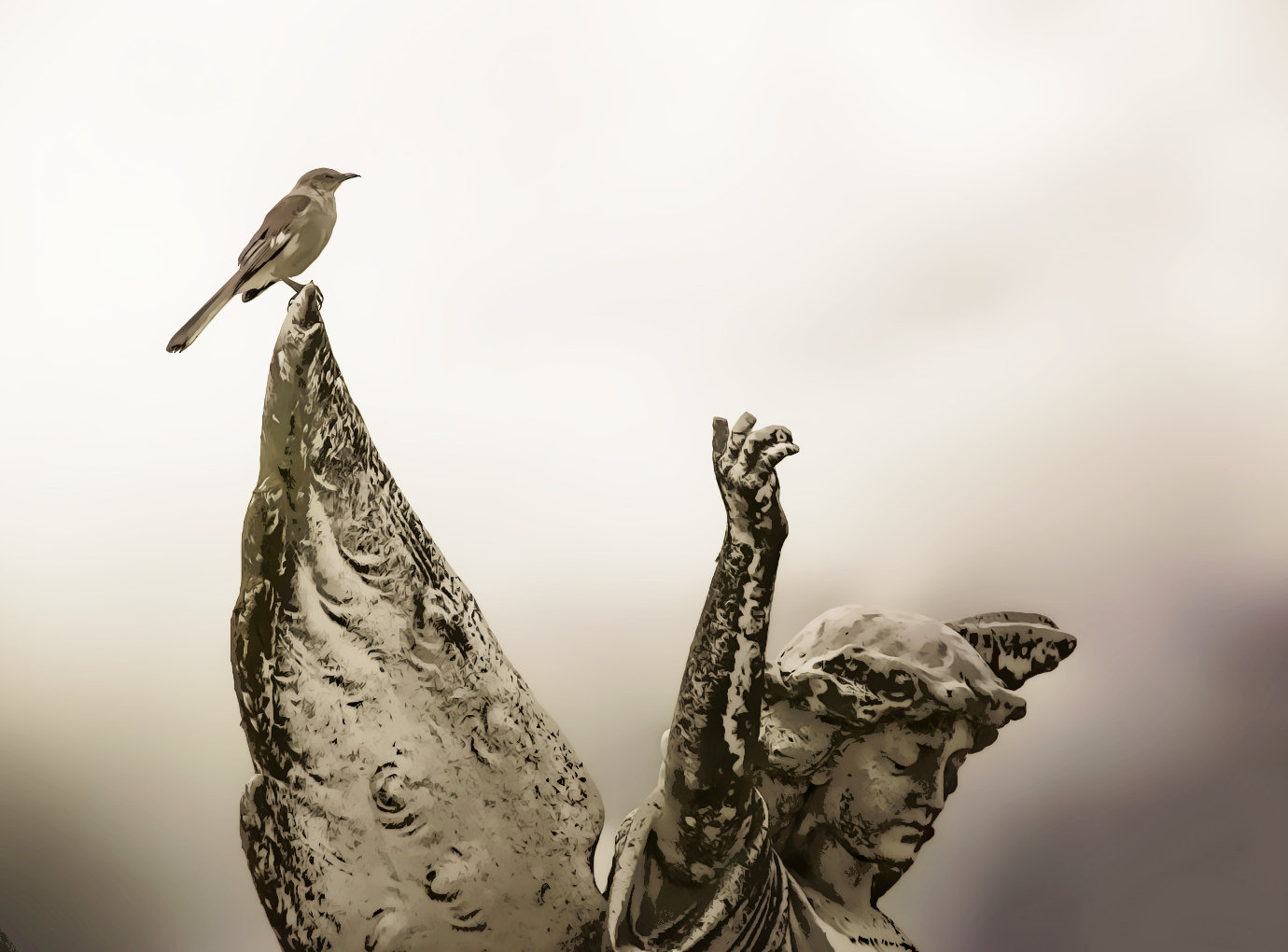
Now however, when she raises her hands, I believe the angels step back in a deep awe.
I just realized this–the angels understand worship, they really do. Praise seems to be their specialty. Each angel that surrounds the throne has a PhD in “worshipology.”
But you know what? The angels really don’t understand our worship out of our pain, weakness, and brokenness. Since they have never experienced it, I don’t think they understand.
Let’s worship God with our cracks and brokenness. In John 12:1-7, a woman breaks open a jar of nard on Jesus’ feet, while the other disciples hang back and complain.
But always remember this dear one–it’s only by brokenness and then being poured out that one can release the perfume.
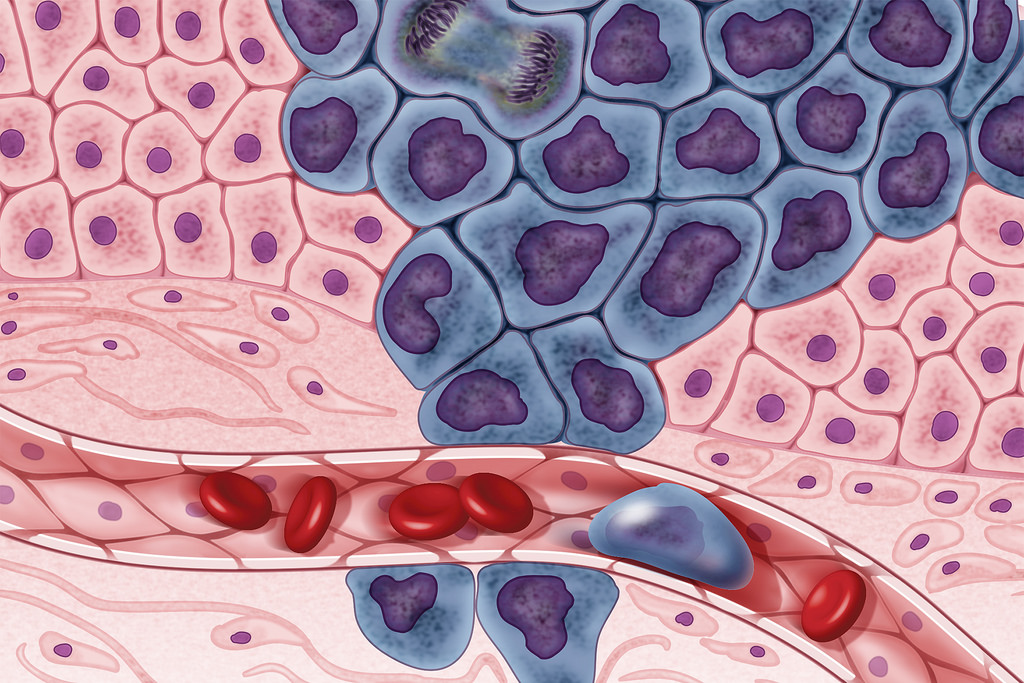
Before I entered college I hardly gave a thought to cancer and terminal illness. But ever since those college days death by disease has walked beside me all the way. Two of my college acquaintances died of leukemia and cancer of the lymph glands before they were 22. At seminary I watched Jim Morgan, my teacher of systematic theology, shrivel up and die in less than a year of intestinal cancer. He was 36. In my graduate program in Germany my own “doctor-father,” Professor Goppelt, died suddenly just before I was finished. He was 62—a massive coronary. Then I came to Bethel, the house of God! And I taught for six years and watched students, teachers, and administrators die of cancer: Sue Port, Paul Greely, Bob Bergerud, Ruth Ludeman, Graydon Held, Chet Lindsay, Mary Ellen Carlson—all Christians, all dead before their three score and ten were up. And now I’ve come to Bethlehem and Harvey Ring is gone. And you could multiply the list ten-fold.
What shall we say to these things? Something must be said because sickness and death are threats to faith in the love and power of God. And I regard it as my primary responsibility as a pastor to nourish and strengthen faith in the love and power of God. There is no weapon like the Word of God for warding off threats to faith. And so I want us to listen carefully today to the teaching of Scripture regarding Christ and cancer, the power and love of God over against the sickness of our bodies.
I regard this message today as a crucial pastoral message.
You need to know where your pastor stands on the issues of sickness, healing, and death. If you thought it was my conception that every sickness is a divine judgment on some particular sin, or that the failure to be healed after a few days of prayer was a clear sign of inauthentic faith, or that Satan is really the ruler in this world and God can only stand helplessly by while his enemy wreaks havoc with his children—if you thought any of those were my notions, you would relate to me very differently in sickness than you would if you knew what I really think. Therefore, I want to tell you what I really think and try to show you from Scripture that these thoughts are not just mine but also, I trust, God’s thoughts.
Six Affirmations Toward a Theology of Suffering
So I would like everyone who has a Bible to turn with me to Romans 8:18–28. There are six affirmations which sum up my theology of sickness, and at least the seed for each of these affirmations is here. Let’s read the text:
I consider that the sufferings of this present time are not worth comparing with the glory that is to be revealed to us. For the creation waits with eager longing for the revealing of the sons of God; for the creation was subjected to futility, not of its own will but by the will of him who subjected it in hope; because the creation itself will be set free from its bondage to decay and obtain the glorious liberty of the children of God. We know that the whole creation has been groaning in travail together until now; and not only the creation, but we ourselves, who have the first fruits of the Spirit, groan inwardly as we wait for adoption as sons, the redemption of our bodies. For in this hope we were saved. Now hope that is seen is not hope. For who hopes for what he sees? But if we hope for what we do not see, we wait for it with patience.
Likewise the Spirit helps us in our weakness; for we do not know how to pray as we ought, but the Spirit himself intercedes for us with sighs too deep for words. And he who searches the hearts of men knows what is the mind of the Spirit, because the Spirit intercedes for the saints according to the will of God.
We know that in everything God works for good with those who love him, who are called according to his purpose. (RSV)
1. All Creation Has Been Subjected to Futility
My first affirmation is this: the age in which we live, which extends from the fall of man into sin until the second coming of Christ, is an age in which the creation, including our bodies, has been “subjected to futility” and “enslaved to corruption.” Verse 20: “The creation was subjected to futility.” Verse 21: “The creation will be freed from slavery to corruption.” And the reason we know this includes our bodies is given in verse 23: not only the wider creation but “we ourselves (i.e., Christians) groan in ourselves awaiting sonship, the redemption of our bodies.” Our bodies are part of creation and participate in all the futility and corruption to which creation has been subjected.
Who is this in verse 20 that subjected creation to futility and enslaved it to corruption? It is God. The only other possible candidates to consider would be Satan or man himself. Perhaps Paul meant that Satan, in bringing man into sin, or man, in choosing to disobey God—perhaps one of them is referred to as the one who subjected creation to futility. But neither Satan nor man can be meant because of the words “in hope” at the end of verse 20. This little phrase, subjected “in hope,” gives the design or purpose of the one who subjected creation to futility. But it was neither man’s nor Satan’s intention to bring corruption upon the world in order that the hope of redemption might be kindled in men’s hearts and that someday the “freedom of the glory of the children of God” might shine more brightly. Only one person could subject the creation to futility with that design and purpose, namely, the just and loving creator.
Therefore, I conclude that this world stands under the judicial sentence of God upon a rebellious and sinful mankind—a sentence of universal futility and corruption. And no one is excluded, not even the precious children of God.
Probably the futility and corruption Paul speaks of refers to both spiritual and physical ruination. On the one hand man in his fallen state is enslaved to flawed perception, misconceived goals, foolish blunders, and spiritual numbness. On the other hand, there are floods, famines, volcanoes, earthquakes, tidal waves, plagues, snake bites, car accidents, plane crashes, asthma, allergies, and the common cold, and cancer, all rending and wracking the human body with pain and bringing men—all men—to the dust.
As long as we are in the body we are slaves to corruption.
Paul said this same thing in another place. In 2 Corinthians 4:16 he said, “We do not lose heart, but though our outer man (i.e., the body) is decaying (i.e., being corrupted) yet our inner man is being renewed day by day.” The word Paul uses for decay or corrupt here is the same one used in Luke 12:33 where Jesus said, Make sure your treasure is in heaven “where thief does not come near and moth does not corrupt.” Just like a coat in a warm, dark closet will get moth eaten and ruined, so our bodies in this fallen world are going to be ruined one way or the other. For all creation has been subjected to futility and enslaved to corruption while this age lasts. That is my first affirmation.
2. An Age of Deliverance and Redemption Is Coming
My second affirmation is this: there is an age coming when all the children of God, who have endured to the end in faith, will be delivered from all futility and corruption, spiritually and physically. According to verse 21, the hope in which God subjected creation was that some day “The creation itself also will be set free from its slavery to corruption into the freedom of the glory of the children of God.” And verse 23 says that “We ourselves groan within ourselves waiting eagerly for our adoption as sons, the redemption of our bodies.” It has not happened yet. We wait. But it will happen. “Our citizenship is in heaven from which we await a Savior, the Lord, Jesus Christ, who will transform the body of our lowliness to be like the body of his glory” (Philippians 3:20, 21). “In a moment, in the twinkling of an eye, at the last trumpet, for the trumpet will sound and the dead will be raised incorruptible and we shall be changed” (1 Corinthians 15:52). “He will wipe away every tear from our eyes, and there shall be no longer any death; and there shall be no longer any mourning or crying or pain; the first things have passed away” (Revelation 21:4).
There is coming a day when every crutch will be carved up, and every wheelchair melted down into medallions of redemption. And Merlin and Reuben and Jim and Hazel and Ruth and all the others among us will do cartwheels through the Kingdom of Heaven. But not yet. Not yet. We groan, waiting for the redemption of our bodies. But the day is coming and that is my second affirmation.
3. Christ Purchased, Demonstrated, and Gave a Foretaste of It
Third, Jesus Christ came and died to purchase our redemption, to demonstrate the character of that redemption as both spiritual and physical, and to give us a foretaste of it. He purchased our redemption, demonstrated its character, and gave us a foretaste of it. Please listen carefully, for this is a truth badly distorted by many healers of our day.
The prophet Isaiah foretold the work of Christ like this in 53:5–6 (a text which Peter applied to Christians in 1 Peter 2:24):
But he was wounded for our transgressions, he was bruised for our iniquities; upon him was the chastisement that made us whole, and with his stripes we are healed. All we like sheep have gone astray; we have turned every one to his own way; and the Lord has laid on him the iniquity of us all. (RSV)
The blessing of forgiveness and the blessing of physical healing were purchased by Christ when he died for us on the cross. And all those who give their lives to him shall have both of these benefits. But when? That is the question of today. When will we be healed? When will our bodies no longer be enslaved to corruption?





 Broken Believers