Radical Ministry

“Turning Your Back,” Russian Folk Art

Religious people love to hide behind religion. They love the rules of religion more than they love Jesus. With practice, the Condemners let rules become more important than the spiritual life. “

— Michael Yaconelli

Mentally ill people are rarely seen in our Churches. Often we are pushed into hiding our true identity;  we can come out into the open, but only if we agree to play according to the rules–their rules.  We are expected to censor ourselves and say proper things at the right time.  Pharisees [who are alive and well] insist on a level of purity that all must maintain. [Hey, I am not picking on anyone, it’s just a generality.] 

If I say that I am depressed, paranoid, manic or anxious, I will really upset the apple cart and muddle up everything. You may see me become as confused or uncertain.  I may be.

“Truth?  You can’t handle the truth?”  [from the movie, “A Few Good Men”.] 

But– if we use our shortcomings as credentials– we have the ability to speak about grace, love and of self-acceptance, with real authority. It won’t become a show.

Christians with mental illnesses have been given a gift that we are to share with the Church.  The Holy Spirit has sprinkled us into each fellowship of believers.  He places us who are presently afflicted and suffering into strategic places.

We are “sprinkled” throughout the Body. Our “gifts” are to speak to the Body, spiritually about a lot of things, but especially grace. We are bearers of grace. We’re Call us the “audio/visual” department of the church.

If our fellowships become religious, it might be because we in our weaknesses have allowed ourselves to be silenced into submission by the “interpreters” of scripture.  If we don’t like the rules, we are told to go elsewhere.  We are not welcome, they say with a thin smile.

But don’t you see, that is our moment to shine!  Our “unsightly” presence shouts out to the “wonderful” people, proclaiming grace in weakness.  Those who receive us, in a way, receive Him.  Those who turn from us, muffling us, are doing that to Jesus. Frightening, isn’t it?

I would strongly suggest that we take our illnesses into the open. 

That we become transparent before others.  As we do this, we can ‘oh-so-gently’ guide our fellowships into true grace and love.  If they look at me and I just want them to see Jesus.  And that is our ministry as mentally ill people in the Church.

Our weaknesses are really our strengths.

9″ But He said to me, “My grace is sufficient for you, for power  is perfected in weakness.”  Therefore, I will most gladly boast all the more about my weaknesses, so that Christ’s power may reside in me.” 

10 “So because of Christ,  I am pleased in weaknesses, in insults, in catastrophes, in persecutions, and in pressures. For when I am weak, then I am strong.” 

                               2 Corinthians 12:9-10, NLT


aabryscript

[This is a re-blog of one of our core teachings, originally posted 11/20/2009. I felt it was time to bring out of our musty old closet and set it before you again. I hope that it resounds deep within and that it encourages those who must mix their discipleship with disability.]

 

cropped-christiangraffiti1-2


***

‘Wait for the Finals’

I have gained much from reading Spurgeon over the years. I read this this morning, and I could hear the Holy Spirit speaking into my soul. I need more of this “peaceful perseverance” working in me.
Eric Liddell
Eric Liddell, 1902-1945, Winner of Gold Medal at 1924 Olympics in Paris

From CH Spurgeon’s “Faith’s Checkbook”
Wait for the Finals

“Gad, a troop shall overcome him: but he shall overcome at the last.”

Genesis 49:19, KJV

Some of us have been like the tribe of Gad. Our adversaries for a while were too many for us; they came upon us like a troop. Yes, and for the moment they overcame us; and they exulted greatly because of their temporary victory. Thus they only proved the first part of the family heritage to be really ours, for Christ’s people, like Dan, shall have a troop overcoming them.

This being overcome is very painful, and we should have despaired if we had not by faith believed the second line of our father’s benediction, “He shall overcome at the last.” “All’s well that ends well,” said the world’s poet; and he spoke the truth.

A war is to be judged, not by first success or defeats, but by that which happens “at the last.” The Lord will give to truth and righteousness victory “at the last”; and, as Mr. Bunyan says, that means forever, for nothing can come after the last.

What we need is patient perseverance in well-doing, calm confidence in our glorious Captain. Christ, our Lord Jesus, would teach us His holy art of setting the face like a flint to go through with work or suffering till we can say, “It is finished.” Hallelujah. Victory! Victory! We believe the promise. “He shall overcome at the last.”

–C.H. Spurgeon

(Brokenbeliever’s favorite teacher.)


cropped-christiangraffiti1 (1)

*

From the Faith’s Checkbook Mobile Devotional Android app – http://www.LookingUpwardApps.com/fcb

Charles Spurgeon’s Bio on Wikipedia- http://en.wikipedia.org/wiki/Charles_Spurgeon

A Grace That Overwhelms Me

“To live by grace means to acknowledge my whole life story, the light side and the dark. In admitting my shadow side I learn who I am and what God’s grace means.”

― Brennan Manning

Perhaps there are a few things we need to more fully grasp. There is a real and definite, ‘life of grace.’ And it’s a whole lot more than a polished niceness or an agreeable congeniality.  It is Grace, and when you do connect with it, it’s like touching a bare wire. The first time— don’t be surprised if it throws across the room– figuratively speaking.

There is a special perception of grace.  We must locate it and then live off its fatness. One of my favorite authors, Anne Lamott wrote,

“I do not understand the mystery of grace –” only that it meets us where we are and does not leave us where it found us.”

After just several sentences of writing this post, I simply come to this same place.  I know precisely what grace is (but I can’t tell you.) I would like to, very very much. It simply is beyond a definition, and yet, I can tell you it is real. When you reach out and grab it, you suddenly realize that you have been ‘taken apart,’ and then reassembled in a changed way.

Manning talks about “acknowledging my whole life story.” There are very dark times, times when we promoted and revelled in our personal evil. I can tell you of many things in my own behavior that would curl your hair, or demand justice be done.

But the ‘light-part’ needs to be recognized.  It does exist. But unquestionably I have done much more evil than good. On my knees recently, I’ve realized I have committed more sin as a believer— than I ever did in my darkness, before Christ. I was completely overwhelmed.

As I get familiar with my evil, it really schools me. It drops me into God’s classroom of grace. He tutors me, over and over. I learn of mercy, and grace, love and kindness. All which can only be decrypted by one simple word, “undeserved.” If you know that single word, heaven itself will open up like a golden sardine can.

But all of it pivots on grace.  Grace was the total reason it all happened like it did.

“For you know the grace of our Lord Jesus Christ, that though he was rich, yet for your sake he became poor, so that you by his poverty might become rich.” 2 Corinthians 8:9, ESV

“You are familiar with the generosity of our Master, Jesus Christ. Rich as he was, he gave it all away for us—in one stroke he became poor and we became rich.”  The Message

One more thing: Sometimes we need a dramatic change in our perception of the truth. What I mean is this. When we accept Jesus as our Savior, we’re often drawn to more systematic and theological specifics. We want to read all about—

  • End Times,
  • the Trinity,
  • the doctrine of healing/tongues,
  • the proper formula to speak at baptism,
  • women in ministry, and the like.

This is all well and good. We need to understand the fundamentals. Doctrine is important.

But just maybe what we really should do is think about—

  • forgiveness,
  • kindness,
  • servanthood,
  • faithfulness,
  • evangelism,
  • prayer

We often make small things big, and big things small.  We really should understand the ‘density’ of things spiritual. Let’s put our discipleship into perspective. To study something out isn’t the same as seeking God’s face, and grace.

Grace is one of those things for us; it is quite “amazing.” In it is such beauty and perfection— men could never, ever dream it up. It’s like an ocean where a child can splash, and yet it’s depths are still unfathomed and unexplored. God’s grace, in its truest sense, is eternally profound.

*

bry-signat (1)

cropped-christiangraffiti1.jpg

The Blessings of a Long Battle, part 4

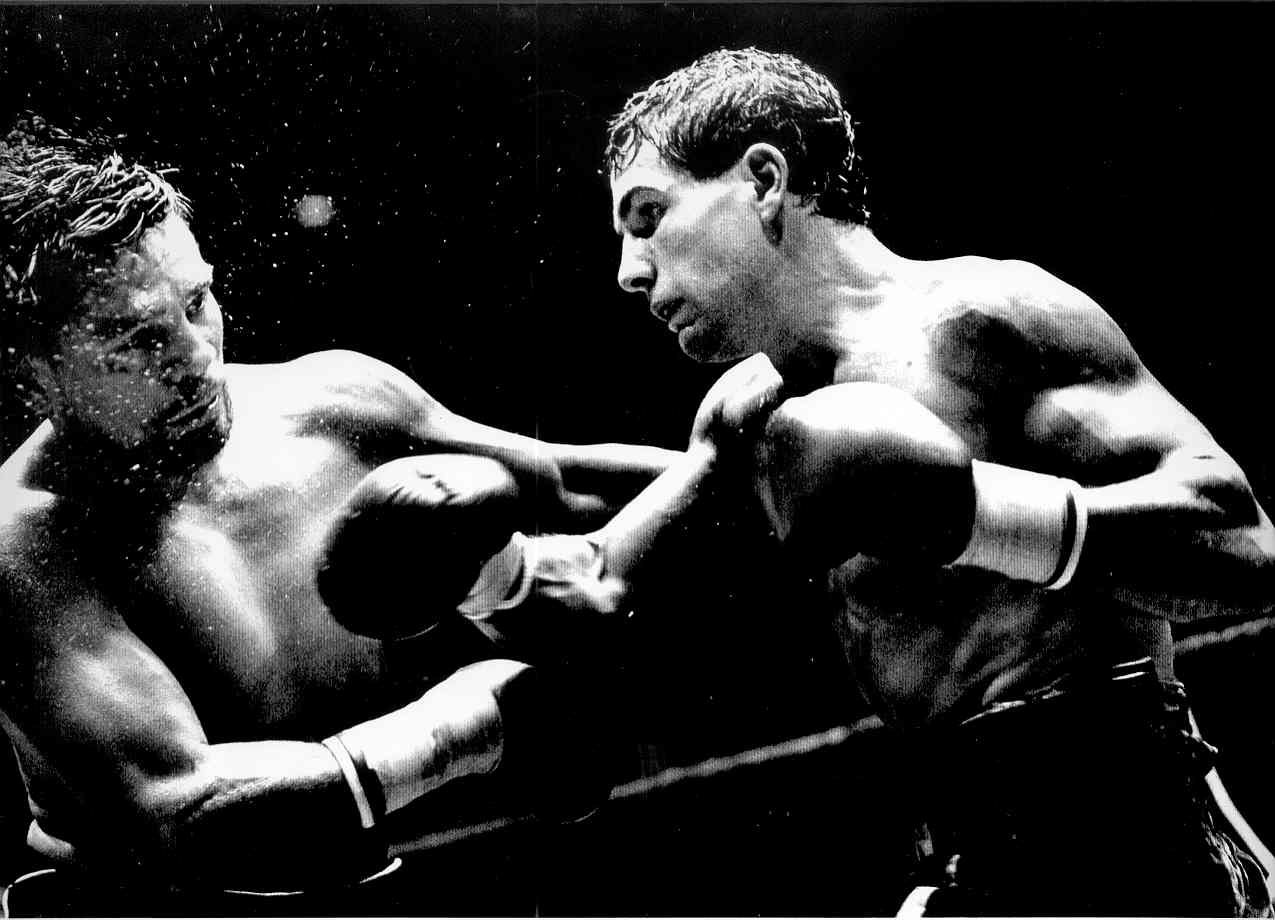
boxing3

In thinking about this final installment about how God can bring much good out of our protracted struggle with sin, weakness, or a problem, it dawned on me how important it is to see the Big Picture. In some ways this post reiterates truths in part 2 of this series, but also adds important new dimensions to those truths and explores new territory.

When a soldier goes through boot camp, it’s crucial for him or her to see the overall purpose of his training–the Big Picture. He or she is being pushed and tested in different ways to the extreme so that they will be prepared for any situation on the battlefield, won’t crack under pressure, and will be a team player.

In the conquest of Canaan under Joshua’s leadership, the nation of Israel experienced many victories over different hostile nations. However, Judges 3:1–4 says that God did not allow the Israelites to completely triumph but left certain enemies in the land (e.g., the Philistines) so that his chosen people would learn warfare.

When we became Christians, God could have put us in a cocoon of protective grace where we would be insulated from our three primary enemies–the world, the flesh, and the devil–but he didn’t so that we would also learn warfare.

If he would’ve sheltered us from the battle, we would end up like many “trust fund babies,” who, because of their vast inherited wealth, never have to work a day in their lives. They’re protected from the toil and struggle of life and never have to worry about paying the rent or the electric bill.

Often there is something profoundly missing in their lives: many are spoiled, shallow, and have not been battle–tested. Perhaps God designed an existence where we battled the world, the flesh, and the devil so that we would not end up becoming spiritual trust fund babies.

Macarius was a great monk who composed the Macarian Homilies in the 4th century. He was convinced that, if after becoming Christians, we were protected in a cocoon of grace from the temptations of the world, the flesh, and the devil, many of us would soon become conceited and fall as Satan fell. Instead of a three steps forward, two steps back grind that life often is, we would have a series of unbroken successes and become lifted up in pride and fall like Lucifer did.

In seeing the big picture, nothing is more important than understanding that God the Father through the Holy Spirit has been preparing a Bride for his Son in a Marriage that will span eternity. He wants you to be a part of that Bride. The Father wants the Bride to fervently love the Groom.

There is no love without free choice. If we would’ve been protected from the enemies of our soul, and choosing the Groom was exquisitely easy or even automatic, where’s the love that has been tested in the furnace of affliction? Like any spouse, Christ wants to be chosen. If we were automatons or even semi–automatons, where’s the love in that?

When we are in a long struggle with sin or weakness, it is because we have become over–attached to some created thing. Addiction is over–attachment in the extreme (e.g., overeating, alcohol, drugs, pornography, sex, power, work, shopping, etc.)

Christ the Uncreated One wants to be chosen over all the created things. Christ the Groom wants to stand in the midst of all his competitors–i.e. created things–and have the Bride choose him. One of the blessings then of a long battle is this: it’s the vehicle whereby we choose Christ as our Groom, as our only lover.

Does that love somehow go away if you’re a Christian who is up to your eyeballs in sin, addiction, and weakness? If anything God loves you more after you fall, because where sin abounds, grace abounds more. And as the old religious cliché tells us, he loves us in our sin and loves us too much to leave us there.

 *

Jonathan

Check out Jonathan’s own site at http://www.openheavensblog.com/.