What Are You Ashamed Of?

“We all carry about in our pockets His very nails.” –Luther
 “I am proud of the good news! It is God’s powerful way of saving all people who have faith, whether they are Jews or Gentiles.”  

 Romans 1:16, CEV

 “For I am not ashamed of the gospel, for it is the power of God for salvation to everyone who believes, to the Jew first and also to the Greek.”

Romans 1:16, ESV

What is it that holds you back? 

Is there a significant issue–a new boat or your next vacation to Disneyland?  Would that keep you from following Him?  Would you trade Him, for that?

So many of us are “chicken” when it comes to witnessing Jesus Christ. We ‘cluck and duck’ when the subject of God or religion is raised. We hope no one is looking when we ask God to bless our food in a public place.  Honestly, most of the time the issue for us is the fear of rejection. (It’s funny but some have never really gotten past the intimidation we experienced in High School.)

The saints who watch us from heaven, have got to be astonished at our embarrassment of Jesus, (Heb. 12: 1).  They look and wonder at the way we act, when so many of them have suffered deeply.  They have been repeatedly, and deliberately hurt for Jesus. But yet we’re arguing about padded pews and the color of the carpeting in our sanctuary.

“For whoever is ashamed of me and of my words in this adulterous and sinful generation, of him will the Son of Man also be ashamed when he comes in the glory of his Father with the holy angels.”

Mark 8:32, ESV

 I suppose we must learn again the spirit of the saints who are suffering for the sake of the Gospel. This very minute they are in prisons, in torture, in abuse all because they profess a love for Jesus Christ.

Could it be possible that God is calling you to leave your comfortable Christianity behind and tell someone that Jesus loves them and wants to save them. Will you do it, or will you be too ashamed? Let this be the present now that you bring the light of Christ to your dorm, your neighborhood, your apartment building, your baseball team, or  wherever God has placed you. Let Him use you for His glory!

I suggest that our faith will activate God– your fear switches on the influence of Satan.

“Fearing people is a dangerous trap, but trusting the Lord means safety.”

Proverbs 29:25, NLT

From Vessel to Vessel

amphora_on_stand

“Moab has been at ease from his youth, and he has settled on his lees, and has not been emptied from vessel to vessel, neither has he gone into captivity: therefore his taste remained in him, and his scent is not changed.”

Jeremiah 48:11, ESV

The expression, “emptied from vessel to vessel” is a figure that speaks of wine making. It relates to a method used to produce a well-refined wine, which is poured into a vessel and allowed to stand for a certain length of time. Then it is poured into another vessel.

Each time this is done, there is a settling of the dregs and sediment which remain in the container, as the wine-maker carefully pours the liquid into another vessel. This process is repeated until the wine is perfectly refined and yields a freshness of fragrance and color that is pleasing to the maker.

This result will not occur if the wine had been allowed to stay in only one vessel. Instead, it would have “settled upon its lees” and become scented with the essence of the dregs. Because the intention of the Lord is to bring us to spiritual maturity, we also are carefully poured from vessel to vessel.

We’re being poured from one dealing to another.

As we yield to His purpose, the Holy Spirit will see to it that we are brought, step upon step (vessel by vessel), into spiritual growth and maturity. With our wills yielded, and our spirits mellowed, we shall then become “wine, well refined.”

Once we understand what we are by nature, we realize that no natural power could carry out so massive of  an undertaking. If ever this is to be accomplished, the power must come from a source other than ourselves. Thus, the Lord simply asks us to become willing, yielded, broken material upon which to work, and He will furnish the means and power for our transformation.

The Lord does not say the vessels are all alike.

That would spoil the teaching given in this figure. Rather, the vessels are quite different, scarcely two being alike. Let’s consider a few in order to enlarge our understanding.

The first is a vessel made of tinted glass.

As the wine is emptied within, it assumes a color that results from the hue of the glass. This is the vessel of misunderstanding. People then judge the wine as being “off-color.” An endless course of reasons ensues as to the cause of its being thus.

The “wine” is aware of these remarks, and as a result has a difficult time remaining still and submitted, so the sediment might settle and cling to the sides and bottom of the vessel. All this keeps the wine in a disturbed state, until finally it discovers that it is really what it should be at this time of its development, since only the glass (dealing) is tinted. Thus there is a delay and a longer time is needed to produce clear wine.

The Maker waits for it to become settled and then carefully pours it into another vessel. All that is left behind are a few dregs of self-importance and some shreds of the self-life.

There is the vessel of being in the public eye.

As the wine is poured out, it beholds the new vessel, a large but shallow receptacle, gray and ugly. At first there is a shrinking, for the vessel seems so unusual, and so absolutely unlike any into which it had been before emptied. As the wine is poured, it is so wide that it fills the entire open vessel. This is the vessel of “public gaze.” It is where the Lord pours us when we are to experience ‘weakness.’

The wine cannot gather itself up to appear in any other shape. It must spread out flat and be open to public judgment and criticism. The snide remarks hinder the wine from becoming quiet, yielded, and silent. But as it realizes that this is a necessary step in its perfection, it becomes settled and is again poured out. Clinging to the sides of the ugly, gray vessel are the dregs of pride and self-preservation, but added to the wine is a richer hue.

There is the vessel of isolation.

The next vessel is made of clay. It is tall with a long narrow neck, and is not transparent. Thus, it reflects no light. As the wine is poured, it has difficulty getting adjusted, owing to the darkness and a fear as to the certainty that it belongs there. But at last it yields and fills the vessel in ‘quietness.’

Here it stands for a long period of time, in shadow and darkness. At times, the wine faintly hears the music and delightful cries of those without who are in the light, but the clay allows no participation, nor affinity of satisfaction. The wine can only remember the light it had found in former days, and simply trust that it will shine again.

There’a another trial of a dark and bitter trial.

This is the vessel of long, dark trial; the kind in which the Lord leaves us alone in order to prove us, even in shadow and darkness. But it works wonders in the wine. As it is again poured forth, it gleams with the light of faith, tried and tested. Left behind are the dregs of impatience, questioning, and unbelief.

There is the vessel of misunderstanding.

Again the wine is poured into a new vessel, which is unusual in size and unique in design. It has many bulges and ridges. Therefore, the wine has a difficult time finding its way into the many bulges, odd nooks, and corners. Those who watch, immediately conclude that the wine is in the wrong vessel, and that it was never called to go into such a receptacle. Thus, it appears to others that the wine’s leading and witness is wrong. This is the vessel of misunderstanding.

The Lord’s ways are not our ways; thus, His ways are often incomprehensible. The Lord seldom explains to others the leadings which He lays upon those who are His own. It is certainly death to our flesh to be led into situations that produce criticism from others, and then not be able to satisfy their reasoning’s. Thus, the wine finds no pleasure in this vessel, but it had been poured and must now fill the vessel.

“The same Jesus who turned water into wine can transform your home, your life, your family, and your future. He is still in the miracle-working business, and His business is the business of transformation.”

     Adrian Rogers

Pushing Through

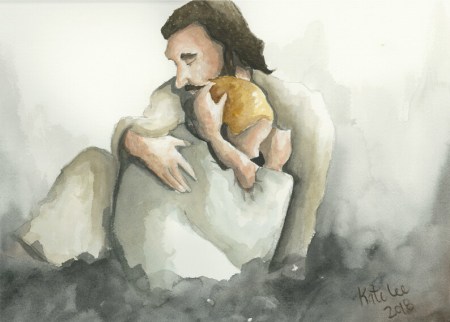
“Snuggle in God’s arms. When you are hurting, when you feel lonely, left out. let Him cradle you, comfort you, reassure you of His all-sufficient power and love.”

     Kay Arthur

There is a lifeline if you are:

  • A weary leader, caregiver, or simply a burned-out believer.
  • Navigating the heavy fog of grief, anxiety, or emotional numbness.
  • Quietly asking yourself, “Why do I still feel so empty?”
  • Aching to feel close to Jesus again.

You don’t have to fix yourself to be found. You’re not too broken—you are already being held.

The Invisible Pain of Fibromyalgia

I posted this recently on my blog, Linda Kruschke’s Blog.

This post was inspired by a flare-up of my fibromyalgia. One of my fellow bloggers who has bipolar commented that the pain of bipolar is also a form of invisible pain. It occurred to me then that this is a perfect post for the encouragement of broken believers, many of whom struggle with some form of invisible pain, whether physical or mental pain.

flourish20

I didn’t want to write about fibromyalgia, but then I realized that sharing my struggles with this syndrome might help someone who also struggles with invisible pain.

When someone breaks a leg, suffers a severe burn, or is covered with cuts and bruises it is easy for people to see what is wrong and to sympathize. But the pain of fibromyalgia is invisible pain. From the outside, the person suffering from the pain of fibromyalgia looks just fine, and so people don’t understand what they are going through.

It is also an unpredictable pain with no easily determinable cause or trigger.

One day you feel just fine and you wake up the next day feeling like you got run over by a freight train. I’ve gone for months feeling fine, with very little pain, then suddenly every muscle in my body aches, and certain movements cause sharp pains in my legs, arms, and neck.

I try to figure out why.

I’ve had doctors give me conflicting theories of what causes this pain, and I have read conflicting theories as well. One doctor told me it is a chemical imbalance in the brain. Another has told me it is caused by what I eat, by an inability of my muscles to process sugar that results in toxins in my muscles.

Another suggested it is a symptom of Post-Traumatic Stress Disorder that stems from some early trauma. I had also read that there was a strong link between fibromyalgia and Epstein Bar Virus (or mononucleosis), which I had when I was in junior high. Finally, I have read that it is simply hereditary.

The pain of fibromyalgia is truly invisible.

There is no medical test that shows whether someone has fibromyalgia. There is a “tender point” test in which the doctor checks 18 designated tender points on the body and if 11 or more are tender to the touch a diagnosis of fibromyalgia can be made. But even that test is somewhat subjective.

All my life I have felt pain in circumstances where someone else thought I shouldn’t have felt pain. I can remember saying something hurt when I was a kid only to be told, “That didn’t hurt.” This summer I experienced pain from something that didn’t seem like it should hurt.

I was at my cousin’s house in Houston and his granddaughter was playing with three pine cones. She kept handing them to me to play with, but the sharp points started to really hurt my hands. I said I didn’t want to play anymore because it made my hands hurt. My sister looked at me and asked, “Does that really hurt?”

But I know that Jesus knows how I feel, and that gives me a great deal of comfort. Although the pain Jesus experienced when He was scourged, beaten, and crucified was quite visible, He experienced an invisible pain, too. He experienced the pain of having the sin of the world laid upon Him and of His Father turning away as He cried out:

“My God, My God, why have You forsaken me?”

Matthew 27:46 (NIV).

If you struggle under the weight of invisible pain, take heart that you are not alone. Christ understands your suffering and your pain. You also have fellow Christians who understand what you are going through. The apostle Peter provided for us who suffer a wonderful encouragement in his first epistle:

Humble yourselves, therefore, under God’s mighty hand, that he may lift you up in due time. Cast all your anxiety on him because he cares for you.

Be self-controlled and alert. Your enemy the devil prowls around like a roaring lion looking for someone to devour. Resist him, standing firm in the faith, because you know that your brothers throughout the world are undergoing the same kind of sufferings.

And the God of all grace, who called you to his eternal glory in Christ, after you have suffered a little while, will himself restore you and make you strong, firm and steadfast. To him be the power for ever and ever. Amen. 

1 Peter 5:6-11 (NIV).

Satan would love to devour us in our pain.

He wants to make us fall and cease to be of use in God’s kingdom. But if we cling to Jesus, and cast all of our fears and anxiety on Him, He will help us to defeat Satan’s plans.

If you are struggling with invisible pain and feeling like you are at your wit’s end, leave me a comment and I would love to pray for you. It would be a blessing to me to be able to ask our Lord to strengthen you and give you peace and comfort so that you might be enabled to stand firm in your faith. Would you do the same for me?

My site is anotherfearlessyear.net, Please visit me.