A Few Bipolar Basics

Bipolar disorder symptoms are characterized by an alternating pattern of emotional highs (mania) and lows (depression). The intensity of signs and symptoms can vary from mild to severe. There may even be periods when your life doesn’t seem affected at all. Take care when this happens.

The manic phase of bipolar disorder–
Signs and symptoms of the manic phase of bipolar disorder may include:

  • Euphoria
  • Extreme optimism
  • Inflated self-esteem
  • Poor judgment
  • Rapid speech
  • Racing thoughts
  • Aggressive behavior
  • Agitation
  • Increased physical activity
  • Risky behavior
  • Spending sprees, credit card irresponsibility
  • Increased drive to perform or achieve goals
  • Increased sexual drive
  • Decreased need for sleep
  • Tendency to be easily distracted
  • Inability to concentrate
  • Drug abuse

The depressive phase of bipolar disorder–
Signs and symptoms of the depressive phase of bipolar disorder may include:

  • Sadness
  • Hopelessness
  • Suicidal thoughts or behavior
  • Anxiety
  • Guilt
  • Sleep problems
  • Appetite problems
  • Fatigue
  • Loss of interest in daily activities
  • Problems concentrating
  • Irritability
  • Chronic pain without a known cause

Types of bipolar disorder
Bipolar disorder is divided into three main subtypes:

  • Bipolar I disorder. You’ve had at least one manic episode, with or without previous episodes of depression.
  • Bipolar II disorder. You’ve had at least one episode of depression and at least one hypomanic episode. A hypomanic episode is similar to a manic episode but much briefer, lasting only a few days, and not as severe. With hypomania, you may have an elevated mood, irritability, and some changes in your functioning, but generally, you can carry on with your normal daily routine and functioning, and you don’t require hospitalization. In bipolar II disorder, the periods of depression are typically much longer than the periods of hypomania.
  • Cyclothymia. Cyclothymia is a mild form of bipolar disorder. Cyclothymia includes mood swings but the highs and lows are not as severe as those of full-blown bipolar disorder.

Other bipolar disorder symptoms:

In addition, some people with bipolar disorder may have rapid-cycling bipolar disorder. This is the occurrence of four or more mood swings within 12 months. These moods shifts can occur rapidly, sometimes within just hours. In mixed state bipolar disorder, symptoms of both mania and depression occur at the same time.

Severe episodes of either mania or depression may result in psychosis or a detachment from reality. Symptoms of psychosis may include hearing or seeing things that aren’t there (hallucinations) and false but strongly held beliefs (delusions).

Taken from the Mayo Clinic/Bipolar Disorder Symptoms.

My Psalm for My Savior

Psalm 116:7 – painted canvas, melodyjoy1983, http://www.etsy.com

This poem is written in the pantoum form and is based on Psalm 116, which is my favorite Psalm. I find that the repetition of lines in this form lends itself well to Christian poetry of lament and praise. I hope you are blessed by this offering.

My Psalm for My Savior

For you, O Lord, have delivered my soul from death
The anguish of death and darkness entangled me
I called on the name of the Lord: “O Lord, save me!”
Praise my God, my Savior who came to my rescue

The anguish of death and darkness entangled me
My eyes filled with tears, my feet stumbled under me
Praise my God, my Savior who came to my rescue
Rescued me from my trouble, sorrow, and darkness deep

My eyes filled with tears, my feet stumbled under me
The Lord, my God, heard my cry for love and mercy
Rescued me from my trouble, sorrow, and darkness deep
Now I know His grace and mercy are mine to keep

The Lord, my God, heard my cry for love and mercy
He saw the anguished turmoil of my broken soul
Now I know His grace and mercy are mine to keep
I will forever praise His glorious name, Jesus

He saw the anguished turmoil of my broken soul
I called on the name of the Lord: “O Lord, save me!”
I will forever praise His glorious name, Jesus
For you, O Lord, have delivered my soul from death

    John Newton

Please check Linda’s site. It’s always a blessing!

Deeply Flawed–A Jar of Clay

Elijah was suicidal. Job wished he had never been born. David understood deep depression. Moses was anxious. Hannah was barren. Jonah was angry. Paul was all alone in a prison cell.

And actually, this is only a brief list. The Bible is loaded with flawed people who stumbled trying to be faithful. God uses imperfect people, because there really isn’t any other kind to be found.

Noah got spectacularly drunk. Abraham lied. Jacob repeatedly deceived others. Rahab was a whore. Samson lusted. David committed adultery and was a murderer. Peter denied Christ.

And there were others.

Why does God favor and love people who are so disturbed? Honestly, none of us measure up. It seems He uses the weak to carry out a plan and a purpose of redeeming others, and establishing a Kingdom. He takes messes and gives them His message.

He is Love– 100% of the time, and He loves you, and He loves me, He loves the world. (John 3:16.)

Messed up people of faith become instruments and vessels of grace to other messed up people. We carry a treasure that is not ours. Sometimes it takes years to see this. I hope you can.

And nothing is ever really wasted. Our mistakes (sins) become useful things to Him. For example, David’s sin would be transformed into Psalm 51 and 32. Yes, his disobedience had consequences, I won’t dispute that, but something wonderful also came when he repented.

Yes, you need to repent. But when sin is destroying you, it does seem logical.

The first two verses of Psalm 51 can bring tears when we finally understand their profound beauty, for they came out of David’s darkness:

Psalm 53:1-2, ESV

For thousands of years people of real faith have come and drawn beauty and grace from this song. David knew his sin was real, and incredible pain emerged from that, but the Psalm did also.

Please do not try to hide or excuse your sin, it always has the most awful consequences.

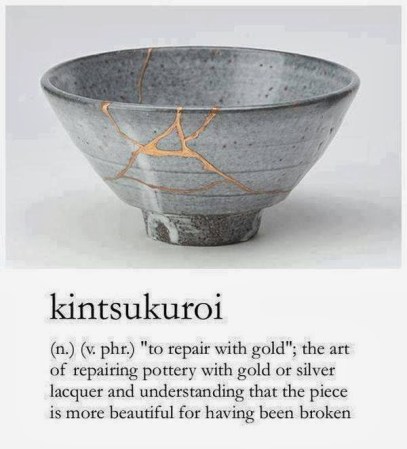
Broken people can be forgiven, redeemed and used. Sometimes I think God gets special enjoyment out of picking the worst and patiently loving us to wholeness. If you really know Him, and know your flaws, you’re well on your way of usefulness in His kingdom.

2 Corinthians 4:7

The Pain of Shattered Dreams

How you handle these fragile moments is key to the remainder of your life. It’s ok to feel abandoned or alone. It’s ok to be depressed.

But let God know about where you’re at. I’m convinced He really wants to teach you to walk in the truth. And dear one, nothing will be as challenging as that.

I really hope that these thoughts might help. There is no question that we’ll face challenges and difficulties. Just maybe this post will strengthen your walk? I chose each thought purposefully and every one contains something helpful (I hope). 

These quotes should speak wisdom as we try to understand what’s happening to us.

A.W. Tozer

“It is doubtful whether God can bless a man greatly until He’s hurt him deeply.” (Roots of Righteousness, Chapter 39)

Calvin Miller

“Hurt is the essential ingredient of ultimate Christ-likeness.” (Quoted in Christianity Today, July 2007, p41)

Larry Crabb

“Brokenness isn’t so much about how bad you’ve been hurt but how you’ve sinned in handling it.” (Christianity Today, A Shrink Gets Stretched, May 1, 2003)

“Shattered dreams are never random. They are always a piece of a piece in a larger story. The Holy Spirit uses the pain of shattered dreams to help us discover our desire for God, to help us begin dreaming the highest dream. They are ordained opportunities for the Spirit to first awaken, then to satisfy our highest dream.” (Shattered Dreams, 2001)

Alan Redpath

“When God wants to do an impossible task, he takes an impossible person and crushes him.” (Quoted by Gary Preston, Character Forged from Conflict: Staying Connected to God During Controversy. The pastor’s soul series, (Minneapolis, MN: Bethany House, 1999)

Bruce Wilkinson

“Are you praying for God’s superabundant blessings and pleading that He will make you more like His Son? If so, then you are asking for the shears.” (Secrets of the Vine, 60.)

Charles Swindoll

“Someone put it this way, ‘Whoever desires to walk with God, walks right into the crucible.’ All who choose godliness live in a crucible. The tests will come.” (Moses, Great Lives from God’s Word, 285.)

“Being stripped of all substitutes is the most painful experience on earth.” (David, p70)

Elisabeth Elliot

“The surrender of our heart’s deepest longing is perhaps as close as we come to an understanding of the cross… our own experience of crucifixion, though immeasurably less than our Saviour’s nonetheless furnishes us with a chance to begin to know Him in the fellowship of His suffering. In every form of our own suffering, He calls us into that fellowship.” (Elisabeth Elliot, Quest For Love, (Grand Rapids, MI: Fleming H. Revell, 1996), 182.)

George MacDonald

“No words can express how much our world ‘owes’ to sorrow. Most of the Psalms were conceived in a wilderness. Most of the New Testament was written in a prison. The greatest words of God’s Scriptures have all passed through great trials. The greatest prophets have “learned in suffering what they wrote in their books.” So take comfort afflicted Christian! When our God is about to make use of a person, He allows them to go through a crucible of fire.”

Helen Keller

“Character cannot be developed in ease and quiet. Only through the experience of trial and suffering can the soul be strengthened, vision cleared, ambition inspired, and success achieved.” (Quoted in Leadership, Vol. 17, no. 4.)

Oswald Chambers

“God can never make us wine if we object to the fingers He uses to crush us with. If God would only use His own fingers, and make me broken bread and poured-out wine in a special way! But when He uses someone whom we dislike, or some set of circumstances to which we said we would never submit, and makes those the crushers, we object. We must never choose the scene of our own martyrdom. If ever we are going to be made into wine, we will have to be crushed; you cannot drink grapes. Grapes become wine only when they have been squeezed.” (Chambers, O. (1993, c1935). My utmost for his highest : Selections for the year (September 30). Grand Rapids, MI: Discovery House Publishers.)

“No-one enters into the experience of entire sanctification without going through a ‘white funeral’ — the burial of the old life. If there has never been this crisis of death, sanctification is nothing more than a vision… Have you come to your last days really? You have come to them often in sentiment, but have you come to them really?… We skirt around the cemetery and all the time refuse to go to death… Have you had your ‘white funeral’, or are you sacredly playing the fool with your soul? Is there a place in your life marked as the last day, a place to which the memory goes back with a chastened and extraordinary grateful remembrance–’yes, it was then, at that ‘white funeral’ that I made an agreement with God.” (Oswald Chambers, My Utmost for His Highest, January 15, (Uhrichsville, OH: Barbour and Company, Inc., 1963).)

Jesus Christ had no tenderness whatsoever toward anything that was ultimately going to ruin a person in his service to God…. If the Spirit of God brings to your mind a word of the Lord that hurts you, you can be sure that there is something in you that He wants to hurt to the point of its death.” (Oswald Chambers, My Utmost for His Highest, September 27, (Uhrichsville, OH: Barbour and Company, Inc., 1963.)

Charles Stanley

Does God purposefully allow suffering? “The comfortable, but theologically incorrect, answer is no. You will find many people preaching and teaching that God never sends an ill wind into a person’s life, but that position can’t be justified by Scripture. The Bible teaches that God does send adversity – but within certain parameters and always for a reason that relates to our growth, perfection, and eternal good.” (*Stanley, C. F. 1997, c1996. Advancing through adversity (electronic ed.). Thomas Nelson: Nashville, TN.)