The Melancholy of Edvard Munch

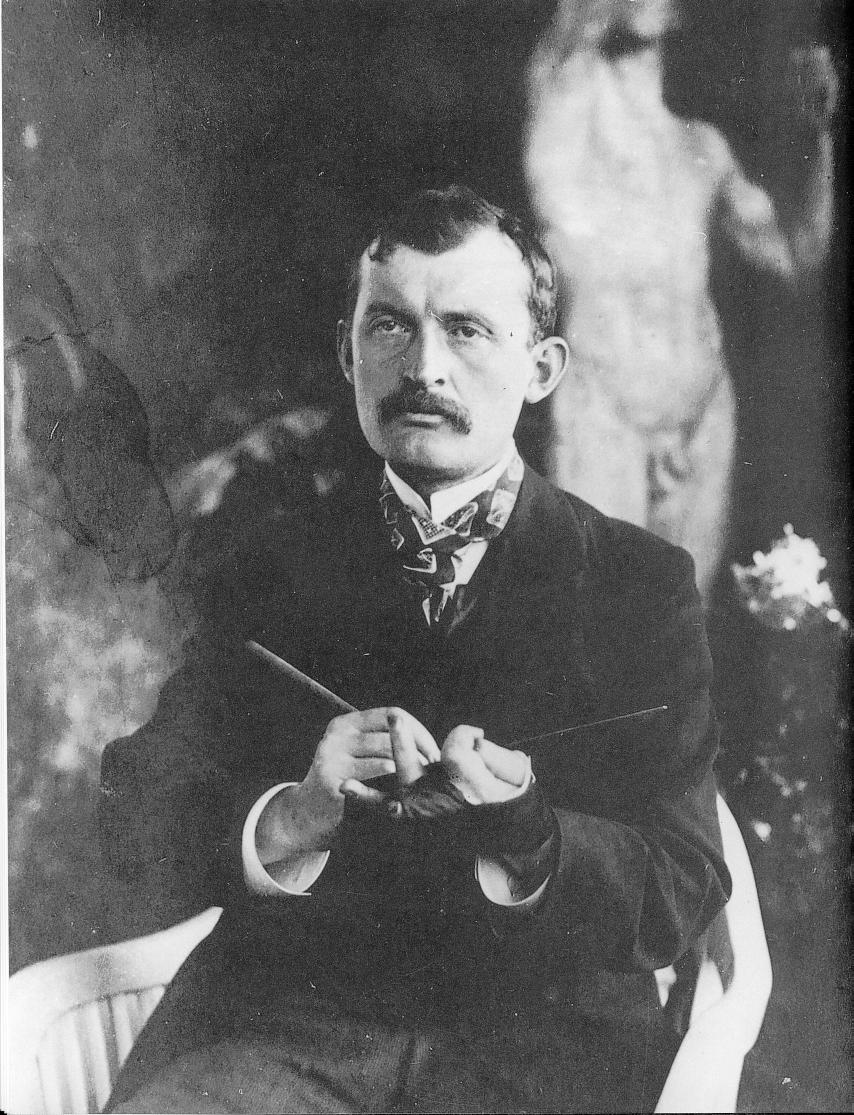
munchDecember 2, 1863 – January 23, 1944, he was a Norwegian painter. He is regarded as a Symbolist and a forerunner of expressionism. He focused on themes of fear, anxiety, melancholy, and death. He did not believe in heaven, or other Christian themes or doctrines, as far as I know.

My intention is to reintroduce you to an artist that I highly esteem.  The challenge I suppose is to understand the issues that Munch discovers in his work. He clearly taps into the ‘angst’ of the modern man, and what he does perpetuates a mindset for our generation.

Obviously these paintings are just an introduction, and I understand that they are selective. I have refrained from any kind of interpretation, other than laying down a general principle–  to Munch, color is everything.

Munch was probably not a cheery person. He essentially was driven by anxiety through his whole life. It seems that he could be very ambitious. His classic work was “The Scream” which he made several versions to sell. He used different mediums to do this– tempera, lithograph and pastel. Interestingly, “The Scream” is a favorite target for art thefts. It captures the minds of every modern thinker.

Within our culture, “The Scream” is iconic. Warhol, Gary Larson, Dr. Who and even “The Simpsons” have cashed in on a parody of it.

Quotes

“I painted the picture, and in the colors the rhythm of the music quivers. I painted the colors I saw.”

“Painting picture by picture, I followed the impressions my eye took in at heightened moments. I painted only memories, adding nothing, no details that I did not see. Hence the simplicity of the paintings, their emptiness.”

“For as long as I can remember I have suffered from a deep feeling of anxiety which I have tried to express in my art.”

“Disease, insanity, and death were the angels that attended my cradle, and since then have followed me throughout my life.”

munch-thescream
The Scream, 1893
Munch’s best known painting ^


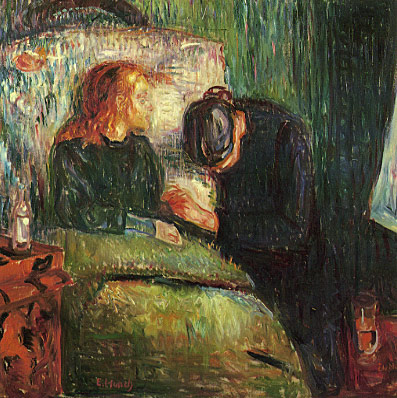
The Sick Child (1885)
Melancholy, 1894
Melancholy, 1894
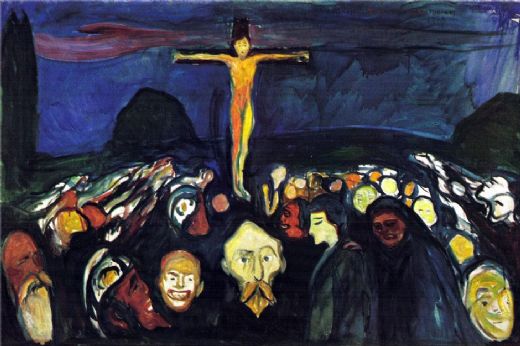
Golgotha, 1900
Golgotha

Disciples Who Can Stay Afloat

22 “Immediately Jesus told his followers to get into the boat and go ahead of him across the lake. He stayed there to send the people home.23 After he had sent them away, he went by himself up into the hills to pray. It was late, and Jesus was there alone.24 By this time, the boat was already far away from land. It was being hit by waves, because the wind was blowing against it. 25 Between three and six o’clock in the morning, Jesus came to them, walking on the water.26 When his followers saw him walking on the water, they were afraid. They said, “It’s a ghost!” and cried out in fear.

27 But Jesus quickly spoke to them, “Have courage! It is I. Do not be afraid.”28 Peter said, “Lord, if it is really you, then command me to come to you on the water.” 29 Jesus said, “Come.” And Peter left the boat and walked on the water to Jesus. 30 But when Peter saw the wind and the waves, he became afraid and began to sink. He shouted, “Lord, save me!”

31 Immediately Jesus reached out his hand and caught Peter. Jesus said, “Your faith is small. Why did you doubt?” 32 After they got into the boat, the wind became calm.33 Then those who were in the boat worshiped Jesus and said, “Truly you are the Son of God!”

Matthew 14:22-33, New Century Version

flourish15

When I am in the storm, when the waves are breaking into my boat, my faith is shaky, and I feel abandoned, I turn to Matthew 14.

Jesus sees his disciples in mortal danger.  The overloaded boat has been caught in a ferocious storm.  It is 3 a.m., and the darkness just makes their situation that more desperate. The idea of imminent drowning has passed through their thoughts. They are terribly afraid.

Suddenly Jesus comes near, he is walking on the water!  Their fear turns to stark terror, they want to bolt but there is no place to go.  They are thinking that Jesus is a ghost, and that he is coming to escort them to the grave.  So Jesus calls out through the raging storm, “It is just me.  Do not fear!  Have courage.”

Brash Peter (bless him, Lord) yells to Jesus, “If it is you, really you, let me come to you, on the water!”  The word ‘if’ is very telling, and it explains much. Peter is soon on the edge of frantic hysteria when he begins to sink while walking to Jesus.

If it was me, I would have let Peter drown.  (What an object lesson to teach the 11 sitting in the boat.  “See what happens when you have weak faith, you drown!”)

But Jesus is not teaching here, He is loving.  He grabs Peter and pulls him out.  I find it interesting that the rock on whom Jesus is to build his Church upon sinks like a stone. Peter shows his faith for a brief shining moment, and when he falters and sinks, Jesus catches him.

aabryscript

Fine Dining

formal_settings

“Thou preparest a table before me in the presence of mine enemies: thou anointest my head with oil; my cup runneth over.”

Psalm 23:5

The six verses of Psalm 23 are truly ‘lightning in a bottle.’ What they contain can’t be found anywhere else. This psalm exists to encourage the faltering and fearing.

The heart of a ‘broken’ Christian can find solace and comfort in each verse; the peace given truly lights our darkness like nothing else. Yet verse five is my favorite. The Father is revealed as the “hostess with the mostess.” 

A waiting table is set for us. I assume it is full of wonderful things– things that are delicious and delightful. It looks inviting. And we are His guests.

“In the presence of mine enemies,” tells me that I’m not dining alone. The word for ‘presence’ is literally ‘in the face of.‘ Satan is so aware of our blessings. Also note: the enemies are plural. This motley bunch have become witnesses of God’s grace and mercy on a sinner. I am a man who feasts while they can only watch.

To be ‘anointed with oil’ evokes the Shepherd’s care for His sheep. The oil would not only be medicinal, but also defining. It would define ‘ownership.’ Only His sheep would receive this tender care. And again, the enemies see this.

“My cup runneth over,” is the ultimate blessing. We find ourselves being given the best metaphor of an overflowing life. I once picked apples and used a five gallon bucket; I had so many apples the bucket wouldn’t hold them all. That’s the way the Kingdom of God works. We’re always blessed with a ‘super-abundance.’ And all is grace.

aabryplain   Flourish-61

This Intense Moment

youchainsaw

“He has told you, O man, what is good;
    and what does the Lord require of you
but to do justice, and to love kindness,
    and to walk humbly with your God?”

Micah 6:8, ESV

“The principal thing is to stand before God, with the mind in the heart, and go on standing before Him unceasingly day and night until the end of life.”

Theophan, 1815-1900 (Russian writer and monk)

This intense moment is almost always present tense. We have yet to experience the future, and the past has already been ‘played out.’ The present is this moment right now, and we live in this time.

There is a certain simplicity to all of this. What happens ‘right now’ is crucial in our walks with Him. Anxiety and guilt can be a result of not living right now. These are obviously to be avoided. The past with its guilt, and the future with its anxiety can corrupt the now.

Micah was given a simple commandment to proclaim, it involved this ‘arena of goodness.’

  1. To do justice, right things
  2. to be in love with kindness,
  3. and then to walk in a humble way.

All of these are to be done in the presence of God. We’re called to this simple way of life. For the person who is living somewhat confused and chaotic this is good news. Those of us who are mentally ill understand chaos. Life becomes complicated when we try to juggle more than this.

This should be a certain relief for many a weary pilgrim. These things Micah declares can be liberating when seen in this moment. There is a freedom for each who follow. If it seems like we’re trying to juggle chain-saws we are doing something wrong.

aabryscript