The Depression Epidemic

Why we’re more down than ever—and the crucial role churches play in healing.

Dan G. Blazer | originally posted 3/06/2009 at Christianity Today

crossredThe church is God’s hospital. It has always been full of people on the mend. Jesus himself made a point of inviting the lame, the blind, and the possessed to be healed and to accompany him in his ministry, an invitation often spurned by those who thought they were fine as is. We should not be surprised, then, that the depressed populate not only secular hospitals and clinics, but our churches as well. Yet depression remains both familiar and mysterious to pastors and lay church leaders, not to mention to those who share a pew with depressed persons.

Virtually everyone has experienced a “down” day, often for no clear reason. We might say we “woke up on the wrong side of the bed,” are “out of sorts,” or just “in a funk.” Such polite references are commonplace in America. Yet as familiar as melancholic periods are to us, the depths of a severe depression remain a mystery. We may grasp in part the distress of King David:

David
King David putting pain in his Psalms

“Be merciful to me, O Lord, for I am in distress; my eyes grow weak with sorrow, my soul and my body with grief. My life is consumed by anguish and my years by groaning; my strength fails because of my affliction, and my bones grow weak”

(Ps. 31:9-10).

But most of us have no idea what David meant when he further lamented, “I am forgotten by them as though I were dead” (v.12). Severe depression is often beyond description. And when such deep and painful feelings cannot be explained, they cut to the heart of one’s spiritual being.

Humans are intricately complex creatures. When things go wrong in us, they do so in myriad and nuanced ways. If churches want to effectively minister to the whole of fallen humanity, they must reckon with this complexity. Depression indicates that something is amiss. But what? And what should churches be doing about it?

For the remainder of this article:  http://www.christianitytoday.com/ct/2009/march/15.22.html


cropped-christiangraffiti1 (3)

The Hidden Blessings of the Long Struggle

freelancing-struggle

by Jonathan Coe

It’s a familiar story. A person has become a Christian in recent years and is engaged in spiritual practices–prayer, Bible study, meditation, church attendance, fellowship, tithing, and/or the sacraments. They have listened closely to their pastor or priest and have developed some formulas that are supposed to help them overcome the problems, sins, and weaknesses in their lives.

They’ve heard sermons and/or read books that have titles that start with “Three Steps,” “Five Keys,” and “Four Ways,” that are supposed to lead them to the abundant Christian life. They see progress in their lives but are discouraged because they still struggle with certain sins, problems, and/or weaknesses. Some feel like they can’t overcome the very deep negative legacy from the unhealthy family they grew up in.

Church leadership would do many believers a service by teaching them about how God can bring good out of their protracted struggle. No, it’s not God’s will for us to habitually sin , but God, in his tender mercies can work redemptively in this long and frustrating battle against profound sin.

One of the first good things that can come out of a long battle with a character flaw or problem is deliverance from a formulaic Christian faith. “Do these three things and your problem will go away” you learn from a best–seller, but your problem doesn’t go away. The fallen human heart is a complex and formidable thing, and these canned approaches are a little like taking a squirt gun to a forest fire.

When people experience sustained adversity, their lives feel out of control, and they will often grab on to formulas to give them a sense of righting a ship that’s taking on water. Unfortunately, they end up trusting in the formulas more than God himself.

Faith in formulas will always eclipse faith in God.

The Christian life is more about a restful trust in a Person than embracing a set of principles (no matter how spiritual those principles may sound.)

The New Testament is clear on the centrality of faith (not self–effort or formulas) in the overcoming life:

When asked by his disciples what they must do to do the works God requires, Jesus answered, “The work of God is this: to believe on the one he has sent” (John 6:2829). When describing the person who overcomes the world, the Apostle John said, “He who believes that Jesus is the Son of God” (I John 5:45).

The failure of formulas is a good experience because it drives the believer to faith in the living God. In this faith, there is a wonderful exchange: I give Christ my pitiful attempts to live the victorious Christian life and he gives me his transforming power to overcome sin. However, this exchange may not happen overnight; it may be a process that takes years.

For those of you in a long struggle, please be comforted by the mercies of God that endure forever. If he can forgive a murderer and adulterer like David, he can forgive you and me. Please take the advice that Winston Churchill gave the British people during World War II: “Never, never, never, never give up ” or listen to the lyrics from a U2 song called “Miracle Drug” : ”There is no failure here, sweetheart/ Just when you quit.”

Even better is C.S. Lewis from The Business of Heaven:

“I know all about the despair of overcoming chronic temptations. It is not serious, provided self–offended petulance, annoyance at breaking records, impatience, etc. don’t get the upper hand. No amount of falls will really undo us if we keep on picking ourselves up each time. We shall of course be very muddy and tattered children by the time we reach home, but the bathrooms are already, the towels put out, and the clean clothes in the airing cupboard. The only fatal thing is to lose one’s temper and to give it up. It is when we notice the dirt that God is most present in us: it is the very sign of his presence.”

I say Amen.

ybic,

Jonathan Coe

&
Bryan’s note: Jonathan is a very old friend. He deeply loves Jesus. He is wise and he is aware. He is a writer, blogger, and a house-painter. (He is also a Dodgers fan, which I suppose he can find forgiveness for). I am made a rich man by knowing him.

On Life Support

 untitled (2)And I will give them singleness of heart and put a new spirit within them. I will take away their stony, stubborn heart and give them a tender, responsive heart, 20 so they will obey my decrees and regulations. Then they will truly be my people, and I will be their God. 21 But as for those who long for vile images and detestable idols, I will repay them fully for their sins. I, the Sovereign Lord, have spoken!”

Ezekiel 11:19-21, NLT

This is one of those complex portions of God’s scripture where several ideas overlap. In our English translation, we read compound sentences and knotty syntax. But the thoughts are God’s, and therefore significant. Without these truths though, I believe that we can quickly slip into a ‘comatose’ condition.

First we must consider who is involved.

  1. God [speaking through the prophet] declares His intentions.
  2. His repentant people [Israel] are acted upon.
  3. But there is a third bunch, those unrepentant ones who have decided within themselves that they will stick with their idols.

God is very decisive by this point. The prophetic ministry was supposed to work, many prophets and teachers have been sent out. But with very limited success. If we pick one out, it would have to be Hosea; his ministry was dramatic– but ultimately fruitless. The only real successful prophet was Jonah– preaching to Ninevah, ironically a pagan people. But God’s own people are living in flagrant sin. They remain untouched. They’ve chosen to remain in their sinful condition.

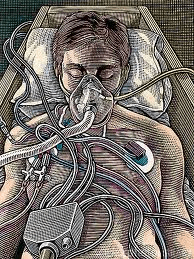
A solid and clear promise has been given. An interior work has been promised by God, if they can only show a minute sense of life. The nation is on “life support.” The prophets attend to the needs before them. They are very far from the virile and robust nation– they are in the ICU and are showing only scanty signs of life.

This promise is that a special work will be done inside. They will become both tender and responsive again. A new receptivity and awareness will come into being. The ability to obey will ignite within. We call this “revival.” Revivalists throughout history have carried this to every generation.

As I scan over my Christian life of more than 30 years, I simply see my own “cycles” of sin and revival. I wish I could have been more consistent. But I cling to the faithfulness of God. He stays true even when I’m not. He has promised me. I’ll take Him at His word.

And I am certain that God, who began the good work within you, will continue his work until it is finally finished on the day when Christ Jesus returns.”

Philippians 1:6, NLT

God will do what He can, His efforts are heroic. He fully intends to change us— if we’re only willing.

“A revival is nothing else than a new beginning of obedience to God.” 

Charles Finney

1brobry-sig4

cropped-christiangraffiti1 (1)

)

The Micro and the Macro, by John Piper

10piper
John Piper, Pastor of Bethlehem Baptist Church, Minneapolis. Writer and Speaker, DesiringGod.org

Originally dated, July 14, 2008 | By: John Piper 

One of the reasons God rarely gives micro reasons for his painful providences, but regularly gives magnificent macro reasons, is that there are too many micro reasons for us to manage, namely, millions and millions and millions and millions and millions. God says things like:

  1. These bad things happened to you because I intend to work it together for your good (Romans 8).
  2. These happened so that you would rely more on God who raises the dead (2 Corinthians 1).
  3. This happened so that the gold and silver of your faith would be refined (1 Peter 1).
  4. This thorn is so that the power of Christ would be magnified in your weakness (2 Corinthians 12).

But we can always object that there are other easier ways for God to accomplish those things. We want to know more specifics: Why now? Why this much? Why this often? Why this way? Why these people?

The problem is, we would have to be God to grasp all that God is doing in our problems. In fact, pushing too hard for more detailed explanations from God is a kind of demand that we be God.

horseshoe-anvil-clipartThink of this, you are a blacksmith making horseshoes. You are hammering on a white hot shoe and it ricochets off and hits you in the leg and burns you. In your haste to tend to your leg you let the shoe alone unfinished. You wonder why God let this happen. You were singing a hymn and doing his will. Your helper, not knowing the horseshoe was unfinished gathered it up and put it with the others.

Later there was an invasion of your country by a hostile army with a powerful cavalry. They came through your town and demanded that you supply them with food and with shoes for their horses. You comply. Their commander has his horse shod by his own smith using the stolen horseshoes, and the unfinished shoe with the thin weak spot is put on the commander’s horse. In the decisive battle against the loyal troops defending your homeland the enemy commander is leading the final charge. The weak shoe snaps and catches on a root and causes his horse to fall. He crashes to the ground and his own soldiers, galloping at full speed, trample him to death. This causes such a confusion that the defenders are able to rout the enemy and the country is saved. Now you might say, well, it would sure help me trust God if he informed me of these events so that I would know why the horseshoe ricocheted and burned my leg. Well maybe it would help you. Maybe not.

God cannot make plain all he is doing, because there are millions and millions and millions and millions of effects of every event in your life, the good and the bad. God guides them all. They all have micro purposes and macro purposes. He cannot tell you all of them because your brain can’t hold all of them.

Trust does not demand more than God has told us. And he has given us immeasurably precious promises that he is in control of all things and only does good to his children. And he has given us a very thick book where we can read story after story after story about how he rules for the good of his people. Let’s trust him and not ask for what our brains cannot contain.

flourish1


http://www.desiringgod.org/Blog/1307_why_god_doesnt_fully_explain_pain/

Need Immediate Help? Call 1-888-NeedHim