“Depression Deceptions,” by James Winsor

“Pilgrim’s Progress” by Bunyan

Bryan’s Note: On many occasions I encounter a blog that communicates so well that I think about doing a re-post.  Today is one of those days. So, here is Pastor Winsor’s exceptional article on depression.  I hope that his perspective will bless you and give you a deeper understanding of this mental illness.


Depression Deceptions by Rev. James Winsor
Lots of people these days suffer from depression. Many of them are Christians. If you suffer from depression, I hope the following information helps you. If you don’t suffer from depression, then maybe this will assist you in understanding and helping those who do. Here is a list of three Depression Deceptions to avoid.


Deception #1: If you’re depressed, you’re not a strong Christian. 

On August 2, 1527, Martin Luther wrote these words in a letter to a close friend: “l have been thrown more than a whole week into death and tossed back and forth in hell.. .I have lost Christ totally and have been shaken by the floods and storms of desperation and of blasphemy against God.”Even strong, mature Christians like Martin Luther can suffer from depression. Depression is not a sign of unbelief or weak faith. It’s a sign of spiritual battle, and battles are for healthy soldiers.

This is a sin-sick world. You’d be crazy not to be depressed sometimes!

Deception #2: No one would understand. 

Holy Scripture tells Christians to “bear one another’s burdens and so fulfill the law of Christ” (Galatians 6:2). We’re told to “mourn with those who mourn” (Romans 12:15). God doesn’t want you to carry your depression alone. God makes sure there are Christians around who understand.

You don’t have to be alone in your depression. Not all Christians will understand it, but some will. You just have to take a few risks until you find the ones who have experienced depression themselves and will understand what you’re going through. Your fellowship with those Christians will be tight. You may even end up being glad the depression brought the two of you together.

Deception #3: Depression is a Useless Detour in the Christian Life.

God has a purpose for the depression that falls on His children. In an Old Testament passage we’re told that “an evil spirit from the Lord tormented King Saul” (1 Samuel 16:14). God had anointed David to be Saul’s replacement as king. God wanted to save Saul’s eternal soul, but He also wanted to replace him as king. So God sent David as a music therapist for Saul. “Whenever the spirit from God came upon Saul, David would take his harp and play. Then relief would come to Saul; he would feel better, and the evil spirit would leave him” (1 Samuel 16:23).

God gave Saul a problem and sent David as the solution. Saul might have done the obvious thing – thank God for David and support him! But instead Saul tried to kill David because he was jealous of him. Saul missed the opportunity his depression offered him. He rejected both his depression and David as gifts from God.

St. Paul, on the other hand, had a similar experience of evil sent from God for a good purpose. He responded the right way and received the suffering as a gift from God. Paul wrote, “There was given me a thorn in my flesh, a messenger of Satan, to torment me. Three times I pleaded with the Lord to take it away from me. But he said to me, ‘My grace is sufficient for you, for my power is made perfect in weakness.’ Therefore, I will boast all the more gladly about my weaknesses, so that Christ’s power may rest on me.. .When I am weak, then I am strong.” (2 Corinthians 12:7-10).

God presented Paul with a problem. Then He presented him with the solution, grace in Christ. Paul learned to be thankful for his weaknesses because his weaknesses made him need Christ.

Depression does that to and for you. It leaves you with nothing to hang onto, but Jesus. When you’re depressed, you can’t find anything inside to place hope in. All that exists is darkness and emptiness. You come to find your hope in something outside of you: Christ and His cross and pardon.

That’s not a detour from the Christian life. That is the Christian life, God has you right where He wants you.

I was really depressed one day. I told a pastor friend of mine, “Sometimes I don’t know whether I’m saved. All I know is that I have a Savior.” God had me right where He wanted me. I could actually rejoice in my weakness. Suddenly all I had was Christ. And, in a way, you don’t have Christ until Christ is all you have.

“Carry each other’s burdens, and in this way you will fulfill the law of Christ.” 

Galatians 6:2

“Rejoice with those who rejoice; mourn with those who mourn.” 

Romans 12:15

NOTE: If you can’t seem to shake your feelings of sadness and depression after a few weeks, seek out help right away. Talk to your parents, a counselor, or your doctor to help you deal with these overwhelming emotions.


The Rev. James Winsor is pastor at Risen Christ Lutheran Church in Arvada, Colorado.


cropped-christiangraffiti1 (2)


Taken from the Spring 2002 edition of Higher Things magazine. You can write Higher Things at P.O. Box 58011, Pleasant Prairie, WI 53158-8011.

 www.issuesetc.org

Related articles

An Armored Response

tank-wallpapers-8

When the Holy Spirit talks we listen. What He shares is usually pretty relevant, and typically mandates our action. He is into change, and guides us into Christlikeness.

In my prayer time I saw a man climbing into the turret of a tank. He was sheltered there, protected by the tank’s armor. He seemed to be discovering the capabilities of the tank. He slowly began to grasp the potential of it, and soon began to turn the massive gun. He played around, not so much as a soldier, but as a child would. It was fun to spin the turret around. He could go places on its tracks. He could run over trees.

But slowly he realized that this was much more than a shelter, but it was an offense weapon as well. The tank could be quite formidable, as well as safe and secure. Surrounded by the armor, he at last began to understand exactly what this tank was capable of, and his role as driver/gunner. Using the gun, he could go up against enemy strongholds.

We come into a certain maturity when we begin to obey. God-given tasks become a joy. We start to see not just the defensive perspective, but the offensive as well. God’s ability is given to anyone who asks. His power can’t be diminished. He alone is the force to be reckoned with.

We are often stunted by our vision, we simply don’t grasp the enormity of what has been given to us.

I also pray that you will understand the incredible greatness of God’s power for us who believe him. This is the same mighty power that raised Christ from the dead,”

Ephesians 1:18-19

“For the Kingdom of God is not just a lot of talk; it is living by God’s power.”

1 Corinthians 4:20

1brobry-sig4

cropped-christiangraffiti1 (1)

Of Promises and Plans

Jeremiahverse

To understand this truth is to be set free.

We live in sort of toxic atmosphere that ‘leeches’ out of us God’s sure promises. But we do have significant resources that will keep us secure. What has been given is fortified promises and plans.

“And because of his glory and excellence, he has given us great and precious promises. These are the promises that enable you to share his divine nature and escape the world’s corruption caused by human desires.

2 Peter 1:4

Every believer has been given these strong promises. It doesn’t matter if you have a physical or mental illness. God is for you in the midst of your pain and disability. You may be miraclously healed, or you may ‘carry the load’ on a daily basis; God is for you regardless.

“What shall we say about such wonderful things as these? If God is for us, who can ever be against us?”

Romans 8:31

When a believer is in a storm, sometimes God will calm it, and other times He will calm the child. Either way we are remarkably protected in His hands. God is for us. We are given ‘promises and plans.’ We may traverse through much difficulty— that seems to be the normal state of things. It seems some will travel from crisis-to-crisis, yet God holds them secure. We will trust Him in the storm.

Think of all you have already been through— search your memories. You will undoubtly recall some hard times, yet you have survived the awful storms.

“I will trust Him. Whatever, wherever I am, I can never be thrown away. If I am in sickness, my sickness may serve Him; in perplexity, my perplexity may serve Him; if I am in sorrow, my sorrow may serve Him. My sickness, or perplexity, or sorrow may be necessary causes of some great end, which is quite beyond us. He does nothing in vain.”    

John Henry Newman

bry-signat (1)

cropped-christiangraffiti1.jpg

The Melancholy of Edvard Munch

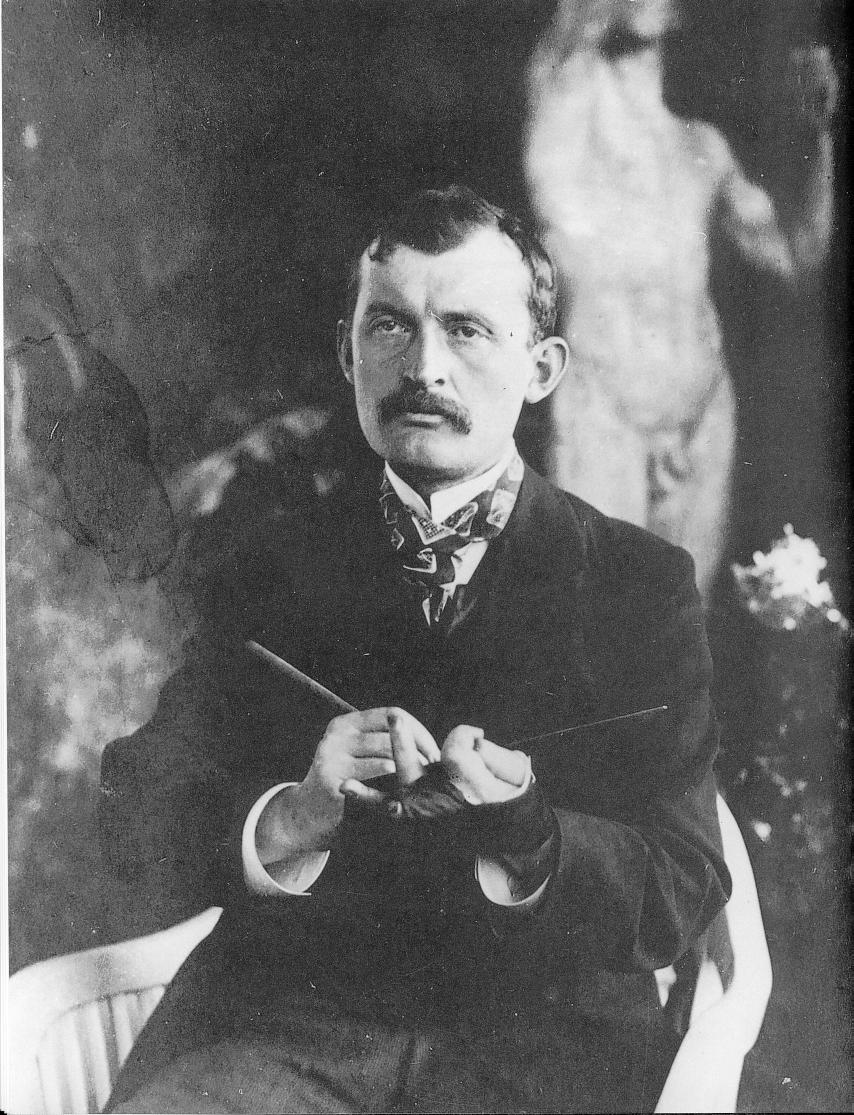
munchDecember 2, 1863 – January 23, 1944, he was a Norwegian painter. He is regarded as a Symbolist and a forerunner of expressionism. He focused on themes of fear, anxiety, melancholy, and death. He did not believe in heaven, or other Christian themes or doctrines, as far as I know.

My intention is to reintroduce you to an artist that I highly esteem.  The challenge I suppose is to understand the issues that Munch discovers in his work. He clearly taps into the ‘angst’ of the modern man, and what he does perpetuates a mindset for our generation.

Obviously these paintings are just an introduction, and I understand that they are selective. I have refrained from any kind of interpretation, other than laying down a general principle–  to Munch, color is everything.

Munch was probably not a cheery person. He essentially was driven by anxiety through his whole life. It seems that he could be very ambitious. His classic work was “The Scream” which he made several versions to sell. He used different mediums to do this– tempera, lithograph and pastel. Interestingly, “The Scream” is a favorite target for art thefts. It captures the minds of every modern thinker.

Within our culture, “The Scream” is iconic. Warhol, Gary Larson, Dr. Who and even “The Simpsons” have cashed in on a parody of it.

Quotes

“I painted the picture, and in the colors the rhythm of the music quivers. I painted the colors I saw.”

“Painting picture by picture, I followed the impressions my eye took in at heightened moments. I painted only memories, adding nothing, no details that I did not see. Hence the simplicity of the paintings, their emptiness.”

“For as long as I can remember I have suffered from a deep feeling of anxiety which I have tried to express in my art.”

“Disease, insanity, and death were the angels that attended my cradle, and since then have followed me throughout my life.”

munch-thescream
The Scream, 1893
Munch’s best known painting ^


The Sick Child (1885)
Melancholy, 1894
Melancholy, 1894
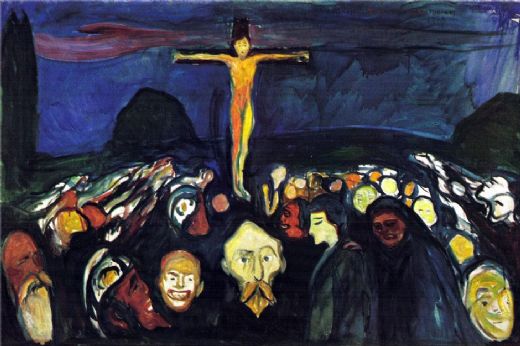
Golgotha, 1900
Golgotha