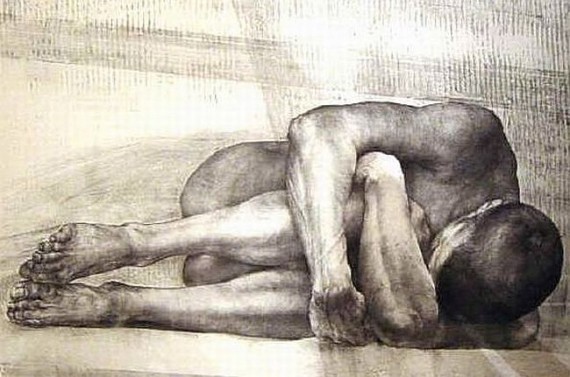
I’m More or Less Oblivious

Inspector Clouseau, (Upon discovering stolen artifacts) in The Pink Panther 2

“Ah yes, the Shroud of Turin! We will have to dry clean it before we return it.”

______________________

I honestly think that our bumbling attempts to follow Jesus are entertaining angels who watch our efforts and shake their heads in astonishment. “Did you see what Bryan just did?”

I’m the “Inspector Clouseau” of the spiritual realm.   😁  

Maybe you can relate?

Clumsy and very much oblivious, I bungle my way down the path of discipleship, without a clue. It seems when something right happens, I still end up butchering it. The Holy Spirit has His hands full. Scripture tells me He has no regrets.

We have experienced so much, and been given so much light.

And yet we consistently choose to trade it for a lie. For the most part, I don’t sin automatically, I sometimes choose it deliberately.  People don’t sin because they feel they have to. We sin because we like the pleasure it brings. We sin because it feels nice. It’s often a mask to cover the pain.

It’s a patch for the pain of my twisted up life.

We sin because it brings a thrill to our bodies, and excitement to the boredom of our everyday lives.  We sin because we believe the lie that the pleasure it brings, though passing (Heb. 11:25).

Sin happens when I look at anything or anyone other than God.

The issues I have are both spiritual and medical.  I survived a brain tumor and I need to walk with a cane. I have constant vertigo. My right arm is paralyzed. I struggle hard sometimes. I have some struggles with social anxiety. But God gives me buckets of His grace.  I know first-hand his agape love for me.

But He will not bless my disobedience and rebellion. 

When we announce to the world that “Jesus is Lord” we can expect God will hold our feet to the fire over this.  The Holy Spirit will not negotiate when we suddenly decide we are hungry for sin.  Apprehended by grace, we must fully surrender all claims we have to sample sin’s delights.

Who do we find joy in? It really does matter.

In the middle of my battles to be a believer, I must remember joy.  I cannot imagine being without it.  I’ve been clinically depressed pushed to the point of suicide.  But God gives me joy in my darkness.

“The joy of the Lord is your strength.”

Nehemiah 8:10

“For the Lord takes pleasure in his people; he adorns the humble with salvation.”

Psalm 149:4

1brobry-sig4 (2)

Your Dark Past

“For the kind of sorrow God wants us to experience leads us away from sin and results in salvation. There’s no regret for that kind of sorrow. But worldly sorrow, which lacks repentance, results in spiritual death.”

2 Corinthians 7:10, NLT

“You will have mercy on us again; 
 You will conquer our sins.
 You will throw away all our sins
 into the deepest part of the sea.”  

Micah 7:19, NCV

 
I’ve done many evil things in my life that I am ashamed of. Regret and sorrow over my sins frequently trouble me. But I always come back to see my sins covered by His blood.
 
I’d probably go insane if all I could do is see my sin without a Savior.

“Properly remembering our past sins with shame will deter us from repeating them and help us receive God’s saving grace.  When we recall our failures through the lens of Christ’s mercy, God produces in us ongoing repentance and deepening humility.” 

–Robert D. Jones

I have walked in self-hatred for many years.  I know all about loathing, fear, and paranoia over my many sins.  These things have handicapped me spiritually, and hating yourself is a terrible way to live.  My struggles with guilt and regret have deepened my sense of despair and depression. 

I’ve come to a point where I find that I am ashamed of my shame.

I have included the lyrics to Bob Bennett’s song “Lord of the Past” in this post.  He is a gifted songwriter and an exceptional guitar player.  (I can’t find it on Youtube.com.)  If you’re like me, you will find that you resonate with those who have been assaulted in the past.

We now speak a common language, and we understand each other. 

We are those whom Jesus has completely forgiven.

LORD OF THE PAST
Bob Bennett
© 1989 Matters Of The Heart Music (ASCAP)  

Every harsh word spoken
Every promise ever broken to me
Total recall of data in the memory
Every tear that has washed my face
Every moment of disgrace that I have known
Every time I’ve ever felt alone

Lord of the here and now
Lord of the come what may
I want to believe somehow
That you can heal these wounds of yesterday
(You can redeem these things so far away)
So now I’m asking you
To do what you want to do
Be the Lord of the Past
(Be the Lord of my Past)
Oh how I want you to
Be the Lord of the Past

All the chances I let slip by
All the dreams that I let die in vain
Afraid of failure and afraid of pain
Every tear that has washed my face
Every moment of disgrace that I have known
Every time I’ve ever felt alone

Well I picked up all these pieces
And I built a strong deception
And I locked myself inside of it
For my own protection
And I sit alone inside myself
And curse my company
For this thing that has kept me alive for so long
Is now killing me.
And as sure as the sin rose this morning,
The man in the moon hides his face tonight.
And I lay myself down on my bed
And I pray this prayer inside my head

Lord of the here and now
Lord of the come what may
I want to believe somehow
That you can heal these wounds of yesterday
So now I’m asking you
To do what you want to do
Be the Lord of my Past
You can do anything
Be the Lord of the Past
I know that you can find a way
To heal every yesterday of my life
Be the Lord of the Past.


Oh God, Why is This Happening to Me?

book_of_Job-570x377
“Why have you made me your target?…Why do you hide your face?…Why should I struggle in vain?…Why does the Almighty not set times for judgment?…Why then did you bring me out of the womb?”

Job 7:20, 13:24, 9:29, 24:1, 10:18

Didn’t Job get “hammered?” His monumental suffering is unparalleled in history. He is essentially a godly man who loses everything (except his faith). Job must pick up the pieces after “catastrophic ” sudden pain and total loss.

Job is being tested with the ultimate horrors. Will he “curse God and die” as his wife suggests? Will he cave in to the final four (his friends) and agree to their twisted theology? (You have to read chapters 38-39 to find out).

The Book of Job has been regarded as inaccessible and archaic by many.

Unfortunately many believe this assessment and look elsewhere for comfort. I would agree that Job is a challenging book, but so is Macbeth or Plato. (I guess you should find an easier translation).

Job is less an explanation and more a revelation of suffering. “Why” questions go unanswered. “Who” questions matter. I suppose this seems unfair. It certainly seems so, but straight answers in a fallen world won’t get any mileage at all.

One more thing. The Book of Job is about “twisted” theology. Job’s friends “toe-the-party-line” of theology that is logical. But don’t be mislead by their pronouncements, for they seem reasonable but they are flawed. It is a doctrine without love.

“If I have the gift of prophecy and can fathom all mysteries and all knowledge, and if I have a faith that can move mountains, but do not have love, I am nothing.”

1 Cor. 13:2

You can’t split your theology from love and get away with it.

When you read “Job’s friends” you must remember that. These are lessons it takes a long time to learn.

The broken believer, hobbled by chronic illness, has much to learn from Job. He is like “the poster child” for those afflicted. My mental illness is an issue (of course) but God is fully in control. He brings beauty out of the ashes.

“To bestow on them a crown of beauty
    instead of ashes,
the oil of joy
    instead of mourning,
and a garment of praise
    instead of a spirit of despair.
They will be called oaks of righteousness,
    a planting of the Lord
    for the display of his splendor.”

Isaiah 61:3


From Vessel to Vessel

amphora_on_stand

“Moab has been at ease from his youth, and he has settled on his lees, and has not been emptied from vessel to vessel, neither has he gone into captivity: therefore his taste remained in him, and his scent is not changed.”

Jeremiah 48:11, ESV

The expression, “emptied from vessel to vessel” is a figure that speaks of wine making. It relates to a method used to produce a well-refined wine, which is poured into a vessel and allowed to stand for a certain length of time. Then it is poured into another vessel.

Each time this is done, there is a settling of the dregs and sediment which remain in the container, as the wine-maker carefully pours the liquid into another vessel. This process is repeated until the wine is perfectly refined and yields a freshness of fragrance and color that is pleasing to the maker.

This result will not occur if the wine had been allowed to stay in only one vessel. Instead, it would have “settled upon its lees” and become scented with the essence of the dregs. Because the intention of the Lord is to bring us to spiritual maturity, we also are carefully poured from vessel to vessel.

We’re being poured from one dealing to another.

As we yield to His purpose, the Holy Spirit will see to it that we are brought, step upon step (vessel by vessel), into spiritual growth and maturity. With our wills yielded, and our spirits mellowed, we shall then become “wine, well refined.”

Once we understand what we are by nature, we realize that no natural power could carry out so massive of  an undertaking. If ever this is to be accomplished, the power must come from a source other than ourselves. Thus, the Lord simply asks us to become willing, yielded, broken material upon which to work, and He will furnish the means and power for our transformation.

The Lord does not say the vessels are all alike.

That would spoil the teaching given in this figure. Rather, the vessels are quite different, scarcely two being alike. Let’s consider a few in order to enlarge our understanding.

The first is a vessel made of tinted glass.

As the wine is emptied within, it assumes a color that results from the hue of the glass. This is the vessel of misunderstanding. People then judge the wine as being “off-color.” An endless course of reasons ensues as to the cause of its being thus.

The “wine” is aware of these remarks, and as a result has a difficult time remaining still and submitted, so the sediment might settle and cling to the sides and bottom of the vessel. All this keeps the wine in a disturbed state, until finally it discovers that it is really what it should be at this time of its development, since only the glass (dealing) is tinted. Thus there is a delay and a longer time is needed to produce clear wine.

The Maker waits for it to become settled and then carefully pours it into another vessel. All that is left behind are a few dregs of self-importance and some shreds of the self-life.

There is the vessel of being in the public eye.

As the wine is poured out, it beholds the new vessel, a large but shallow receptacle, gray and ugly. At first there is a shrinking, for the vessel seems so unusual, and so absolutely unlike any into which it had been before emptied. As the wine is poured, it is so wide that it fills the entire open vessel. This is the vessel of “public gaze.” It is where the Lord pours us when we are to experience ‘weakness.’

The wine cannot gather itself up to appear in any other shape. It must spread out flat and be open to public judgment and criticism. The snide remarks hinder the wine from becoming quiet, yielded, and silent. But as it realizes that this is a necessary step in its perfection, it becomes settled and is again poured out. Clinging to the sides of the ugly, gray vessel are the dregs of pride and self-preservation, but added to the wine is a richer hue.

There is the vessel of isolation.

The next vessel is made of clay. It is tall with a long narrow neck, and is not transparent. Thus, it reflects no light. As the wine is poured, it has difficulty getting adjusted, owing to the darkness and a fear as to the certainty that it belongs there. But at last it yields and fills the vessel in ‘quietness.’

Here it stands for a long period of time, in shadow and darkness. At times, the wine faintly hears the music and delightful cries of those without who are in the light, but the clay allows no participation, nor affinity of satisfaction. The wine can only remember the light it had found in former days, and simply trust that it will shine again.

There’a another trial of a dark and bitter trial.

This is the vessel of long, dark trial; the kind in which the Lord leaves us alone in order to prove us, even in shadow and darkness. But it works wonders in the wine. As it is again poured forth, it gleams with the light of faith, tried and tested. Left behind are the dregs of impatience, questioning, and unbelief.

There is the vessel of misunderstanding.

Again the wine is poured into a new vessel, which is unusual in size and unique in design. It has many bulges and ridges. Therefore, the wine has a difficult time finding its way into the many bulges, odd nooks, and corners. Those who watch, immediately conclude that the wine is in the wrong vessel, and that it was never called to go into such a receptacle. Thus, it appears to others that the wine’s leading and witness is wrong. This is the vessel of misunderstanding.

The Lord’s ways are not our ways; thus, His ways are often incomprehensible. The Lord seldom explains to others the leadings which He lays upon those who are His own. It is certainly death to our flesh to be led into situations that produce criticism from others, and then not be able to satisfy their reasoning’s. Thus, the wine finds no pleasure in this vessel, but it had been poured and must now fill the vessel.

“The same Jesus who turned water into wine can transform your home, your life, your family, and your future. He is still in the miracle-working business, and His business is the business of transformation.”

     Adrian Rogers