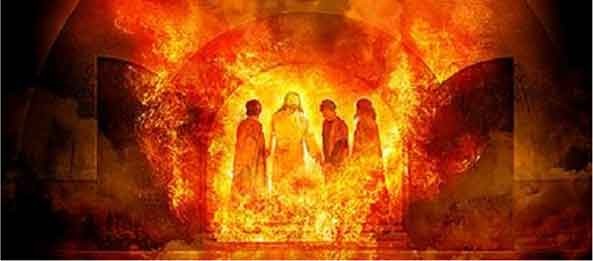
Cities Without Walls

“A man without self-control
    is like a city broken into and left without walls.”

Proverbs 25:28

The writer of Proverbs can be blunt. He makes the cold observation that people can often be like a city that has no walls.

The city he alluded to was completely defenseless, vulnerable and wide open to a marauding enemy. It no longer is protected. It can be assaulted from outside and is no longer safe. It can be easily defeated by its foes.

The description is used to describe a spiritual condition of danger and defeat. A real potentiality exists of a helpless invasion by evil forces. It has no protection to speak of.

Proverbs uses this imagery to state a fundamental truth about some people.

We live in an age when everything is “open.” Seldom do we see protecting walls around the perimeter of our lives. We are open to the demonic forces of darkness. We move from crisis to crisis because we are not protected.

Nehemiah faced the stark reality of Jerusalem without walls of protection. His first order of business (before anything else) was to rebuild them. He mobilized work crews that immediately went to work restoring the cities safety.

“I went out by night by the Valley Gate to the Dragon Spring and to the Dung Gate, and I inspected the walls of Jerusalem that were broken down and its gates that had been destroyed by fire.”

Nehemiah 2:13

He knew what he was up against; a discouraged people who were extremely vulnerable. It’s also interesting that the cities enemies resisted at this crucial time. They wanted the people to fail so  they would continue to defeat them.

Our culture today is no longer protected by the evil of the day. We’re victims for the most part by Satan’s tactical assaults. A generation has come and gone that has not known the defense of personal walls.

We are desperate of the ministry of Nehemiah. He is a type of Christ. Protection can only come from faith and blood of Jesus. He alone is our safe place. He alone can defend us from this present darkness.

If your life is characterized by oppression I urge you to erect a safe place for yourself and for your family. Being specific in prayer is very often your sheltered place. Take a stand and drive the enemy away. Resist him and he will flee from you.

“The world’s battlefields have been in the heart chiefly; more heroism has been displayed in the household and the closet, than on the most memorable battlefields in history.”

–Henry Ward Beecher


My Enemy is at the Door

strongtower2

“And he said, “Listen, all Judah and inhabitants of Jerusalem and King Jehoshaphat: Thus says the Lord to you, ‘Do not be afraid and do not be dismayed at this great horde, for the battle is not yours but God’s.”

2 Chronicles 20:15, ESV

flourish10

We certainly don’t face a human army, yet the spiritual battle is just as consuming. Satan and his hordes are working 24/7 to capture our hearts and minds. He wants to enslave our spirits, and to assimilate us into his rebellion against God. For the broken believer, we know where we are weakest. Satanic influence can be fierce. However we are not alone.

Jehoshaphat’s own situation was precarious. Vastly out numbered, his own troops were about to be slaughtered and Jerusalem captured. Jehoshaphat responds by praying. He acknowledges God, and asks for divine help. We find him desperate, and that is how humility grows.

‘Do not be afraid and do not be dismayed at this great horde, for the battle is not yours but God’s.”

When God intervenes, we can only watch (and trust) His deliverance. King Jehoshaphat arranged for his army to be led by singers. There is a confidence here. Praise and worship is the way the enemy is defeated. “The battle belongs to God.” A great victory is won.

Make God your general. Infuse the atmosphere with prayer and praise. Impossible things are about to happen. Victory can be yours if you can only ‘get out of the way.’ This is the wisest and the safest course. (My worst defeats have come when I try my hardest to battle on my own.) When the enemy is pounding at the door, ask Jesus to answer it. He alone will bring you the victory.

P.S. Find a psalm– and then hide yourself in it.


From Vessel to Vessel

amphora_on_stand

“Moab has been at ease from his youth, and he has settled on his lees, and has not been emptied from vessel to vessel, neither has he gone into captivity: therefore his taste remained in him, and his scent is not changed.”

Jeremiah 48:11, ESV

The expression, “emptied from vessel to vessel” is a figure that speaks of wine making. It relates to a method used to produce a well-refined wine, which is poured into a vessel and allowed to stand for a certain length of time. Then it is poured into another vessel.

Each time this is done, there is a settling of the dregs and sediment which remain in the container, as the wine-maker carefully pours the liquid into another vessel. This process is repeated until the wine is perfectly refined and yields a freshness of fragrance and color that is pleasing to the maker.

This result will not occur if the wine had been allowed to stay in only one vessel. Instead, it would have “settled upon its lees” and become scented with the essence of the dregs. Because the intention of the Lord is to bring us to spiritual maturity, we also are carefully poured from vessel to vessel.

We’re being poured from one dealing to another.

As we yield to His purpose, the Holy Spirit will see to it that we are brought, step upon step (vessel by vessel), into spiritual growth and maturity. With our wills yielded, and our spirits mellowed, we shall then become “wine, well refined.”

Once we understand what we are by nature, we realize that no natural power could carry out so massive of  an undertaking. If ever this is to be accomplished, the power must come from a source other than ourselves. Thus, the Lord simply asks us to become willing, yielded, broken material upon which to work, and He will furnish the means and power for our transformation.

The Lord does not say the vessels are all alike.

That would spoil the teaching given in this figure. Rather, the vessels are quite different, scarcely two being alike. Let’s consider a few in order to enlarge our understanding.

The first is a vessel made of tinted glass.

As the wine is emptied within, it assumes a color that results from the hue of the glass. This is the vessel of misunderstanding. People then judge the wine as being “off-color.” An endless course of reasons ensues as to the cause of its being thus.

The “wine” is aware of these remarks, and as a result has a difficult time remaining still and submitted, so the sediment might settle and cling to the sides and bottom of the vessel. All this keeps the wine in a disturbed state, until finally it discovers that it is really what it should be at this time of its development, since only the glass (dealing) is tinted. Thus there is a delay and a longer time is needed to produce clear wine.

The Maker waits for it to become settled and then carefully pours it into another vessel. All that is left behind are a few dregs of self-importance and some shreds of the self-life.

There is the vessel of being in the public eye.

As the wine is poured out, it beholds the new vessel, a large but shallow receptacle, gray and ugly. At first there is a shrinking, for the vessel seems so unusual, and so absolutely unlike any into which it had been before emptied. As the wine is poured, it is so wide that it fills the entire open vessel. This is the vessel of “public gaze.” It is where the Lord pours us when we are to experience ‘weakness.’

The wine cannot gather itself up to appear in any other shape. It must spread out flat and be open to public judgment and criticism. The snide remarks hinder the wine from becoming quiet, yielded, and silent. But as it realizes that this is a necessary step in its perfection, it becomes settled and is again poured out. Clinging to the sides of the ugly, gray vessel are the dregs of pride and self-preservation, but added to the wine is a richer hue.

There is the vessel of isolation.

The next vessel is made of clay. It is tall with a long narrow neck, and is not transparent. Thus, it reflects no light. As the wine is poured, it has difficulty getting adjusted, owing to the darkness and a fear as to the certainty that it belongs there. But at last it yields and fills the vessel in ‘quietness.’

Here it stands for a long period of time, in shadow and darkness. At times, the wine faintly hears the music and delightful cries of those without who are in the light, but the clay allows no participation, nor affinity of satisfaction. The wine can only remember the light it had found in former days, and simply trust that it will shine again.

There’a another trial of a dark and bitter trial.

This is the vessel of long, dark trial; the kind in which the Lord leaves us alone in order to prove us, even in shadow and darkness. But it works wonders in the wine. As it is again poured forth, it gleams with the light of faith, tried and tested. Left behind are the dregs of impatience, questioning, and unbelief.

There is the vessel of misunderstanding.

Again the wine is poured into a new vessel, which is unusual in size and unique in design. It has many bulges and ridges. Therefore, the wine has a difficult time finding its way into the many bulges, odd nooks, and corners. Those who watch, immediately conclude that the wine is in the wrong vessel, and that it was never called to go into such a receptacle. Thus, it appears to others that the wine’s leading and witness is wrong. This is the vessel of misunderstanding.

The Lord’s ways are not our ways; thus, His ways are often incomprehensible. The Lord seldom explains to others the leadings which He lays upon those who are His own. It is certainly death to our flesh to be led into situations that produce criticism from others, and then not be able to satisfy their reasoning’s. Thus, the wine finds no pleasure in this vessel, but it had been poured and must now fill the vessel.

“The same Jesus who turned water into wine can transform your home, your life, your family, and your future. He is still in the miracle-working business, and His business is the business of transformation.”

     Adrian Rogers

Choosing a Christian Counselor

 
counselor-lucy
Why Educate Yourself about Christian Counseling?

Perhaps you do not suffer from depression, have a great marriage, kids seem to be doing okay, everything is fine. Why should you look into various types of Christian counsel?
If you are a believing Christian, I MUST recommend seeking a Christian counselor.

1) Think of a Christian counselor as an invaluable resource, much like the family lawyer, pediatrician, or accountant. When problems arise, wouldn’t it be nice to already have the information you need regarding local counseling services?

2) It’s always a good idea to have information at hand so that you can guide distraught friends and family members to a trusted counselor who can offer biblical guidance and support.

“Consequently, you are no longer foreigners and aliens, but fellow citizens with God’s people and members of God’s household.”

Ephesians 2:19

There can be a problem with secular counsel.

Many secular counselors will take your faith into consideration when treating you. However, as citizens of heaven, seeking counsel from a non-Christian is much like seeking counsel from someone who doesn’t speak your language…and he or she does not speak yours. Progress and inroads could be made, but in the long run, little will be accomplished.

There’s seldom wisdom and truth apart from godly counsel:

“The godly offer good counsel; they know what is right from wrong.”

Psalm 37:30

Please try to find a Christian who is a professional counselor. There are a number of directories on the internet. Each individual counselor is different from the next, however, and you will need to interview any counselor before you decide to use his or her services.

If possible, find a specialist.

You may wish to choose a counselor who specializes in a specific area. There a number of issues for which people seek counsel, including:

  • Abuse
  • Addiction
  • Anger Management
  • Anxiety
  • Coping with Stress
  • Depression
  • Divorce
  • Eating disorders
  • Emotional trauma
  • Financial difficulties
  • Grief
  • Loss
  • Major life changes
  • Marital issues
  • Mental illness
  • Pain management
  • Parenting issues
  • Post-traumatic stress
  • Pre-marital counseling
  • Relationship conflict
  • Religious doubt/ confusion
  • Sexual/ intimacy difficulties

The first thing to consider when choosing a Christian counselor is whether or not they are capable or qualified to handle the particular issue you seek counsel for. A marriage counselor may not be the best person to go to if your thirteen-year-old daughter is battling anorexia. This seems like a given; however, be sure your counselor has experience handling your specific issue.

Decide whether or not you would feel more comfortable seeing a man or a woman for your particular problem.

Seek out a Licensed Professional
Also, if you seek counsel outside of your church, make sure your counselor is a licensed professional. I suggest finding a professional who holds a minimum of a master’s degree in their field of study, who have completed the required number of supervised hours, and who has passed your state’s examination to become a licensed counselor.

Remember that most counselors employed by churches are professional counselors, but some are not. A church counselor should be qualified through their educational experience, and have some sort of license or certification that enables them to counsel (generally they have a Christian counseling certification awarded from various Christian counseling training programs or colleges.)

Interview your prospective counselor BEFORE your first session.

Before your first session, make sure the counselor shares your faith and concerns about the issue at hand. If possible, bring a trusted companion along to get their opinion about the practice you are considering.

Some questions to ask your potential counselor are:
  • What is your Christian counseling approach?
  • Do they adhere strictly to biblical counseling or do they consider psychological approaches as well?
  • Will they work with your psychiatrist and or doctor?
  • What license or certification do you have? Is it from an accredited college? A Christian college? A training program?
  • Are you affiliated with any particular Christian counseling organization?
  • How do you integrate the Bible into your counseling sessions?
  • How do you incorporate prayer into your counseling practice?
  • Do you have experience counseling people with (insert the issue for which you seek counsel)?
  • What is your payment structure?
  • Will my insurance cover my sessions with you?
  • What is your view on psychoanalysis, medication treatments for psychological ailments, and other scientific approaches to mental illness?

If you have an opportunity to interview your potential counselor in his or her office, take a good look at the books on their bookshelves. The types of books displayed might give you an excellent indication of the types of counsel you will receive.

Before you make your final decision, pray on it, consult your Bible, and if possible, talk to your trusted general practitioner before seeking therapy.

Recap:

Educate yourself about the various types of Christian Counselors. When finding a Christian counselor, remember to find a licensed, experienced CHRISTIAN professional capable of addressing your specific issue. Interview your prospective counselor before attending your first session. Go prepared with a series of questions that will help you gain knowledge about the kind of counsel you will be receiving. Prayerfully consider whether or not you and the counselor are a good fit.

I unearthed this from somewhere. Thought it might help someone. I apologize for not being able to attribute the article.