Self-Deception & Brokenbelievers

moralselfdeception.jpg__700x460_q95

“The Lord is near to all who call on him, to all who call on him in truth.”

Psalm 145:18

“Behold, You desire truth in the innermost being, and in the hidden part You will make me know wisdom.”

Psalm 51:6, NASB

flourish20

Self-deception is sort of an occupational hazard for believing Christians. We have this strong tendency to walking and seeing out of delusion. A certain amount of confusion comes over religious people who have lost the sense of truth; we lose the sense of words and definitions of the Faith. We may say all the right things (and at the right time,) but no longer understand what is real, and what is true.

We can see this in our worship. We come to God and say the things we think he wants to hear. We declare praises, but they revert to a superficial veneer that covers up our lives. We can be fairly sincere in this, but we’re not speaking what is real. We can sing “praise the Lord,” without a true sense of what we are truly saying or doing.

We can see this in our prayer times. We come into the room and encounter God. (At least we hope so). But we say things like, “I give you my heart,” when we haven’t really. We so want to please God, so we tell him the things we think he would like to hear. We can polish our words to the point they are no longer real.

I know this may seem harshly dismissive of many peoples discipleship, and I’m sorry if it seems this way. But I’m really describing myself. I want the ‘real me’ to encounter the real God. “You will know the truth, and the truth will make you free” (John 8:32). That freedom comes as a result of knowing what is real.

Perhaps we should become alert:

  • of words that have lost their meaning,
  • of the tendency toward self-deception,
  • of the unreal world of the enemy,
  • of God’s love of the truth.

Oh Father, please may it be the real me that speaks to the real you. Keep me from deceiving myself with empty and vain words that have a long time ago lost their meaning. May I truly possess what I glibly profess. Keep me true, dear Lord. Amen.

aabryscript

When He Questions You

  1. “But what about you?” he asked.
  2. “Who do you say I am?”

Matthew 16:15, NIV

I would suggest to you, that these two questions are quite pivotal and critical.  Nothing explains a man or woman more.  Nothing means more, or is of greater consequence than how you answer these two questions. One by one, we are led to this particular place, and it is required of us to explain ourselves.  And essentially that is what will happen.  We have to come to a decision.

“What about you?”  The first question asked, reduces us and causes us to come to a place of personal responsibility.  We dare not sidestep, or look for an emergency exit.  The issue, front and center is “you.”  It must be stated that questions like this one is not a way to stay popular.  You don’t win people’s hearts like this.  “What about you?”  In my mind this is a whole lot of personal decision-making.  Commitment is not easy.  (And if it is too easy, be very alert.)

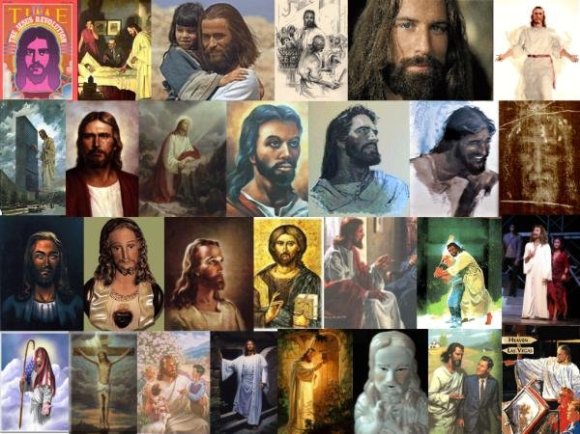
The second question, “Who do you say that I am?” is masterful.  Jesus is speaking to those close disciples.  Essentially he is asking them to decide, once and for all, his placement into their lives. 

  • Is he a good teacher?
  • A healer?
  • A revolutionary or social catalyst?
  • A prophet?

He is all of these–but much more.  It’s interesting that Jesus never took a lesser position.  He was the “Son of God.”  He comes to us, and asks us to decide for ourselves.

The decision awaits us.  When we gather up information to evaluate him, it isn’t “Trivial Pursuit.”  Our decisions are quite significant and defining.  This here are the ultimate “fork in the road.”  Our lives will extrapolate out and then take us to places we never thought we would be.  Jesus knows this, he understands us.

In conclusion, another question.  Are you even ready to be addressed with these two ultimatums?  Are you in a “good place” where you are even approachable?  We all must go through this gauntlet of blazing truth, and decide for oneself.  Truly blessed is the person who will not stumble in this place of decision.

 “Today I have given you the choice between life and death, between blessings and curses. Now I call on heaven and earth to witness the choice you make. Oh, that you would choose life, so that you and your descendants might live!

Deut. 30:19, NLT

recite-25825-95458975-1jznxku

Hell and Hope

inferno

Sometimes, I feel like a tour guide for believers that are walking through hell. I point out the different strugglers, and urge each one not to linger too long but to keep moving. We look on those trapped (they have no hope within them) but we hope that they are yet to reach out for the Savior. It is distressing, and yet somehow we understand them just a little bit.

Our journey out and down each sad corridor can be painfully disturbing for us. There are so many different types of prisons and chains used to confine and control. Dante wrote his “Inferno” (Italian, for hell), and somehow he in some curious way walks through the different levels (varieties) of hell with us. Virgil (Dante’s own tour guide) takes Dante through some pretty hairy stuff, and they pass through the very gate, which bears an inscription, of the infamous phrase “Lasciate ogne speranza, voi ch’intrate“, or “Abandon all hope, ye who enter here.”

Our own rescue from this dreadful place is based on that singular word, “hope”. Somehow, hope has distilled inside us, and that alone can enable us to walk out as the freed. We have chosen not to abandon hope, but to use it as our passport out of the bottom of hell itself. We show it to each guardian, and then pass through without any hinderance.

  • And so at last the poor have hope. (Job 5:16)
  • Having hope will give you courage. You will be protected and will rest in safety. (Job 11:18)
  • Lord, you know the hopes of the helpless. Surely you will hear their cries and comfort them. (Ps. 10:17)
  • All day long I put my hope in you. (Ps. 25:5)
  • Let your unfailing love surround us, Lord, for our hope is in you alone. (Ps. 33:22)
  • O Lord, you alone are my hope. (Ps. 71:5)
  • Your word is my source of hope. (Ps. 119:114)
  • “Listen to me, all who hope for deliverance— all who seek the Lord!” (Isa. 51:1)
  • And his name will be the hope of all the world.” (Matt. 12:21)
  • Even when there was no reason for hope, “Abraham kept hoping.” (Rom. 4:18)
  • We, too, wait with eager hope. (Rom. 8:23)
  • Rejoice in our confident hope. (Rom. 12:12)
  • The Scriptures give us hope and encouragement as we wait. (Rom. 15:4)
  • Three things will last forever—faith, hope, and love. (1 Cor. 13:13)
  • That you can understand the confident hope he has given us. (Eph. 1:18)
  • Our hope is in the living God, who is the Savior of all. (1 Tim. 4:10)
  • In order to make certain that what you hope for will come true. (Heb. 6:11)
  • This hope is a strong and trustworthy anchor for our souls. (Heb. 6:19)
  • Let us hold tightly without wavering to the hope we affirm. (Heb. 10:23)
  • They placed their hope in a better life after the resurrection. (Heb. 11:35)
  • You have placed your faith and hope in God. (1 Pet. 1:21)
  • If someone asks about your Christian hope. (1 Pet. 3:15)

I suppose we must say (it’s clear) that hope is what sets us free from the difficulty that rests in our minds. Whatever DSM-IV has branded us, whatever a psychiatrist has declared us to be, and whatever our therapist has told us– our hope, that’s in Christ, will open all doors that are closed and locked.

Hope really is the Christian’s freedom from hell. Those of us who have been freed from our incarceration from our mental illness are amazingly liberated. I know the lostness of being very much lost. But hope is everything. When our hope somehow connects with Jesus, our souls are set free. We walk out of hell, with our souls soaring clean.

kyrie elesion, Bryan

*

The Blessings of a Long Struggle

falteringfaith

It’s a familiar story. A person has become a Christian in recent years and is engaged in spiritual practices–prayer, Bible study, meditation, church attendance, fellowship, tithing, and/or the sacraments. They’ve listened closely to their priest or pastor and have developed some formulas that are supposed to help them overcome the problems, sins, and weaknesses in their lives.

They’ve heard sermons and/or read books that have titles that start with “Three Steps,” “Five Keys,” and “Four Ways,” that are supposed to lead them to the abundant Christian life. They see progress in their lives but are discouraged because they still struggle with certain sins, problems, and/or weaknesses. Some feel like they can’t overcome the very deep negative legacy from the unhealthy family they grew up in.

Church leadership would do many believers a service by teaching them about how God can bring good out of their protracted struggle. No , it’s not God’s will for us to habitually sin , but God, in his tender mercies can work redemptively in this long and frustrating battle.

One of the first good things that can come out of a long battle with a character flaw or problem is deliverance from a formulaic Christian faith. “Do these three things and your problem will go away” you learn from a best–seller, but your problem doesn’t go away. The fallen human heart is a complex and formidable thing, and these canned approaches are a little like taking a squirt gun to a forest fire.

When people experience sustained adversity, their lives feel out of control, and they will often grab on to formulas to give them a sense of righting a ship that’s taking on water. Unfortunately, they end up trusting in the formulas more than God himself. Faith in formulas will always eclipse faith in God. The Christian life is more about a restful trust in a Person than embracing a set of principles no matter how spiritual those principles may sound.

The New Testament is clear on the centrality of faith (not self–effort or formulas) in the overcoming life:

When asked by his disciples what they must do to do the works God requires, Jesus answered, “The work of God is this: to believe on the one he has sent” (John 6:28, 29). When describing the person who overcomes the world, the Apostle John said, “He who believes that Jesus is the Son of God” (I John 5:4, 5).

The failure of formulas is a good experience because it drives the believer to faith in the living God. In this faith, there is a wonderful exchange: I give Christ my pitiful attempts to live the victorious Christian life and he gives me his transforming power to overcome sin. However, this exchange may not happen overnight; it may be a process that takes years.

For those of you in a long struggle, please be comforted by the mercies of God that endure forever. If he can forgive a murderer and adulterer like David, he can forgive you and me. Please take the advice that Winston Churchill gave the British people during World War II: “Never, never, never, never give up ” or listen to the lyrics from a U2 song called “Miracle Drug” : ” There is no failure here, sweetheart/ Just when you quit.” Even better is C.S. Lewis from The Business of Heaven:

“I know all about the despair of overcoming chronic temptations. It is not serious, provided self–offended petulance, annoyance at breaking records, impatience, etc. don’t get the upper hand. No amount of falls will really undo us if we keep on picking ourselves up each time. We shall of course be very muddy and tattered children by the time we reach home, but the bathrooms are already, the towels put out, and the clean clothes in the airing cupboard. The only fatal thing is to lose one’s temper and to give it up. It is when we notice the dirt that God is most present in us: it is the very sign of his presence.”

Amen.

ybic, Jonathan

Jonathan is a old friend of mine. He writes like I wish I could. You would do well to visit his site. http://www.openheavensblog.com/ –Bryan