This is a bit of a longish post. My apologies. I do think you’ll find it a blessing.
This is a perfect Psalm for broken believers–those who sometimes struggle to believe. We can understand because we each have encountered difficult things–hard things. So buckle up, here are my comments on Psalm 27. I really hope that they might help you through your personal mess.
I sometimes use the Message Bible:
Light, space, zest—
that’s God!
So, with him on my side I’m fearless,
afraid of no one and nothing.
2 When vandal hordes ride down
ready to eat me alive,
Those bullies and toughs
fall flat on their faces.
Man alive, we tolerate so much darkness. But the believer understands that God not only chooses him/her, but protects them. There is going to be difficulty, that much I understand. I can’t and won’t sugarcoat this. I’m not naive.
“Vandal hordes;” and “bullies and toughs” are motivated by darkness–Satan’s kingdom. The psalmist David sees trouble up ahead, he’s very real here and definitely not a ‘pie-in-the-sky’ optimist. But he’s very much convinced of their defeat.
When besieged,
I’m calm as a baby.
When all hell breaks loose,
I’m collected and cool.
4 I’m asking God for one thing,
only one thing:
To live with him in his house
my whole life long.
I’ll contemplate his beauty;
I’ll study at his feet.
There’s a place of safety for David. He’s being blasted right and left by the enemy, but in that place, he finds “calmness.” He’s protected and you could say he wears spiritual body armor. Wearing that David discovers that he’s bullet-proof, for he wears a vest of spiritual steel.
The house of God is crucial, and he wants to live in it, to “contemplate” the wonder of the Spirit of God. David sees it as his castle that stands in resistance against all those who want to destroy him. And believe me, it is his complete focus.
He injects the word “study” which tells us that he’s found Someone that teaches him the things he needs.
That’s the only quiet, secure place
in a noisy world,
The perfect getaway,
far from the buzz of traffic.
6 God holds me head and shoulders
above all who try to pull me down.
I’m headed for his place to offer anthems
that will raise the roof!
Already I’m singing God-songs;
I’m making music to God.
Outside of the Church, there is very little that can protect a straying believer!
David is aware that the world is a noisy place (v. 5). But he knows that the very presence of God is a place of quiet and security, it’s “the perfect getaway,” that exists for everyone who believes.
Worship is critical here.
I think it not only exalts and glorifies God but it also is the best way of protecting himself. David is exuberant here, he can hardly contain himself! Perhaps we really don’t understand–it seems rather excessive–may be too zealous for us.
In v. 6 we see the spiritual effort of God holding David in place. He understands that there are many who are trying their best “to pull” him away from the security of God.
7-9 Listen, God, I’m calling at the top of my lungs:
“Be good to me! Answer me!”
When my heart whispered, “Seek God,”
my whole being replied,
“I’m seeking him!”
Don’t hide from me now!
9-10 You’ve always been right there for me;
don’t turn your back on me now.
Don’t throw me out, don’t abandon me;
you’ve always kept the door open.
My father and mother walked out and left me,
but God took me in.
Wow! “the top of my lungs” is pretty intense. The passage speaks of seeking–that’s the key of this whole thing. To be an authentic seeker has to be a “heart” issue, and never a brain thing. Heart followers certainly understand the difference.
Note that the presence of God is David’s entire focus. One of his petitions here is “don’t hide from me now.” As a New Testament guy, I know that it isn’t really possible. Jesus promised me He would dtay with me. See John 14:15-17.
If you’re struggling, like David did, you’re in good hands. Even though it seems like God is distant, He’s not. “God took me in” is a statement of real faith. David knows that the Father’s love is beyond the love of a father or mother.
And now the comes the finale!
11-12 Point me down your highway, God;
direct me along a well-lighted street;
show my enemies whose side you’re on.
Don’t throw me to the dogs,
those liars who are out to get me,
filling the air with their threats.
13-14 I’m sure now I’ll see God’s goodness
in the exuberant earth.
Stay with God!
Take heart. Don’t quit.
I’ll say it again:
Stay with God.
“Point me” and “direct me” is David’s discipleship to his Father’s ways. He speaks of enemies (“dogs” and “liars”) who are trying very hard to destroy him. “Out to get me” is David’s assessment of the hard things that come.
David is convinced that God is always very good to him, he understands this. It’s the same for the NT believer, although Satan nips at our heels, God protects us–He’s on our side.
He exhorts us twice to “stay with God.”
Maybe that’s where a lot of issues come. “Don’t quit” is David’s plea. This is stated throughout Paul’s epistles written for us.
What a wonderful Psalm. So much security here (as well as the opposition). Psalm 27 is written to us rascals and inconsistent believers in Jesus. I exhort you to spiritually digest this passage. It’s yours!
Illustration: Solomon’s Temple. I’m using “The Message,” a translation by Eugene Peterson.




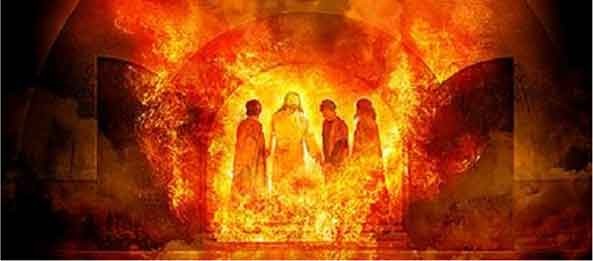
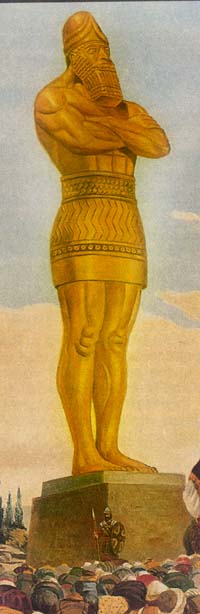 ere are three Jewish men: Shadrach, Meshach, and Abednego who are brought to the king with the charge of ‘failure to worship.’ They refused to bow at the statue at the signal. They were observed standing when everyone else was kneeling. Non-compliance to the king meant the death penalty, but that doesn’t deter the three.







 Broken Believers