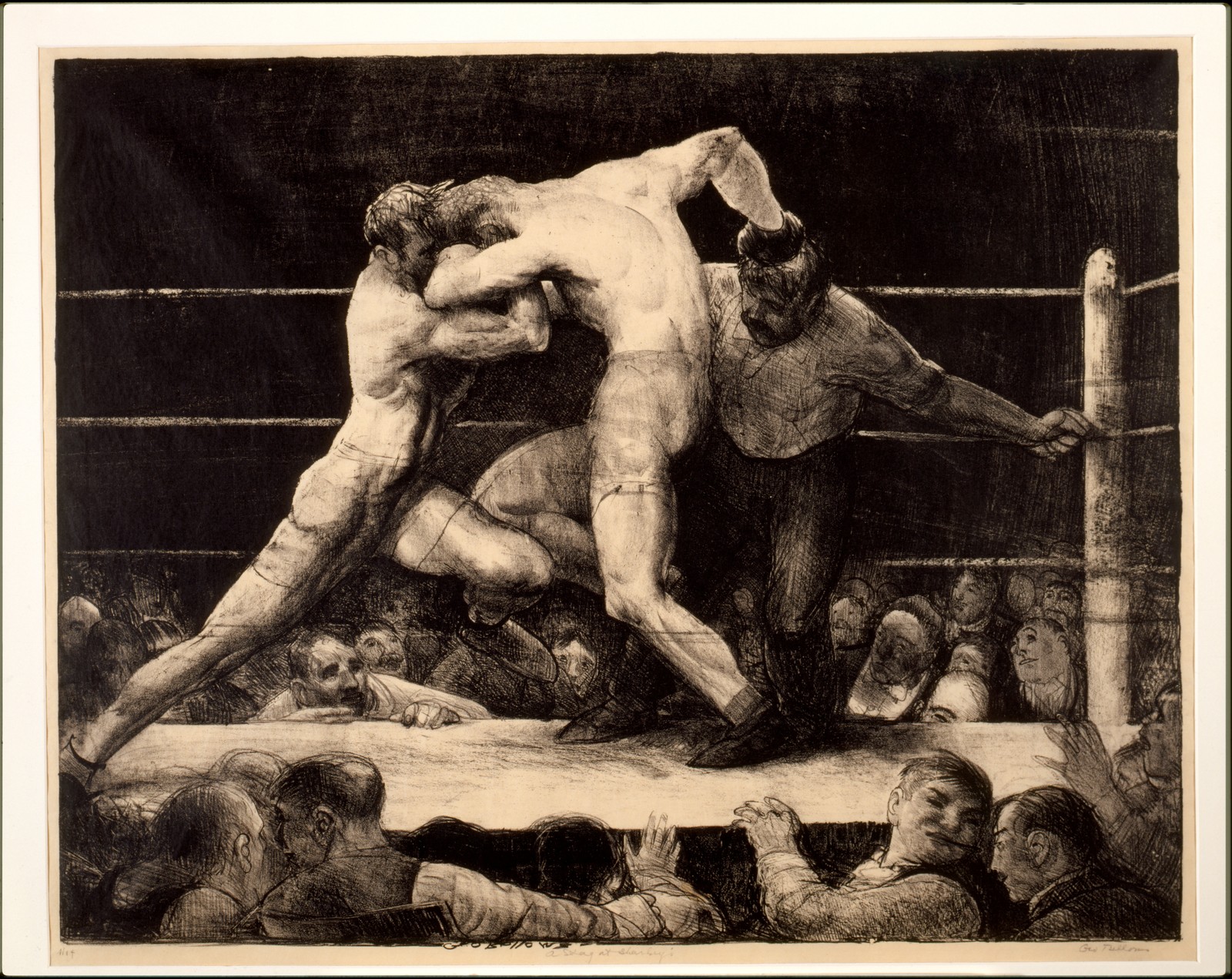
The Blessings of a Long Battle, part 2

brutal-boxing

 “Do not fear the conflict, and do not flee from it; where there is no struggle, there is no virtue.”   John of Kronstadt

Part 1 of this post highlighted how God can bring good out of a long struggle with a sin, weakness, and/or problem by helping the Christian make the transition from putting their faith in formulas (e.g., “Do these three things and your problem will go away”) to a restful trust in Christ. Again, no sane Christian advocates habitual sin but the benefits of a protracted battle are numerous:

(1)  After a long battle, in making the transition from formulas to faith in God, a new brokenness develops in the believer. They’ve come to the end of themselves, run out of “self–effort fuel”, and are beginning to learn what Christ meant when he said, “…apart from me you can do nothing” (John 15:5).

(2) During a long battle with sin or weakness, there is a pattern of falling down and getting up. Proverbs 24:16 says that a righteous man falls seven times but keeps rising again. In this process many Christians report that a new intimacy has emerged in their relationship to God. They’ve come to know the God of mercy and compassion as never before because they’ve been repeatedly forgiven after their many stumbles.

(3) “He who is forgiven much loves much.” Along with a new intimacy, a greater love for God can also develop, after a long battle, because we’ve been forgiven over and over.

(4) And since God has extended his tender mercies to us over and over, we then can extend his mercy and compassion to others who have a protracted struggle with some issue. If our heart is right, a long battle can inoculate us from self–righteousness and judgmentalism in relation to others who fall over and over. How can we not extend to them the same grace that God extended to us?

In extending this grace to others, we may become a wounded healer to them. The healing we received from Christ during our struggle is graciously passed on those often struggling with similar issues. Healing emerges from your wounds just as resurrection emerges from death.

(5) After a war, the soldier of Christ often emerges battle–tested and wise to the schemes of the enemy. If a person has been pulled down into the dust 27 different ways by the devil, then, if he or she is paying attention, they’ve learned 27 strategies the enemy of our soul uses to try to destroy us.

In Twelve Step programs, one often hears the acronym H.A.L.T. mentioned in discussing relapse back into addiction. These four letters stand for hungry, angry, lonely, and tired and emphasize how these conditions create fertile soil for relapse.

If you frame the issue a different way, these are four strategies the devil uses to bring us back into bondage. How was this acronym learned? By people relapsing over and over when these conditions were present. Recovering people became wise through their failures in their long battle with addiction.

*

Jonathan

posted from http://www.openheavensblog.com/

Sinner Friendly?

When a sinful woman in that town found out that Jesus was there, she bought an expensive bottle of perfume. 

Luke 7:37

***

It is wonderful how genuine goodness draws to itself the unfortunate, the troubled, the friendless, the outcast, the fallen. Wherever Jesus went, these classes always found him out and gathered about him. It was because he was the true friend of all men. They found sympathy in him. He would listen to their story.

Though he was the sinless One, there was yet no air of “I am holier than thou” about him. He was just as gentle to an outcast sinner as to a spotless Nicodemus. No matter who reached out a hand for help, he was ready to grasp it. One of the truest things ever said of Jesus was the prophetic word concerning him, “A bruised reed shall he not break.” He dealt always most gently with sore spirits and with bruised hearts.

Those who want to be useful in this world must have the same qualities. There is a kind of human “holiness” that draws nobody to itself, but rather repels; genuine holiness, however, wins its way everywhere into men’s hearts. The secret of it all is in living “not to be ministered unto, but to minister;” in considering one’s self not too good to serve the unworthiest of God’s creatures.

If we stay in this world to be served, we shall be of no manner of use. But if we live to minister to others, yearning to be of service to every one we meet, our life will be something worth. The hungry-hearted and the soul-needy will be drawn to us, and God will love to put work into our hands.

We need, too, to train ourselves to exceeding gentleness in dealing with human souls in their spiritual crises. Many earnest people, in the excess of their zeal, so incalculable harm to those whom they greatly desire to help. People with sore and bruised hearts usually need loving sympathy and strong, kindly friendship much more than they need theology. –JR Miller

***

‘Behold, a gluttonous man, and a drunkard, a friend of tax-gatherers and sinners!’ 

Luke 7:34

“A pharisee is hard on others and easy on himself, but a spiritual man is easy on others and hard on himself.” 

–A.W. Tozer


cropped-christiangraffiti1-2


Afflictions That Heal Us

Today I especially wanted to share a message the David Wilkerson shared on his blog a few years ago.  It is probably one of the better messages I’ve read in quite awhile on the issue of pain and affliction in a believer’s life.  I hope this helps!

“Curse the scalpel if you must; but kiss the Surgeon’s hand.”

flourish14

“Before I was afflicted I went astray: BUT NOW have I kept thy word”

Psalm 119:67

“I believe in healing. I believe in affliction. I believe in “healing afflictions.” Any affliction that keeps me from going astray—that drives me deeper into his Word—is healing. God’s most gracious healing force spiritually and physically can be afflictions.

To suggest that pain and affliction are of the devil is to suggest that David was driven by the devil to seek God’s Word. I have suffered great pain. I have called on God for deliverance and I believe him for complete healing. Yet, while I go on believing, I continue to thank God for the present condition and let it serve to remind me how dependent on him I really am. With David I can say, “It is good for me” (Psalm 119:71).

Pain and affliction are not to be despised as coming from the devil. Such burdens have produced great men of faith and insight.

“Casting ALL your care upon him…”

1 Peter 1:5

Paul spoke of the “cares” of the churches that were thrust upon him (see 2 Corinthians 11:28). Every newborn church was another “care” on his shoulders. Growth, expansion, lengthening of stakes always involve new cares. The man God uses must have broad shoulders. He dare not shrink under the challenge of numerous cares and responsibilities.

Every new step of faith God leads me to take has brought with it numerous new cares and problems. God knows just how many cares he can trust us with. It is not that he seeks to break us—in health or strength; it is only that willing laborers are few and the harvest is so great. Cares are taken from those who refuse them and given as gifts to those who are not afraid of them. Forget the load of cares you carry—can we not cast them all on him?

Every new blessing is related to a family of cares. They cannot be divorced. You cannot learn to live with the blessing until you learn to live with the cares.”

Source: http://davidwilkersontoday.blogspot.com/


Is Mania A Spiritual Experience? [Bipolar]

by Chris Cole

I was eighteen years old when I first experienced acute manic psychosis. I had just arrived at the University of Georgia for my freshman fall semester when I suddenly had what seemed like a profound spiritual awakening. I felt as if I was waking up from a bad dream, as if my mind and body were merely figments of my imagination. I felt an incredible transcendence and oneness with the universe, an experience I could only fathom to be spiritual. Back then, I didn’t know anything about bipolar disorder.

My first thought upon being struck with this overwhelmingly blissful state was, “This is what God feels like; I must be Jesus!” It was from there that I began my deluded descent into madness. I ran upstairs in my dormitory, assuming that my friends would be my first disciples, and tried to perform miracles to prove my divinity. When they attempted to calm me down, I punched one of them in the face, calling him the devil, and ran back downstairs. Campus police promptly met me in the dorm lobby and arrested me on the spot.

On my way to jail, I was no longer feeling so ecstatic. In fact, it was the most excruciating fear I had ever experienced. I began believing that the police officers were the Pharisees taking me to my crucifixion. They placed me in my own jail cell, and I began stripping off my clothes, demanding for the officers to come look at my naked body. Throughout the whole experience, I felt almost completely dissociated, as if I was watching a movie of myself with little to no control of the actor.

After a few days of trying to convince my parents that I was returning humanity to the Garden of Eden, they realized my condition might not be from taking psychedelic drugs as they had thought. I was escorted to my local psychiatric hospital, and once medicated, came down from my messianic mission to create heaven on earth. The only problem was, I had never been more certain of God in my life, and the clinicians just kept telling me that it was normal for grandiose delusions to take on religious and spiritual themes. I was not convinced.

My thoughts immediately went to the biblical stories I grew up with: how God tested Abraham’s faith when he was told to sacrifice his son, and how God communicated to Moses through a burning bush. Were these not examples of delusions and hallucinations? Even Jesus was convinced to be the Son of God. Were the holy men of the Bible bipolar? I had a lot of questions, and my questions seemed to be forcing me to choose one side or the other—either spirituality or psychiatry.

It took me about a decade to finally integrate both truths and find some peace around my manic episodes. I studied spirituality and psychology, and I came to the conclusion that bipolar disorder and spiritual experiences didn’t need to exist in opposition. I’ve come to some basic definition of spirituality as the transcendence of ego. In this sense, mania was indeed a spiritual experience, albeit an unmanageable one. This didn’t mean my bipolar diagnosis was bogus, and I’m not saying all psychotic episodes are spiritual. But I can now rest easy knowing that my experiences were both spiritual and bipolar.

If I’m honest with myself, a major sign of my mania is increased spirituality, but at the same time, a major sign of my depression is a lack of spiritual significance. Finding balance in recovery means that I am able to seek both spiritual and clinical solutions to my bipolar symptoms without fear that I am falling out of grace with God. When I was first diagnosed, I had the idea that either bipolar existed or God existed. There was no space for both.

My spirituality has necessarily evolved over the years. Because of my history with manic psychosis, I have to guard myself against dogmatic or superstitious beliefs. I try my best to live a life of love, and I rest assured knowing that the more kindness I spread to the world, the more aligned I am with my spiritual path. Telling my story of recovery has become part of this spiritual process. My faith means a great deal to my health, and without it, my recovery wouldn’t be as strong as it is today. I hope that by sharing my story, others going through the same difficulties might not take so long to make sense of their own experiences.

____________________________

Chris Cole has authored a book recounting his experiences, and he’s now a life coach for folks in recovery.

Source: http://www.ibpf.org/blog/mania-spiritual-experience

cropped-cropped-christiangraffiti1.jpg