Hiding Our Wounds

Brennan Manning Quote
“You are the light of the world. A city set on a hill cannot be hidden. 15 Nor do people light a lamp and put it under a basket, but on a stand, and it gives light to all in the house.”

Matthew 5:14-15, ESV

Overall, I think this Manning quote is a great observation. We, the torn and wounded, often try to hide, secluding ourselves in the “Island of Misfit Toys.” (Got to love those 60s Christmas cartoons.) We pretty much accept our lot as damaged merchandise.

Maybe we choose to isolate ourselves more than we want to admit. Could that be what we do? Are we still embarrassed and ashamed by all that we’ve done? That’s quite possible.

This may come as a shock, but the Church doesn’t need any more gifted people.

But it does need broken people who understand ‘the giftedness of the flawed.” When we conceal, we diminish the Church by our absence. We can ostracize ourselves, through a self imposed shame— but the Church will suffer. We need to show them that everyone can be healed, even screwy ‘fruit-cakes’ like us.

I recently had the privilege of speaking to a class of young Bible college students.

My subject was decidedly not on being successful, but on being a failure. Whole courses are geared toward ministerial success– but where are the ones for failure? I think that it just might be even more important, in the long run.

No human effort is going to erase your past.

I have tried and it can’t be done. I have blitzed my brains on drugs and booze, but I still remember the people I’ve hurt. (And I pray for them.) There really isn’t a cure for the evil we have done. I believe in forgiveness. And I hold to the idea that are sins are never to be a subject of  guilty accusation–

“He will again have compassion on us;
    he will tread our iniquities underfoot.
You will cast all our sins
    into the depths of the sea.”

Micah 7:19

Our dark iniquity is put in a very deep place. But there are the memories of an unkind word, or a sad and dark foolishness that we must learn to live with. There will be many regrets, and we face the terrible consequences of our sins, but it’s enough to know that all is under the blood of Jesus.

We are indeed forgiven. Completely.

We are now to live as forgiven sinners, yet precious in God’s eyes. We discover that although the Father has no favorites among His children, but He does have intimates. We are to live the rest of our lives for His glory, exploring that intimacy.

“Leave the broken, irreversible past in God’s hands, and step out into the invincible future with Him.”

  Oswald Chambers

Spectacular Faith

Matthew 8:5-13

 When Jesus had entered Capernaum, a centurion came to him, asking for help. “Lord,” he said, “my servant lies at home paralyzed, suffering terribly.”

Jesus said to him, “Shall I come and heal him?”

The centurion replied, “Lord, I do not deserve to have you come under my roof. But just say the word, and my servant will be healed. For I myself am a man under authority, with soldiers under me. I tell this one, ‘Go,’ and he goes; and that one, ‘Come,’ and he comes. I say to my servant, ‘Do this,’ and he does it.”

10 When Jesus heard this, he was amazed and said to those following him, “Truly I tell you, I have not found anyone in Israel with such great faith. 11 I say to you that many will come from the east and the west, and will take their places at the feast with Abraham, Isaac and Jacob in the kingdom of heaven. 12 But the subjects of the kingdom will be thrown outside, into the darkness, where there will be weeping and gnashing of teeth.”

13 Then Jesus said to the centurion, “Go! Let it be done just as you believed it would.” And his servant was healed at that moment.

Obedience had been ingrained in me. I understood authority and submission to my superior officers. It’s called “the chain of command” and it’s the reason why armies function the way they do. I ultimately acceded my will to my superior, who’s under authority himself. I also have soldiers who I command. I led over 100 men as the occupying force in Palestine.

We were hated and despised.

My servant was sick, and I knew that he was suffering greatly, but I had run out of options. My servant was the only family I was allowed to have. Since I served as a centurion I was not allowed to have a wife for the duration of my service. Over the years I’ve kept good and trustworthy servants with me–these men were very dear to me. They became my family.

I certainly was aware that both my men and I lived in constant danger from radical Jews.

I had exhausted all my efforts to bring some relief and healing to him–and it seemed to be getting worse, not better. My “contacts” told me of an itinerant teacher who had a reputation as a healer. It seems Jesus had a large following and I realized that He could be my last option.

So I went to Him for help and Jesus responded. But He wanted to go with me to my home. His willingness to come encouraged me, but I simply couldn’t allow that. Jesus’ visit would’ve made Him ceremonially unclean–I was a Gentile, a “dog.”

My home was off-limits.

But I did understand something. I was under authority as an officer in the Roman army, and my men also took orders. Obedience meant survival in a hostile environment like Judea. Our entire unit was drilled constantly and we all understood the need for a “chain of command.” Each of us obeyed our superiors. We had to.

With all this in mind, I asked Jesus to heal my servant with just a word.

He marveled at this. He said that my adherence to protocol was evidence of real faith. Those who were with Jesus were told something earth-shaking. My trust meant something, He made me an equal with the Israel patriarchs. My faith was to be emulated by the Jews.

He then told His followers that my confident trust was respected and acknowledged as evidence of God’s favor.

Simply, Jesus spoke a word and when I returned home my servant would be healed. I returned home to find him healthy.

“Christ will always accept the faith that puts its trust in Him.”

    Andrew Murray

Please visit my other site, alaskabibleteacher.com if you liked this teaching.

The Blessings of an Illness

The Bible is a book of miraculous healing.

Jesus Christ performed many of them. He taught His disciples, and those who would follow, to heal the sick and afflicted. This is a real part of the Gospel, and it’s the definite work of his Kingdom.

I’ve personally seen legs lengthened and fevers ‘broken’ on several occasions. Obviously it changes life for the sick person, certainly! But it can also boost the faith of those who witness these miracles. I truly believe the Holy Spirit still works these wonders today. We must let him do these things. That isn’t an option.

Somehow though, there is the ‘understanding’ that in order to be healed you must have sufficient faith. Those who are not healed are the people who have a weak faith, they’re missing out somehow on a miracle because their faith didn’t measure up. I wonder though, how much faith was needed to wash in the pool of Siloam in John 5? But really, all that is needed is a mustard seed (Matthew 17:20).

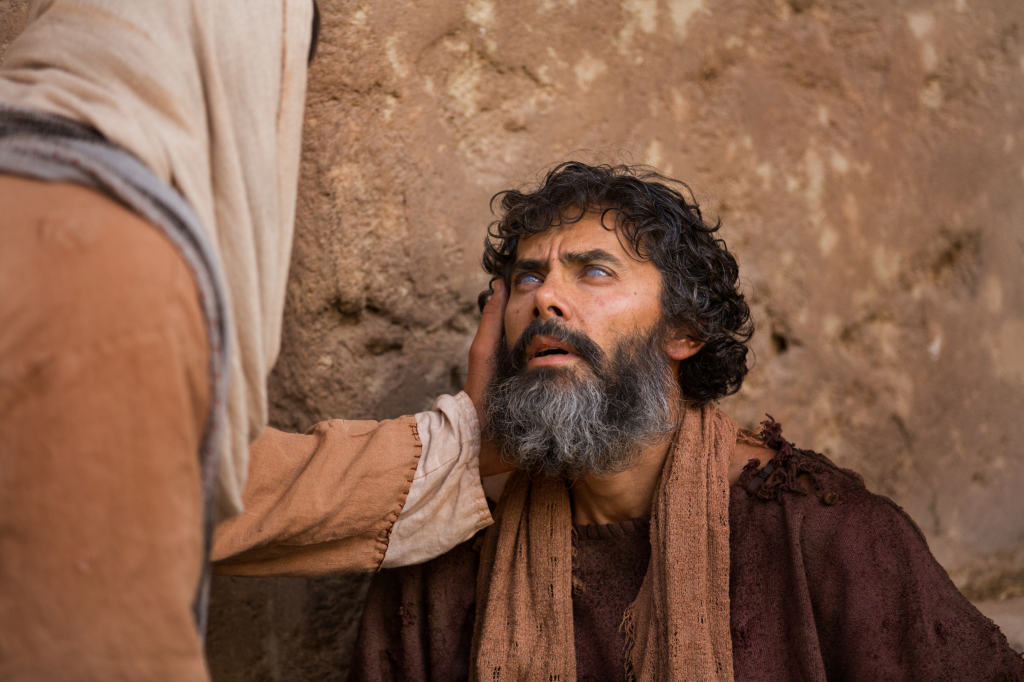
Faith is an active component to many who were healed in Scripture. Jesus said to the blind man, “Receive your sight; your faith has healed you” (Luke 18:42). It happened!

Yet we read of many believers in Hebrews 11 who endured sickness and ill-treatment. We read of vicious brutality and persecution of these “people with faith.”

Not everyone who is sick will receive a physical healing.

For believers today who suffer physically or mentally, we may question our faith. (Especially when the healing evangelist comes to town). After 2-3 tries we settle back on our “deficient’ faith feeling a bit miserable. I honestly don’t think that’s what the Lord wants.

It seems to me that the real issue is not so much a weak faith, but holding on to your faith when you are not healed.

I hear talk about having faith to be healed–but what about the faith that’s needed to be sick?

Why do we suffer from illness? I suspect that for many believers sickness is really there to bring glory to God. Holding onto faith in the midst of pain often encourages those who witness it. I believe that was Paul’s experience (2 Cor. 12:7-10).

Oh dear one, continue to seek healing, (James 5:14).

The Spirit does these things today. But if you’re left in your illness, trust in Him still. All your ways end up in His nail-scarred hands of our Lord Jesus. But remember, when he greets you in heaven, you will know him by the scars.

“The moment an ill can be patiently handled, it is disarmed of its poison, though not of its pain.”

–Henry Ward Beecher

Without Your Wound, Where Would Your Power Be? 

angel6

The subject of “the pool at Bethesda” alludes to the Thorton Wilder play, “The Angel that Troubled the Waters.” 

The play is based on the biblical verses of John 5:1-4, however, it changes the end of the parable. 

The play tells of a physician who comes to the pool of Bethesda, hoping to see the stir, and then be the first in the water, and healed of his melancholy and debilitating depression.  An angel appears and troubles the water. Everybody at the pool hopes to be the first one in and to be healed of their disability.

…………………………………………………………………

An angel appears and blocks the physician at the very moment he is ready to step into the pool and be healed.

angel1

Angel: “Drawback, physician, this moment is not for you.”

Physician: “Angelic visitor, I pray thee, listen to my prayer.

Angel: “This healing dear physician, is not for you.”

Physician: “Surely, surely, the angels are wise. Surely, O Prince, you are not deceived by my apparent wholeness. Your eyes can see the nets in which my wings are caught; the sin into which all my endeavors sink half-performed, cannot be concealed from you.”

Angel: “I know.”

Physician: “Oh, in such an hour was I born, and doubly fearful to me is the flaw in my heart. Must I drag my shame, Prince and Singer, all my days more bowed than my neighbor?”

Angel: Without your wound where would your power be?” 

“It is your very sadness that makes your low voice tremble into the hearts of men. The very angels themselves, cannot persuade the wretched, and blundering children on earth, as can one human being broken on the wheels of living.

Later, the person who enters the pool first, and was healed rejoices in his good fortune, then turns to the physician before leaving and says:

“But come with me first, an hour only, to my home. My son is lost in dark thoughts. I — I do not understand him, and only you have ever lifted his mood.”

“Only an hour… my daughter, since her child has died, sits in the shadow. She will not listen to us, but she will listen to you.”

For me, the play pierces me with the understanding that comes from this wonderful line— “Without your wound where would your power be?“ That causes me to look at my many weaknesses with a very different perspective.

Paul’s teachings offer us a powerful revelation: it is through our weaknesses that we can authentically minister to others, just as Jesus did going to the cross. This concept, slowly permeating my understanding, emphasizes the transformative nature of my own pain and vulnerability.

Paul boldly declares that it is the very things we perceive as weak that have the potential to cultivate strength and truth within us and to others. It is my sincere hope that brokenbelievers.com, through its ministry, will impact lives by embracing this profound truth.

I hope so anyway. Pray for Linda. Pray for me.

I first encountered this excerpt in the book, “Abba’s Child: The Cry of the Heart for Intimate Belonging,” by Brennan Manning. The book is a worthy read, and if you can find it, you’ll be blessed.

Please check out Brennan Manning’s Facebook page for more info.

Please check out my newest, alaskabibleteacher.com.