Tightrope Theology

As a person with a mental illness, it seems my issues are a matter of extremes.  Life seems uncontrollable; the wheels seem to always ready to come off of the wagon.  It strikes me as a semi-crazed place to be.  I look at the “norms” with envy, as their lives are crisp, healthy, and strong.

I once met a man that had a prophetic ministry who was speaking at a local church here in Alaska.  When I met with him, he looked at me intently.  He said many things, but the most significant was this. “You are an unstable man; you are like water.”  This was almost 30 years ago.  It has been an accurate prophecy and assessment since I heard it.  At first it stung, I hated it; but now, all these years later, I find a certain comfort in it.  God knows me; He understands.  I haven’t found any reason to be condemned for being Bipolar.

Those of us who walk the tightrope of sanity and insanity have One in heaven who not only knows us, but is on our side.  Hebrews 7:25 declares:

“Consequently, he is able to save to the uttermost those who draw near to God through him, since he always lives to make intercession for them.”

I must realize that I am not the “bad apple in the barrel,” nor am I cursed.  Rather the opposite is true.  I am the richest of all men, because of His radical grace that gets extended to the weakest. Those who “touch” my life are blessed by their contact with me, and since I have been so unnaturally “graced,” they become blessed by His presence through me. WOW! I simply need to be me, and they are drawn to you.

The issues that a mentally ill person (and those who are often a struggler and a rascal) faces are formidable.  But without His promises they are impossible.  The secular view is just to create a “zero sum” game.  It is to bring a person to some stupefied place of stasis.  Not exactly up–but not down either.  Stable, sort of.

It is very good to be stable.  But my goal can not be stability, but an obedience to a supernatural God who loves me supernaturally.  I simply can’t live without knowing that.  However, when I know it, I can handle the tightrope.  I will start to walk a “supernatural” walk.

You could say that God has a hobby, or a specialty.  It is weak and handicapped people.

He loves working with us and in us.  And I have become very much convinced that He pours out special favor on those of us who struggle so difficulty, those of us who will never fit in or be ‘normal.’

We need to come to that real and authentically holy place where we see God. But also in that place, and at the same time, we need to see ourselves as well.  And actually, both are most critical.  They are done imperfectly— but both must happen, nevertheless.

I exhort you to take on your tightrope.  You will only stay upright and cross it if you are aware of His grand love and presence.  It is an amazing thing to balance and walk, and if we fall?  Well, we drop into His net.  Get back up, and get in line again.  Secure your heart into the love of God for your soul.

aabryscript

cropped-christiangraffiti1-2


Killing My Sin, Before It Kills Me

killing-sin-act

We are for the most part anyway, eager to please God. We are Jesus’ people with the occasional brush with sin. But hey, who doesn’t? But that attitude must be questioned.

“My little children, these things I write to you, so that you may not sin.”

1 John 2:1

John hopes that his readers would make a choice— not to commit sin. After all, what soldier goes into battle with the intent of getting just a little wounded? Often we will sin just because it seems so inevitable, and we feel we can’t help ourselves. (But the reality is that we can.)

But the Holy Spirit now lives inside. Cooperation with Him is needed. Often we will work ourselves into a ‘no win scenario’ where we believe that sin rules. We can’t beat it, so we stop trying. That is common, and sad.

‘Passivity’ is defined as not participating readily or actively; inactive. When we are passive spiritually, we disengage ourselves from any effort of living holy and pure lives. Not being ‘hot’, but content to be lukewarm. At this point sin becomes, reluctantly, tolerated. “After all, I’m a sinner, what else can I do?”

Mentally ill people are often passive. We are told that we have an uncontrolled illness which dictates that we act ‘irresponsible.’ Our depression often escalates and we feel victimized by it. My experience has taught me that there are three kinds of depression:

  • organic depression, or the ‘biochemistry’ of the disease,
  • guilty depression, the kind that feels bad because of what we’ve done (or didn’t do),
  • reactionary depression, the type we feel when experiencing a loss, a loved one, or a job

Depression will almost always fall in these three categories. And passivity plays a part in all three. We  frequently feel victimized and ‘acted upon.’ When it comes to our discipleship we don’t act, we react. We are utterly convinced of the Bible— God’s truth, but we are so sporadic we can’t seem to get it to work for any length of time.

Yes, we are believers. And yes, we have issues. We’re waiting for a miracle, and hope we get a breakthrough soon.

At the base point of our lives, quite often, there is a passive attitude. Passivity aggravates our depression or mental illness. It deepens, spreading through our lives like a contagious illness. Our discipleship sputters and stalls. We no longer act on God’s Word, but we find ourselves fabricating a faith that makes allowances for our situation.

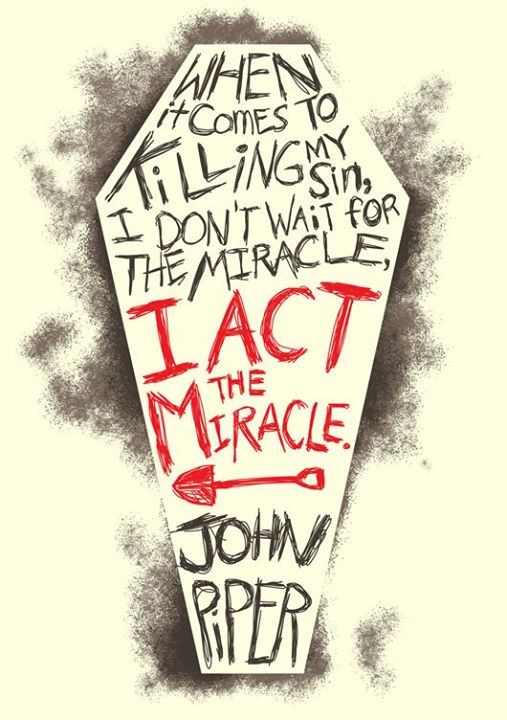
But we must ‘act the miracle.’ Everything God gives… everything… must be received by a convinced faith. We must be persuaded to give up our flawed ideas, and believe God for the real thing. I opened up this with 1 John 2:1. But there’s much more to this verse:

“My little children, these things I write to you, so that you may not sin.  And if anyone sins, we have an Advocate with the Father, Jesus Christ the righteous.”

I don’t want you to sin. Avoid sin. But even if you do— we have someone who will plead our case before God. He stands and argues our plight. He loves us that much.


bry-signat (2)

cropped-christiangraffiti1.jpg


Traveling Mercies, [The Journey]

Things can get pretty grim just living life.  But add a disability, and suddenly blam! It gets worse.  A mental illness intensifies life, and the weird concoction of symptoms and hospitals, therapists and medications and family/friends is a bit daunting for anyone. Imagine, that it’s a bit like running through the wilderness slathered in ‘bacon grease,’ trying to stay ahead from the bears (I’m writing this from Alaska, hence the bear imagery, lol.)

My walk with Jesus has extreme variations (at least, on my part.)  I’m up, and then I’m down.  I’m on fire and then I’m cold.  I struggle to attempt at least a modicum of consistency, wishing I could just put two ‘good days’ together.  I am ashamed by this volatility.  The apostle Peter, or David are probably the only guys in scripture I can really understand.

The impulsivity of my mental illness has driven me to turn my credit cards over to Lynn.  I try to avoid liquor stores, porn sites, and urges to strip off my clothes and run down Pioneer Avenue.  I definitely try to go to Church, read the Bible and pray.  But I have been known to hallucinate, I hear things, and get awfully paranoid.  I’m always, it seems just one step ahead of my psychiatrist in avoiding the hospital.  (And I want to keep it that way.) And suicidality is an almost real monster– always lurking for me under my bed.

But I have also learned many other things from being a mentally ill believer:

  • When its really dark, His love always comes through. He understands me. He intentionally ‘looks’ for me. He’ll never quit on me.
  • My discipleship is not about the externals of my theology, but it’s about romance from my heart.
  • In my pathetic brokenness, He is my strength and my shield. Always.
  • Worship and prayer are more like invasive “medical procedures” that keep me alive.
  • Love. I’m learning to be kinder and more aware of others then ever before.
  • I want to live in the Light and respond to others in Christlike way. Never out of my fallen sinfulness.

I suppose I could add more, if I thought about it.  Ultimately, it all comes down to the presence of Jesus Christ coming to meet me, to forgive me and to change me.  This simple blog is saturated with posts that other Brokenbelievers can wade through, and some just might help, lol.

The title of this post alludes to a quote I found. I’ve gently modified it. Not sure where I found it. But it gives the explanation for all that I’ve said:

“Life should NOT be a journey to heaven with the
intention of arriving safely in an attractive and well
preserved body, but rather to skid in sideways,
with bruises and band-aids, and some tears as well, body thoroughly used up, totally worn out and screaming… “WOO HOO what a ride!”

bry-signat (1)

cropped-christiangraffiti1.jpg


Is Mania A Spiritual Experience? [Bipolar]

by Chris Cole

I was eighteen years old when I first experienced acute manic psychosis. I had just arrived at the University of Georgia for my freshman fall semester when I suddenly had what seemed like a profound spiritual awakening. I felt as if I was waking up from a bad dream, as if my mind and body were merely figments of my imagination. I felt an incredible transcendence and oneness with the universe, an experience I could only fathom to be spiritual. Back then, I didn’t know anything about bipolar disorder.

My first thought upon being struck with this overwhelmingly blissful state was, “This is what God feels like; I must be Jesus!” It was from there that I began my deluded descent into madness. I ran upstairs in my dormitory, assuming that my friends would be my first disciples, and tried to perform miracles to prove my divinity. When they attempted to calm me down, I punched one of them in the face, calling him the devil, and ran back downstairs. Campus police promptly met me in the dorm lobby and arrested me on the spot.

On my way to jail, I was no longer feeling so ecstatic. In fact, it was the most excruciating fear I had ever experienced. I began believing that the police officers were the Pharisees taking me to my crucifixion. They placed me in my own jail cell, and I began stripping off my clothes, demanding for the officers to come look at my naked body. Throughout the whole experience, I felt almost completely dissociated, as if I was watching a movie of myself with little to no control of the actor.

After a few days of trying to convince my parents that I was returning humanity to the Garden of Eden, they realized my condition might not be from taking psychedelic drugs as they had thought. I was escorted to my local psychiatric hospital, and once medicated, came down from my messianic mission to create heaven on earth. The only problem was, I had never been more certain of God in my life, and the clinicians just kept telling me that it was normal for grandiose delusions to take on religious and spiritual themes. I was not convinced.

My thoughts immediately went to the biblical stories I grew up with: how God tested Abraham’s faith when he was told to sacrifice his son, and how God communicated to Moses through a burning bush. Were these not examples of delusions and hallucinations? Even Jesus was convinced to be the Son of God. Were the holy men of the Bible bipolar? I had a lot of questions, and my questions seemed to be forcing me to choose one side or the other—either spirituality or psychiatry.

It took me about a decade to finally integrate both truths and find some peace around my manic episodes. I studied spirituality and psychology, and I came to the conclusion that bipolar disorder and spiritual experiences didn’t need to exist in opposition. I’ve come to some basic definition of spirituality as the transcendence of ego. In this sense, mania was indeed a spiritual experience, albeit an unmanageable one. This didn’t mean my bipolar diagnosis was bogus, and I’m not saying all psychotic episodes are spiritual. But I can now rest easy knowing that my experiences were both spiritual and bipolar.

If I’m honest with myself, a major sign of my mania is increased spirituality, but at the same time, a major sign of my depression is a lack of spiritual significance. Finding balance in recovery means that I am able to seek both spiritual and clinical solutions to my bipolar symptoms without fear that I am falling out of grace with God. When I was first diagnosed, I had the idea that either bipolar existed or God existed. There was no space for both.

My spirituality has necessarily evolved over the years. Because of my history with manic psychosis, I have to guard myself against dogmatic or superstitious beliefs. I try my best to live a life of love, and I rest assured knowing that the more kindness I spread to the world, the more aligned I am with my spiritual path. Telling my story of recovery has become part of this spiritual process. My faith means a great deal to my health, and without it, my recovery wouldn’t be as strong as it is today. I hope that by sharing my story, others going through the same difficulties might not take so long to make sense of their own experiences.

____________________________

Chris Cole has authored a book recounting his experiences, and he’s now a life coach for folks in recovery.

Source: http://www.ibpf.org/blog/mania-spiritual-experience

cropped-cropped-christiangraffiti1.jpg