The Ugly Tree

uglytree

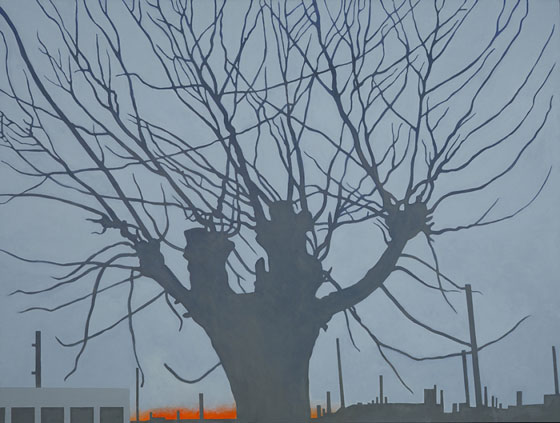
Several years have passed, and I mark out each day with a silent wish. I look across the road and I see something that doesn’t belong. A tree that is hideous; a tree beyond any kind of symmetry, a tree that is very ugly. It’s beyond any kind of redemption. It is bad, and needs to be cut down. It is an eyesore.

When I see it, I’m aggravated. It never, ever really belongs. I dream of sneaking past the road and chopping it down. I want it to fall. Why should it blight my eyes? Why should I allow it to obstruct my view of the wonderful mountains? It is all wrong. (I rejoice at every wind-storm.)

But sometimes, God will speak to me through the “Ugly Tree.” There is a moment when we just might see something beyond the normal. It stands, because He made it so. Could not the Father have made it His “visual aid” just for me?

  • In my own personal sin and twistedness, could I be the spiritual version of “the ugly tree?”
  • Could the cross of Jesus be “the ugly tree?” The place where He absorbed all our sin?

Both seem to be relevant to me.

As I type this I’m looking across the road. Maybe it should stay as it reminds me of who I am and how much the cross means to me. Perhaps it should stay.

ybic, Bryan


cropped-christiangraffiti1-2

Our Life in Babylon

Living-in-babylon-Logo

Christians are now smack-dab in “Babylon.” We must live our lives under the auspices of this hostile world-system, and yet stay faithful to our Lord. We must manage ourselves with the same grace as Daniel or Esther.

In Jeremiah 29 there contains an important historical letter that the prophet Jeremiah wrote to those taken into captivity. In it we can absorb much of what is needful for the moment. For people caught in Babylon it becomes a vital document, advising them of what they should now do.

This list comes straight out of Jeremiah 29.

  • First, prepare for the long haul. Be good citizens of your new land, (vv.5-6.)
  • Second, pray for the peace of the nation you’re captive in. (v.7.)
  • Third, don’t be fooled by it’s culture, Discern what is true and what is false. Babylon is full of false gods and worship.
  • Fourth, remember that God has given you “a future and a hope” (v. 11.)
  • Lastly, extend that same discernment to the spiritual understanding of your own past.

These five should be enough to navigate faithfully through hard times in Babylon. We must admit that we’re only “pilgrims and strangers” here. Our citizenship is in heaven where it is secure. By faith we understand this.

As broken believers we are supervised by the Holy Spirit, even in this difficult place, Our souls are shepherded by God, even in Babylon. Our “captivity” is only temporary– it is not a permanent one.

“And you will seek Me and find Me, when you search for Me with all your heart.”

Jeremiah 29:13, NKJV

“By the rivers of Babylon, There we sat down, yea, we wept When we remembered Zion.”

Psalm 137:1

“She who is in Babylon, elect together with you, greets you; and so does Mark my son.”

1 Peter 5:13

‘Alas, alas, that great city Babylon, that mighty city! For in one hour your judgment has come.’

Revelation 18:10

ybic, Bryan


cropped-christiangraffiti1-2

O Hang On, Dear One!

“He comes to us in the brokenness of our health, in the shipwreck of our family lives, in the loss of all possible peace of mind, even in the very thick of our sins. He saves us in our disasters, not from them. He emphatically does not promise to meet only the odd winner of the self-improvement lottery: He meets us all in our endless and inescapable losing.”

Robert Farrar Capon

For most of us, life is not an ecstasy of really wonderful things that roll unceasingly over us. Sometimes it attacks us. It can have teeth. Goblins and giants begin to encircle us, pressing to our very door. Several friends of mine have faced down divorce lately. Others have gotten very sick. I have some dear ones who battle with mental illnesses. Pain, pain, and more pain.

I certainly don’t intend to be excessively bleak. It was Job who described us as, “Man is born to trouble, as the ‘sparks’ fly upward.” Job was no pessimist, but he was neither an optimist. But he fully grasped that bad things will happen to good people. And I suppose sitting quietly, grieving with friends will adjust your perspective.

“Paul and Barnabas returned to Lystra, Iconium, and Antioch of Pisidia, 22 where they strengthened the believers. They encouraged them to continue in the faith, reminding them that we must suffer many hardships to enter the Kingdom of God.”

Acts 14:21, 22, NLT

These two heroes of the faith, Paul and Barnabas visit these cities. They now have an awareness of what their message is to be. It was one of encouragement, and of endurance, and of the ways of God. They both had the physical evidence to show that they “understood” the scope of their teaching.

Suffering is like learning another language. It is then you can minister deeply.

When I learned Spanish it was a new and vital way of communicating to millions of other people. Learning to speak “fluent” suffering will open up the world to billions of people. Learning to speak the language of pain will unlock many closed doors. Broken believers are in high demand for this “kind of work.”

A lot of us will never learn. We are sold on this exotic idea that God wants us healthy and wealthy. But health and wealth were never supposed to be ends in themselves. Jesus is to be all we seek and desire. When the bottom drops out, will Jesus be enough for you? Will you be encouraged by this revelation of suffering to enter the Kingdom?

“So do not throw away this confident trust in the Lord. Remember the great reward it brings you! Patient endurance is what you need now, so that you will continue to do God’s will. Then you will receive all that he has promised.”

Hebrews 10:36, NLT

flourish20

“You will know more of Jesus in one sanctified trial, than in wading through a library of volumes, or listening to a lifetime of sermons.” 

Octavius Winslow

“Adversity is always unexpected and unwelcomed. It is an intruder and a thief, and yet in the hands of God, adversity becomes the means through which His supernatural power is demonstrated.” 

Charles Stanley

“He knows when we go into the storm, He watches over us in the storm, and He can bring us out of the storm when His purposes have been fulfilled.” 

Warren W. Wiersbe

cropped-christiangraffiti1-2

Working God’s Night Shift

temple-etching
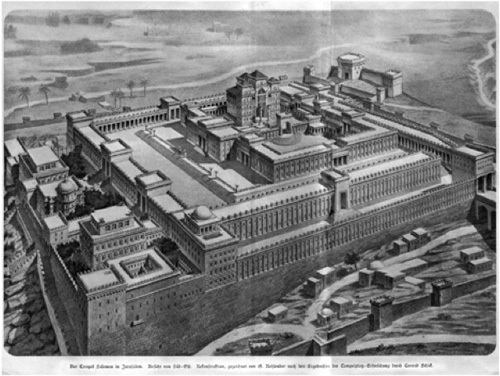
Solomon’s Temple in Jerusalem
A song for going up to worship.

134 “Praise the Lord, all you servants of the Lord,
    you who serve at night in the Temple of the Lord.
Raise your hands in the Temple
    and praise the Lord.

May the Lord bless you from Mount Zion,
    he who made heaven and earth.”

Psalm 134, NCV

This remarkable Psalm is part of an elite group known as “the Psalms of Ascent.” These 15 were sung as the congregation of Israel went up the steps of the temple in Jerusalem. They would sing each in “rounds” with each other. As you can well imagine, this made the ascent slow, but meaningful.

As you read the three verses, I get a picture of worshipers turning back and blessing the Levites. This takes place at the very end of the day. The Levites, and other godly ones who lived in the Temple, (remember Anna and Simeon, in Luke 2?) They were the support staff for the priests.

Commentary

V. 1, “Praise the Lord, all you servants of the Lord,
you who serve at night in the Temple of the Lord.”

The first significant thought is “Lord” mentioned three times. The word is the recognition of someone’s status and standing. We call Him Lord, because He is that (and more).

The second has to deal with the Levitical “night shift.” They served and guarded the Temple during the wee hours of the night. They probably cleaned, stacked wood, sharpened knives and maintained the Holy Place with its needs.

There was no real glory working the night shift. There were no people to serve. The crowds were for the day shift. (Here’s a weird thought– think “Disneyland at 2:00 a.m.”) There was also a contingent of non-Levite people ministering to the Lord as well. They had no duties, and only the priests could serve through their work.

The Levites working at night were not ‘second best.’ At least, not in the eyes of the Holy Spirit. They were integral in both presence and service to the Lord. To despise them is to reveal one’s ignorance. They definitely mattered.

V. 2 “Raise your hands in the Temple
and praise the Lord.”

I’ve worked nights before. It’s a real adjustment. You never feel like you’ve had enough sleep, and it is really hard to be positive and cheerful.  I could get pretty grouchy at times.

But an exhortation is given, a shout and a blessing as the crowds leave. “Raise up your hands– and praise Him!” It is as the work, although necessary, would be secondary. The worship however, was primary. We need to hear that.

V. 3, “May the Lord bless you from Mount Zion,
he who made heaven and earth.”

To be blessed (literally, made “lucky”) by our Creator and Lord is pretty profound. As a kid who read a lot, I think of ‘fairy dust.’ I know better now, but to be blessed by God is deeply significant.

To summarize, I believe this Psalm is speaking of those in the church who are doing “hidden service.” No one sees them really. They go about there duties quietly, and purposefully. The only recognition is from God– who sees all.

I must encourage you to keep on. There are many more than you think who see your hidden ministry to the Father. You are His ‘night shift.’ You’re seen by few, but Him. He knows what you do.


aabryscript

cropped-christiangraffiti1-2