The Numbers Don’t Lie: Mental Illness in America

giving-up2

~Mental Illness in America, 2016

Mental disorders are common in the United States and internationally. An estimated 26.2 percent of Americans ages 18 and older — about one in four adults — suffer from a diagnosable mental disorder in a given year.1

When applied to the 2004 U.S. Census residential population estimate for ages 18 and older, this figure translates to 57.7 million people.2 Even though mental disorders are widespread in the population, the main burden of illness is concentrated in a much smaller proportion — about 6 percent, or 1 in 17 — who suffer from a serious mental illness.1

In addition, mental disorders are the leading cause of disability in the U.S. and Canada.3 Many people suffer from more than one mental disorder at a given time. Nearly half (45 percent) of those with any mental disorder meet criteria for 2 or more disorders, with severity strongly related to comorbidity.1

In the U.S., mental disorders are diagnosed based on the Diagnostic and Statistical Manual of Mental Disorders, fourth edition (DSM-V).4

Mood Disorders

Mood disorders include major depressive disorder, dysthymic disorder, and bipolar disorder.

  • Approximately 20.9 million American adults, or about 9.5 percent of the U.S. population age 18 and older in a given year, have a mood disorder.1,2
  • The median age of onset for mood disorders is 30 years.5
  • Depressive disorders often co-occur with anxiety disorders and substance abuse.5

Major Depressive Disorder

  • Major Depressive Disorder is the leading cause of disability in the U.S. for ages 15-44.3
  • Major depressive disorder affects approximately 14.8 million American adults, or about 6.7 percent of the U.S. population age 18 and older in a given year.1, 2
  • While major depressive disorder can develop at any age, the median age at onset is 32.5
  • Major depressive disorder is more prevalent in women than in men.6

Dysthymic Disorder

  • Symptoms of dysthymic disorder (chronic, mild depression) must persist for at least two years in adults (one year in children) to meet criteria for the diagnosis. Dysthymic disorder affects approximately 1.5 percent of the U.S. population age 18 and older in a given year.1, This figure translates to about 3.3 million American adults.2
  • The median age of onset of dysthymic disorder is 31.1

Bipolar Disorder

  • Bipolar disorder affects approximately 5.7 million American adults, or about 2.6 percent of the U.S. population age 18 and older in a given year.1, 2
  • The median age of onset for bipolar disorders is 25 years.5

Suicide

  • In 2006, 33,300 (approximately 11 per 100,000) people died by suicide in the U.S.7
  • More than 90 percent of people who kill themselves have a diagnosable mental disorder, most commonly a depressive disorder or a substance abuse disorder.8
  • The highest suicide rates in the U.S. are found in white men over age 85.9
  • Four times as many men as women die by suicide9; however, women attempt suicide two to three times as often as men.10

Schizophrenia

  • Approximately 2.4 million American adults, or about 1.1 percent of the population age 18 and older in a given year,11, 2 have schizophrenia.
  • Schizophrenia affects men and women with equal frequency.12
  • Schizophrenia often first appears in men in their late teens or early twenties. In contrast, women are generally affected in their twenties or early thirties.12

Anxiety Disorders

Anxiety disorders include panic disorder, obsessive-compulsive disorder, post-traumatic stress disorder, generalized anxiety disorder, and phobias (social phobia, agoraphobia, and specific phobia).

  • Approximately 40 million American adults ages 18 and older, or about 18.1 percent of people in this age group in a given year, have an anxiety disorder.1,2
  • Anxiety disorders frequently co-occur with depressive disorders or substance abuse.1
  • Most people with one anxiety disorder also have another anxiety disorder. Nearly three-quarters of those with an anxiety disorder will have their first episode by age 21.5 5

Panic Disorder

  • Approximately 6 million American adults ages 18 and older, or about 2.7 percent of people in this age group in a given year, have panic disorder.1, 2
  • Panic disorder typically develops in early adulthood (median age of onset is 24), but the age of onset extends throughout adulthood.5
  • About one in three people with panic disorder develops agoraphobia, a condition in which the individual becomes afraid of being in any place or situation where escape might be difficult or help unavailable in the event of a panic attack.12

Obsessive-Compulsive Disorder (OCD)

  • Approximately 2.2 million American adults age 18 and older, or about 1.0 percent of people in this age group in a given year, have OCD.1, 2
  • The first symptoms of OCD often begin during childhood or adolescence, however, the median age of onset is 19.5

Post-Traumatic Stress Disorder (PTSD)

  • Approximately 7.7 million American adults age 18 and older, or about 3.5 percent of people in this age group in a given year, have PTSD.1, 2
  • PTSD can develop at any age, including childhood, but research shows that the median age of onset is 23 years.5
  • About 19 percent of Vietnam veterans experienced PTSD at some point after the war.13 The disorder also frequently occurs after violent personal assaults such as rape, mugging, or domestic violence; terrorism; natural or human-caused disasters; and accidents.

Generalized Anxiety Disorder (GAD)

  • Approximately 6.8 million American adults, or about 3.1 percent of people age 18 and over, have GAD in a given year.1, 2
  • GAD can begin across the life cycle, though the median age of onset is 31 years old.5
To finish reading this article, you will need to go to its source at:

http://www.nimh.nih.gov/health/publications/the-numbers-count-mental-disorders-in-america/index.shtml  


cropped-christiangraffiti1 (1)

Heart Disease

Hearts 168457_154905807894473_110794108972310_320156_2061498_n“The human heart is the most deceitful of all things,
and desperately wicked. Who really knows how bad it is?”

Jeremiah 17:9, NLT

We are the wounded. What exactly has caused it isn’t always known.  A death, divorce, depression and disability are great triggers.  Some of us are chronically ill, others are mentally ill.  We struggle to hold a job, and to go to church. There are some who are reading this who are controlled by addictions.  And a few of us consider suicide on pretty much a regular basis.

We’ve been hospitalized and stigmatized, and sometimes even institutionalized. And at times we endure massive attacks of fear and anxiety.  We are not easily understood, and we hear the whispers.  Our paranoia can often saturate what what we are thinking, (I think its more like a “marinade.”  Our brains just soak it up.)  Most of us are ‘walking wounded.’ We limp physically, and figuratively with equal pain.

“For thus says the LORD: Your hurt is incurable,
    and your wound is grievous.”

Jeremiah 30:12, ESV

If we are honest (and God insists on a rigorous honesty) we realize that we are a mess!  The prophet Jeremiah had a tremendous understanding of the human condition, and was never beguiled by the lie of pride, arrogance and selfishness.  He declares that we are diseased down to the core, like a rotten apple.

At times we continue in our favorite style of darkness.  And havoc sporadically rips through us and we become “disaster areas.”  How very sad, and profoundly tragic.

But you must understand this powerful fact.  Jesus Christ has been sent by the Father to save and cleanse all who come to Him.

“At that time a fountain will be open for David’s descendants and for the people of Jerusalem to cleanse them of their sin and uncleanness.”

Zechariah 13:1, NCV

“Children, it’s time for a bath,” and what God has done provides us the only way to “get better.” Some of us have carried staggering burdens for decades.  But I must be truthful. Our afflictions may continue to disturb us.  If you are bipolar or depressed, it just could be you’ll remain so.  But I know first-hand that our Father will give us an extra ration of grace.

In the Old Testament, family patriarchs could give an additional portion to a son he especially loved.  All were blessed, but some more so. That peculiar proclivity of our Father is why some of us with deep wounds can follow closer than others who are healthy.

“For I am the LORD, your healer.” Ex. 15:26

flourish2

“The treatment a wound gets decides whether time will bring healing or bondage.”

&

ybic, Bryan

kyrie elesion. (Lord, have mercy on each reader)

cropped-christiangraffiti1-2

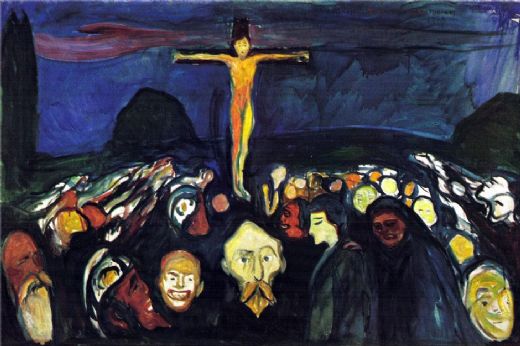
The Melancholy of Edvard Munch

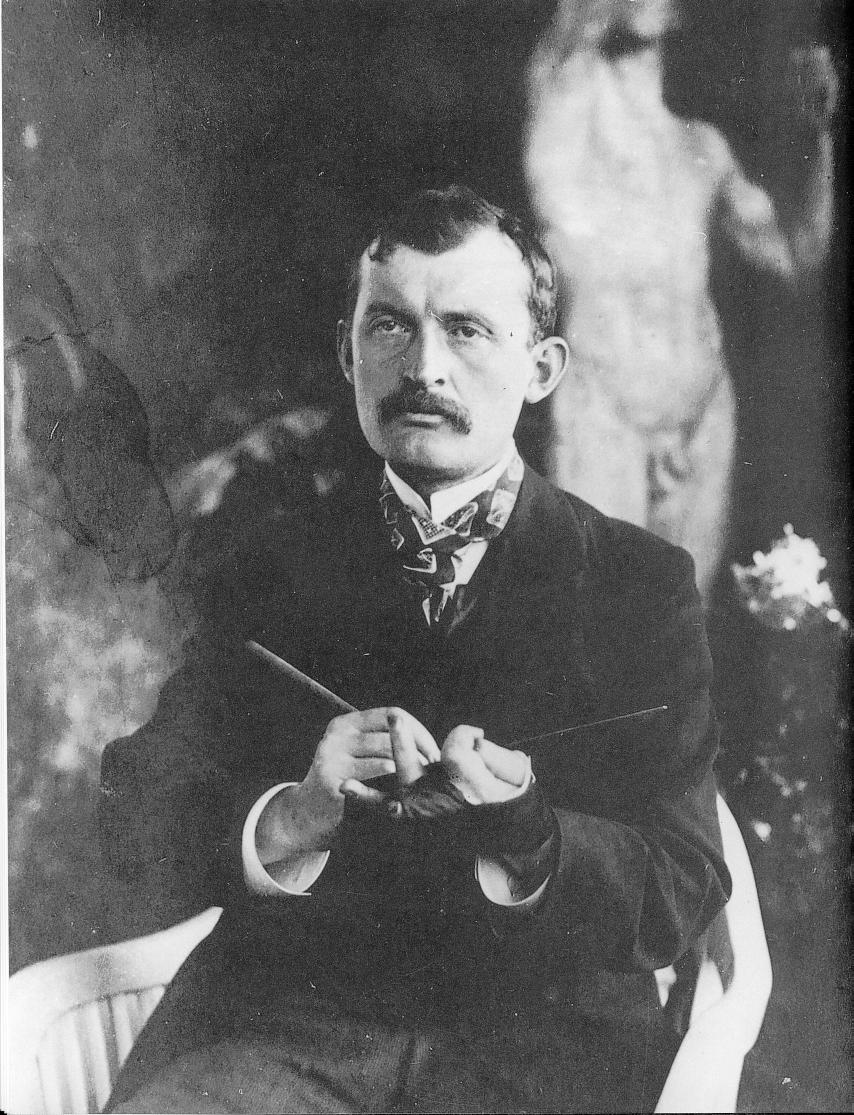
munchDecember 2, 1863 – January 23, 1944, he was a Norwegian painter. He is regarded as a Symbolist and a forerunner of expressionism. He focused on themes of fear, anxiety, melancholy, and death. He did not believe in heaven, or other Christian themes or doctrines, as far as I know.

My intention is to reintroduce you to an artist that I highly esteem.  The challenge I suppose is to understand the issues that Munch discovers in his work. He clearly taps into the ‘angst’ of the modern man, and what he does perpetuates a mindset for our generation.

Obviously these paintings are just an introduction, and I understand that they are selective. I have refrained from any kind of interpretation, other than laying down a general principle–  to Munch, color is everything.

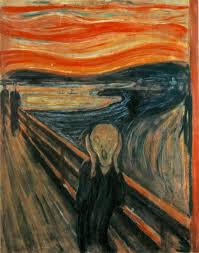
Munch was probably not a cheery person. He essentially was driven by anxiety through his whole life. It seems that he could be very ambitious. His classic work was “The Scream” which he made several versions to sell. He used different mediums to do this– tempera, lithograph and pastel. Interestingly, “The Scream” is a favorite target for art thefts. It captures the minds of every modern thinker.

Within our culture, “The Scream” is iconic. Warhol, Gary Larson, Dr. Who and even “The Simpsons” have cashed in on a parody of it.

Quotes

“I painted the picture, and in the colors the rhythm of the music quivers. I painted the colors I saw.”

“Painting picture by picture, I followed the impressions my eye took in at heightened moments. I painted only memories, adding nothing, no details that I did not see. Hence the simplicity of the paintings, their emptiness.”

“For as long as I can remember I have suffered from a deep feeling of anxiety which I have tried to express in my art.”

“Disease, insanity, and death were the angels that attended my cradle, and since then have followed me throughout my life.”

munch-thescream
The Scream, 1893
Munch’s best known painting ^


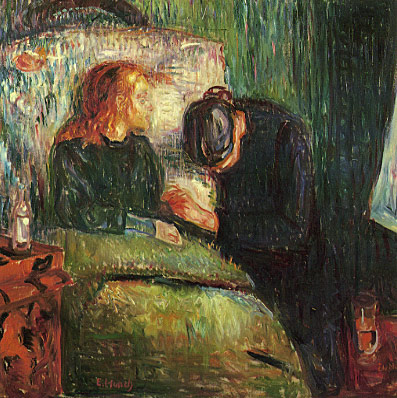
The Sick Child (1885)
Melancholy, 1894
Melancholy, 1894
Golgotha, 1900
Golgotha

Comparing Our Differences

“Do not insult the deaf or cause the blind to stumble. You must fear your God; I am the Lord.”

Leviticus 19:14, NLT

“I served as eyes for the blind and feet for the lame.”

Job 29:15, NLT

Our disabilities can give us a rough time of it. Being mentally ill– whether with depression, schizophrenia, bipolar, autism spectrum, etc can create many challenges. In some sense, those of us with physical or mental issues are all in the same boat. Many of us are physically, mentally, or developmentally disabled.

Or are we? I suspect that there are a million permutations (or more) of disability. One is in a wheelchair and suffers from migraines and depression. Another has severe anxiety. Others have little or no self-control and is becoming a drunkard, and yet another is just a child but diagnosed as autistic.

The fact of  labeling people often diminishes them into categories. A young child with Downs Syndrome is often labeled, and they seldom have the opportunities that ‘normal’ children receive. This is usually an unconscious reaction to their handicap.

In Nazi Germany, those with a mental or physical illness were rounded up and sterilized or euthanized (murdered) to achieve an ‘Aryan superiority.’ Systematically, untold thousands of disabled people were executed. We call this “eugenics” and it still is alive and well in the 21st century. It is rampant in a world that embraces “social darwinism” as its ideology.

We must remember these things. We also need to understand that we shouldn’t compare people with people. And we dare not pass judgement on anyone who is different. Disabled people should not wear labels, especially when ‘normal’ people slap it on us. A person’s perceived value should never, ever be part of a Christian believer’s agenda.

*

ybic, Bryan

*