The Numbers Don’t Lie: Mental Illness in America

giving-up2

~Mental Illness in America, 2016

Mental disorders are common in the United States and internationally. An estimated 26.2 percent of Americans ages 18 and older — about one in four adults — suffer from a diagnosable mental disorder in a given year.1

When applied to the 2004 U.S. Census residential population estimate for ages 18 and older, this figure translates to 57.7 million people.2 Even though mental disorders are widespread in the population, the main burden of illness is concentrated in a much smaller proportion — about 6 percent, or 1 in 17 — who suffer from a serious mental illness.1

In addition, mental disorders are the leading cause of disability in the U.S. and Canada.3 Many people suffer from more than one mental disorder at a given time. Nearly half (45 percent) of those with any mental disorder meet criteria for 2 or more disorders, with severity strongly related to comorbidity.1

In the U.S., mental disorders are diagnosed based on the Diagnostic and Statistical Manual of Mental Disorders, fourth edition (DSM-V).4

Mood Disorders

Mood disorders include major depressive disorder, dysthymic disorder, and bipolar disorder.

  • Approximately 20.9 million American adults, or about 9.5 percent of the U.S. population age 18 and older in a given year, have a mood disorder.1,2
  • The median age of onset for mood disorders is 30 years.5
  • Depressive disorders often co-occur with anxiety disorders and substance abuse.5

Major Depressive Disorder

  • Major Depressive Disorder is the leading cause of disability in the U.S. for ages 15-44.3
  • Major depressive disorder affects approximately 14.8 million American adults, or about 6.7 percent of the U.S. population age 18 and older in a given year.1, 2
  • While major depressive disorder can develop at any age, the median age at onset is 32.5
  • Major depressive disorder is more prevalent in women than in men.6

Dysthymic Disorder

  • Symptoms of dysthymic disorder (chronic, mild depression) must persist for at least two years in adults (one year in children) to meet criteria for the diagnosis. Dysthymic disorder affects approximately 1.5 percent of the U.S. population age 18 and older in a given year.1, This figure translates to about 3.3 million American adults.2
  • The median age of onset of dysthymic disorder is 31.1

Bipolar Disorder

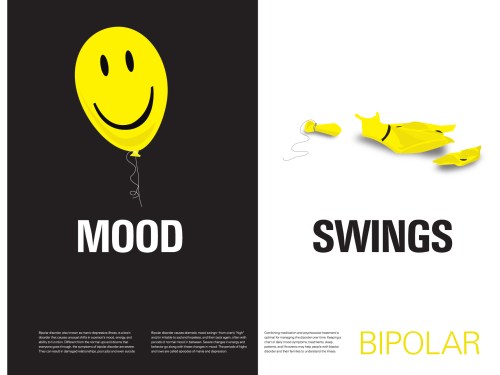
  • Bipolar disorder affects approximately 5.7 million American adults, or about 2.6 percent of the U.S. population age 18 and older in a given year.1, 2
  • The median age of onset for bipolar disorders is 25 years.5

Suicide

  • In 2006, 33,300 (approximately 11 per 100,000) people died by suicide in the U.S.7
  • More than 90 percent of people who kill themselves have a diagnosable mental disorder, most commonly a depressive disorder or a substance abuse disorder.8
  • The highest suicide rates in the U.S. are found in white men over age 85.9
  • Four times as many men as women die by suicide9; however, women attempt suicide two to three times as often as men.10

Schizophrenia

  • Approximately 2.4 million American adults, or about 1.1 percent of the population age 18 and older in a given year,11, 2 have schizophrenia.
  • Schizophrenia affects men and women with equal frequency.12
  • Schizophrenia often first appears in men in their late teens or early twenties. In contrast, women are generally affected in their twenties or early thirties.12

Anxiety Disorders

Anxiety disorders include panic disorder, obsessive-compulsive disorder, post-traumatic stress disorder, generalized anxiety disorder, and phobias (social phobia, agoraphobia, and specific phobia).

  • Approximately 40 million American adults ages 18 and older, or about 18.1 percent of people in this age group in a given year, have an anxiety disorder.1,2
  • Anxiety disorders frequently co-occur with depressive disorders or substance abuse.1
  • Most people with one anxiety disorder also have another anxiety disorder. Nearly three-quarters of those with an anxiety disorder will have their first episode by age 21.5 5

Panic Disorder

  • Approximately 6 million American adults ages 18 and older, or about 2.7 percent of people in this age group in a given year, have panic disorder.1, 2
  • Panic disorder typically develops in early adulthood (median age of onset is 24), but the age of onset extends throughout adulthood.5
  • About one in three people with panic disorder develops agoraphobia, a condition in which the individual becomes afraid of being in any place or situation where escape might be difficult or help unavailable in the event of a panic attack.12

Obsessive-Compulsive Disorder (OCD)

  • Approximately 2.2 million American adults age 18 and older, or about 1.0 percent of people in this age group in a given year, have OCD.1, 2
  • The first symptoms of OCD often begin during childhood or adolescence, however, the median age of onset is 19.5

Post-Traumatic Stress Disorder (PTSD)

  • Approximately 7.7 million American adults age 18 and older, or about 3.5 percent of people in this age group in a given year, have PTSD.1, 2
  • PTSD can develop at any age, including childhood, but research shows that the median age of onset is 23 years.5
  • About 19 percent of Vietnam veterans experienced PTSD at some point after the war.13 The disorder also frequently occurs after violent personal assaults such as rape, mugging, or domestic violence; terrorism; natural or human-caused disasters; and accidents.

Generalized Anxiety Disorder (GAD)

  • Approximately 6.8 million American adults, or about 3.1 percent of people age 18 and over, have GAD in a given year.1, 2
  • GAD can begin across the life cycle, though the median age of onset is 31 years old.5
To finish reading this article, you will need to go to its source at:

http://www.nimh.nih.gov/health/publications/the-numbers-count-mental-disorders-in-america/index.shtml  


cropped-christiangraffiti1 (1)

Bipolar Disorder– Basic Stuff


If you have bipolar disorder, you may recognize many below. Not everyone has exactly the same symptoms. Talk with your healthcare provider about your symptoms at each visit.

  • Feeling sad or blue, or “down in the dumps”
  • Loss of interest in things you used to enjoy, including sex
  • Feeling worthless, hopeless, or guilty
  • Sleeping too little or too much
  • Changes in weight or appetite
  • Feeling tired or having little or no energy
  • Feeling restless
  • Problems concentrating or making decisions
  • Thoughts of death or suicide


Symptoms of mania may include:

  • Increased energy level
  • Less need for sleep
  • Racing thoughts or mind jumps around
  • Easily distracted
  • More talkative than usual or feeling pressure to keep talking
  • More self-confident than usual
  • Focused on getting things done, but often completing little
  • Risky or unusual activities to the extreme, even if it’s likely bad things will happen

Here are some behaviors that may be seen in people with bipolar disorder. Please note some of these behaviors may also indicate a different problem, so proper diagnosis is important.

  • Agitation
  • Alcohol or drug abuse
  • Irritability
  • Excessive gambling
  • Violence
  • Poor judgment with decisions
  • Careless spending, buying sprees
  • Talking about hurting oneself
  • Risky sex or change in sexual activity
  • Impulsive financial investments
  • More arguments
  • Change in energy level, appetite, or sleep pattern
  • Relationship problems at home or work
  • Mounting debt
  • Drinking or drugging for ‘escape’ or maintenance purposes
  • Legal/criminal issues
Visit http://www.webmd.com/depression/guide/bipolar-disorder-manic-depression for more detailed information about bipolar disorder and its symptoms.

bry-signat-1

cropped-christiangraffiti1 (2)


Animated Dust

face

18 “I will go home to my father and say, “Father, I have sinned against both heaven and you, 19 and I am no longer worthy of being called your son. Please take me on as a hired servant.”’

Luke 15:18-19, NLT

“In the same way, when you obey me you should say, ‘We are unworthy servants who have simply done our duty.’”

Luke 17:10

 flourish14

I admit it. I am flawed. I am a contradiction inside of an enigma– at times more a devil than an angel. And today I fancy no pretenses to righteousness. But I can tell you all about sin, I’m thinking that maybe I’ll sell tickets. I’m the spiritual version of “the elephant man.” But yet, I still know that I’m completely loved and secure through faith.

I’m convinced that God’s ability to hold me outweighs all of my sin. His mercy is continually refreshed and continues to exceed my iniquity by a massive margin. I can try to blame my erratic behavior on my mental illness, as I’m reasonably certain that it has something to do with things.

“At best we are but clay, animated dust; but viewed as sinners, we are monsters indeed. Let it be published in heaven as a miracle that the Lord Jesus should set His heart’s love upon people like us.”

Alistair Begg

I will never have it together. At best I can only keep coming back to this Grace that has decided “to never let me go.” I only stand, only because He makes it so.  I’ve given up trying to be worthy enough. I seem to chase a ‘laser pointer’ like a over-caffeinated cat, and it is starting to get a little old. (But maybe this time I’ll finally catch it.) Writer Anne Lamott wryly explained her own issues:

“I thought such awful thoughts that I cannot even say them out loud because they would make Jesus want to drink gin straight out of the cat dish.” 

Anne Lamott

The Holy Scriptures never put human beings on a pedestal. We are never seen as noble or excellent specimens of righteousness. We sin in deed and in thought continually. The parable of the Pharisee and the Tax-collector tells us that a consciousness of sin and a holy God is the only way to be declared just. Both men were rascals, but only one admitted it.

We sin sins of commission and also of omission daily. In fact, I have determined that I have sinned more as a believer than I ever did as a non-believer. This shouldn’t be a surprise, but it is. I’ve been pretty busy the last 32 years. I have been ‘ungodly,’ on more than one occasion.

I want to encourage you today in Him. Life can be such a grind, and your hope anemic. But consider Him who has come for you. Let Jesus take your heaviness, ask Him for His peace. A fair exchange, don”t you think?

Pastor Bryan Lowe
Pastor Bryan Lowe

aabryscript

The Modern Tax-Collector

Pharisee-and-Publican

Luke 18:9-14, ESV

He also told this parable to some who trusted in themselves that they were righteous, and treated others with contempt: “Two men went up into the temple to pray, one a Pharisee and the other a tax collector. The Pharisee, standing by himself, prayed thus: ‘God, I thank you that I am not like other men, extortioners, unjust, adulterers, or even like this tax collector. I fast twice a week; I give tithes of all that I get.’

But the tax collector, standing far off, would not even lift up his eyes to heaven, but beat his breast, saying, ‘God, be merciful to me, a sinner!’

Essentially it would seem, that there are only two kinds of people, (which simplifies things.)  On the right stands the religious man, who has confided  in a level of righteousness that he deems adequate.  But his sin is multi-faceted.  A big chunk has to do with how he perceives others in comparison to himself.  He often despises those who are failures, losers, and criminals.  He points to them only to bolster his own standing. It generates his own feelings of religiousness.

Too many churches have become places were Pharisees come together to congratulate themselves.  These men and women do not operate from brokenness and humility.  They know nothing of tears over their sin.  But they pat themselves on their back because of their progress in the ways of God.  Life seems so wonderful in our churches.  We leave the service comfortably encouraged in our self-righteousness.

The tax-collectors of this world are its drunks, addicts, mentally ill, and the losers.  They stand afar off. And they don’t even have the energy or confidence to turn to God.  They know exactly what they have done, and understand perfectly that they are less then zero.  There is such a gap between these two men, and it has only deepened to this present situation.

Where are the bipolar, the schizophrenic, the person with OCD in our churches?  For that matter, where has is the unwed mother, the crack addict, and the homosexual gone?  I will tell you where, they are “standing afar off”People with ugly secrets and intense issues are often scared to death by religious people.

Please be aware. I didn’t intend for this to be a hard word.  But many of the “rascals” of the Church have gone missing!  We must seek them out and bring them home.  The sinner very often needs our encouragement to “come and dine” with Jesus. The last verse of Jesus’ parable sums up the lesson–

“I tell you, this man went down to his house justified, rather than the other. For everyone who exalts himself will be humbled, but the one who humbles himself will be exalted.”

Luke 18:14

aabryplain