God’s Good and Perfect Gifts

I often hear people say that the bad things that happen to them are God’s punishment for something wrong they have done. I have a friend who desires to find someone to marry, but has said she doesn’t think God will ever bring her a mate because of all the wrong she has done in the past with respect to relationships. In the news we hear televangelists say natural disasters are God’s punishment for the sins of the people in the area hit by the disaster.

But I don’t think God works that way.

Photo by Pixabay on Pexels.com

James wrote, “Every good and perfect gift is from above, coming down from the Father of the heavenly lights, who does not change like shifting shadows. He chose to give us birth through the word of truth, that we might be a kind of firstfruits of all he created.” James 1:17-18 (NIV). God desires to give good gifts, not punishment.

I also think of Job, a man who endured great suffering and loss. But none of it was punishment from God. Rather, all of his sorrows came from Satan, albeit with God’s permission, so that Satan would see that God’s redeemed and faithful servants would never reject Him simply because of trials they face. See Job 1-2 (NIV).

For the believer in Christ Jesus, all the punishment for our sins has already been meted out at the cross. As Jesus said, “It is finished.” John 19:30 (NIV). To believe that we need to suffer punishment for our own sin is to believe that Jesus’ sacrifice was insufficient. The apostle John wrote, “My dear children, I write this to you so that you will not sin. But if anybody does sin, we have one who speaks to the Father in our defense—Jesus Christ, the Righteous One. He is the atoning sacrifice for our sins, and not only for ours but also for the sins of the whole world.” 1 John 2:1-2 (NIV). God does not seek to punish, but to restore and redeem those He loves.

There are, however, natural consequences of sin.

If we are gluttonous, we are likely to be overweight and suffer various illnesses that come from poor eating habits.

If we get drunk, especially habitually, we will suffer in terms of health problems, possibly losing a job, or having financial difficulties because we spend too much money on alcohol.

If we get involved with other drugs, the same problems can happen, perhaps even worse if they are illegal drugs because we could end up in prison for breaking the law.

If we are sexually promiscuous we may contract diseases, end up with a child we didn’t want, or will suffer emotional damages and loneliness.

If we gossip and badmouth others, we will damage others view of us and damage our relationships.

Every sin has natural consequences. Sometimes we are fortunate to avoid the worst of the natural consequences, but not always. And all sin results in the natural consequence of separating us from God because our guilt and shame cause us to avoid God. That has been the case from the first sin in the Garden of Eden, when Adam and Eve hid from God.

When the woman saw that the fruit of the tree was good for food and pleasing to the eye, and also desirable for gaining wisdom, she took some and ate it. She also gave some to her husband, who was with her, and he ate it. Then the eyes of both of them were opened, and they realized they were naked; so they sewed fig leaves together and made coverings for themselves.

Then the man and his wife heard the sound of the LORD God as he was walking in the garden in the cool of the day, and they hid from the LORD God among the trees of the garden. But the LORD God called to the man, “Where are you?”

He answered, “I heard you in the garden, and I was afraid because I was naked; so I hid.”

Genesis 3:6-10 (NIV).

God knows what is best for us and has declared what is sin based on His superior knowledge of what is beneficial for our physical and emotional well-being. Just as He gave to Adam and Eve all that they needed in the Garden, He desires to give us good and perfect gifts.

In addition to the natural consequences of individual sinful behavior, the sinful nature of mankind over the centuries has brought into our lives a brokenness that leads to pain and suffering. The evil nature of some people can lead to suffering by others, such as a violent man who beats his wife, or the drunk driver who causes an accident that kills others, or a serial killer who tortures his victims. Our sinfulness is also engrained in our DNA and can lead to sickness and disease that brings suffering as well.

So if you are suffering and think that God is punishing you, think again. Return to God and seek His face, seek the good and perfect gifts that He has offered. Lean on Jesus in your suffering because He desires to restore and redeem you, not cause you more suffering. “This is the message we have heard from him and declare to you: God is light; in him there is no darkness at all.” 1 John 1:5 (NIV). Come into the light and rest in His love.

Being Lured Back, [Apostasy]

360px-Atheist_stickers.jpg (360×480)

Recently I read a news story about pastors who have been led into atheism.  These are all evangelical men, some with more than 20 years of experience in the pulpit.  They’ve turned to a belief that God does not exist. Here is part of the article:

There is among us a prevalent manipulation that is relentlessly reaching out for us in order to destroy our faith.  This force has an ally; and this ally is resident in us.  My flesh becomes the connection that Satan needs to link with–  to make it work.  The Bible calls this residing connection, ‘the old man’.

Some of the ‘brothers’ who now walk in apostasy to the Faith still remain in ministry.  Even though they don’t believe anymore, they continue to preach and counsel their congregations.  Many will only speak out under the condition of anonymity.

One in particular said it was somewhat difficult to continue to work in the ministry. “But I just look at it as a job and do what I’m supposed to do,” he said. “I’ve done it for years.”

This pastor said, that when speaking to parishioners, he tried to stick to the sections of the Bible that he still believed in — the parts about being a good person. Many pastors say that they would like to leave their jobs but they can’t afford to.

Please someone, and correct me if I’m wrong, but doesn’t the Bible speak of shepherds and hired men?  Some who are called by God, and others who do it for money?  Does this disturb anyone but me? 

 He flees because he is a hired hand and cares nothing for the sheep.”

John 10:13

These ‘pastors’ and their issues of faith are all on the heart of God.  He loves these men.  His Son died for them.  They are precious.   But they make an effort to conceal themselves, in order that they will continue to receive the wages/benefits they’ve become accustomed to.

When I was ordained into the ministry, it came with the provision that if I could not remain faithful that I was obligated to ‘step down’.  If I ever become conflicted, I would voluntarily remove myself from the ministry.  It was part of the ‘package’ and it came with that understanding. Ordination for me was as much a decision to be faithful as it was for empowerment from above. 

There is so much confusion, but that is characteristic of the times in which we live.  Our shepherds are an increasingly influential part of our lives in these last days.  They guide and preach the Word to us. We owe much to our pastors.

Perhaps we have not prayed for them like we should? (!)

As a result they’ve become casualties. (Pray for your pastor).

There is a desperate need for us to take the darkness seriously.  It has a pulling power to reach out and latch upon us.  It opens its mouth to swallow us into a never-ending night.  Everything that strays ends up in its claws. The thing that saves us is the presence of Jesus.  His hand on our lives removes us out of Satan’s claim.

But the darkness has an incredibly sweet allure.  It’s a power that is beyond our comprehension.  It seems at first to want to enhance us. Satan causes us to think that we are immune or superior to all that God has commanded. Darkness is at work in our minds and we will begin to walk into even more foolishness. Our deception only deepens as we start to diminish the very tenets of discipleship.

Truth does not come to those who are trading their salvation for even more darkness.

Duplicity is just another form of hypocrisy and deception, you can’t sugarcoat poop and make it good to eat. A lie is still a lie no matter who is speaking it.

” But though we, or an angel from heaven, preach any other gospel unto you than that which we have preached unto you, let him be accursed.”

Galatians 1:8

bry-signat (1)

cropped-christiangraffiti1.jpg

*

P.S. The story that ‘got me going’ is found here.

http://abcnews.go.com/WN/atheist-ministers-leading-faithful/story?id=12004359


The Blessings of a Long Battle, part 4

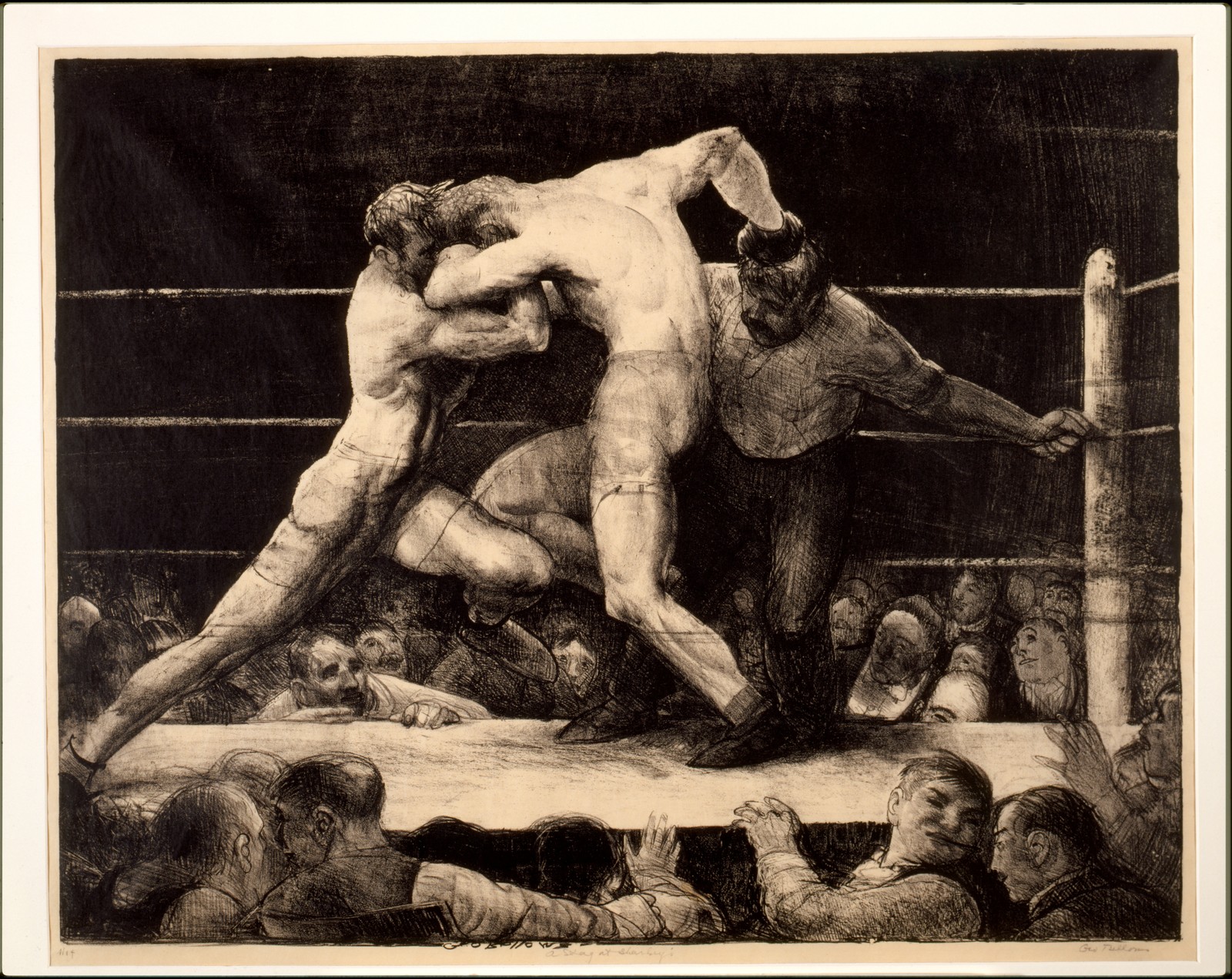
boxing3

In thinking about this final installment about how God can bring much good out of our protracted struggle with sin, weakness, or a problem, it dawned on me how important it is to see the Big Picture. In some ways this post reiterates truths in part 2 of this series, but also adds important new dimensions to those truths and explores new territory.

When a soldier goes through boot camp, it’s crucial for him or her to see the overall purpose of his training–the Big Picture. He or she is being pushed and tested in different ways to the extreme so that they will be prepared for any situation on the battlefield, won’t crack under pressure, and will be a team player.

In the conquest of Canaan under Joshua’s leadership, the nation of Israel experienced many victories over different hostile nations. However, Judges 3:1–4 says that God did not allow the Israelites to completely triumph but left certain enemies in the land (e.g., the Philistines) so that his chosen people would learn warfare.

When we became Christians, God could have put us in a cocoon of protective grace where we would be insulated from our three primary enemies–the world, the flesh, and the devil–but he didn’t so that we would also learn warfare.

If he would’ve sheltered us from the battle, we would end up like many “trust fund babies,” who, because of their vast inherited wealth, never have to work a day in their lives. They’re protected from the toil and struggle of life and never have to worry about paying the rent or the electric bill.

Often there is something profoundly missing in their lives: many are spoiled, shallow, and have not been battle–tested. Perhaps God designed an existence where we battled the world, the flesh, and the devil so that we would not end up becoming spiritual trust fund babies.

Macarius was a great monk who composed the Macarian Homilies in the 4th century. He was convinced that, if after becoming Christians, we were protected in a cocoon of grace from the temptations of the world, the flesh, and the devil, many of us would soon become conceited and fall as Satan fell. Instead of a three steps forward, two steps back grind that life often is, we would have a series of unbroken successes and become lifted up in pride and fall like Lucifer did.

In seeing the big picture, nothing is more important than understanding that God the Father through the Holy Spirit has been preparing a Bride for his Son in a Marriage that will span eternity. He wants you to be a part of that Bride. The Father wants the Bride to fervently love the Groom.

There is no love without free choice. If we would’ve been protected from the enemies of our soul, and choosing the Groom was exquisitely easy or even automatic, where’s the love that has been tested in the furnace of affliction? Like any spouse, Christ wants to be chosen. If we were automatons or even semi–automatons, where’s the love in that?

When we are in a long struggle with sin or weakness, it is because we have become over–attached to some created thing. Addiction is over–attachment in the extreme (e.g., overeating, alcohol, drugs, pornography, sex, power, work, shopping, etc.)

Christ the Uncreated One wants to be chosen over all the created things. Christ the Groom wants to stand in the midst of all his competitors–i.e. created things–and have the Bride choose him. One of the blessings then of a long battle is this: it’s the vehicle whereby we choose Christ as our Groom, as our only lover.

Does that love somehow go away if you’re a Christian who is up to your eyeballs in sin, addiction, and weakness? If anything God loves you more after you fall, because where sin abounds, grace abounds more. And as the old religious cliché tells us, he loves us in our sin and loves us too much to leave us there.

 *

Jonathan

Check out Jonathan’s own site at http://www.openheavensblog.com/.


The Blessings of a Long Battle, part 2

brutal-boxing

 “Do not fear the conflict, and do not flee from it; where there is no struggle, there is no virtue.”   John of Kronstadt

Part 1 of this post highlighted how God can bring good out of a long struggle with a sin, weakness, and/or problem by helping the Christian make the transition from putting their faith in formulas (e.g., “Do these three things and your problem will go away”) to a restful trust in Christ. Again, no sane Christian advocates habitual sin but the benefits of a protracted battle are numerous:

(1)  After a long battle, in making the transition from formulas to faith in God, a new brokenness develops in the believer. They’ve come to the end of themselves, run out of “self–effort fuel”, and are beginning to learn what Christ meant when he said, “…apart from me you can do nothing” (John 15:5).

(2) During a long battle with sin or weakness, there is a pattern of falling down and getting up. Proverbs 24:16 says that a righteous man falls seven times but keeps rising again. In this process many Christians report that a new intimacy has emerged in their relationship to God. They’ve come to know the God of mercy and compassion as never before because they’ve been repeatedly forgiven after their many stumbles.

(3) “He who is forgiven much loves much.” Along with a new intimacy, a greater love for God can also develop, after a long battle, because we’ve been forgiven over and over.

(4) And since God has extended his tender mercies to us over and over, we then can extend his mercy and compassion to others who have a protracted struggle with some issue. If our heart is right, a long battle can inoculate us from self–righteousness and judgmentalism in relation to others who fall over and over. How can we not extend to them the same grace that God extended to us?

In extending this grace to others, we may become a wounded healer to them. The healing we received from Christ during our struggle is graciously passed on those often struggling with similar issues. Healing emerges from your wounds just as resurrection emerges from death.

(5) After a war, the soldier of Christ often emerges battle–tested and wise to the schemes of the enemy. If a person has been pulled down into the dust 27 different ways by the devil, then, if he or she is paying attention, they’ve learned 27 strategies the enemy of our soul uses to try to destroy us.

In Twelve Step programs, one often hears the acronym H.A.L.T. mentioned in discussing relapse back into addiction. These four letters stand for hungry, angry, lonely, and tired and emphasize how these conditions create fertile soil for relapse.

If you frame the issue a different way, these are four strategies the devil uses to bring us back into bondage. How was this acronym learned? By people relapsing over and over when these conditions were present. Recovering people became wise through their failures in their long battle with addiction.

*

Jonathan

posted from http://www.openheavensblog.com/