Tears Do Things

I’ve been thinking a lot about tears lately—in part because Pastor Bryan pointed out to me how many hits my post titled God Keeps Your Tears in a Bottle has had, in part because I’ve cried more than a few tears this year, and in part because I’ve been listening to Johnny Cash’s Cry, Cry, Cry in my car all week—and I thought I’d share my thoughts with you all here.

First of all, people cry for a lot of reasons.

Earlier this year my sister died of breast cancer at only 61 years old. I cried, a lot. It’s normal and even helpful to shed tears over the death of a loved one even if we know where they are going when they die, because it allows us to express the grief we feel over not having them in our lives any more here on earth.

I remember a time I had a previous boss say some very cruel things to me in front of other people. She accused me of having done things I had not based on motives I did not have. I was very angry, hurt, and frustrated. And I cried, a lot. I didn’t cry in front of her, mind you, but afterwards I did. And it was good to express that anger to others.

Just yesterday I experienced unexpected tears.

I was reciting the prayers of the people in church, which I’ve done many times. Our church has many prayer concerns for members, family, and friends with health concerns and more. Towards the end of the prayer I began to lift up prayers for a church member’s brother-in-law who is a pastor back in New York because he is faced with conducting the funerals of two teens who had been killed in an accident last week.

I recently wrote this poem.

Tears

Tears of sorrow, anger
drench my soul
course without end
eroding pain, anguish

Where once only aching
occupied my heart
now is a deep empty ravine
carved by a river of tears

Tears of forgiveness
water my soul’s riverbed
allowing flowers of love
to flourish and grow

Peace arises in my heart
held aloft by God’s promises
the fragrance of sweet alyssum
blossoms of my soul

I think the saddest tears of all, though, are the tears of major clinical depression. These tears are so sad because the one who cries them doesn’t know what purpose they serve.

I remember when I was suffering from depression sitting in a chair and just crying. When someone asked me why I was crying all I could say was, “I don’t know.” And I truly didn’t. The tears didn’t wash away pain; they only seemed to make it all the worse.

In the midst of such tears, there is One who knows their purpose.

Romans 8:26 says: “In the same way, the Spirit helps us in our weakness. We do not know what we ought to pray for, but the Spirit himself intercedes for us through wordless groans.” Through prayer God can sometimes lead us to an understanding of the purpose of the tears of depression, and ultimately to healing.

That makes your tears a good thing.

Henry Ward Beecher

Check out Linda’s site.

To Be, Rather Than Seem to Be

il_340x270.336585301

“When the woman saw that the fruit of the tree was good for food and pleasing to the eye, and also desirable for gaining wisdom, she took some and ate it. She also gave some to her husband, who was with her, and he ate it. Then the eyes of both of them were opened, and they realized they were naked; so they sewed fig leaves together and made coverings for themselves.”

Genesis 3:6-7

The broken believer survives because he or she is constantly having to move toward “authenticity.” There exists a credibility and a realness about them. You’ll suddenly realize that you’re talking with someone who is real. They’ve stepped out of the wreckage and have survived their personal catastrophes. This doesn’t come easy.

It is a rarity and a gift.

On the other hand, we see those wrapped up in so much self-imposed deception that can’t admit anything is wrong. Like the problem drinker who denies he has a problem, we can’t handle the reality and drink to alter it. The addicted are compelled to live a delusion of their own choices, and soon discover they are hopelessly trapped. And so we hide under our favorite bush.

(Euphoria was my favorite.)

“When the cool evening breezes were blowing, the man and his wife heard the Lord God walking about in the garden. So they hid from the Lord God among the trees. Then the Lord God called to the man, “Where are you?”

Genesis 3:8

There is a Latin phrase, esse quam videri; to be rather than seem to be.” We would rather be “seeming to be” than actually just “be.” The sons of Adam and the daughters of Eve are still using “fig leaves.” We don’t want to deal with the truth about ourselves and face the sin of our lives. But it seems to be more than that.

The struggler and the broken believer may try to conceal themselves.

They may hold up an image that deflects the curious onlooker from seeing the real them. We won’t deal with the truth, and we choose to hide ourselves. We want to be seen as “together” even if we are not. It is all about looking good. This is pretense and sham. We dodge and deflect.

“And this is the judgment: the light has come into the world, and people loved the darkness rather than the light because their works were evil.”

John 3:19

 This was Jesus’ indictment of the human heart. I wish it was otherwise.

Each day I must put to death my old self. Take my meds, and ask the Lord for strength to stay real. No more pretense, and no more projecting a false self to others (and myself.) I choose reality over fantasy.

The Holy Spirit is eagerly waiting to fill me. In this I discover I can live well with the strength and joy He gives me.

“The God who can change a sinner into a Christian by giving him His life can equally transform the fleshly Christian into a spiritual one by giving him His life more abundantly.”

—Watchman Nee

Lord Jesus, may it be that the real me meets the real You. Keep me real and authentic. Amen.


bry-signat (1)

Bethesda, 31 A.D.

healing-the-lame

“Afterward Jesus returned to Jerusalem for one of the Jewish holy days. Inside the city, near the Sheep Gate, was the pool of Bethesda, with five covered porches. Crowds of sick people—blind, lame, or paralyzed—lay on the porches.One of the men lying there had been sick for thirty-eight years. When Jesus saw him and knew he had been ill for a long time, he asked him,“Would you like to get well?”

“I can’t, sir,” the sick man said, “for I have no one to put me into the pool when the water bubbles up. Someone else always gets there ahead of me.”

Jesus told him, “Stand up, pick up your mat, and walk!”

Instantly, the man was healed! He rolled up his sleeping mat and began walking! But this miracle happened on the Sabbath,

John 5:1-9, NLT

We were following Jesus and He led us to the pool of Bethesda. A crowd gathered quickly, but I jostled myself right up front. We stood waiting, we pretty much knew something big was going to happen. And it did. I can never be the same, after what I saw. This is my simple story.

So much was happening, and as I watched I realized that so much escapes me. I can’t take it all in. But when I decide to watch Jesus, I quickly become aware of what is important, what is real. It starts to make sense. The chaos of the moment becomes calm. At least it does when He takes charge.

There were hundreds of sick people camped out. They are laying under the roofs, with their thin mats. The smell alone was really bad, all were unwashed and some with putrid and festering sores. Dirty bandages are used over and over, and shared with all.

Finally, all are watching Jesus, they become quiet wondering what He will say. We’re all pretty curious. We see Jesus as He walks directly into this ugly field of suffering people. He doesn’t hesitate or flinch.

It is almost like He is at home in this dreadful place.

Just to have a religious teacher visit Bethesda is rare. They never come. And today is the Sabbath (and a special feast day at that) and that alone makes it impossible. And yet Jesus is here, and that somehow is wonderful.

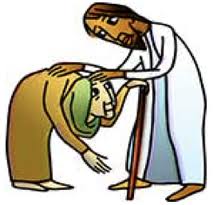
Jesus stops to talk with a man who is an ‘old-timer’ here in this horrible place of pain. This man had been sitting here for almost 40 years, and that is a long, long time. Jesus speaks. “Do you want to get well?” Jesus waits quietly.

“Sir, when the water is stirred, I don’t have anybody to put me in the pool. By the time I get there, somebody else is already in.” The man explains. He has an excuse that seems like a reason. Nothing has ever gone right– ‘I always miss out, and I can’t find anyone to help me.’ And I suppose that this is the world of the blind, the crippled, the paralyzed in Israel. They are confined to Bethesda, with the weak hope of finally being healed. I don’t think that this is how it was meant to work.

This man was horribly discouraged.  It was then Jesus said, “Get up, take your bedroll, start walking.” And this very crippled man was healed on the spot. No ‘hocus-pocus’, no incantations, no magic dust or rubbing of sacred bones. Nothing.

He was healed by a few spoken words.

I cannot emphasize my own astonishment enough. It shook all of us to the core. We were all stunned, and undone. The crowds, and all the sick and the paralyzed just stopped and stared. There are so few moments in life, just like this. We just looked at each other sort of stunned.

The ramifications of what we all had witnessed were staggering. Shocked, we turned to each other, and a great fear fell on us like a heavy blanket. The crowd did not disperse, we were completely shocked, and pretty much speechless.

For years that sense of awe has never left me.

I don’t really listen to the scorners anymore– they simply have no idea. It completely changed my life. I was never the same after that.

“For the Son of Man came to seek and save those who are lost.”

Luke 19:10

Kyrie elesion,  (Lord, have mercy on us.)

Bryan
 cropped-christiangraffiti1 (1)
 

Jesus Actively Helps Me

shipwreck

“So then, since we have a great High Priest who has entered heaven, Jesus the Son of God, let us hold firmly to what we believe. This High Priest of ours understands our weaknesses, for he faced all of the same testings we do, yet he did not sin. So let us come boldly to the throne of our gracious God. There we will receive his mercy, and we will find grace to help us when we need it most.

Hebrews 4:14-16

These two verses out of Hebrews 4 establish three things.
  • We are “criminals” and in need of representation.
  • Jesus Christ stands ready, and able to help us before both this world and to the one to come.
  • Jesus still has a present day ministry as our priest and provider.

And he is busy! He did not ascend to heaven to wait around for his second coming. He is active, and we are being acted upon.

Saving you, and watching over you, is the present work of heaven.

But there is more, let’s look at the story of Paul’s voyage to Rome in Acts 27. He is a prisoner being escorted to stand before Caesar. He has a guard who is watching him as he travels by ship across much of the Mediterranean.

Because of the time of the year, the trip will be hard. The weather is very iffy, and awful storms could pummel a ship at times. No matter what, it will be a hard journey. Sometimes that happens.

 “When a light wind began blowing from the south, the sailors thought they could make it. So they pulled up anchor and sailed close to the shore of Crete. 14 But the weather changed abruptly, and a wind of typhoon strength (called a “northeaster”) burst across the island and blew us out to sea. 15 The sailors couldn’t turn the ship into the wind, so they gave up and let it run before the gale.”
16 “We sailed along the sheltered side of a small island named Cauda, where with great difficulty we hoisted aboard the lifeboat being towed behind us. 17 Then the sailors bound ropes around the hull of the ship to strengthen it. They were afraid of being driven across to the sandbars of Syrtis off the African coast, so they lowered the sea anchor to slow the ship and were driven before the wind.”

Acts 27:13-17, NLT

The storm is probably a once in a lifetime experience. It seems everyone is problem-solving trying to keep the ship from “breaking up.” They are fighting for their lives. After tossing over the cargo, and the ships tackle, they would have cut down the mast. Leaving it up would only weaken the ship’s hull, which reduces their chances.

They then did something called “frapping.”

It involved wrapping ropes or cables around the hull in a criss-cross manner. This outside strengthening would have been “levered” to increase tightness. It could be an effective way of surviving the unsurvivable.

There is a specific Greek word to describe this frapping. It is used in only one other place in the entire Bible. In Hebrews 4:16 we read–

“So let us come boldly to the throne of our gracious God. There we will receive his mercy, and we will find grace to help us when we need it most.

Can you see the connection? In these desperate times when the storm is ripping up everything, attempting to destroy us– our families, our friends and neighbors. Just survival seems a long stretch. It is then that Jesus fraps (or wraps) us tightly.

But many of us go through typhoons with the cables coiled up on deck. We seem oblivious and ignorant of its availability. We really don’t see the “present tense’ ministry of Jesus standing to intercede. We merit nothing– but He promises us everything. We are on the knife’s edge of falling apart, but perhaps it’s our own fault?

I believe this message has not come to you by accident. You are either in the storm, or know someone who is there. The name of this post is, “Jesus Actively Helps Me.” I hope you will see it, you will need it.

Jesus Christ carries on intercession for us in heaven; the Holy Ghost carries on intercession in us on earth; and we the saints have to carry on intercession for all men.”

     Oswald Chambers

ybic, Bryan