“And Jesus said to him, “Go your way; your faith has made you well.” And immediately he recovered his sight and followed him on the way.”
Mark 10:53, ESV
God has touched you in a profound way, (at least I hope so.) Only He could’ve done this. You’re not the same person now. Just like Jesus healed blind Bartimaeus, you too can really see. The beggar becomes a follower. (Mark 10:46-53.)
So what’s next?
There is always another step to take as we follow Jesus. Everyday there is something new. Our salvation is given freely, but we discover that it’s something active–more like a flowing stream and less like a stagnant pool. If we truly have been “healed,” we’ll want to follow. And now each day is a joyous adventure.
After all, we’ve been terribly blind for a long, long time.
Bartimaeus would never be able to truly explain what had happened to him, at least not in a perfect or complete way to the others–but no matter, it really wasn’t necessary. (But I must believe he tried.) He could see!
Notice the sequence of events in verse 53—
Jesus: “Go your own way.”
Bartimaeus: “..followed Him on the way.”
He was now a true follower. No longer a blind beggar, but he now was a true companion of Jesus and the “church.” He now walked with other believers in the Master’s band of disciples. (Having been blind and instantaneously given sight changed him forever.)
So what happened next?
I suspect Bartimaeus followed the Lord all the way. Although scripture doesn’t say what happened, I believe this ‘ex-blind’ man was now a visible witness to any with eyes to see. Bartimaeus became an authentic witness–God’s megaphone to the power and mercy of Jesus Christ.
I can’t say exactly. Each believer has a different story.
But I do know tomorrow’s life episode is going to be something fantastic, and a challenge. The fruit of the Holy Spirit is given to each who are truly being discipled to follow. The road in front of you just might be excruciatingly hard, but truly there is joy in our journey with Jesus.
“You called, You cried, You shattered my deafness, You sparkled, You blazed, You drove away my blindness, You shed Your fragrance, and I drew in my breath, and I pant for You.”
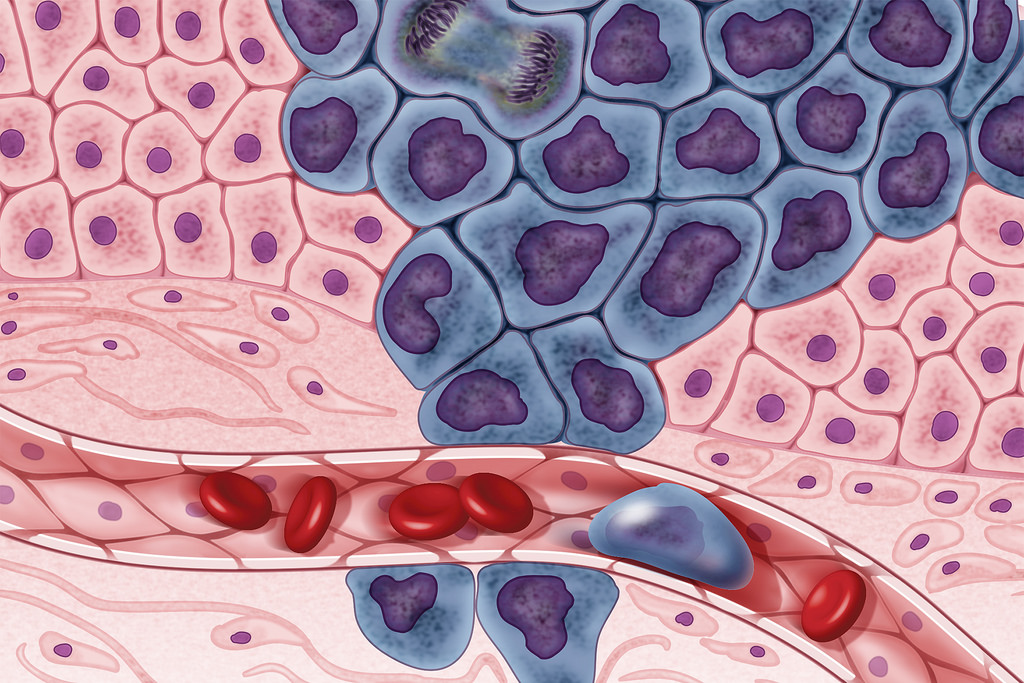
Before I entered college I hardly gave a thought to cancer and terminal illness. But ever since those college days death by disease has walked beside me all the way. Two of my college acquaintances died of leukemia and cancer of the lymph glands before they were 22. At seminary I watched Jim Morgan, my teacher of systematic theology, shrivel up and die in less than a year of intestinal cancer. He was 36. In my graduate program in Germany my own “doctor-father,” Professor Goppelt, died suddenly just before I was finished. He was 62—a massive coronary. Then I came to Bethel, the house of God! And I taught for six years and watched students, teachers, and administrators die of cancer: Sue Port, Paul Greely, Bob Bergerud, Ruth Ludeman, Graydon Held, Chet Lindsay, Mary Ellen Carlson—all Christians, all dead before their three score and ten were up. And now I’ve come to Bethlehem and Harvey Ring is gone. And you could multiply the list ten-fold.
What shall we say to these things? Something must be said because sickness and death are threats to faith in the love and power of God. And I regard it as my primary responsibility as a pastor to nourish and strengthen faith in the love and power of God. There is no weapon like the Word of God for warding off threats to faith. And so I want us to listen carefully today to the teaching of Scripture regarding Christ and cancer, the power and love of God over against the sickness of our bodies.
I regard this message today as a crucial pastoral message.
You need to know where your pastor stands on the issues of sickness, healing, and death. If you thought it was my conception that every sickness is a divine judgment on some particular sin, or that the failure to be healed after a few days of prayer was a clear sign of inauthentic faith, or that Satan is really the ruler in this world and God can only stand helplessly by while his enemy wreaks havoc with his children—if you thought any of those were my notions, you would relate to me very differently in sickness than you would if you knew what I really think. Therefore, I want to tell you what I really think and try to show you from Scripture that these thoughts are not just mine but also, I trust, God’s thoughts.
Six Affirmations Toward a Theology of Suffering
So I would like everyone who has a Bible to turn with me to Romans 8:18–28. There are six affirmations which sum up my theology of sickness, and at least the seed for each of these affirmations is here. Let’s read the text:
I consider that the sufferings of this present time are not worth comparing with the glory that is to be revealed to us. For the creation waits with eager longing for the revealing of the sons of God; for the creation was subjected to futility, not of its own will but by the will of him who subjected it in hope; because the creation itself will be set free from its bondage to decay and obtain the glorious liberty of the children of God. We know that the whole creation has been groaning in travail together until now; and not only the creation, but we ourselves, who have the first fruits of the Spirit, groan inwardly as we wait for adoption as sons, the redemption of our bodies. For in this hope we were saved. Now hope that is seen is not hope. For who hopes for what he sees? But if we hope for what we do not see, we wait for it with patience.
Likewise the Spirit helps us in our weakness; for we do not know how to pray as we ought, but the Spirit himself intercedes for us with sighs too deep for words. And he who searches the hearts of men knows what is the mind of the Spirit, because the Spirit intercedes for the saints according to the will of God.
We know that in everything God works for good with those who love him, who are called according to his purpose. (RSV)
1. All Creation Has Been Subjected to Futility
My first affirmation is this: the age in which we live, which extends from the fall of man into sin until the second coming of Christ, is an age in which the creation, including our bodies, has been “subjected to futility” and “enslaved to corruption.” Verse 20: “The creation was subjected to futility.” Verse 21: “The creation will be freed from slavery to corruption.” And the reason we know this includes our bodies is given in verse 23: not only the wider creation but “we ourselves (i.e., Christians) groan in ourselves awaiting sonship, the redemption of our bodies.” Our bodies are part of creation and participate in all the futility and corruption to which creation has been subjected.
Who is this in verse 20 that subjected creation to futility and enslaved it to corruption? It is God. The only other possible candidates to consider would be Satan or man himself. Perhaps Paul meant that Satan, in bringing man into sin, or man, in choosing to disobey God—perhaps one of them is referred to as the one who subjected creation to futility. But neither Satan nor man can be meant because of the words “in hope” at the end of verse 20. This little phrase, subjected “in hope,” gives the design or purpose of the one who subjected creation to futility. But it was neither man’s nor Satan’s intention to bring corruption upon the world in order that the hope of redemption might be kindled in men’s hearts and that someday the “freedom of the glory of the children of God” might shine more brightly. Only one person could subject the creation to futility with that design and purpose, namely, the just and loving creator.
Therefore, I conclude that this world stands under the judicial sentence of God upon a rebellious and sinful mankind—a sentence of universal futility and corruption. And no one is excluded, not even the precious children of God.
Probably the futility and corruption Paul speaks of refers to both spiritual and physical ruination. On the one hand man in his fallen state is enslaved to flawed perception, misconceived goals, foolish blunders, and spiritual numbness. On the other hand, there are floods, famines, volcanoes, earthquakes, tidal waves, plagues, snake bites, car accidents, plane crashes, asthma, allergies, and the common cold, and cancer, all rending and wracking the human body with pain and bringing men—all men—to the dust.
As long as we are in the body we are slaves to corruption.
Paul said this same thing in another place. In 2 Corinthians 4:16 he said, “We do not lose heart, but though our outer man (i.e., the body) is decaying (i.e., being corrupted) yet our inner man is being renewed day by day.” The word Paul uses for decay or corrupt here is the same one used in Luke 12:33 where Jesus said, Make sure your treasure is in heaven “where thief does not come near and moth does not corrupt.” Just like a coat in a warm, dark closet will get moth eaten and ruined, so our bodies in this fallen world are going to be ruined one way or the other. For all creation has been subjected to futility and enslaved to corruption while this age lasts. That is my first affirmation.
2. An Age of Deliverance and Redemption Is Coming
My second affirmation is this: there is an age coming when all the children of God, who have endured to the end in faith, will be delivered from all futility and corruption, spiritually and physically. According to verse 21, the hope in which God subjected creation was that some day “The creation itself also will be set free from its slavery to corruption into the freedom of the glory of the children of God.” And verse 23 says that “We ourselves groan within ourselves waiting eagerly for our adoption as sons, the redemption of our bodies.” It has not happened yet. We wait. But it will happen. “Our citizenship is in heaven from which we await a Savior, the Lord, Jesus Christ, who will transform the body of our lowliness to be like the body of his glory” (Philippians 3:20, 21). “In a moment, in the twinkling of an eye, at the last trumpet, for the trumpet will sound and the dead will be raised incorruptible and we shall be changed” (1 Corinthians 15:52). “He will wipe away every tear from our eyes, and there shall be no longer any death; and there shall be no longer any mourning or crying or pain; the first things have passed away” (Revelation 21:4).
There is coming a day when every crutch will be carved up, and every wheelchair melted down into medallions of redemption. And Merlin and Reuben and Jim and Hazel and Ruth and all the others among us will do cartwheels through the Kingdom of Heaven. But not yet. Not yet. We groan, waiting for the redemption of our bodies. But the day is coming and that is my second affirmation.
3. Christ Purchased, Demonstrated, and Gave a Foretaste of It
Third, Jesus Christ came and died to purchase our redemption, to demonstrate the character of that redemption as both spiritual and physical, and to give us a foretaste of it. He purchased our redemption, demonstrated its character, and gave us a foretaste of it. Please listen carefully, for this is a truth badly distorted by many healers of our day.
The prophet Isaiah foretold the work of Christ like this in 53:5–6 (a text which Peter applied to Christians in 1 Peter 2:24):
But he was wounded for our transgressions, he was bruised for our iniquities; upon him was the chastisement that made us whole, and with his stripes we are healed. All we like sheep have gone astray; we have turned every one to his own way; and the Lord has laid on him the iniquity of us all. (RSV)
The blessing of forgiveness and the blessing of physical healing were purchased by Christ when he died for us on the cross. And all those who give their lives to him shall have both of these benefits. But when? That is the question of today. When will we be healed? When will our bodies no longer be enslaved to corruption?
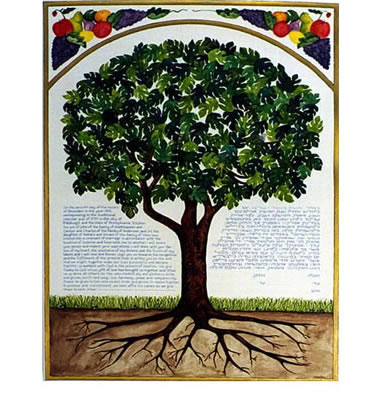
“Seeing at a distance a fig tree in leaf, He went to see if perhaps He would find anything on it; and when He came to it, He found nothing but leaves, for it was not the season for figs.”
Mark 11:13, NASB
Perplexing isn’t it? I personally have had a certain amount of ambiguity with this passage. I have questions that I’ve swept under the rug. Why did that poor tree get cursed? It wasn’t the trees fault, after all. And didn’t Jesus realize this? So why go through the theatrics?
I don’t know if this is the case with anyone else.
I hesitate to ask around. But recently have come to a better place about this entire event. The traditional view is that it comes immediately after “the cleansing of the temple” and that explains a lot. The fig tree is always emblematic of Israel. (The Old Testament is well populated with these references.) The disciple Mark adroitly organized his Gospel in order to connect both events.
I assure you, Jesus has no issues or vendettas against trees. 😁
But He does take an issue with things that claim fruit, but really have nothing. There’s nothing but leaves. I’ve been told that the figs do grow, almost as fast as leaves. The lush greenness is the prime indicator of the succulent fruit. At least, in theory, it has the potential.
Luke 12:7-9,
“Look, for three years now I have come seeking fruit on this fig tree, and I find none. Cut it down. Why should it use up the ground?’8 And he answered him, ‘Sir, let it alone this year also, until I dig around it and put on manure.9 Then if it should bear fruit next year, well and good; but if not, you can cut it down.’”
The beautiful leaves declare its fruitfulness. This tree was loaded, but had nothing to show but leaves. Within God’s plan for Israel was for fruit. Enough to feed the nations that would stream to Jerusalem. Instead, it was worthless. There was nothing to be had. Loads of leaves, and the promise of an incredible harvest, but zilch, zero, nothing.
Hypocrisy is a deadening experience, with a definite sterility.
Israel was finding this out, and Jesus is now declaring it to the nation. A corrupt temple, and a fruitless tree; this were all indicators of hypocrisy and showiness. The luxuriant leaves loaded the tree, but ‘where’s the fruit?!’
Sometimes we declare that we are fruitful, on the mere basis of our lovely leaves.
At times maybe even green? Leaves are pretty much all we can do. And we do it quite well. But the fruit is from the Holy Spirit, (Galatians 5:22.)
Israel failed God. They became religious and neglected mercy, and justice. Humility and graciousness. The widow and the orphan were not part of their personal equation. They produced leaves by the wheelbarrow load, but were missing out on the authenticity to what was true, and what really mattered.
Pharisees will do this all the time.
They turn into hypocrites who do not possess what they profess. A hypocrite values true godliness, but he personally falls short of all those things he admires. But he will never, ever admit it to anyone. And even we who struggle so, must continually admit that we stumble and falter as we try to follow.
The terrible temptation of this time is to look good without being good.
It’s the awful curse of legalistic religion, and it runs rampant in our nation today, even in our government. The Lord absolutely detests it. God help us understand, and repent from what He shows us.
Personally, I may be a ‘screwy’ excuse of being a disciple, but I have decided I don’t want to deceive people anymore.
God, help me.
“This year, or this month, or, more likely, this very day, we have failed to practice ourselves the kind of behavior we expect from other people.”
7–8 Jesus continued, “After a servant has finished his work in the field or with the livestock, he doesn’t immediately sit down to relax and eat. No, a true servant prepares the food for his master and makes sure his master is served his meal before he sits down to eat his own.
Does the true servant expect to be thanked for doing what is required of him?10 So learn this lesson: After doing all that is commanded of you, simply say, ‘We are mere servants, undeserving of special praise, for we are just doing what is expected of us and fulfilling our duties.’”
Luke 17, TPT
Selfishness is endemic to men of all stripes. It’s in our bloodstream It taints the most noble of actions and the most wonderful of efforts.
There is an exception for the empowered Christian. The ability to live unselfishly is the believer’s option. We can live above the issues of the worldling. To us is given the joy of obedience. Obeying God’s will is the privilege of redeemed men and women. We have the Holy Spirit’s abilities to meet the situation around us.
We serve because we’ve been served.
But we still are ”mere servants” and we shouldn’t make a big deal of our efforts. Within our most noble efforts is the possibility of falling short of the Lord’s wishes for us.
The only safe place for us is found in a sacred humility. It is the posture of obedience which generates something enduring. You might say that humility is the wiring that keeps us from ‘shorting out.’ Being a humble person will insulate us from the holy power of any disobedience.
I’m afraid that is the only way it’ll work.
“We had long known the Lord without realizing that meekness and lowliness of heart should be the distinguishing feature of the disciple.”








 Broken Believers