The Blessings of a Long Battle, Part 3

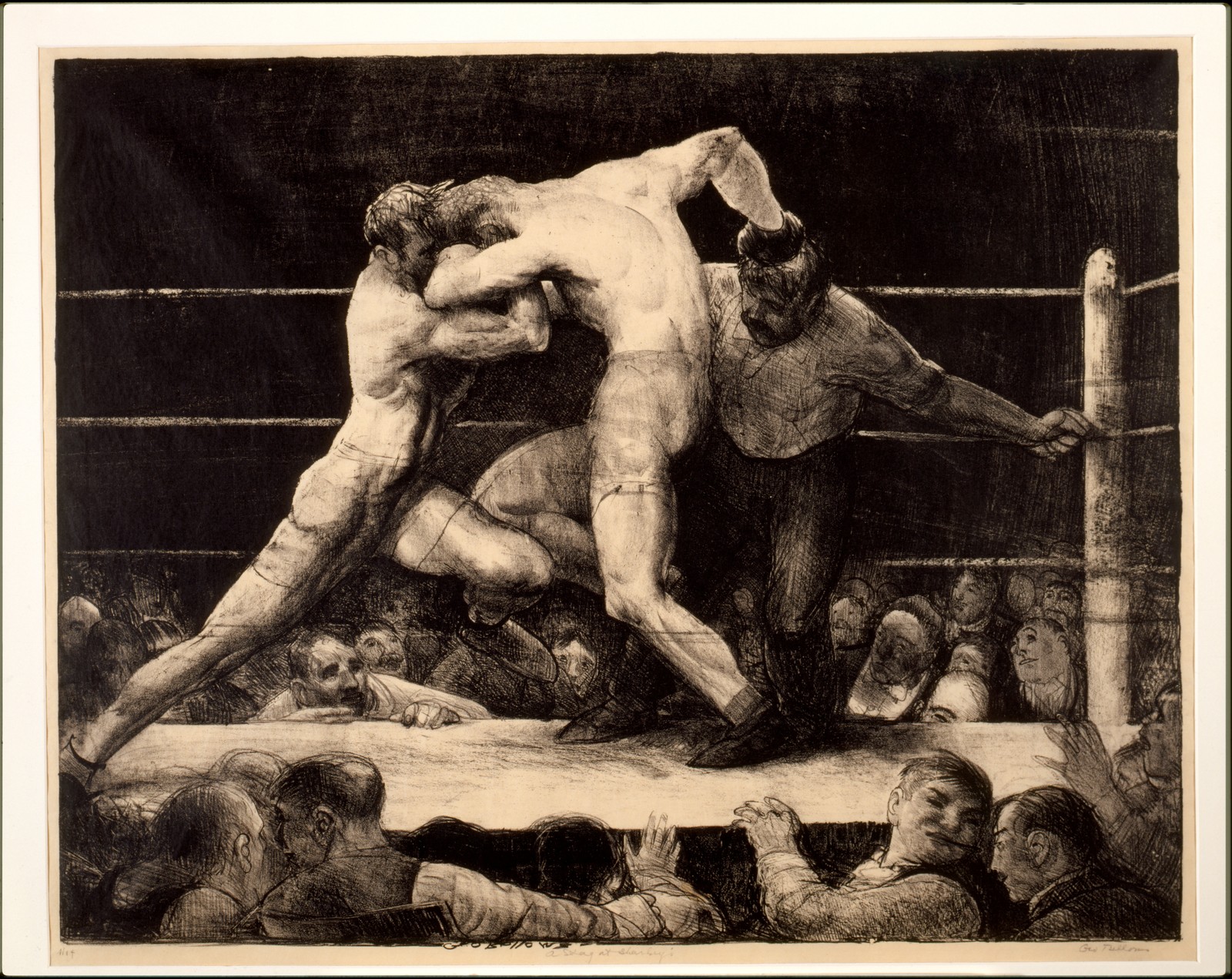
boxing2

From Jonathan Coe’s website at http://www.openheavensblog.com/. Thank you gracious brother! (I’m so glad you are my friend.)

As I look over the last two posts on the blessings of a long battle, I’m reminded of what the Apostle Paul said to the Corinthians about the importance of not being ignorant concerning the schemes of Satan (II Corinthians 2:11). After reading those posts, I realized a word of balance was needed in discussing the relationship of formulaic Christianity to spiritual practices lest the devil distort the truth to his advantage.

Both posts encouraged the believer to move beyond canned formulas to a restful trust in and radical dependence on Christ. A common formula for someone who finds themselves in a protracted struggle with sin, weakness, or some thorn in the flesh is “Read the Bible, pray, and attend church and that will solve your problem.”

These are wonderful spiritual practices but the problem is that people begin to trust in the formula more than the Person who can heal their inner leper. The formula can become a religious idol.

The biblical view of spiritual practices (prayer, Scripture study, church attendance, fellowship, fasting, meditation, and the sacraments) is that they are both avenues of renewal and bridges to intimacy with the Living God. They are sacramental; they are a means of grace.

Christ is the Vine; we are the branches. One of the primary ways that the branches stay connected to the Vine is through spiritual practices. That is how we abide in him and apart from abiding in him, we can do nothing.

This next part is crucial, and, if you only get one thing out of this post, this is it: when the believer gets frustrated enough to forsake impotent formulas, the devil’s primary agenda then is to get that person to forsake authentic, life–giving spiritual practices too.

That’s why the Christian should ask for wisdom every day so that he or she can tell the difference between the two. Satan is more than happy to allow us to forsake the false as long as we don’t replace it with the real.

It’s part of the human condition that, in our anger and frustration, we often throw out the wheat with the chaff. And a person who is involved in a long, difficult battle is going to need all the grace–filled spiritual practices they have time for!

I’m convinced that when the devil sees a believer, who is involved in a long battle, leave anemic formulas and begin to become engaged in regular, soul–nourishing spiritual practices, it fills him with uncontrollable rage. He will come to that Christian with many false voices in an effort to separate the branch from the Vine. Here’s a small sampling:

  • “ You tried this religious stuff before and you still have the same addiction/weakness/problem. What makes you think it’s going to work this time?”
  • “If you have your quiet time with God in the morning when you don’t feel like it, you’re being a phony. You should only do it when you feel like it.”
  • “If your quiet time with God becomes a regular thing, it will become a dead religious ritual. You don’t want to become legalistic. Keep things spontaneous. Just do it when your heart moves you to do it.”
  • “Regular spiritual practices aren’t the real you. You can find God in every day life without them in a way that fits your personality.”
  • “You’re a person of action not of contemplation. You get things done without all this navel–gazing and spiritual stuff.”

These are just a few plays out of the devil’s playbook. May God give us the discernment to recognize his voice and the wisdom to reject his counsel.

Reposted from http://www.openheavensblog.com/. Thank you Jonathan for your great teaching.

The Blessings of a Long Battle, part 2

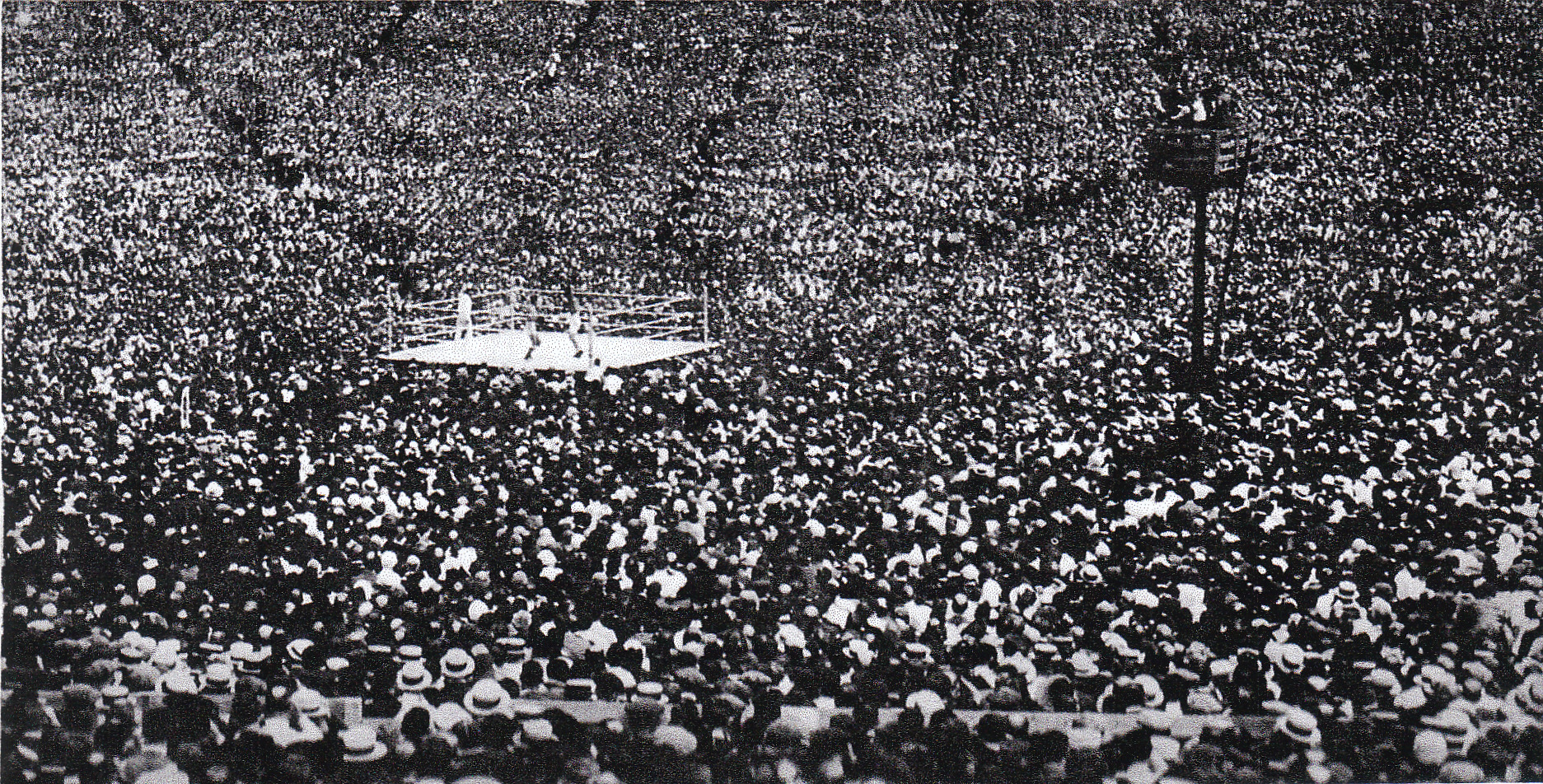
brutal-boxing

 “Do not fear the conflict, and do not flee from it; where there is no struggle, there is no virtue.”   John of Kronstadt

Part 1 of this post highlighted how God can bring good out of a long struggle with a sin, weakness, and/or problem by helping the Christian make the transition from putting their faith in formulas (e.g., “Do these three things and your problem will go away”) to a restful trust in Christ. Again, no sane Christian advocates habitual sin but the benefits of a protracted battle are numerous:

(1)  After a long battle, in making the transition from formulas to faith in God, a new brokenness develops in the believer. They’ve come to the end of themselves, run out of “self–effort fuel”, and are beginning to learn what Christ meant when he said, “…apart from me you can do nothing” (John 15:5).

(2) During a long battle with sin or weakness, there is a pattern of falling down and getting up. Proverbs 24:16 says that a righteous man falls seven times but keeps rising again. In this process many Christians report that a new intimacy has emerged in their relationship to God. They’ve come to know the God of mercy and compassion as never before because they’ve been repeatedly forgiven after their many stumbles.

(3) “He who is forgiven much loves much.” Along with a new intimacy, a greater love for God can also develop, after a long battle, because we’ve been forgiven over and over.

(4) And since God has extended his tender mercies to us over and over, we then can extend his mercy and compassion to others who have a protracted struggle with some issue. If our heart is right, a long battle can inoculate us from self–righteousness and judgmentalism in relation to others who fall over and over. How can we not extend to them the same grace that God extended to us?

In extending this grace to others, we may become a wounded healer to them. The healing we received from Christ during our struggle is graciously passed on those often struggling with similar issues. Healing emerges from your wounds just as resurrection emerges from death.

(5) After a war, the soldier of Christ often emerges battle–tested and wise to the schemes of the enemy. If a person has been pulled down into the dust 27 different ways by the devil, then, if he or she is paying attention, they’ve learned 27 strategies the enemy of our soul uses to try to destroy us.

In Twelve Step programs, one often hears the acronym H.A.L.T. mentioned in discussing relapse back into addiction. These four letters stand for hungry, angry, lonely, and tired and emphasize how these conditions create fertile soil for relapse.

If you frame the issue a different way, these are four strategies the devil uses to bring us back into bondage. How was this acronym learned? By people relapsing over and over when these conditions were present. Recovering people became wise through their failures in their long battle with addiction.

*

Jonathan

posted from http://www.openheavensblog.com/

More Voltage, Please!

Schnorr_von_Carolsfeld_Bibel_in_Bildern_1860_001

“Then Moses said to Aaron, “This is what the Lord was speaking about when he said,
    ‘I must be respected as holy
       by those who come near me;
    before all the people
       I must be given honor.’ “
So Aaron did not say anything about the death of his sons.”

Leviticus 10:3, NCV

We dare not become casual by our contact we have with the Lord.  Intimacy is obvious, but it must be done with certain precautions.  He asks for us to respond with a sense of holiness.  It is vitally important to Him, and it is vital for us.  We must honor Him as the One who is holy.

The closer we come, the more significant our response.  We are carefully monitored, to see what we will do after we confront the reality of Him.  He insists that we should honor Him as ‘holy’.  He passionately desires and requests that we do what is appropriate and honorable as we meet Him.

Giving Him honor is critical.  It should be the first thought of every man or woman who presses in to know Him.  Honoring Him as holy is not regarded as an option to be debated or brought out for consideration.  It is essential to follow Him faithfully.

We live with ‘lightning’, and a flamethrower, it seems.  He is a tiger who we have grabbed by the tail, we have but a few options.  One is too release our hold and let Him go.  The second is too hold on to Him with all our strength.  He loves those who make the second choice.  Grab hold of the Lord Jesus, and hang on for dear life!

“Who among us shall dwell with the devouring fire?
Who among us shall dwell with everlasting burnings?”

Isaiah 33:14, NKJV

He is dangerous, but in a good way.

We should anticipate Him coming and disrupting our Sunday services.  We need our ushers to hand-out ropes and life-jackets before the service starts.  We should expect Him to explode in our congregations, in a whirlwind of holy love.  He wants us to expect Him. We must be changed by the power of the Holy Spirit.

There is a sense here in Leviticus 10 of something that is needful and mandatory on our parts.  Often we will discover that entering and abiding in His presence requires us to honor His holiness.  When we do so, we find we will trigger a response from the Lord, which will it turn be a true blessing to our own souls.

The moment you come to realize that only a holy God can make a man godly, you are left with no option but to find God, and to know God, and to let God be God in and through you.   

Major Ian Thomas

bry-signat (1)

cropped-christiangraffiti1.jpg

The Judas’ Kiss

The Judas Kiss

“Judas came straight to Jesus. “Greetings, Rabbi!” he exclaimed and gave him the kiss.”   

Matthew 26:49

Kiss–  verb (used with object)  1. to touch or press with the lips slightly pursed, and then often to part them and to emit a smacking sound, in an expression of affection, love, greeting, reverence, etc.:  He kissed his son on the cheek. 
   –Dictionary.com
“A man’s kiss is his signature.”
Mae West

This singular verse (v. 49) should cause us to pause and think. It is part of an amazing account of the events surrounding the death of Jesus.  At this point Judas leans over and kisses him. Now, a kiss can be used when you show affection and commitment for someone. Kisses are like a ‘x-ray’ into your very being, opening and quite revealing.

Judas shows everyone exactly what he is all about.  The kisser declares to the kissed the intent and desire of their heart. It also says things to those who witness it.

This kiss of Judas set into motion a whole series of events.  But more importantly, this kiss was an evil kiss.    We kiss and are kissed.  Its the way we tell others of our friendship and fidelity.  It has always been so.  The mechanics of it all seem a bit odd, when you think about it.  Touching lips?  (Ok. That’s odd.)  But a real kiss goes further, injecting love and esteem and other intangibles into another.

Also, we should understand that a kiss has intense power.  The kiss of Judas had this power.  It wasn’t done to convey his commitment or affection, rather it was a powerful act of betrayal.  Judas had drained this particular kiss of all its goodness and only evil remained. 

It very well could be that Judas was attempting to manipulate a sequence of events to allow Jesus to become the messiah/king by force.  He may have thought that this was a politically expedient thing to do.  Maybe a good thing in his thinking. (But who can know?)

A “Judas kiss” is perhaps the most dastardly way one can be betrayed.  It is not real common, but it happens, and it is devastating.  Some have told me that it was like having your heart ripped out of your body.  Betrayal with a “Judas kiss” is almost always a surprise, coming out of the blue, hitting you when you’re most vulnerable.

The English poet Milton envisioned hell with many levels.  The very deepest level is reserved for Satan.  Interestingly, Milton puts Judas at the bottom with Satan.  They share the punishment of hell together, forever.  I guess that this is as awful as it can get.    In studying the character and the sin of Judas the following lessons may be brought out:

  1.  We must not be surprised if some bad men enter the Church, for even among the twelve was one Judas.
  2.  It is no proof that Christianity is untrue when some of its believers prove hypocrites. The defection of Judas did not leave a stain on the name of Christ, nor did it disprove the loyalty and fidelity of the other disciples.
  3. One may be very near to Christ and not be made holy in character. Judas was three years with Christ, heard His words, lived in the atmosphere of His love, and remained unchanged. An empty bottle, hermetically sealed, may lie long in the ocean and continue perfectly dry within. A heart sealed to Christ’s love may lie near Him for years and not be blessed. Only when the heart is opened to receive His grace does closeness to Him change the heart.
  4. Sin grows, and we never can know to what terrible and awful extent a wicked thought or desire may reach.  Extrapolated, it has a vast magnitude of evil possibilities and potentialities beyond anything we would have ever dreamed.
    88

1brobry-sig4

cropped-christiangraffiti1 (1)