He Loves the Sick

The good physician treats the disease; the great physician treats the patient who has the disease.” 

– Sir William Osler, 1849-1919

I wrote this poem the other day for ‘Thankful Thursday’ on my own blog. Knowing that many who visit Broken Believers struggle with illness and pain, I thought this would be good to share here as well.

There are plenty of cracked clay pots that find this place, and God’s in the business of putting the pieces back together. It’s His special supernatural work, and only He can do it properly.

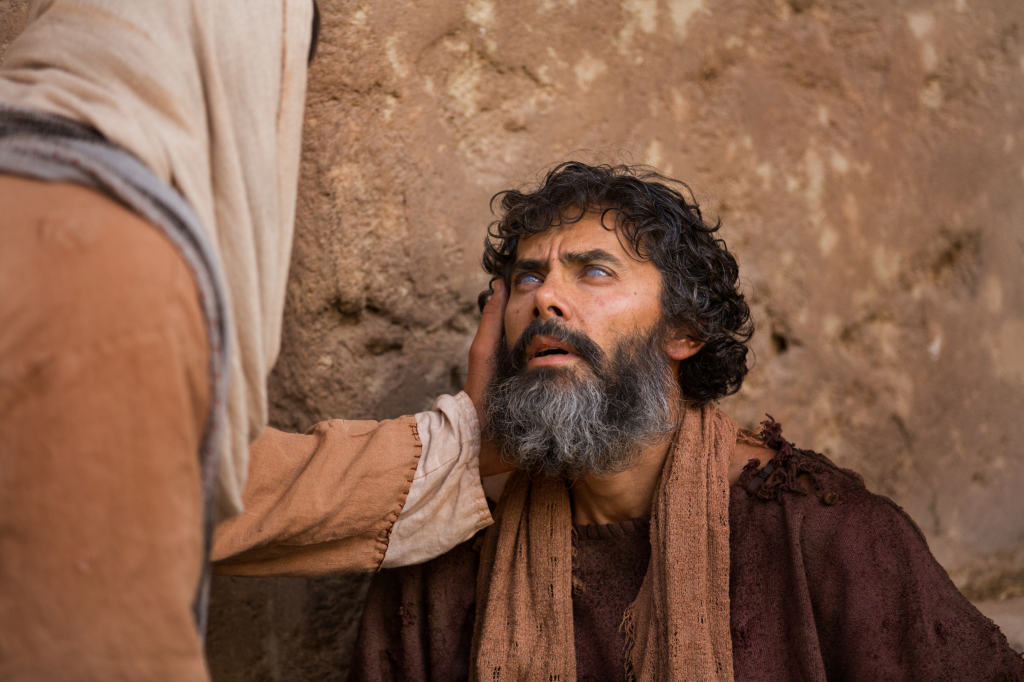
He loves helplessness. He cures the sick. It’s what He’s been called to do.

“And when Jesus heard it, he said to them, “Those who are well have no need of a physician, but those who are sick. I came not to call the righteous, but sinners.”

Mark 2:17

Our Great Physician

Illness comes to everyone –
pain, fever, fatigue, and tears
Chronic or acute, it’s such a trial –
these clay pots we inhabit
are so incredibly fragile
even in the hands of the Potter

But our Great Physician
provides strength, comfort –
Sometimes He brings doctors,
nurses, and medication –
Wisdom and talents used
to do His will, to heal, to mend

Sometimes all it takes
is to touch the hem of His robe –
Like the woman who bled
for twelve long years, outcast
one moment, then healed
completely and wholly

The greatest good –
spiritual health and salvation
for the least of us, for all –
each clay pot is used to help others
as grace leaks out of cracks –
Cracks that never seem to heal

Sometimes what the Physician
has in store is our ultimate healing –
A new body, new life eternal
in a place of no more pain,
no tears, energy galore –
as death brings everyone home

“But we have this treasure in jars of clay to show that this all-surpassing power is from God and not from us. We are hard pressed on every side, but not crushed; perplexed, but not in despair; persecuted, but not abandoned; struck down, but not destroyed.”

2 Corinthians 4:7-8

Check out Linda’s blog.

The Weakest Link is Us

power-and-weakness

“Now when they saw the boldness of Peter and John, and perceived that they were uneducated, common men, they were astonished. And they recognized that they had been with Jesus.”

Acts 4:13

“God created the world out of nothing, and so long as we are nothing, He can make something out of us.”  

Martin Luther

Consider this: the jawbone of a donkey, a sling shot. and barley loaves, a woman’s tears, a young boy’s lunch, a young colt, and a talking donkey, they all suggest that God touches the common and the insignificant. He uses what we consider of minor importance.

We often turn to the talented and gifted far too readily.

Peter and John are being seen by the Sanhedrin (the Jewish “Supreme Court”). They are to give account of themselves before the highest court of the land. There had been a healing, and there was the matter of preaching as well. Both Peter and John exude a confidence that these religious leaders couldn’t deny. Their perception was that they were ignorant men. Uneducated and common. But, they also knew they had been with Jesus.

However, in the minds of the leadership, they were nothing more than religious white trash.

God loves to use what we consider common. His revealed history has been to take anything at His disposal and utilize it to redeem lost souls. A staff or a sling-shot are used with an adroitness that seems extraordinary among men. The things we think are simple and common are used to further God’s work among mankind.

But the message always returns back to the preachers. The Sanhedrin knew of the disciples preaching. They had absorbed the fact of a miracle; a crippled man had just been healed. (This they couldn’t deny.) But they were troubled. And they didn’t really know what to do.

What more could this be, but a direct intervention of God? And yet, God is working through extremely “common people.” Then let’s look…

“…if we are being examined today concerning a good deed done to a crippled man, by what means this man has been healed,”

Acts 4:9

Within this preaching was woven this healing. The Holy Spirit was ‘rocking their  world.’ The people who came in contact with these disciples would never be the same. Paul tells the Corinthian church that:

“Instead, God chose things the world considers foolish in order to shame those who think they are wise. And he chose things that are powerless to shame those who are powerful.”

1 Corinthians 1:27, NLT

If God has a specialty it would be this. He desires all the glory. He goes out of the way to use the broken and weak. He shows His strength through insignificant and minor things and people. This is His heart given to nobodies.

“We are all wounded. But wounds are necessary for his healing light to enter into our beings. Without wounds and failure and frustrations and defeats, there will be no opening for his brilliance to trickle in and invade our lives.”
“Failures in life are courses with very high tuition fees, so I don’t cut classes and miss my lessons: on humility, on patience, on hope, on asking others for help, on listening to God, on trying again and again and again.”

Bo Sanchez


What Good are the Miracles of Jesus?

His touch makes the difference

But if I do it, even though you do not believe me, believe the miracles, that you may know and understand that the Father is in me, and I in the Father.” 

–John 10:38

The healing’s Jesus boldly attest to his claim to be God.  When we read about them, as recorded in the Gospels, we cannot doubt their real and supernatural flavor.  A normal person cannot give sight to someone who has been blind from birth.  I cannot raise a dead person, it’s simply not even in the basic realm of remote possibility.

Jesus performed hundreds and hundreds of healing’s.

Many of these are not recorded in the Scriptures except through a vague and veiled reference to them.  There were not just healing’s, but he also did miracles over natural laws.  Water gets turned into wine, He walks on the Sea of Galilee, see Him feeding 5000 people with a little boys simple lunch.

You would think that the presentation of each miracle would bring a person to faith.  But that is not the case.  We process them, and then assimilate them to the point where we can more or less nullify them.  “Sure Jesus raised a widow’s son from the dead,” we say–but then we inoculate ourselves against the truth of it.  We deafen ourselves, and by our mental silence nullify the miracle.

We roll right over it. How many miracles have we seen on any given day?

I need, I must re-visit these supernatural events again and again.  They are a tonic to my jaded soul.  These miracles require that I pick them up by their handle and make them my own.  Jesus Christ is waiting for us to accept him as supernatural, because that is what he is. Get used to it.

Does the Lord Jesus still work miracles for you?

“Remember the wonders he has done,
 His miracles, and the judgments he pronounced,”

–Psalm 105:5

Related articles

Tears Do Things

I’ve been thinking a lot about tears lately—in part because Pastor Bryan pointed out to me how many hits my post titled God Keeps Your Tears in a Bottle has had, in part because I’ve cried more than a few tears this year, and in part because I’ve been listening to Johnny Cash’s Cry, Cry, Cry in my car all week—and I thought I’d share my thoughts with you all here.

First of all, people cry for a lot of reasons.

Earlier this year my sister died of breast cancer at only 61 years old. I cried, a lot. It’s normal and even helpful to shed tears over the death of a loved one even if we know where they are going when they die, because it allows us to express the grief we feel over not having them in our lives any more here on earth.

I remember a time I had a previous boss say some very cruel things to me in front of other people. She accused me of having done things I had not based on motives I did not have. I was very angry, hurt, and frustrated. And I cried, a lot. I didn’t cry in front of her, mind you, but afterwards I did. And it was good to express that anger to others.

Just yesterday I experienced unexpected tears.

I was reciting the prayers of the people in church, which I’ve done many times. Our church has many prayer concerns for members, family, and friends with health concerns and more. Towards the end of the prayer I began to lift up prayers for a church member’s brother-in-law who is a pastor back in New York because he is faced with conducting the funerals of two teens who had been killed in an accident last week.

I recently wrote this poem.

Tears

Tears of sorrow, anger
drench my soul
course without end
eroding pain, anguish

Where once only aching
occupied my heart
now is a deep empty ravine
carved by a river of tears

Tears of forgiveness
water my soul’s riverbed
allowing flowers of love
to flourish and grow

Peace arises in my heart
held aloft by God’s promises
the fragrance of sweet alyssum
blossoms of my soul

I think the saddest tears of all, though, are the tears of major clinical depression. These tears are so sad because the one who cries them doesn’t know what purpose they serve.

I remember when I was suffering from depression sitting in a chair and just crying. When someone asked me why I was crying all I could say was, “I don’t know.” And I truly didn’t. The tears didn’t wash away pain; they only seemed to make it all the worse.

In the midst of such tears, there is One who knows their purpose.

Romans 8:26 says: “In the same way, the Spirit helps us in our weakness. We do not know what we ought to pray for, but the Spirit himself intercedes for us through wordless groans.” Through prayer God can sometimes lead us to an understanding of the purpose of the tears of depression, and ultimately to healing.

That makes your tears a good thing.

Henry Ward Beecher

Check out Linda’s site.