I’m Disappointed in Myself

We read of the “Romans 7” man.

  • For I know that nothing good dwells in me, that is, in my flesh.
  • For I have the desire to do what is right, but not the ability to carry it out. 
  • For I do not do the good I want, but the evil I do not want is what I keep on doing. 

Romans 7:18-19, ESV

When we struggle like this we can safely assume that we’re trying to be holy and accepted by God apart from the grace of God. Our efforts to please Him fall woefully short. This frustration is when we try to keep the Law and neglect to walk in the Spirit.

To be disappointed in your behavior is not grace. To continue living like this becomes deception and hypocrisy. Most of all it creates a vicious wall between your walk and God’s love. A barrier between you and others.

The tension of Romans 7 is real. Every believer will encounters it.

The Scriptures teach us the depravity of man. All we do, even our best efforts and noblest actions are selfish and corrupt. As we understand this we end up realizing that there is a vast gulf between our aspirations and our actions.

“We are all infected and impure with sin.
    When we display our righteous deeds,
    they are nothing but filthy rags.”

Isaiah 64:6

We have a problem when our heart doesn’t match our actions. I’ve worked through the obvious. And yet it gets a little hairy when our ‘little’ sins are visible to others. We feel like hypocrites and we know that our testimony is officially ‘toast.’

“Many have passed the rocks of gross sins – who have suffered shipwreck upon the sands of self-righteousness.”

    William Secker

Romans 7 describes what is wrong with us, it seems we are attempting to please God by our own efforts.

In Romans 7 we read of a man who is constantly disappointed in himself. It can be wrenching to read– partly because it is so real. It describes us too well. At times the Word is like looking into a mirror.

This is what a dear friend said to me recently. I was flabbergasted. I didn’t know how to answer. It was a bit embarrassing, but I couldn’t respond. Later, the Spirit ministered to me while praying about it.

The Lord spoke, “He has no idea how bad you really are. Don’t you dare defend yourself!’

I now realize I should have said this to my friend. You’re absolutely right, I am a bit of a flake. But you only see the veneer, deep down  I’m much worse than you will ever know. I can’t defend my actions, and I desperately need a Savior. Would you pray for me to work this out? I need Jesus”

The daily struggle with sin and personal failure is sometimes more visible than we would like. Even as a believer I can and do sin. That should surprise no one, and yet, it seems I’m the most amazed when sin inevitably breaks out. At times I feel like I specialize in inconsistency.

I wonder when we boldly ‘strut’ into His presence if the angels don’t ‘roll their eyes?’

Whenever we come before God, we should never show up with our list of great things we have recently done for Him. It won’t be accepted. They are at best, filthy rags. They’re not fit for a King’s court. But yet we keep coming, parading our dirty, grimy rags.

We keep forgetting that only Christ’s righteousness is accepted in God’s eyes.

“The greatest enemy to human souls is the self-righteous spirit which makes men look to themselves for salvation.”

Charles Spurgeon


1brobry-sig4

The Glory of Gripping Things

Acts 17:33 Artwork | Bible Art

I never had an opportunity to attend a seminary, and only have a three year diploma from a Bible Institute. But I’ve had to rely on the Holy Spirit in ways that a seminary trained pastor will never really understand. I’ve come to see the wisdom in the way God has led me.

“It is the glory of God to conceal things, but the glory of kings is to search things out.”

Proverbs 25:2

Concealing things and searching for things are contrasting actions. God hides things purposefully–they are sort of like a spiritual version of “Where’s Waldo.” Certain things are hidden, but always in plain sight.

Searching for things should definitely be our own response. The word used in Hebrew means to investigate, but with a planned purpose. It’s more than curiosity, rather it’s a passionate curiosity. And the Holy Spirit is always pleased with that.

In the New Testament book of Acts (17:11) we can see this attitude of the Bereans. They were the only ones in Scripture to be called “noble minded” for their serious study and thought. When they heard Paul’s teaching they sat down, opened their Bibles and began to investigate for themselves.

But it will always take humility. Always.

Intellect is important but it’s not enough. The list seen below is something to work through, and the issue is one that has been a challenge for me through 40+ years of following Jesus.

Here’s a study that I’m confident will bless you.

Justification & Sanctification– Gripping the Two
  •  Justification is free (John 4:1)
  • Sanctification is costly (Lk. 14:25-33)
  • Justification is instantaneous (Jn. 3:8)
  • Sanctification is a lifelong process (Jn. 8:31)
  • Justification is by faith (Eph. 2:8)
  • Sanctification is by faithfulness (1 Cor. 4:2)
  • Justification is not of works (Eph. 2:9)
  • Sanctification is of works (Eph. 2:10)
  • Justification involves Christ’s love for me (Jn. 3:16)
  • Sanctification involves my love for Christ (1 Jn. 4:19)
  • Justification concerns Christ’s righteousness (2 Cor. 5:21)
  • Sanctification concerns my righteousness (Lk. 14:25-33)
  • Justification involves my position in Christ (Col. 2:11-14)
  • Sanctification involves my practice (Col. 3:1-11)
  • Justification considers what God has done (1 Cor. 15:3-4)
  • Sanctification considers what I am doing (Lk. 14:25-33)
  • Justification is God’s commitment to me (1 Jn. 5:9-13)
  • Sanctification is my commitment to God (Jn. 14:15)
  • Justification requires obedience to one command: to believe the Gospel (Ac. 6:7)
  • Sanctification requires obedience to all of Christ’s commands (Matt. 28:19-20)
  • Justification focuses on the cross which Jesus took up once and for all (1 Cor. 1:18)
  • Sanctification focuses on the cross which I am to take up daily (Lk. 9:53)
  • Justification is finished at the moment of faith (Jn. 5:24)
  • Sanctification is not finished until I go to be with the Lord (1 Cor. 9:24-27)

Discerning between the two should only be a blessing. In some sense working through the differences between justification and sanctification should energize you, and bring truth to your walk. Now you might disagree, but let it be after you’ve worked through this list.

“I have more understanding than all my teachers, for your testimonies are my meditation.”

Psalm 119:99

The author of the above ‘list’ is unknown. May they be blessed by this if they should read this post.
 
 
cropped-christiangraffiti1 (3)
 

Cities Without Walls

“A man without self-control
    is like a city broken into and left without walls.”

Proverbs 25:28

The writer of Proverbs can be blunt. He makes the cold observation that people can often be like a city that has no walls.

The city he alluded to was completely defenseless, vulnerable and wide open to a marauding enemy. It no longer is protected. It can be assaulted from outside and is no longer safe. It can be easily defeated by its foes.

The description is used to describe a spiritual condition of danger and defeat. A real potentiality exists of a helpless invasion by evil forces. It has no protection to speak of.

Proverbs uses this imagery to state a fundamental truth about some people.

We live in an age when everything is “open.” Seldom do we see protecting walls around the perimeter of our lives. We are open to the demonic forces of darkness. We move from crisis to crisis because we are not protected.

Nehemiah faced the stark reality of Jerusalem without walls of protection. His first order of business (before anything else) was to rebuild them. He mobilized work crews that immediately went to work restoring the cities safety.

“I went out by night by the Valley Gate to the Dragon Spring and to the Dung Gate, and I inspected the walls of Jerusalem that were broken down and its gates that had been destroyed by fire.”

Nehemiah 2:13

He knew what he was up against; a discouraged people who were extremely vulnerable. It’s also interesting that the cities enemies resisted at this crucial time. They wanted the people to fail so  they would continue to defeat them.

Our culture today is no longer protected by the evil of the day. We’re victims for the most part by Satan’s tactical assaults. A generation has come and gone that has not known the defense of personal walls.

We are desperate of the ministry of Nehemiah. He is a type of Christ. Protection can only come from faith and blood of Jesus. He alone is our safe place. He alone can defend us from this present darkness.

If your life is characterized by oppression I urge you to erect a safe place for yourself and for your family. Being specific in prayer is very often your sheltered place. Take a stand and drive the enemy away. Resist him and he will flee from you.

“The world’s battlefields have been in the heart chiefly; more heroism has been displayed in the household and the closet, than on the most memorable battlefields in history.”

–Henry Ward Beecher


Hiding Our Wounds

Brennan Manning Quote
“You are the light of the world. A city set on a hill cannot be hidden. 15 Nor do people light a lamp and put it under a basket, but on a stand, and it gives light to all in the house.”

Matthew 5:14-15, ESV

Overall, I think this Manning quote is a great observation. We, the torn and wounded, often try to hide, secluding ourselves in the “Island of Misfit Toys.” (Got to love those 60s Christmas cartoons.) We pretty much accept our lot as damaged merchandise.

Maybe we choose to isolate ourselves more than we want to admit. Could that be what we do? Are we still embarrassed and ashamed by all that we’ve done? That’s quite possible.

This may come as a shock, but the Church doesn’t need any more gifted people.

But it does need broken people who understand ‘the giftedness of the flawed.” When we conceal, we diminish the Church by our absence. We can ostracize ourselves, through a self imposed shame— but the Church will suffer. We need to show them that everyone can be healed, even screwy ‘fruit-cakes’ like us.

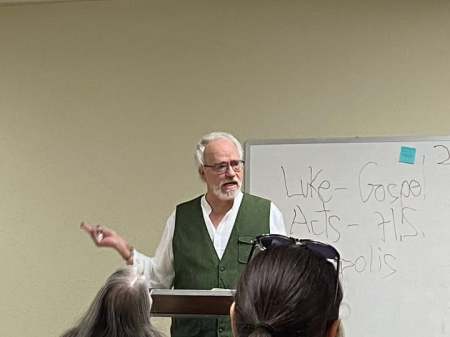
I recently had the privilege of speaking to a class of young Bible college students.

My subject was decidedly not on being successful, but on being a failure. Whole courses are geared toward ministerial success– but where are the ones for failure? I think that it just might be even more important, in the long run.

No human effort is going to erase your past.

I have tried and it can’t be done. I have blitzed my brains on drugs and booze, but I still remember the people I’ve hurt. (And I pray for them.) There really isn’t a cure for the evil we have done. I believe in forgiveness. And I hold to the idea that are sins are never to be a subject of  guilty accusation–

“He will again have compassion on us;
    he will tread our iniquities underfoot.
You will cast all our sins
    into the depths of the sea.”

Micah 7:19

Our dark iniquity is put in a very deep place. But there are the memories of an unkind word, or a sad and dark foolishness that we must learn to live with. There will be many regrets, and we face the terrible consequences of our sins, but it’s enough to know that all is under the blood of Jesus.

We are indeed forgiven. Completely.

We are now to live as forgiven sinners, yet precious in God’s eyes. We discover that although the Father has no favorites among His children, but He does have intimates. We are to live the rest of our lives for His glory, exploring that intimacy.

“Leave the broken, irreversible past in God’s hands, and step out into the invincible future with Him.”

  Oswald Chambers