April Fool’s Day: An Accident Report

This is a bricklayer’s accident report that was printed in the newsletter of the English equivalent of the Workers’ Compensation Board.

Dear Sirs,

I am writing in response to your request for additional information in Block #3 of the accident reporting form. I put “Poor Planning” as the cause of my accident. You asked for a fuller explanation and I trust the following details will be sufficient.

I am a bricklayer by trade. On the day of the accident, I was working alone on the roof of a new six-story building. When I completed my work, I found I had some bricks left over which when weighed later were found to weigh 240 lbs. Rather than carry the bricks down by hand, I decided to lower them in a barrel by using a pulley which was attached to the side of the building at the sixth floor.

Securing the rope at ground level, I went up to the roof, swung the barrel out and loaded the bricks into it. Then I went down and untied the rope, holding it tightly to insure a slow descent of the 240 lbs of bricks. You will note on the accident reporting form that my weight is 165 lbs. Due to my surprise at being jerked off the ground so suddenly, I lost my presence of mind and forgot to let go of the rope. Needless to say, I proceeded at a rapid rate up the side of the building.

In the vicinity of the third floor, I met the barrel which was now proceeding downward at an equally impressive speed. This explains the fractured skull, minor abrasions and the broken collarbone, as listed in Section 3, accident reporting form. Slowed only slightly, I continued my rapid ascent, not stopping until the fingers of my right hand were two knuckles deep into the pulley which I mentioned in Paragraph 2 of this correspondence. Fortunately by this time I had regained my presence of mind and was able to hold tightly to the rope, in spite of the excruciating pain I was now beginning to experience.

At approximately the same time, however, the barrel of bricks hit the ground and the bottom fell out of the barrel. Now devoid of the weight of the bricks, the barrel weighed approximately 50 lbs. I refer you again to my weight. As you might imagine, I began a rapid descent down the side of the building. In the vicinity of the third floor, I met the barrel coming up. This accounts for the two fractured ankles, broken tooth and severe lacerations of my legs and lower body.

Here my luck began to change slightly. The encounter with the barrel seemed to slow me enough to lessen my injuries when I fell into the pile of bricks and fortunately only three vertebrae were cracked.

I am sorry to report, however, as I lay there on the pile of bricks, in pain, unable to move and watching the empty barrel six stories above me, I again lost my composure and presence of mind and let go of the rope. And I lay there watching the empty barrel begin its journey back onto me.

1brobry-sig4

cropped-christiangraffiti1 (1)

My ‘Agape’ Jalopy

Accepting the reality of our broken, flawed lives is the beginning of spirituality not because the spiritual life will remove our flaws but because we let go of seeking perfection and, instead, seek God, the one who is present in the tangledness of our lives. ”  — Michael Yaconelli

My “Agape” Jalopy

Accepting ourselves is a lifelong process.

We talk of “accepting Christ”, but for many that really is not the problem.  When we talk about Jesus, there is such an attractiveness about him, that makes ‘hard-boiled’ agnostics stand back and grudgingly admire.  But, to accept “me”, well that takes more then just a bit of imagination.  When your depressed or anxious it just escalates the problem.

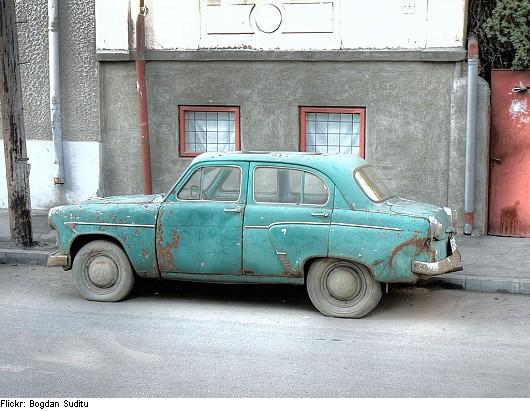
We just don’t like ourselves.  Sometimes I think that if I met me, I would think, “What a jerk! ”  Having psychiatric issues only intensifies and focalizes my sin into a horrifying mess.  I’m not just a loser, I’m a loser on steroids.  A supreme loser!  I’m certainly not the red Ferrari, I am obviously the rusty Edsel with the balloon tires and a lousy heater.

The remarkable thing though is not my spiritual unattractiveness, but God’s irrational love for me.  The New Testament writers used the word we translate “love” as “agape“.  That Greek word meant a love without any conditions, a selfless love, a love that was passionately committed to the well being of the other.  Actually, it is a love that goes out of the way to care for its enemy.  That’s the audacity of agape.

We do the mental gymnastics to try to grasp the definition.  We strain and contort but it defies comprehension.  We grab, hold it, and then it gets loose and we clutch air.

“This is how much God loved [agape] the world: He gave his Son, his one and only Son. And this is why: so that no one need be destroyed; by believing in him, anyone can have a whole and lasting life .”                                

 -John 3:16, MSG

When I tell you, “Jesus loves you”, you will probably smile politely, nod and say “I know,” and turn away.  But, once in awhile, “lightning will strike,” you will look up in stunned amazement, with tears in your eyes, and whisper, “I know”.

…………………………

Spirituality is not about being fixed; it is about God’s being present in the mess of our unfixedness.” — Michael Yaconelli, Messy Spirituality

bry-signat (1)

cropped-christiangraffiti1.jpg

Outside the Boundaries

boundries

As I spin through this world; I pick up many things. Some are wholesome, but many are not. I’m like a ball of soft wax, and I pick-up whatever is in my path. Some things are good, and others not so. I would love to enlighten you, but am disturbed by all the ‘garbage’ I pick-up. Not everything is good.

In my mind I remember far too much to be ‘good.’ Images of sin are part of the ball, and I can’t dislodge them on my own. Their very presence is wrong, and quite embarrassing. I’m ashamed of what you may find, and yet I know I should be transparent, at least to what I’m capable of. I suppose I am sorry, at least that is I want to be.

Darkness has a way of latching on. At least that is how it seems. It seems what has been seen, can never be unseen. These things are irrevocable and can’t be forgotten. We remember them in the ‘night hours.’ However, the grace of God is such that these dark things are remembered no more. Their evil can never cripple a mind set on the sweet things of God.

I have been damaged by the things I have seen and did. I can admit that they’re shameful and wrong. (Perhaps ‘perverted’ is a better word.) These things are dark and twisted, and far beyond the pale of what is acceptable. I learn to be foul, but deep down I wish to be good.

The Gospel comes to those outside of the boundaries, or it doesn’t come at all. It handles the heavy sin, and easily takes on the lesser. Sin seems to have a way of rubbing through what is true, and certain efforts must be applied. We are meant to soar. We were never meant to be its sin’s slaves.

 “For he has rescued us from the dominion of darkness and brought us into the kingdom of the Son he loves,”

Colossians 1:13, NIV

We ought to trust in what He can do. Sin can never bind us again. He has done something that defies the darkness, once and for all. We who once were slaves, now walk the streets as free men and women. And we dare not rely on our own reasoning on this matter.

What the Father has done exceeds our rational ability. We are completely released and then exonerated us from our sin; it no longer manhandles us the way it used to. We are now prisoners set free. It is easy to become skeptical at this point; the reality of our iniquity is immense. But He has declared us free.

 “So if the Son sets you free, you will be free indeed.”

John 8:36

We hear many things from our pulpits today. But it is imperative that we receive the word, ‘freedom.’ Freedom—

  • from our many sins,
  • from our flesh that delights in them,
  • from death that comes from our sins,
  • from the destroying influence of this world’s system,
  • to enjoy eternal life.

“You have been set free from sin and have become slaves to righteousness.” (Romans 6:18). We must be convinced that this is so, and be willing to leave the sin behind us. And this is right where believers break down; the leaving behind their favorite sin. But it must be renounced and denounced for any progress can be made. You have to say “No!” before you can say “Yes!”

God is fantastically patient with us. He waits patiently as we decide. Are we going to get sick of our sin, or not? He waits for us to decide. Will we continue in sin, or will we let it pass by?

bry-signat (1)

cropped-christiangraffiti1.jpg

Bragging Rights


battery

“Three times I begged the Lord to make this suffering go away. But he replied, “My kindness is all you need. My power is strongest when you are weak.” So if Christ keeps giving me his power, I will gladly brag about how weak I am.”

2 Corinthians 12:8-9

This is a very crisp idea, Paul flips things upside down and then gives it a shake.  His attention is directed at bringing clarity and understanding about these issues of pain, weakness and conflict.  There is an understanding that Paul passes on that has personally worked its way through his own heart.  Truth that has taken that pathway is very precious.

Paul shares a conversation he had with the Lord Himself.  It really does seem that this subject was a continual topic between them.  He mentions it to Jesus three different times.  This tells me,  that suffering and pain are issues where it’s hard to get resolution.  When we hurt, we want Jesus to intervene, asap.  It is a real riddle to us, “Why am not healed?”

It seems to me that Paul comes to the point over and over and its not resolved to his satisfaction.  When the Lord does bring Paul to an understanding; it is basically the whole dynamic of the Christian experience.  And it is this, when a believer is sick, or weak–it’s then the strength and power of Jesus can be accessed.  Simply put–No pain, no power.

Paul ‘begged’ for resolution, and the ultimate response was the Lord was showing him the secret for his strength was in that presence of pain.  It gave him a power and force and might that he would not have otherwise.  Now Paul had a very intense ministry.  He would deal with issues and conflicts that would shrivel up most believers.  The list is long (see 2 Corinthians 11:23-28) and painful.  But the gist of it was Paul being abused and attacked by other people, over and over.

Paul had to have an extra boost to fulfill his ministry.  He needed affliction and weakness to connect him to a  huge ‘underground river’ of grace and love that flowed under his feet unseen and unknown.  The difficulties that Paul dealt with were actually what propelled him in his ministry.

There can be no power without pain; no discipleship without some kind of ‘disability.’

Paul tells the truth, “I boast in my weaknesses.  Just tap me into His power”.  Trials are the power outlet for the believer.  When he says things like that, it is good to pay attention.  The earnestness of Paul’s language in these verses gives us a sense of what is real, and how we should trust these ideas, as we are propelled into our ministry to the Lord.

“The power of the Church is not a parade of flawless people, but of a flawless Christ who embraces our flaws. The Church is not made up of whole people, rather of the broken people who find wholeness in a Christ who was broken for us.” –Mike Yaconelli


bry-signat (1)

cropped-christiangraffiti1.jpg