Contemplating Suicide Is Not Selfish

Sept. 10,  is World Suicide Prevention Day. Why there is but a single day of the year devoted to preventing suicide, I do not know. We should endeavor every day to provide the hope the hopeless need to get them through the pain that leads to suicide.

Often we hear it said that those who kill themselves are selfish because they hurt the people they leave behind. But if you’ve ever had suicidal thoughts or tried to die by suicide, you know that is not the case.

If you never have, it is difficult to understand.

I’ve only been truly suicidal once, but my thoughts were far from selfish. At the time, my actual thought was that my husband and son would be better off without me because I was so depressed and broken that I was no good to them. I truly believed this terrible lie.

Thoughts of suicide often follow a long pattern of trying to get well with little or no success. It stems from hopelessness and a sense of feeling like you are a burden to those around you. To consider suicide is to desire to unburden others and put an end to endless pain.

Unfortunately, the thought processes of a person who is suicidal are just simply wrong. I know mine were. I can’t imagine where my husband and son (who was 1 ½ then and is 26 now) would be if I had gone through with it. They certainly would not be better off. That thought was a lie.

There is always hope, even when things seem the most hopeless. What a person struggling with depression and suicidal thoughts needs is love and hope. They need understanding and reassurance that the rest of us would not be better off if they were gone. They need to know we are there for them and that they matter to someone.

They need to know that God loves them and wants what is best for them, and that “This too shall pass.” But in the meantime, we are there to be a shoulder to cry on and a heart to confide in.

A Sidetracked Life

sidetracked

So Saul headed toward Damascus. As he came near the city, a bright light from heaven suddenly flashed around him. Saul fell to the ground and heard a voice saying to him, “Saul, Saul! Why are you persecuting me?”

Acts 9:3-4

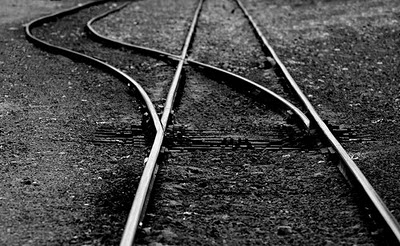
I’m thinking that an awful lot of my life has been filled with these inconvenient interruptions. I like a certain order, and schedules and keeping appointments. I’m not a rigid person, but I can become mildly annoyed when my life becomes ruled by these unplanned intrusions.

However, at times an interruption can be quite productive. Often when my plans are set aside, I get the opportunity to see the Holy Spirit step in. He does things that are eternally true and special.

Scriptures are saturated with ‘inconvenient interruption.’ Mary, whose life was jolted by a visit by the angel Gabriel (Luke 1:26-31). Paul, on the road to Damascus was overwhelmed suddenly and converted (Acts 9:1-9). The virgin Mary would have a son, and Paul would shake the world with his preaching the Gospel of Jesus.

There are many others who had their calm lives ‘turned upside down’ by our tumultuously peaceful God.

One could almost say that the Bible is a book of this ‘blessed interruption.’ I’m thinking right now of Moses, whom God shook and completely altered his life in just a few moments. And of course we read of Abraham, suddenly leaving everything to follow a promise.

I tell you, God has a flair for the dramatic. He often steps into the lives of His people. We might get irritated, frustrated, ‘owly’ and a little bit afraid. They can’t keep Him away; here he is again to save us!

But the question is this– can the Spirit disrupt you?

Perhaps this is the next lesson in your discipleship. You will need to be a servant. The most profoundly Christian people I know are those whose lives can be side-tracked. I encourage you, look for God’s purposes behind your next interruption. Let Him arrange your schedule. 

 Mary said, “I am the servant of the Lord. Let this happen to me as you say!”  

Luke 1:38

bry-signat (1)

&

Meandering Intensely Through Grace

“For God knew his people in advance, and he chose them to become like his Son, so that his Son would be the firstborn among many brothers and sisters.”

Romans 8:29, NLT

“Just as we are now like the earthly man, we will someday be like the heavenly man.”

1 Corinthians 15:49

flourish20

Much speculation has been made regarding these two ‘pinnacle’ verses. We must approach them humbly to see what they are all about. We must see for ourselves all that concerns us. “They will not hear the voice of a stranger,” (John 10:5).

The Father has decreed, “Christlikeness.’ This is a mandate from the One who loves us unconditionally. (There are no whips being used.) We really need to enter this holy process with a sure confidence of a solid love.

His face burns brighter when we are positioned appropriately in His glory.

It begins now. The heavenly Father’s exclusive purpose is to “bring many sons to glory” (Heb. 2:10). We do not have to wait until heaven to become like Jesus. We can accelerate the joy by starting today. And when He comes, He will ‘clean house,’ (so to speak). Holiness is mandatory to everyone who wishes to walk with Him.

You are one of the selected. Few have the options and opportunities that have been offered. To ‘put on’ Christlikeness is a rare privilege. From this point on, you will move through the confusion as one assured of his place and calling. He has ‘marked’ you, you are His. Everything will move aside in the light of His calling.

I so want you to ‘long for heaven.’ It is the place where we will dwell permanently. But at this point, the Father needs you to ‘hash it out’ on planet Earth. There is a need for volunteers who will come from ‘free will.’ After all, we get to choose Him who holds our destinies within; He alone carries our burdens and sins. He knows me thoroughly, yet loves me still.

You need to decide soon of your next step. But know this– Christlikeness will never be forced or coerced. Yet it is the ‘ride of a lifetime.’ Sheer boredom will probably ‘do-you-in’ if you choose to just ‘pray the prayer’ and walk away.

But you will never know the thrill of standing under God’s grace blasting full over your thirsty heart.

cropped-christiangraffiti1-2

The Joyful Necessity of Dying Daily

Eye+Fetch+Photography+Stormy+Wheat+Fields+by+Diane+Loft (1)
Photo by Diane Loft

“We know that our old sinful selves were crucified with Christ so that sin might lose its power in our lives. We are no longer slaves to sin.”

Romans 6:6, NLT

“There are two things which the Church needs: more death and more life— more death in order to live; more life in order to die.”

C.A. Fox

The need of this moment is critical. Many believers have never came to this point of ‘knowing.’ Maturity comes when one realizes that crucifixion has dealt with the old man. We died when He died, we were there when He died, we were part of that event. Romans 6 is all about a believers ‘co-crucifixion’ with Jesus Christ. Calvary was far more than a religious event— it was where our sin was terminated. It was more than just a penalty carried— it was where our old nature put to death.

“My old self has been crucified with Christ. It is no longer I who live, but Christ lives in me. So I live in this earthly body by trusting in the Son of God, who loved me and gave himself for me.”

Galatians 2:20

Sin has no power to sway a dead man. A man who is dead doesn’t respond to a girl in a leopard skin bikini. (It doesn’t matter if she is insanely gorgeous). He no longer can be tempted to sin. Why?  Because he is dead. This is not an issue of semantics, it is not poetic interpretation of a metaphor. It rings true in heaven and it is quite real here on earth.

Sin should no longer remain in power of a believer’s life. We believe that our sins have been dealt with on the cross, that Jesus took our sins from us, bearing them as a ‘sacrificial lamb.’ But the same is true to say, “My sinful nature was also crucified with him.”

“I tell you the truth, unless a kernel of wheat is planted in the soil and dies, it remains alone. But its death will produce many new kernels—a plentiful harvest of new lives.”

John 12:24

The principle is from farming. A kernel of wheat will bring an abundance. But it must be buried first. The dead seed miraculously sprouts. At the moment of death it suddenly receives a new life. The dead seed grows into a bountiful harvest. This is the New Testament principle of dying to self. A few things:

  • we are not sinless— we must deal daily with the sinful part of us,
  • this must be taken by faith, much like anything else from God, Heb. 11
  • discipline aids our quest for holiness, 1 Tim. 4:8
  • it accentuates the role of water baptism, it’s a daily reckoning, Rom. 6:4,
  • temptations can be really strong, but He enables us, 1 Cor. 10:13
  • this is a God honoring way to live.

Crucifixion should always be taken by faith in God’s Word and it will lead to resurrection. Crucifixion weakness is necessary for resurrection power. Jesus shares his life with us— his power is given to his people. He shares all that He is so we might become like him.

“Do not let sin control the way you live; do not give in to sinful desires. 13 Do not let any part of your body become an instrument of evil to serve sin. Instead, give yourselves completely to God, for you were dead, but now you have new life. So use your whole body as an instrument to do what is right for the glory of God.”

Romans 6:12-13

We’ve been given a gracious teacher in the person of the Holy Spirit. He will never condemn our feeble efforts to be holy. Be encouraged: God delights to make the weakest of us strong. He has done all He can to work holiness into our hearts.

bry-signat-1-1


cropped-christiangraffiti1.jpg