Hearing Voices


5117230-1x1-700x700

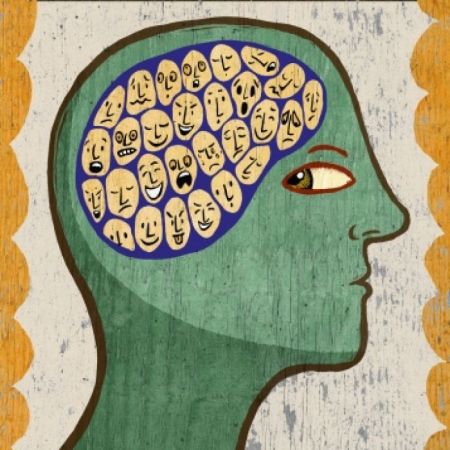
I guess I’m in a wandering/wondering frame of mind.  I’ve been hearing voices off and on.  They are clear, distinct and I suppose  rather commanding.  Previously I’ve dealt with ‘tinnitus’, but this is definitely different.  The voices are not incredibly sophisticated–its usually just one or two words.  Quite simple actually.

Perhaps the full reason of why this is a problem,  because I wonder about some sort of ‘mental degradation’.

  • Am I getting worse?
  • Are the ‘voices’ the sign of the end for me?
  • Will they take over?
  • Will I turn into a blathering idiot?
  • Could they be ‘demonic’ or worse?

I have this image of a stark raving crazy guy, hung up on religion and ‘right-wing extremism’, foaming at the mouth and ‘heading for a bunker up in the mountains.’  But I am none of these things.  Maybe that’s why it scares me so.  I cannot relate to any of this, and I don’t want to.  I am not that person. This is not me.

The voices by themselves, not extrapolating their content, are disruptive enough.  They don’t have to be specific, all they have to be is loud and insistent.  It really doesn’t matter if I obey them.  They disrupt me just by speaking. (I hope they never decide to expand their vocabulary!)

I have a new insight to my brothers and sisters who struggle with schizophrenia/bipolar.  Many are on the streets, and they are desperately homeless.   On almost a ‘medieval’ level they battle with dragons.  Sometimes they push back the beastie, and then sometimes they themselves are slammed back.  But no matter what will happen that day, God’s love meets the warrior, and He lifts them up.

Voices.  These are not dredged up, or manipulated.  I definitely do not ‘manufacture’ them.  I certainly not doing this for attention.  But when they do press me (with an order or command) I do know that it is an alien voice, coming from outside of me.   I know the presence of Jesus pushes them away. I call on His name and they flee.

I have to believe, that God is holding on to me with both hands. 

He will not let me slide into the night, alone.  He has determined that darkness will never claim me.  I turn as I can, to look at Him, face-to-face by faith.  “He has come to heal the broken-hearted.  A bruised reed,  He will not break.  A smoking wick, He will not quench” (Isa. 43:3). What an awesome promise! We serve a gentle and protective God.

There may (or may not) be spiritual warfare issues. I believe that there is a magnificent power in the name of Jesus. The blood and the cross are for my protection. I shelter in all He is and all He has done, If anything, they push me toward the Lord Jesus and He protects me.


 

1brobry-sig

cropped-christiangraffiti1-2


An Inconvenient Madness, [A Broken Believer]

lightanddark

Very simply, bipolar disorder is characterized by mood swings that are defined by major shifts between incredible mania and clinical depression. It’s usually intense and quite disabling.

Depression: There are days when I wake up and I don’t like what I see in the mirror. At times a deep and profound sadness seems to grip me like a vise. It’s like a huge heavy grey cloak covers me, and I can’t shake it off. Typically I hide and crawl into bed for weeks at a time. All is hopeless and I despair of life. I am irrevocably lost. This is bipolar depression and I’m slowly learning that I can shake it free.

Mania: When I’m manic it’s as though I have wings! I’m blasted with a special grace which makes me creative and intelligent and superior to mere mortals.  I become energetically impulsive and irritably crass. It’s all about ME! Thankfully these times don’t happen too often. These moods don’t last long but they’re intense. A measure of freedom can also be found.

Medication prescribed by my psychiatrist helps smooth things out. It was hard to adjust to taking them, but now I know I did the right thing. It’s been over 10 years since my diagnosis and I suppose I have the dubious honor of just surviving. I have several scars on my wrists that remind me of a long journey. Those afflicted will understand.

It’s been suggested that bipolar people can become more empathetic and sensitive to the suffering of others. I’d like to believe that this is true. This seems like a biblical idea.

“He comforts us in all our troubles so that we can comfort others. When they are troubled, we will be able to give them the same comfort God has given us.”

2 Corinthians 1:4, NLT

 “The Sovereign Lord has given me a well-instructed tongue, to know the word that sustains the weary.”

Isaiah 50:4

For the broken believer, I’m confident that the Lord can turn my mental illness into something positive and good. The Holy Spirit empowers the Christian to do the extraordinary. It’s in our weaknesses we can become strong. We are fully enough in Christ. (2 Corinthians 12:9).

I stepped down from my positions as a pastor and a Bible instructor when the bipolar symptoms became clear. This wasn’t easy but I knew it was what God wanted. Today I still speak on occasion at a local Church.

I also minister here at brokenbelievers.com and http://www.lambfollowers.com.. I try to post everyday and I get constant feedback from those who are in need. Just a single post, a list of 24 hour crisis hotlines, averages 175 hits a day by itself! (https://brokenbelievers.com/247-crisis-lines/)

I do covet your prayers for both ministry sites.

This work would never have happened unless I was “detoured” by my bipolar.

“And we know that God causes everything to work together for the good of those who love God and are called according to his purpose for them.”

Romans 8:28

I want to urge you to look at the big picture of mental illness. Sure it can be remarkably disruptive, but the Lord can transform you. Meds and therapy are vital for me. Prayer and Bible reading even more so. You can find a way through this. It’s not easy. Don’t fight the illness. The Father works close to His “special” children. There is a real and abiding hope for you. I’m convinced you can find it.

bry-signat (1)

cropped-christiangraffiti1.jpg

Coming Apart at the Seams, [S.A.D.]

sad-guy-alone
Seasonal Affective Disorder is real

If you notice periods of depression that seem to accompany seasonal changes during the year, you may suffer from seasonal affective disorder (SAD). This condition is characterized by recurrent episodes of depression – usually in late fall and winter – alternating with periods of normal or high mood the rest of the year.

Most people with SAD are women whose illness typically begins in their twenties, although men also report SAD of similar severity and have increasingly sought treatment. SAD can also occur in children and adolescents, in which case the syndrome is first suspected by parents and teachers. Many people with SAD report at least one close relative with a psychiatric condition, most frequently a severe depressive disorder (55 percent) or alcohol abuse (34 percent).

What are the patterns of SAD? Symptoms of “winter SAD” usually begin in October or November and subside in March or April. Some patients begin to slump as early as August, while others remain well until January. Regardless of the time of onset, most patients don’t feel fully back to normal until early May.

Their depressions are usually mild to moderate, but they can be severe. Very few patients with SAD have required hospitalization, and even fewer have been treated with electroconvulsive therapy.

The usual characteristics of recurrent winter depression include:

  • oversleeping,
  • daytime fatigue,
  • carbohydrate craving
  • and weight gain, although a patient does not necessarily show these symptoms.

Additionally, there are the usual features of depression, especially decreased sexual interest, lethargy, hopelessness, suicidal thoughts, lack of interest in normal activities, and social withdrawal.

Treating your SAD

Light therapy is now considered the first-line treatment intervention, and if properly dosed can produce relief within days. Antidepressants may also help, and if necessary can be used in conjunction with light. In about 1/10th of cases, annual relapse occurs in the summer rather than winter, possibly in response to high heat and humidity. During that period, the depression is more likely to be characterized by insomnia, decreased appetite, weight loss, and agitation or anxiety.

Interestingly, patients with such “reverse SAD” often find relief with summer trips to cooler climates in the north. Generally, normal air conditioning is not sufficient to relieve this depression, and an antidepressant may be needed. In still fewer cases, a patient may experience both winter and summer depressions, while feeling fine each fall and spring, around the equinoxes. The most common characteristic of people with winter SAD is their reaction to changes in environmental light.

Latitudes effect attitudes

Patients living at different latitudes note that their winter depressions are longer and more profound the farther north they live. Patients with SAD also report that their depression worsens or reappears whenever the weather is overcast at any time of the year, or if their indoor lighting is decreased. SAD is often misdiagnosed as hypothyroidism, hypoglycemia, infectious mononucleosis, and other viral infections.

http://www.ncpamd.com/seasonal.htm

http://www.mayoclinic.com/health/seasonal-affective-disorder/DS00195

http://www.alaskanorthernlights.com/


cropped-christiangraffiti1.jpg

A Failure to Understand [An Excerpt]

cropped-depressionmeds1.jpg

Excerpt from “A Firm Place to Stand”

BY MARJA BERGEN

I’m disappointed when friends and family who know me well say things that reveal a gross misunderstanding of depression and how it affects those of us who suffer from it. One person close to me thought depression was something we bring on when we feel sorry for ourselves. Perhaps she thought we liked the attention.

Sufferers of depression would do anything to feel happy and vibrant again. When I’m depressed, many friends keep me at arm’s length. I don’t blame them. It’s not pleasant to be around me when I can’t find anything to talk about except my pain. Depression does that to you: It turns your thinking inward; all you can wrap your mind around is the misery you feel. You end up feeling very alone.

Another person complained to me about an acquaintance with depression who couldn’t manage to do anything more than lie on the sofa. “Couldn’t he just try and make himself do something?” she asked. Nothing I said could convince her that this was an illness that, like other illnesses, couldn’t be helped by simple willpower. Those who have never experienced depression find it difficult to understand how profoundly a brain disorder can affect the entire body.

A long time ago, when I was bordering on psychosis, my doctor put me in a seniors’ care facility for a few days to give me relief from the stress I faced at home. I called a close family member to let her know where I was. She advised me, “You’ve got to pull yourself together and be strong. You have to try harder.” That was insensitive. I was at the facility because I was doing my best to recover – I wasn’t living with eighty and ninety-year-olds for fun. She should have known I always try my best. When I’m trapped in this state, extricating myself is extremely hard. I need time and medication to recover. If I sound angry and hurt, yes, I was.

A person I worked with recommended strongly that I get counseling. “You don’t need those pills you’re taking. All you need is to talk to someone at my church.” She knew nothing about mental disorders like mine. She had no idea what I was dealing with. Again, I seethed, remembering how psychotic I was when I was first admitted to hospital. I could become sick like that again if I didn’t take the medication my mental stability depended on. Would this person tell a diabetic to stop taking insulin?

Christian psychiatrist and author, Dwight L. Carlson, writes, “There are legions of God-fearing Christians who – to the best of their ability – are walking according to the Scriptures and yet are suffering from emotional symptoms. Many of them have been judged for their condition and given half-truths and clichés by well-meaning but ill-informed fellow believers. ‘Pray for God’s forgiveness,’ some are told. ‘A person who is right with the Lord can’t have a nervous breakdown.’”

Fortunately, I have not been treated in this way. The church congregations I’ve belonged to were understanding, yet the stigma continues. It hurts me deeply that Christians who should be compassionate are often judgmental. Church communities need to learn the medical basis for mental disorders and how that differs from the spiritual. They are in the best position to help those in crisis. But when they don’t understand, they are in danger of doing a lot of damage. For Christians, there is nothing worse than to be told our emotional problems are our own fault, the result of unconfessed sin. We suffer so much already. Having to shoulder blame multiplies our mental anguish.


flourishx

1 Dwight L. Carlson, Why do Christians Shoot Their Wounded? Helping (Not Hurting) Those With Emotional Difficulties,(InterVarsity Press, 1994)

Marja Bergen has lived with bipolar disorder for over forty years. Her mission is to dispel the lingering stigma attached to mental health conditions and to encourage people to lovingly welcome the sufferers into congregations by understanding them better and supporting them in practical ways.

She is the author of Riding the Roller Coaster (Northstone, 1999) and A Firm Place to Stand: Finding Meaning in a Life with Bipolar Disorder (Word Alive). Marja is the founder of the growing faith-based support group ministry, Living Room.  Visit her website and her blog.


cropped-christiangraffiti1 (3)