We’re Pretty Much Scum

a1705366707_10

“To this very hour we go hungry and thirsty, we are in rags, we are brutally treated, we are homeless. 12 We work hard with our own hands. When we are cursed, we bless; when we are persecuted, we endure it; 13 when we are slandered, we answer kindly. We have become the scum of the earth, the garbage of the world—right up to this moment.”

1 Corinthians 4:11-13, NIV

The apostle Paul isn’t ashamed to be called ‘scum.’ He realizes that this is his ‘standing’ in this world’s opinion. He is regarded as a nobody and of little value by the ‘powers-that-be.’ A tension exists between the believer and the world system. The expectations that the world has is part of the package that we have been given. The message of the Cross is the ultimate foolishness. Jesus told his own disciples that:

“If the world hates you, remember that it hated me first. 19 The world would love you as one of its own if you belonged to it, but you are no longer part of the world. I chose you to come out of the world, so it hates you.”

John 15:18-19, NLT

 The world hates us because we belong to Jesus.

It is his reproach we bear. We should not see the trial and sorrows as our issue, and we shouldn’t get upset by the world’s snub. The tension is real and we can expect being ostracized. In fact, we might do well to be concerned if we don’t see it.

After all, hatred is such a hard word.

And the stigma should humble us— it has a supernatural origin. We shouldn’t expect otherwise. To follow Jesus means we will only experience what he is already gone through. Some of us will follow him even to martyrdom. The hardships and challenges do not invalidate our walk, rather they confirm what he said would happen. The world is under seige by Satan,  it is his spirit that controls the unbelieving world.

“Here on earth you will have many trials and sorrows. But take heart, because I have overcome the world.”

John 16:33

*********

Father of all comfort, please come to your servants who are suffering for their faith in you. Meet them and hold them close to you. Give them boldness and awareness. Seek them out and make them your witnesses in a hostile world. Give them the Spirit of Jesus and help them overcome by their love. ~In Jesus Name, Amen


bry-signat (1)


Making Pain Work for You, [Trials]

heart-1463424_960_720

“Then they went back to Lystra, Iconium, and Antioch in Pisidia. 22They encouraged the followers and begged them to remain faithful. They told them, “We have to suffer a lot before we can get into God’s kingdom.”

Acts 14:21-22, CEV

Paul and Barnabas, together are perhaps the most gifted men ever to minister the Gospel.  They have an amazing love for the Church.  They operate out of great difficulty, but the deep work they do, proceeds out of encouragement.  I looked at a dozen or so translations of the Bible–all of them translate this, “encouraged.”  Every single one!

Earlier in chapter 14, we can read about the brutality and ugliness they had to walk through.  It was very bad, beyond belief.  But these two never ever lose their love for the Lord, and for His people.  Their ministry continued to be full of optimism and comfort.  They simply can’t be poisoned by the nastiness and bitterness just days before.

They understand something.  What they have to say (as they minister that comfort) kind of boggles everyone’s thinking.

They said, “We must suffer many things to enter God’s kingdom.”

Comforting and strengthening, isn’t it?  Sometimes when I read this passage I can’t believe what they are saying!  It doesn’t make any sense at all.   I believe there are three things we must process to fully understand these verses.

 *****************

1)  What comforts us is not always comfortable.

 I’m slowly coming to the place of accepting pain and sickness as my personal doorway into the Lord’s kingdom.  I know my mental illness has opened an entrance into something wonderful.  My months of being institutionalized in different hospitals has seemed to have filled me with grace, gentleness and love–in other words, the kingdom. At least that is what I think.

2)  What we think is the best way often is not.

No one chooses one’s particular path.  If we could we would all be driving a BMW and our homes would be palaces, we would win the lottery on a regular basis.  Our children would be little angels.  We would never be sick, or have a chronic illness.  But–we can’t enter His kingdom, unless there are trials.  They have to be there, they must.  Somewhere it says,  if we suffer, we will reign.

3)  What we need from our elders and pastors is the truth.

 Often the leadership of the Church keeps this one in the closet.  They communicate very well other subjects that are enjoyable.  And we pressure them to do this, gently and subliminally of course.  And everyone wonders why we don’t mature in our faith.  Paul and Barnabas are tremendous leaders, but they don’t roll things in sugar, and their ministry carries on the sufferings of Jesus.

Often it seems, when God chooses to bless a man or a woman greatly, He will send a trial to prepare them deeply.

bry-signat (1)

cropped-christiangraffiti1.jpg

The Sinning Servant

St Elijah FBol

God responds to our personal falterings in an amazing way. The prophet Elijah had experienced considerable fireworks in his ministry. One could easily dismiss an incident when he failed big time.

“Ahab told Jezebel all that Elijah had done, and how he had killed all the prophets with the sword. 2 Then Jezebel sent a messenger to Elijah, saying, “So may the gods do to me and more also, if I do not make your life as the life of one of them by this time tomorrow.” 3 Then he was afraid, and he arose and ran for his life and came to Beersheba, which belongs to Judah, and left his servant there.”

1 Kings 19:1-3, ESV

Up to this time:

  1. Elijah was coming off Mt. Carmel having witnessed fire from heaven.
  2. The 450 prophets of Baal had been executed.
  3. Rain was coming through his prayer, the long drought was ending.

Things seemed right on track for a nationwide revival. Life was good for Elijah, and for the Kingdom of Israel. “Laissez les bons temps rouler.”

But Queen Jezebel wasn’t about to give up her stranglehold on the kingdom. She threatens Elijah. A messenger is dispatched to him; and Elijah is completely intimidated. He reacts by running as fast as he can to get away. The prophet known for boldness and miracles flees for his life into the wilderness.

What was it about Jezebel that caused such a frantic and irrational move? Why didn’t Elijah’s faith stand this test? He had been in stickier places.

“But he himself went a day’s journey into the wilderness and came and sat down under a broom tree. And he asked that he might die, saying, “It is enough; now, O Lord, take away my life, for I am no better than my fathers.”

1 Kings 19:4

Fear and fatigue were working on Elijah’s mind. This is a fact, if you’re acting unscripturally you will behave irrationally.

God ministers to his sinning servant with a powerful and formidable gentleness. It takes awhile for Elijah to react to this tenderness. But there is a no condemnation, no recrimination, no words of rebuke; all we hear is God’s still small voice. God doesn’t chide, but quietly asks his prophet to consider. All Elijah does is accept a certain grace. That’s it.

“And when Elijah heard it, he wrapped his face in his cloak and went out and stood at the entrance of the cave. And behold, there came a voice to him and said, “What are you doing here, Elijah?” 

1 Kings 19:13

Fear, defeat, and self-pity were real issues for Elijah (the man of God). Scripture tells us that, “Elijah was a man with a nature like ours” (James 5:17). We are not machines, but mere men who falter and trip. That is good to remember.

In 2 Corinthians 12:10 Paul comments, “For when I am weak, then I am strong.” The Gospel is predicated on human weakness and flaws. It reaches us consistently where we need it most. The God of Elijah still whispers to broken hearts.

aabryscript


cropped-christiangraffiti1 (3)

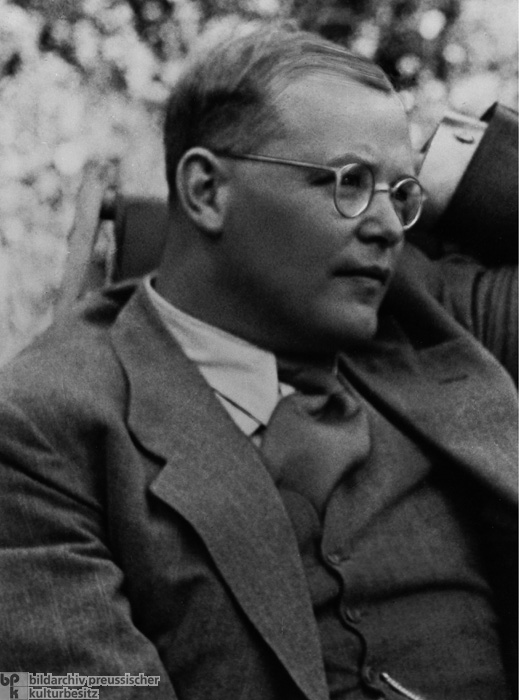
Dietrich Bonhoeffer, A Saint for Today

Dietrich Bonhoeffer (1906-1945) is known for his leadership role in the Confessing Church, efforts on behalf of peace and justice, opposition to antisemitism, and writings on theology and ethics that have been influential far beyond his German Lutheran context. He was was hanged by the Nazis on April 6, 1945 in the Flossenburg concentration camp.

Dietrich Bonhoeffer quotes:

In normal life we hardly realize how much more we receive than we give; life can be rich only with such realization. source: Letters and Papers from Prison

To be silent does not mean to be inactive; rather it means to breathe in the will of God, to listen attentively and be ready to obey. Meditating on the Word

It is not necessary that we should discover new ideas in our meditation. It is sufficient, and far more important, if the Word, as we read and understand it, penetrates and dwells within us. Life Together

When we come to a clearer and more sober estimate of our own limitations and responsibilities, that makes it possible more genuinely to love our neighbor. Letters and Papers…

There is not a place to which the Christian can withdraw from the world, whether it be outwardly or in the sphere of the inner life. Any attempt to escape from the world must sooner or later be paid for with a sinful surrender to the world. Ethics

You have granted me many blessings; let me also accept what is hard from your hand. Prayers from Prison

The first call which every Christian experiences is the call to abandon the attachments of this world. The Cost of Discipleship

Earthly possessions dazzle our eyes and delude us into thinking that they can provide security and freedom from anxiety. Yet all the time they are the very source of anxiety. The Cost of Discipleship

The first service that one owes to others in the fellowship consists of listening to them. Just as love of God begins with listening to his word, so the beginning of love for our brothers and sisters is learning to listen to them. Life Together

From God we hear the word: “If you want my goodness to stay with you then serve your neighbor, for that is where God comes to you.” In the anthology, No Rusty Swords

Judging others makes us blind, whereas love is illuminating. By judging others, we blind ourselves to our own evil and to the grace which others are just as entitled to as ourselves. The Cost of Discipleship

I can no longer condemn or hate a brother [or sister] for whom I pray, no matter how much trouble he causes me. His face that hitherto may have been strange and intolerable to me is transformed through intercession into the countenance of a brother for whom Christ died. Life Together

We have learned a bit too late in the day that action springs not from thought but from a readiness for responsibility. Letters and Papers from Prison

Which of us has really admitted that God’s goodness can also lead us into conflict. In the Anthology, No Rusty Swords

Our enemies are those who harbor hostility against us, not those against whom we cherish hostility… As a Christian I am called to treat my enemy as a brother and to meet hostility with love. My behavior is thus determined not by the way others treat me, but by the treatment I receive from Jesus. The Cost of Discipleship

So long as we eat our bread together, we shall have sufficient even for the least. Not until one person desires to keep his own bread for himself does hunger ensue. Life Together

In a world where success is the measure and justification of all things, the figure of him who was sentenced and crucified remains a stranger. Ethics

 A Prayer written by Bonhoeffer

In me there is darkness,

but with you there is light;

I am lonely, but you do not leave me;

I am feeble in heart; but with you there is help;

I am restless, but with you is peace.

In me there is bitterness, but with you there is patience;

I do not understand your ways, but you know the way for me.

Amen.