“One Sabbath day as Jesus was teaching in a synagogue, 11 he saw a woman who had been crippled by an evil spirit. She had been bent double for eighteen years and was unable to stand up straight. 12 When Jesus saw her, he called her over and said, “Dear woman, you are healed of your sickness!” 13 Then he touched her, and instantly she could stand straight. How she praised God!”
Luke 13:10-13
When we read through the Gospels we see that Jesus never laid His hands on those who were demon possessed, rather He would first command the demon to leave. (Interesting.)
The text tells us that the woman had been bent over for 18 years. (That’s a long, long time.) The cause was being “demonized” which is very different than being possessed.
There is a difference. Demons can oppress people and influence their lives, especially if that person is living in sin and rebellion.
“The physical cause of her inability to straighten up has been examined by J. Wilkinson, who identified the paralysis as the result of spondylitis ankylopoetica, which produces the fusion of the spinal bones.”
14 But the leader in charge of the synagogue was indignant that Jesus had healed her on the Sabbath day. “There are six days of the week for working,” he said to the crowd. “Come on those days to be healed, not on the Sabbath.”
That is absurd. There’s a truth here that this “leader” is covering up. The woman is instantly healed, and this so-called leadertries to nullify what has just happened. Rather than rejoicing, he renounces what has just happened, and claims that the Sabbath law has been violated. He declares the Law is greater than this woman’s healing.
Jesus never once asserts His authority. Rather He points to this woman’s healing as being truly the very essence of the Law. In spite of what the Law means legalistically, it can never invalidate mercy.
“For eighteen years she had not gazed upon the sun; for eighteen years no star of night had gladdened her eye; her face was drawn downward towards the dust, and all the light of her life was dim: she walked about as if she were searching for a grave, and I do not doubt she often felt that it would have been gladness to have found one.”
CH Spurgeon
Her private agony was never to be found again. She was free. The pain she lived with was no more. The captivity was gone, and she was freed. The biblical text seems to ignore this and concentrates on the synagogues leader’s response, and that’s well and good. Perhaps though we should focus on this woman’s healing from an awful terrible darkness.
She is free. The stoop is gone. The pain is gone. Jesus has set her free, she gazes at the sun after many years. She stands erect, and though everything now seems different, she now knows her deliverer, and her healer.
The vision of World Bipolar Day is to bring world awareness to bipolar disorders and to eliminate social stigma.
World Bipolar Day (WBD) – an initiative of the Asian Network of Bipolar Disorder (ANBD), the International Bipolar Foundation (IBPF), and the International Society for Bipolar Disorder (ISBD).
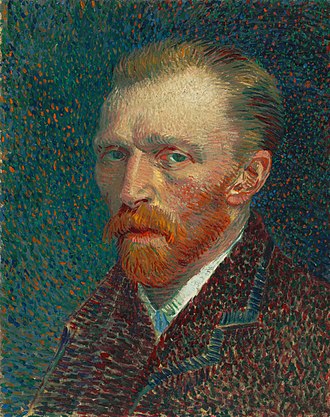
On March 30th, the birthday of Vincent Van Gogh, was posthumously diagnosed as probably having bipolar disorder.
The vision of WBD is to bring world awareness to bipolar disorders and to eliminate social stigma. Through international collaboration the goal of World Bipolar Day is to bring the world population information about bipolar disorders that will educate and improve sensitivity towards the illness.
Bipolar Disorder (also called manic-depressive illness) is a mental illness affecting up to 2% of the population worldwide. It represents a significant challenge to patients, their family members, health care workers, and our communities.
While growing acceptance of bipolar disorder as a medical condition, like diabetes and heart disease, has taken hold in some parts of the world, unfortunately the stigma associated with the illness is a barrier to care and continues to impede recognition and effective treatment.
Despite the alarming number of people affected with a mental illness, statistics show that only one-third of these individuals seek treatment. According to Dr. Thomas Insel, Director of the NIMH (USA), psychiatry is the only part of medicine where there is actually greater stigma for receiving treatment for these illnesses than for having them.
How you handle your fragile moments is key to the remainder of your life. It’s ok to feel abandoned or alone. It’s ok to be depressed.
But let God know about where you’re at. I’m convinced He really wants to teach you to walk in the truth. And dear one, nothing will be as challenging as that.
I really hope that these thoughts might help. We face challenges and difficulties. Just maybe this post will strengthen your walk? I chose each thought purposefully and every one contains something helpful (I hope).
These each speak wisdom as we try to understand what’s happening to us.
Quotes to Guide You Through Your Trial:
A.W. Tozer
“It is doubtful whether God can bless a man greatly until He’s hurt him deeply.” (Roots of Righteousness, Chapter 39)
Calvin Miller
“Hurt is the essential ingredient of ultimate Christ-likeness.” (Quoted in Christianity Today, July 2007, p41)
Larry Crabb
“Brokenness isn’t so much about how bad you’ve been hurt but how you’ve sinned in handling it.” (Christianity Today, A Shrink Gets Stretched, May 1, 2003)
“Shattered dreams are never random. They are always a piece of a piece in a larger story. The Holy Spirit uses the pain of shattered dreams to help us discover our desire for God, to help us begin dreaming the highest dream. They are ordained opportunities for the Spirit to first awaken, then to satisfy our highest dream.” (Shattered Dreams, 2001)
Alan Redpath
“When God wants to do an impossible task, he takes an impossible person and crushes him.” (Quoted by Gary Preston, Character Forged from Conflict: Staying Connected to God During Controversy. The pastor’s soul series, (Minneapolis, MN: Bethany House, 1999)
Bruce Wilkinson
“Are you praying for God’s superabundant blessings and pleading that He will make you more like His Son? If so, then you are asking for the shears.” (Secrets of the Vine, 60.)
Charles Swindoll
“Someone put it this way, ‘Whoever desires to walk with God, walks right into the crucible.’ All who choose godliness live in a crucible. The tests will come.” (Moses, Great Lives from God’s Word, 285.)
“Being stripped of all substitutes is the most painful experience on earth.” (David, p70)
Elisabeth Elliot
“The surrender of our heart’s deepest longing is perhaps as close as we come to an understanding of the cross… our own experience of crucifixion, though immeasurably less than our Saviour’s nonetheless furnishes us with a chance to begin to know Him in the fellowship of His suffering. In every form of our own suffering, He calls us into that fellowship.” (Elisabeth Elliot, Quest For Love, (Grand Rapids, MI: Fleming H. Revell, 1996), 182.)
George MacDonald
“No words can express how much our world ‘owes’ to sorrow. Most of the Psalms were conceived in a wilderness. Most of the New Testament was written in a prison. The greatest words of God’s Scriptures have all passed through great trials. The greatest prophets have “learned in suffering what they wrote in their books.” So take comfort afflicted Christian! When our God is about to make use of a person, He allows them to go through a crucible of fire.”
Helen Keller
“Character cannot be developed in ease and quiet. Only through the experience of trial and suffering can the soul be strengthened, vision cleared, ambition inspired, and success achieved.” (Quoted in Leadership, Vol. 17, no. 4.)
Oswald Chambers
“No-one enters into the experience of entire sanctification without going through a ‘white funeral’ — the burial of the old life. If there has never been this crisis of death, sanctification is nothing more than a vision… Have you come to your last days really? You have come to them often in sentiment, but have you come to them really?… We skirt around the cemetery and all the time refuse to go to death… Have you had your ‘white funeral’, or are you sacredly playing the fool with your soul? Is there a place in your life marked as the last day, a place to which the memory goes back with a chastened and extraordinary grateful remembrance–’yes, it was then, at that ‘white funeral’ that I made an agreement with God.” (Oswald Chambers, My Utmost for His Highest, January 15, (Uhrichsville, OH: Barbour and Company, Inc., 1963).)
“God can never make us wine if we object to the fingers He uses to crush us with. If God would only use His own fingers, and make me broken bread and poured-out wine in a special way! But when He uses someone whom we dislike, or some set of circumstances to which we said we would never submit, and makes those the crushers, we object. We must never choose the scene of our own martyrdom. If ever we are going to be made into wine, we will have to be crushed; you cannot drink grapes. Grapes become wine only when they have been squeezed.” (Chambers, O. (1993, c1935). My utmost for his highest : Selections for the year (September 30). Grand Rapids, MI: Discovery House Publishers.)
“Jesus Christ had no tenderness whatsoever toward anything that was ultimately going to ruin a person in his service to God…. If the Spirit of God brings to your mind a word of the Lord that hurts you, you can be sure that there is something in you that He wants to hurt to the point of its death.” (Oswald Chambers, My Utmost for His Highest, September 27, (Uhrichsville, OH: Barbour and Company, Inc., 1963.)
Charles Stanley
Does God purposefully allow suffering? “The comfortable, but theologically incorrect, answer is no. You will find many people preaching and teaching that God never sends an ill wind into a person’s life, but that position can’t be justified by Scripture. The Bible teaches that God does send adversity – but within certain parameters and always for a reason that relates to our growth, perfection, and eternal good.” (*Stanley, C. F. 1997, c1996. Advancing through adversity (electronic ed.). Thomas Nelson: Nashville, TN.)
“I will instruct you and teach you in the way you should go;I will counsel you with my eye upon you.”
Psalm 32:8
In April 2002, I was sitting in a cavernous waiting room at King’s Crossin London, England. I was waiting for a bus to Cambridge, UK. I sat all alone and stared at the tiled floor at my feet. The doctors had warned me not to travel alone, but I ignored their advice.
And now I was starting to really unravel.
Depression had followed me all the way from Alaska to England. I had pushed my limits and was completely drained and was becoming very confused. I began to cry out to the Lord, very desperately. Sometimes madly. (Read Psalm 88.)
As I sat there staring intensely at the floor, several pigeons seemed to put on a show, just for me. They were fat little guys, apparently scratching out a good living. Several very large windows were open, and these pigeons seemed to have no fear as they took advantage of a meal from bored travelers.
All of a sudden something very odd happened.
A pigeon came across the floor and “presented” himself, right square in front of me. I watched him intently and saw that he was crippled, one of his feet was nothing more than a twisted claw. He had been profoundly injured in such a way, that he would never be the same. He was damaged, and yet somehow he was surviving, but even more, and he was thriving!
It was like experiencing a lightning bolt. God’s own light switch was being flipped.
I saw that pigeon, and I saw myself, and it was a moment of clarity, a shining grace. In the mega-hustle of 13.6 million people in London, and in the midst of my own profound mental crisis, I knew God’s caring touch and it gave me real grace, love, and goodness–far greater than all my sin and confusion. He was just letting me know that He was very, very close. (See Psalm 34:18.)
I had seen my damaged pigeon, completely oblivious to self-pity.
I started to call out to the Father out of my confusion. Within a few minutes, I found myself sitting on the top level of a double decker bus, with the driver aware of my problems and who specifically drove me to the place I was staying.
I was being cared for. Between a crippled pigeon and the dutiful ministrations of a bus driver, I’d finally found my hotel. (See Matthew 6:26.)
I have come to realize that this trip to England was not for me to see Big Ben, Parliament, or wander the academic schools of Cambridge University. Rather I was brought there to make contact with a certain pigeon, who was waiting to meet me and pass on vital instructions.
The Father shared things that I need to know. British castles and churches are beautiful and worth seeing but I must admit I’ve forgotten much. I hope I can return someday.
But on this trip, all I really needed to see was a crippled English pigeon who was just waiting to meet me.