
I really want to bless you today on the subject of simple prayer. I recall reading O. Hallesby way back in my Bible school days. Back then, it was assigned reading for a class, but today it is a close treasure. Here are 23 quotes I put together.

-
Helplessness is the real secret and the impelling power of prayer.
-
Helplessness becomes prayer the moment that you go to Jesus and speak candidly and confidently with him about your needs. This is to believe.
-
A humble and contrite heart knows that it can merit nothing before God, and that all that is necessary is to be reconciled to one’s helplessness and let our holy and almighty God care for us, just as an infant surrenders himself to his mother’s care.
-
Listen, my friend! Your helplessness is your best prayer. It calls from your heart to the heart of God with greater effect than all your uttered pleas. He hears it from the very moment that you are seized with helplessness, and He becomes actively engaged at once in hearing and answering the prayer of your helplessness.
-
When we go to our meeting with God, we should go like a patient to his doctor, first to be thoroughly examined and afterwards to be treated for our ailment. Then something will happen when you pray.
-
When you enter your secret chamber, take plenty of time before you begin to speak. Let quietude wield its influence upon you. Let the fact that you are alone assert itself. Give your soul time to get released from the many outward things. Give God time to play the prelude to prayer for the benefit of your distracted soul.
-
Jesus is moved to happiness every time He sees that you appreciate what He has done for you. Grip His pierced hand and say to Him, “I thank Thee, Saviour, because Thou has died for me.” Thank Him likewise for all the other blessings He has showered upon you from day to day. It brings joy to Jesus.
-
Jesus wills of His own accord to come into us and, in His own power, to deal with our needs. It is not necessary for us to constrain Him by our prayers to take an interest in us.
-
There come times when I have nothing more to tell God. If I were to continue to pray in words, I would have to repeat what I have already said. At such times it is wonderful to say to God, “May I be in Thy presence, Lord? I have nothing more to say to Thee, but I do love to be in Thy presence.”
-
When prayer is a struggle, do not worry about the prayers that you cannot pray. You yourself are a prayer to God at that moment. All that is within you cries out to Him. And He hears all the pleas that your suffering soul and body are making to Him with groanings which cannot be uttered.
-
If God does not give you something you ask for, wait on Him. He will speak with you tenderly and sympathetically about the matter until you yourself understand that He cannot grant your prayer.
-
As impossible as it is for us to take a breath in the morning large enough to last us until noon, so impossible is it to pray in the morning in such a way as to last us until noon. Let your prayers ascend to Him constantly, audibly or silently, as circumstances throughout the day permit.
-
By prayer we couple the powers of heaven to our helplessness, the powers which can capture strongholds and make the impossible possible.
-
My praying friend, continue to make known your desires to God in all things. … Let Him decide whether you are to receive what you ask for or not.
-
Notice carefully every word here. It is not our prayer which draws Jesus into our hearts. Nor is it our prayer which moves Jesus to come in to us. All He needs is access. He enters in of His own accord, because He desires to come in. To pray is nothing more involved than to let Jesus into our needs, and permitting Him to exercise His own power in dealing with them. And that requires no strength. It is only a question of our wills. Will we give Jesus access to our needs?
-
The air which our body requires envelops us on every hand. The air which our souls need also envelops all of us at all times and on all sides. God is round about us in Christ on every hand, with his many sided and all-sufficient grace. All we need to do is to open our hearts.
-
You can use your time to no better advantage than to pray whenever you have a moment, either alone, or with others, while at work, at rest, or walking down the street! Anywhere!!
-
As white snow flakes fall quietly and thickly on a winter day, answers to prayer will settle down upon you at every step you take, even to your dying day. The story of your life will be the story of prayer and answers to prayer.
-
Pray a little each day in a childlike way for the Spirit of prayer. If you feel that you know, as yet, very little concerning the deep things of prayer and what prayer really is, then pray for the Spirit of prayer. There is nothing He would rather do than unveil to you the grace of prayer.
-
Prayer is a fine, delicate instrument. To use it right is a great art, a holy art. There is perhaps no greater art than the art of prayer. Yet the least gifted, the uneducated and the poor can cultivate the holy art of prayer.
-
Our prayer life will become restful when it really dawns upon us that we have done all we are supposed to do when we have spoken to Him about it. From the moment we have left it with Him, it is His responsibility.
-
We should say to God as we mingle with our dear ones each day, “God, give them each Thy blessing. They need it, because they live with me, and I am very selfish and unwilling to sacrifice very much for them, although I do love them.”
-
Prayer can assume very different forms, from quiet, blessed contemplation of God, in which eye meets eye in restful meditation, to deep sighs or sudden exclamations of wonder, joy, gratitude or adoration.
_____________
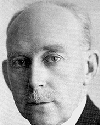 Ole Hallesby
1879-1961
Ole Kristian O. Hallesby was a Lutheran pastor who taught at the Free Faculty of Theology from 1909 to 1952.
He was an outspoken opponent of the Nazi occupation of Norway and was for a time detained at a concentration camp.
Hallesby wrote over 60 books, mostly on theology and ethics, but is known for his devotional writings. His book on prayer is one of the best written on the subject.
*
Related articles from Around the Web
- Prayer of Dedication and Worship (simplyjuliana.com)
- The School of Prayer (challies.com)
- Prayer and Desire (afellowpartaker.wordpress.com)
- Weary of Praying? (justifiedandsinner.com)
- Prayer! (kevilynj.wordpress.com)
- There’s Power (lacykitkat.wordpress.com)