Six Hours One Friday

cropped-god-is-love

Mere Christianity
Who Really Has the Answer?
I’m Glad You Asked

Six Hours One Friday
The Day Christ Died
God Came Near

From Resurrection to Pentecost
It’s Not About Me
At Jesus’ Feet
Won by Love

Grace
What’s So Amazing About Grace?
Peace Like a River
A Love Worth Giving
The Light and the Glory

Walking with God Day by Day
Streams in the Desert
A Life God Rewards
In the Footsteps of Jesus

flourish-bird

Be Blessed, Linda K

This is a “stack poem,” a type of found poem that Samuel Peralta wrote about on dVerse Poets Pub today.

Linda K has a wonderful site– well worth a look… http://lindakruschke.wordpress.com/

Hell and Hope

inferno

Sometimes, I feel like a tour guide for believers that are walking through hell. I point out the different strugglers, and urge each one not to linger too long but to keep moving. We look on those trapped (they have no hope within them) but we hope that they are yet to reach out for the Savior. It is distressing, and yet somehow we understand them just a little bit.

Our journey out and down each sad corridor can be painfully disturbing for us. There are so many different types of prisons and chains used to confine and control. Dante wrote his “Inferno” (Italian, for hell), and somehow he in some curious way walks through the different levels (varieties) of hell with us. Virgil (Dante’s own tour guide) takes Dante through some pretty hairy stuff, and they pass through the very gate, which bears an inscription, of the infamous phrase “Lasciate ogne speranza, voi ch’intrate“, or “Abandon all hope, ye who enter here.”

Our own rescue from this dreadful place is based on that singular word, “hope”. Somehow, hope has distilled inside us, and that alone can enable us to walk out as the freed. We have chosen not to abandon hope, but to use it as our passport out of the bottom of hell itself. We show it to each guardian, and then pass through without any hinderance.

  • And so at last the poor have hope. (Job 5:16)
  • Having hope will give you courage. You will be protected and will rest in safety. (Job 11:18)
  • Lord, you know the hopes of the helpless. Surely you will hear their cries and comfort them. (Ps. 10:17)
  • All day long I put my hope in you. (Ps. 25:5)
  • Let your unfailing love surround us, Lord, for our hope is in you alone. (Ps. 33:22)
  • O Lord, you alone are my hope. (Ps. 71:5)
  • Your word is my source of hope. (Ps. 119:114)
  • “Listen to me, all who hope for deliverance— all who seek the Lord!” (Isa. 51:1)
  • And his name will be the hope of all the world.” (Matt. 12:21)
  • Even when there was no reason for hope, “Abraham kept hoping.” (Rom. 4:18)
  • We, too, wait with eager hope. (Rom. 8:23)
  • Rejoice in our confident hope. (Rom. 12:12)
  • The Scriptures give us hope and encouragement as we wait. (Rom. 15:4)
  • Three things will last forever—faith, hope, and love. (1 Cor. 13:13)
  • That you can understand the confident hope he has given us. (Eph. 1:18)
  • Our hope is in the living God, who is the Savior of all. (1 Tim. 4:10)
  • In order to make certain that what you hope for will come true. (Heb. 6:11)
  • This hope is a strong and trustworthy anchor for our souls. (Heb. 6:19)
  • Let us hold tightly without wavering to the hope we affirm. (Heb. 10:23)
  • They placed their hope in a better life after the resurrection. (Heb. 11:35)
  • You have placed your faith and hope in God. (1 Pet. 1:21)
  • If someone asks about your Christian hope. (1 Pet. 3:15)

I suppose we must say (it’s clear) that hope is what sets us free from the difficulty that rests in our minds. Whatever DSM-IV has branded us, whatever a psychiatrist has declared us to be, and whatever our therapist has told us– our hope, that’s in Christ, will open all doors that are closed and locked.

Hope really is the Christian’s freedom from hell. Those of us who have been freed from our incarceration from our mental illness are amazingly liberated. I know the lostness of being very much lost. But hope is everything. When our hope somehow connects with Jesus, our souls are set free. We walk out of hell, with our souls soaring clean.

kyrie elesion, Bryan

*

Nothing New Under the Sun

sun1This post is one that I posted at my own blog over three years ago, but watching Pr. Lowe share his story so honestly here reminded me of it, and so I decided to share it. I know his story is one that has blessed others; I know because I am one of those people who have been blessed by his honesty and faith.

What’s your story? I know you have one; we all do. But a more important question is: Have you shared your story with anyone? So often we don’t. Even when someone asks, “How are you?” or “What’s going on with you?”, we answer with platitudes like, “I’m fine” or “Not much.” We do this even when it is not true, even when we are not fine or a multitude of stressful situations are plaguing us.

A Facebook friend posted as her status one day that everyone lies, and the biggest lie we tell is “I’m fine.” But why do we do that? Why don’t we share our story with others? I believe there are two reasons, both rooted in fear to some extent.

First, we think our story is ordinary. We are afraid that others will be bored by what we have to say about what’s going on in our lives. Sometimes this might be true, sometimes the person we are speaking with won’t really care enough to truly listen or will be bored. Dwight Yoakam sings a song called “Sorry You Asked” that exemplifies this concern:

You’ll be sorry you asked
me the reason
That she’s not here with
me tonight
And I know you were
probably just acting polite
But you’ll be sorry you
ever asked why

We think people are just acting polite when they ask how we are, and don’t really want to know the truth. But often that is not the case, at least not if you are hanging out with people who care about you.

Second, we think we are the only ones going through whatever difficulty we are experiencing. We are afraid that others will look down on us for the situation we are in or the trial we are experiencing. We are afraid they will think we are weird or worse. But seldom are we the only ones who have experienced the trial we are currently experiencing or have gone through in the past. “What has been will be again, what has been done will be done again; there is nothing new under the sun.” Ecclesiastes 1:9.

The truth is our shared stories are what bring us together in community. I believe God allows us to experience trials that He knows we can handle so that we can then be an encouragement to others in a similar situation. If you have had a miscarriage, chances are at least one of the other women in your circle of friends has had one, too, and could use some support and encouragement. If you have suffered from depression and recovered, odds are you will encounter someone else who is struggling with this problem who could benefit from your understanding. If you have lost a loved one, I would venture that many of the people you know have lost someone, too, and could find hope in the fact that you have survived this ordeal. (As a side note, all three of these circumstances are part of my story.)

I could go on and on with examples, but the specific examples are not the point. It is the fact that we are all the same in so many ways. We are not alone and need not feel alone. In Ecclesiastes 4:9-12, Solomon wrote:

9 Two are better than one,
because they have a good return for their work:

10 If one falls down,
his friend can help him up.
But pity the man who falls
and has no one to help him up!

11 Also, if two lie down together, they will keep warm.
But how can one keep warm alone?

12 Though one may be overpowered,
two can defend themselves.
A cord of three strands is not quickly broken.

So go ahead, just like the character in Dwight’s song, share your story. Tell your friends how you really are, the genuine struggles you are facing, and the frustrations you are dealing with. Who knows, you just might help them feel less afraid and alone about their own trials, or you might encounter someone who is willing to share with you their story of hope and healing that you desperately need to hear.

aasignLinda

88

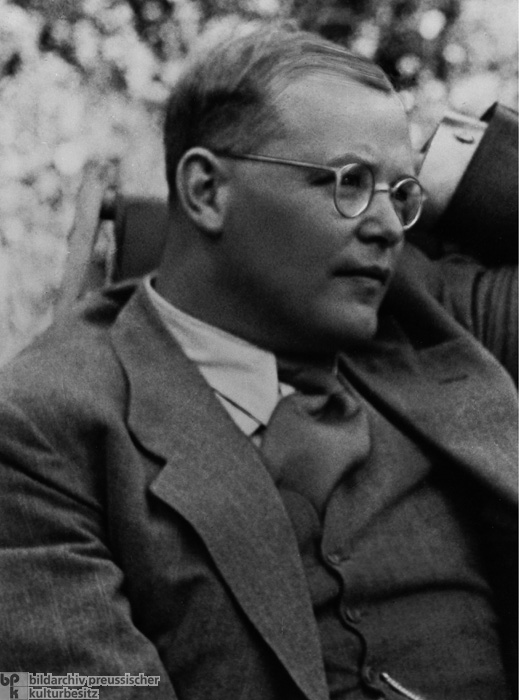
Dietrich Bonhoeffer, A Saint for Today

Dietrich Bonhoeffer (1906-1945) is known for his leadership role in the Confessing Church, efforts on behalf of peace and justice, opposition to antisemitism, and writings on theology and ethics that have been influential far beyond his German Lutheran context. He was was hanged by the Nazis on April 6, 1945 in the Flossenburg concentration camp.

Dietrich Bonhoeffer quotes:

In normal life we hardly realize how much more we receive than we give; life can be rich only with such realization. source: Letters and Papers from Prison

To be silent does not mean to be inactive; rather it means to breathe in the will of God, to listen attentively and be ready to obey. Meditating on the Word

It is not necessary that we should discover new ideas in our meditation. It is sufficient, and far more important, if the Word, as we read and understand it, penetrates and dwells within us. Life Together

When we come to a clearer and more sober estimate of our own limitations and responsibilities, that makes it possible more genuinely to love our neighbor. Letters and Papers…

There is not a place to which the Christian can withdraw from the world, whether it be outwardly or in the sphere of the inner life. Any attempt to escape from the world must sooner or later be paid for with a sinful surrender to the world. Ethics

You have granted me many blessings; let me also accept what is hard from your hand. Prayers from Prison

The first call which every Christian experiences is the call to abandon the attachments of this world. The Cost of Discipleship

Earthly possessions dazzle our eyes and delude us into thinking that they can provide security and freedom from anxiety. Yet all the time they are the very source of anxiety. The Cost of Discipleship

The first service that one owes to others in the fellowship consists of listening to them. Just as love of God begins with listening to his word, so the beginning of love for our brothers and sisters is learning to listen to them. Life Together

From God we hear the word: “If you want my goodness to stay with you then serve your neighbor, for that is where God comes to you.” In the anthology, No Rusty Swords

Judging others makes us blind, whereas love is illuminating. By judging others, we blind ourselves to our own evil and to the grace which others are just as entitled to as ourselves. The Cost of Discipleship

I can no longer condemn or hate a brother [or sister] for whom I pray, no matter how much trouble he causes me. His face that hitherto may have been strange and intolerable to me is transformed through intercession into the countenance of a brother for whom Christ died. Life Together

We have learned a bit too late in the day that action springs not from thought but from a readiness for responsibility. Letters and Papers from Prison

Which of us has really admitted that God’s goodness can also lead us into conflict. In the Anthology, No Rusty Swords

Our enemies are those who harbor hostility against us, not those against whom we cherish hostility… As a Christian I am called to treat my enemy as a brother and to meet hostility with love. My behavior is thus determined not by the way others treat me, but by the treatment I receive from Jesus. The Cost of Discipleship

So long as we eat our bread together, we shall have sufficient even for the least. Not until one person desires to keep his own bread for himself does hunger ensue. Life Together

In a world where success is the measure and justification of all things, the figure of him who was sentenced and crucified remains a stranger. Ethics

 A Prayer written by Bonhoeffer

In me there is darkness,

but with you there is light;

I am lonely, but you do not leave me;

I am feeble in heart; but with you there is help;

I am restless, but with you is peace.

In me there is bitterness, but with you there is patience;

I do not understand your ways, but you know the way for me.

Amen.