Life with Thorns

From desiringgod.org

Finding Strength in Physical Weakness

It’s easy to romanticize physical suffering — especially when you’re not the one experiencing it.

Saints like Amy Carmichael, who spent over twenty years bedridden, and Joni Eareckson Tada, a quadriplegic who lives in constant pain, can evoke peaceful images of unbroken communion with God. We may imagine that it’s easier for them to endure pain and weakness than it is for the rest of us.

Yet the reality of physical suffering is that it’s insistent and intrusive. No one gets used to it. Pain demands our attention. Time slows to a crawl, particularly in the middle of the night, when we’re begging God for the relief of sleep. We feel alone and isolated. No one else can enter the prison that our bodies have become.

Pain Accumulates

If that weren’t enough, physical pain rarely exists in isolation — it’s usually accompanied by loss, weakness, and dependence. Often, we require help with basic daily needs, and we worry about the burden we’re putting on others. We second-guess every request, not wanting to bother someone one more time. Will people get tired and think we’re “too much”? Do they resent their lack of freedom?

We longingly remember the carefree days before our physical struggles altered our lives, when we could do what we wanted. Now we measure our energy in teaspoons rather than buckets. We weigh every decision, every action. Saying yes to one activity means saying no to many others. It is hard not to envy those with fit bodies, who seem to have no cares.

Pain, loneliness, and longing can give way to depression and despair. We cry out to the Lord for relief, but relief doesn’t come. The cancer spreads. Sleep eludes us. The pain intensifies. The medicine stops working. The side effects multiply. Our caregivers grow weary. Our friends stop checking in. Our resources run dry.

Doubt Advances

The vibrant faith we once had begins to fade — which is exactly what Satan wants to happen as we suffer. He wants us to doubt and fall away from God, convinced that he is indifferent to our cries. Satan knows that we’re susceptible to discouragement when we’re physically depleted, so that’s when he attacks. As physical needs scream for attention, Satan whispers to us, “Does God even hear you, let alone really care for you? If he does, why isn’t he delivering you?”

Insidious doubts slip in, making us question beliefs we once held rock-solid: Are we deeply loved by an all-powerful Father? As soon as we recognize the mental shift, we need to stop and cry out to God, asking him to meet us in our sorrow, to deliver us from our pain, and to show us evidence of his goodness and love. Are we fixating on all that we’ve lost, on how God hasn’t delivered us, on how hopeless we feel? Or do we recognize that God is with us, working for our good, and caring for us each moment?

What we think about in the moments of our deepest pain is critical. Our mindset will determine how we approach the questions that bombard us. Here are three common questions I’ve asked:

  1. How can God be “for me” if I’m still suffering?
  2. How can God use my weakness for good?
  3. What good can come in moments of overwhelming pain?

How can God be ‘for me’ if I’m still suffering?

Sometimes God miraculously delivers us when we plead for relief, like at the parting of the Red Sea. Other times he sustains us, as he did with manna in the wilderness. The Red Sea deliverance freed the Israelites, but their need for manna kept them dependent on God. In gathering manna, they had a harder time forgetting their reliance on God. And if God’s greatest blessing is himself, then perhaps sustenance is a more precious gift than deliverance, since it can keep us in constant communion with him.

Take the apostle Paul. He begged God for deliverance from his thorn in the flesh, but instead he received grace — grace to bear the thorn, grace to be content with weakness, grace that would carry him through other trials as well (2 Corinthians 12:7–10).

When we realize that we can depend on God in our weakness, we learn to trust him in everything. Anyone can thank God for quick deliverance from physical suffering, but we often forget him until the next crisis. Yet when he sustains us in our pain, we’re confident that he is with us always.

How can God use my physical weakness for good?

We may think our physical weakness is keeping us from maximum fruitfulness, but that’s impossible. Our weaknesses are a part of God’s plan for our lives; they are intertwined with our calling. Paul thought his thorn was hampering his ministry, but God knew that it was the key to his strength: it forced Paul to be wholly dependent on God. When we are depleted and exhausted, lacking any resources of our own — it is then that we fully rely on God.

And in that reliance, we discover the power of God flowing through us — the same power that raised Jesus from the dead (Ephesians 1:19–20). This power keeps us enduring when we want to give up; it showcases God’s glory and brings lasting change. Because Paul relied on God’s provision, he accomplished more for the kingdom with his thorn than he could have without it. His greatest strength lay in his submission to Christ.

Even Jesus’s greatest strength appeared in his greatest physical weakness.

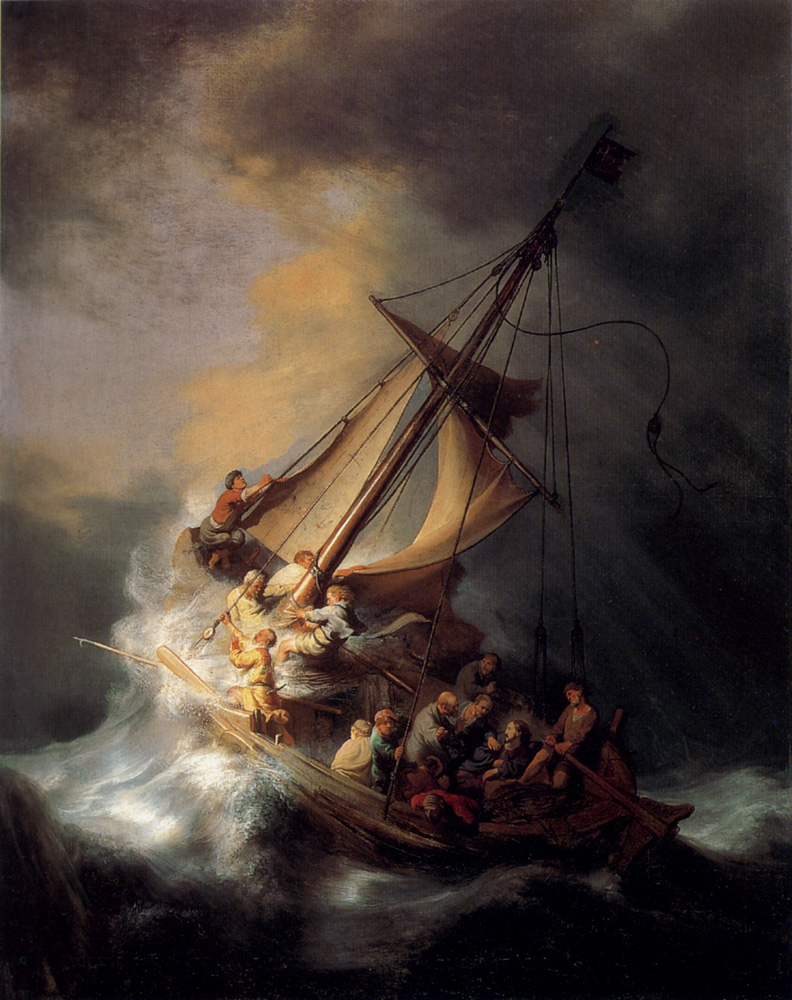
Throughout his ministry, Jesus impacted others by his actions. He calmed the storm with a word. He fed five thousand with a few loaves and fish. He cast out demons, healed the sick, and raised the dead. He turned the world upside down.

But at the end of his ministry, from the Last Supper on, Jesus allowed others to act upon him: he was led away, he was whipped and mocked, he was beaten and crucified. When he submitted to his captors, the crowds saw weakness rather than what was really there: Jesus’s strength and power.

Just before these horrific events, Jesus begged God to take the cup of suffering from him. But it was through Christ’s submission to the will of the Father — to torture and humiliation, to physical abuse and carrying his own cross — that God brought about the most astonishing display of his power and grace.

Article by Vaneetha Rendall Risner

The Prodigal Son of the Old Testament

God’s temple was now filled with an evil darkness. King Manasseh made the Lord’s holy place a fountain of sin and filth. Instead of holiness, it was an evil place.

He brought in dark things that were twisted, perverted and clearly forbidden.

“Manasseh led Judah and the inhabitants of Jerusalem astray, to do more evil than the nations whom the Lord destroyed before the people of Israel.”

2 Chronicles 33:9, ESV

His own darkness was now encouraged by others, it became accessible, available and promoted:

  • The high places were rebuilt throughout the land.
  • Altars to Baal rebuilt, using images of wood.
  • In the holy temple, altars to the “starry host,” astrology, plain and simple.
  • Human sacrifice of his own sons to Molech, a false god. Murder.
  • He practiced soothsaying, used witchcraft and sorcery, and consulted mediums and spiritists.

Evil was being encouraged and something wicked was replacing all that was good and true. The analysis of Manasseh’s policies was way beyond disturbing. Of all the kings of Judah, he was the most sinful and the most corrupt. He was at the bottom of the barrel.

The Hebrew word for “led astray” can be translated seduced.

Manasseh was an incredibly immoral man, a king who ruled for 40 years. “He did all he could to pervert the national character, and totally destroy the worship of the true God; and he succeeded.” (Clarke)

It’s believed that he put Isaiah to death by cutting him in two.

Moreover Manasseh shed very much innocent blood, till he had filled Jerusalem from one end to another, besides his sin by which he made Judah sin, in doing evil in the sight of the LORD.

1 Kings 21:16

But then something happened.

And the LORD spoke to Manasseh and his people, but they would not listen. Therefore the LORD brought upon them the captains of the army of the king of Assyria, who took Manasseh with hooks, bound him with bronze fetters, and carried him off to Babylon.

2 Chronicles 33:10-11

Assyria came knocking on Manasseh’s door. I think there was a certain mercy here, but also discipline. Manasseh had “hooks,” inserted through his jaw and out of his mouth. Like a fish he was led to Babylon, a trophy of the power of the army of Babylon.

It was from a dark dungeon that Manasseh cried out to the Lord and repented.

(2 Chronicles 33:12-13.)

There’s a Jewish fable that when Manasseh cried out to God the angels boarded up the windows in heaven. They wanted to block out his prayer so God wouldn’t be able to hear. But God, rich in mercy, bored a hole in front of His throne to hear Manasseh’s desperate cry.

The Lord’s intention was to forever show His kindness and grace given to the most awful repentant sinner.

I believe that Manasseh was the “Prodigal Son” of the Old Testament.

God is not at a loss when He moves to bring us back to Himself. He can woo or whip. He can draw or drive. He can work rapidly or slowly, as He pleases. In other words, He is free to be God! And in His own way, at His own pace, He brings us back.

     Tom Wells

God is wildly in love with you. Yes, the sin you’ve committed is awful, but the Lord wants you to come back. He may discipline you, but He forgives everything if you’ll turn and repent.

No matter how awful your sin, He forgives and restores. Manasseh is proof of that.

Sources:

2 Chronicles 33:1-20

2 Kings 21:1-18

Enduring Word commentary

The Desperation Factor

  1. : Loss of hope and surrender to despair. 2. : a state of hopelessness leading to rashness.
  2. Synonyms–desperation · concern · dejection · depression · despondency · disconsolateness · distraction · distress · pang · torture · trouble · worry. noun as in rashness.

A terrific study is finding the people who fell at Jesus’ feet. Tucked in the Gospels you’ll find stories of those who despair. You’ll also see them come to Jesus in brokenness and humility, without any other recourse. I call these the feet-finders.

They came to Jesus because they had no hope otherwise. They were people who were hopeless and wretched, they had long ago run out of options. They came to Jesus, falling down in front of Him. They were all feet-finders.

They were men and women who were truly desperate.

John 11:32

One of the classic scenes in the Gospels is when Mary meets Jesus after her brother’s death. She doesn’t understand Jesus’ delay, Lazarus has been very ill and Jesus could have healed him. She is grieving and confused. But she only has one posture and one place in her heart to be– at the feet!

There are some common characteristics that feet-finders have:

  • A great need that can’t be met without His touch
  • To understand one’s true condition–humility, brokenness
  • To beg for a healing, for self or family
  • To honor Jesus as the Messiah
  • To be more receptive to His teaching, to understand Him
  • To become a witness to others (although it does seem secondary)

The following 3 verses are just a small selection of those who fell at Jesus feet.

Matthew 15:30

Mark 7:25

Luke 8:35

But there are several other instances where people came to sit at Jesus’ feet:

  • Mark 5:22-23, Jairus, a leader in the local synagogue
  • Luke 7:37-38, a sorrowing mother for her daughter
  • Luke 8:41, also Jairus
  • Luke 10:39, Mary, when Jesus was teaching
  • John 11:32, Mary, meeting Jesus entering Bethany
  • John 12:3, Mary, with her perfume
  • Revelation 1:17, John to express what he was seeing (also 19:10)

In every case we find people consciously coming and kneeling at the feet of the Lord Jesus. It was a deliberate action that came from their hearts. Each had a terrible need, and each was without hope.

Formality and religious politeness are jettisoned. Brokenness and true humility takes their place. A foot-finder is no longer operating on spiritual niceties. Religion is comfortable, noble, and respectable, but it cannot heal or change people deeply.

Feet-finders know that they need Jesus desperately and will go to any length just to be touched by Him. They defy what is conventional and proper. They are not what we call respectable. You can find them at the feet of Jesus. They are feet-finders. Foot-finders weep, kneel, beg, shout. Too many tears and maybe some snot.

Hardly decent to religious people.

Are you really that desperate yet? Have you seen your need, and do you realize how lost you would be without His healing touch?

Often when I do pray, I sometimes think of the woman who was unclean. She speaks to me about approaching Jesus. I see myself in a crushing crowd of people, and I’m reaching out just to touch the hem of His robe. I know only Jesus can stop my own uncleanness. (Matthew 9.)

I’m convinced only Jesus can make me clean and whole.

I’ve tried to be holy and acceptable to Him. But I felt like a juggler, trying to keep my balls in the air all at the same time, and I could never pull it off. So I tried again and again. I was the unofficial master of religious effort.

But I found my rightful place at His feet. It’s where I belong. I love Him.

I’m not ashamed to be found kneeling.

bry-signat (1)

*

In Need of Grace–Quotes

To Manning, every person is redeemable, none are too far gone.  Brennan Manning was a strong voice to the weak, the lame, the mentally challenged, and for the prodigal.

*******

“There is a beautiful transparency to honest disciples who never wear a false face and do not pretend to be anything but who they are.”

My deepest awareness of myself is that I am deeply loved by Jesus Christ and I have done nothing to earn it or deserve it.”

 “To live by grace means to acknowledge my whole life story, the light side and the dark. In admitting my shadow side I learn who I am and what God’s grace means.”

“To be alive is to be broken; to be broken is to stand in need of grace.”

“Christianity doesn’t deny the reality of suffering and evil… Our hope… is not based on the idea that we are going to be free of pain and suffering. Rather, it is based on the conviction that we will triumph over suffering.”

“I am what I am in the sight of Jesus and nothing more. It is His approval that counts.”

“[Be] daring enough to be different, humble enough to make mistakes, wild enough to be burnt in the fire of love, real enough to make others see how phony [you] are.”

“The blood of the Lamb points to the truth of grace: what we cannot do for ourselves, God has done for us. On the cross, somehow, someway, Christ bore our sins, took our place, died for us. At the cross, Jesus unmasks the sinner not only as a beggar but as a criminal before God.”

“Do the truth quietly without display.”

“It is for the inconsistent, the unsteady disciples whose cheese is falling off their cracker.”

“The dominant characteristic of an authentic spiritual life is the gratitude that flows from trust—not only for all the gifts that I receive from God, but gratitude for all the suffering. Because in that purifying experience, suffering has often been the shortest path to intimacy with God.”

“The greatest single cause of atheism in the world today is Christians, who acknowledge Jesus with their lips and walk out the door and deny him with their life style. That is what an unbelieving world simply finds unbelievable.”

“The saved sinner is prostrate in adoration, lost in wonder and praise. He knows repentance is not what we do in order to earn forgiveness; it is what we do because we have been forgiven. It serves as an expression of gratitude rather than an effort to earn forgiveness.”

“In essence, there is only one thing God asks of us–that we be men and women of prayer, people who live close to God, people for whom God is everything and for whom God is enough. That is the root of peace.”

***********

I really hope some of these quotes have connected.  Brennan Manning has authored several books all of which I can heartily recommend.