


NAMI’s Interviews With Danielle Steel & Kay Jamison
Last year, Steel published His Bright Light, a memoir of her son, Nick Traina, who committed suicide at age 19 after a life-long battle with bipolar disorder (manic depression). More recently, Jamison has published Night Falls Fast: Understanding Suicide, combining research, clinical expertise and personal experience to explore one of the world’s leading causes of death.On February 8, the Senate Appropriations Subcommittee on Labor, Health, Human Resources, Education & Related Agencies will hold a hearing on suicide prevention that will include testimony from best-selling author Danielle Steel and Professor Kay Redfield Jamison, author of several academic and popular books on mental illness.
Interviews with Steel and Jamison have appeared in “Spotlight,” a special supplement to The Advocate, the quarterly publication of the National Alliance for the Mentally Ill (NAMI). Conducted by NAMI executive director Laurie Flynn, they offer a possible preview of Steel and Jamison’s testimony on Tuesday. Excerpts follow below.
……………………………………………..

NAMI’s Interview with Kay Jamison
Spotlight (Winter 1999/2000)
NAMI: What do we know about the linkage between suicide and mental illness?
Jamison: The most important thing to know is that 90 to 95 percent of suicides are associated with one of several major psychiatric illnesses: depression, bipolar illness, schizophrenia, drug and alcohol abuse, and personality disorders. These are obviously treatable illnesses. Another thing people don’t think about enough or emphasize enough is that because cancer and heart disease hit older people, they are seen as lethal illnesses. Because the age of onset for mental illnesses is very, very young, people don’t tend to think of mental illnesses as the potentially lethal illnesses they are. It’s important for people to understand that they have an illness to begin with and then that they get good treatment for it.
NAMI: You have spoken specifically of suicide and college students.
Jamison: Yes. Suicide is the second major killer of college aged kids. It’s the second leading killer of young people generally.
NAMI: You also have pointed out that, worldwide, suicide is the second leading killer of women between ages 15 and 45. These statistics are staggering, yet most people don’t seem to be aware of it.
Jamison: Absolutely. Across the world. There are almost two million suicides a year worldwide. I think people just don’t have any sense of the enormity of it. Suicide unfortunately has been so individualized and, because of the early suicide movement in this country, so separated from mental illness. People working in the field of suicide concentrated on existential factors and vague sorts of things, when in fact the underlying science is very clear that they’re associated with a few mental illnesses.
NAMI: Knowing what we do about illness and its treatability allows us to be able to discuss preventing suicide.
Jamison: Right. [U.S. Surgeon General] Dr. David Satcher’s emphasis has been very strong on three fronts. One is public awareness. Secondly, intervention and all that’s involved in making doctors and others more able to ask the kinds of questions needed to uncover mental illness. And then, thirdly, to support the science that’s necessary to study suicide.
NAMI: What else can policy makers and public officials do?
Jamison: I think we have to have public officials talking about it. When you have someone like Jesse Ventura out there saying these outrageous things-I think it’s really beyond the pale-we’ve got to have the president of the United States saying look we’ve got a real epidemic here, and there’s something we can do about it. People are dying from not gaining access to treatment-or from having three days in the hospital, and then going out and dying.
…………………………………………………

NAMI’s Interview with Danielle Steel
Spotlight (Winter 1999)
NAMI: “His Bright Light” is a very personal story about a very painful subject, the mental illness and death of a child. What did you hope people would learn by sharing your story?
Steel: I hoped first of all that people would come to know my son, and learn what an extraordinary person he was. I wrote the book to honor him, and to share with people what a remarkable person he was, in spite of his illness. I also wrote it to share with people the challenges we faced, so that they feel less alone and less isolated with their pain, in similar situations. I wrote it to give people hope and strength as they follow a similar path to ours.
NAMI: What did you learn from this painful tragedy?
Steel: I’m not sure yet what I learned from the tragedy, except that one can and must survive. But from his life, I learned a great deal about courage and perseverance, and love.
NAMI: Lots of people in America might be facing signs of a mental illness in one of their children. What about Nick’s behavior made you realize that it was more severe than just the normal growing pains of a child?
Steel: Nick was different. Always. His moods were more extreme. I sensed from early on, that despite his many wonderful qualities, there was something very wrong. I knew it in my gut, as I think many parents do.
NAMI: How long did it take for Nick to be diagnosed as manic-depressive and receive treatment for that condition?
Steel: Nick was not clearly diagnosed as manic depressive until he was 16, a good 12 years after we began the pursuit of the causes for his ‘differences’. He received no medication until he was 15, and did not receive the most effective medications until he was 16. A long and very painful wait for all concerned!
NAMI: Prior to knowing of Nick’s manic depression, what did mental illness mean to you? Did you associate stigma with mental illness?
Steel: I don’t think I realized, before Nick, that one could still be functional, or seemingly functional, if mentally ill. I thought of it as something totally incapacitating, and of people who were shut away. I don’t think I realized how intelligent and capable mentally ill people can still be. I’m not sure I did associate a stigma with mental illness. It just seemed like a sickness, and not necessarily a shameful one. I just thought of Nick as sick, whatever it was called, and wanted him to be cured.
NAMI: How did Nick deal with the knowledge that he had a mental illness?
Steel: For a long time, Nick himself was in denial about his illness. And eventually, he accepted it. In the last year, he told people he was manic-depressive. Before that, when he felt ‘normal’ on medications, he believed he was cured. He had a hard time accepting at first that he would be manic-depressive all his life.
NAMI: Are schools able to cope with the mental illness of a child?
Steel: In most cases, I don’t believe they are. It is a huge challenge for all to meet, and certainly hard on the other kids to have one child acting out. We were very lucky, in Nick’s high school years we finally found a wonderful school that understood the problem, accepted him as he was, and was willing to work with him in a framework he could cope with. They were remarkably flexible and creative. But for most schools, it’s asking a lot to expect them to adapt to a mentally ill child.
NAMI: If you could tell a family member who is caring for someone who is mentally ill one thing, what would that be?
Steel: Never give up. Get the best help you can. Keep trying, keep loving, keep giving, keep looking for the right answers, and love, love, love, love. Don’t listen to the words, just listen to your heart.
NAMI: What do you think support groups like NAMI can do for families coping with the mental illness of a loved one?
Steel: I think groups like NAMI can provide support, both emotional and practical—the knowledge that you are not alone. And resources, where to go, who to talk to, what works. You need all the information you can get, and it is just about impossible to do it alone.
NAMI: Stereotyping the mentally ill as violent and dangerous is pervasive in America. How do we change this perception?
Danielle: Information. Obviously there must be some mentally ill people who are violent and/or dangerous. But I suspect that most are not. Nick certainly wasn’t either of those, he was gentle, loving, smart, funny, compassionate, extremely perceptive about people, and very wise. I cannot conceive of Nick as ‘dangerous,’ although ultimately he was a danger to himself. But for the most part, I think the turmoils of the mentally ill are directed within and not without.
NAMI: What do you think the average American should know about mental illness?
Steel: I think most people should know how common it is…I also think people should know how serious it is when it goes untreated. And how potentially lethal it can be. It is vitally important to get good treatment, the right medication, and good support. If you let a bad cold turn into bronchitis and then pneumonia, without medication, it can kill you. If you do not treat serious diabetes, it can kill you. If mental illness goes untreated, it can kill you.
NAMI: We know that having “hope” is important to battling any disease. What hope do you see for people with mental illness?
Steel: I see a huge amount of hope. The medications today can give people whole, happy, productive lives. There are lots and lots of people with mental illness holding down good jobs, even with important careers, happy family lives, and doing great things. It is possible to lead a good and happy life if you are mentally ill. If those who are doing just that would speak up, it would give great hope to all those who are still groping their way along in the dark.
NAMI: What is Nick’s legacy?
Steel: Nick’s legacy is the love we had and have for him, the word we have spread of what a terrific person he was. In his lifetime, he touched countless lives, with his warmth, with his mind, with his music, with his words. Through his experiences, others have and will learn. Through the Nick Traina Foundation, hopefully we can bring help to others, in his name.
For more information or assistance, please contact NAMI at: http://www.nami.org/

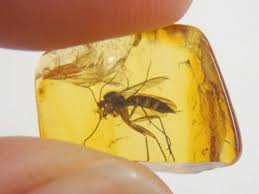
 I remember as a boy seeing a prehistoric bug caught in amber. It struck me as a bit macabre. This poor insect frozen for all to see.


 Broken Believers