The Lord Is Our Shepherd

This is what is called a “found poem,” which means that every line of the poem was found in some other writing. In this case, all of  the lines of this poem are found in the Bible, from the Old Testament prophets, the words of Jesus, and all the way through Revelation.

The lines of the poem do not appear in the order they do in the Bible, but are arranged to illustrate how Scripture maintains a consistent Biblical theme of the Lord as our Good Shepherd watching over His lost and straying sheep.

Lost sheep, may you find yourself in the arms of our Shepherd today.

************

The Shepherd

We all, like sheep, have gone astray,
each of us has turned to his own way;
Hear us, O Shepherd of Israel,
You who lead Joseph like a flock;
You who sit enthroned
between the cherubim.

Like a hunted gazelle, like sheep
without a shepherd,
each will flee to his native land.
Save your people and bless
your inheritance; be their shepherd
and carry them forever.

He had compassion on them,
because they were harassed and helpless,
like sheep without a shepherd.
This is what the Sovereign LORD says:
Woe to the shepherds of Israel
who only take care of themselves!

Should not shepherds take care of the flock?
The LORD is my shepherd,
I shall not be in want.
“I will place shepherds over them
who will tend them, and they will
no longer be afraid or terrified,
nor will any be missing,” declares the LORD.

Then I will give you shepherds
after my own heart, who will lead you
with knowledge and understanding.
They will follow my laws
and be careful to keep my decrees.
And David shepherded them
with integrity of heart;
with skillful hands he led them.

For you were like sheep
going astray, but now
you have returned to the Shepherd
and Overseer of your souls.
And when the Chief Shepherd appears,
you will receive the crown of glory
that will never fade away.

For the Lamb at the center
of the throne will be their shepherd;
He will lead them to springs
of living water. And God
will wipe away every tear from their eyes.
So the LORD’s people will not
be like sheep without a shepherd.

But you, Bethlehem, in the land of Judah,
out of you will come a ruler
who will be the shepherd of my people Israel.
“I have other sheep that are
not of this sheep pen. I must bring them also.
They too will listen to my voice,
and there shall be one flock and one shepherd.”

He will stand and shepherd
his flock in the strength of the LORD,
in the majesty of the name of the LORD
his God. And they will live securely,
for then his greatness will reach
to the ends of the earth.

“I am the good shepherd
who lays down his life for the sheep.”
He tends his flock like a shepherd:
He gathers the lambs in his arms
and carries them close to his heart;
and the LORD has laid on him
the iniquity of us all.

Dressing Up to Please, [Authenticity]

“Put on then, as God’s chosen ones, holy and beloved, compassionate hearts, kindness, humility, meekness, and patience,”

 – Colossians 3:12, ESV

I used to always get dressed up for Sunday church, hey– our whole family dressed in their best.  “Windsor knots” and jewelry, and we looked good.  I was pastoring at this time, and we felt compelled to make a statement.  We were examples, after all. (But we were also idiots.)

This now seems a little ‘kooky’ living in rural Alaska.  During the spring breakup, we would wear big rubber boots as we navigated the mud, and then in the church foyer we would all change into our dress shoes before we entered into the sanctuary.  I admit, I’m glad that we are no longer compelled to do this.

But “dress up” is a major spiritual issue with real consequences.

Not the physical dressing, nor our preening and posturing– but spiritually, getting dressed.  Paul urges us to put on our spiritual man clothing that will honor our Father.  He lists the clothes in our “wardrobe”.  These are the things we should put on, and be seen in.  We are to cover ourselves in what really matters.

“Put on…compassionate hearts, kindness, humility, meekness, and patience”

This is a list of items the Lord wants us to wear.  If my dear wife Lynn tells me she really likes to see me in a particular sweater, I will wear it and frequently.  I know she likes it on me, and I want to please her.  The list just above is what the Father really wants you to wear.  He wants to see you in these things.

I just want to urge you today, that you would think about your spiritual clothing.  What is covering your spiritual man?  What do you look like?  This might mean changing your clothes and putting on something that the Father really thinks you look good in.

“Father, when will I learn to dress the inside? Help me attend to the things that really matter to You. Amen.”

bry-signat (1)

cropped-christiangraffiti1.jpg

“The Sheep Dip”

sheep+003

“It is not my business to judge those who are not part of the church. God will judge them. But you must judge the people who are part of the church. The Scripture says, “You must get rid of the evil person among you.” 

1 Cor. 5:12-13

a

We live in time of staggering sin.  It’s saturating everything and everybody— the world, and the Church . Our rebellion has gone viral.  We’ve been so inured and taken by it we find we just can’t imagine thinking apart from its influence.  Two generations ago things were astonishingly simple.  Todays sin has gotten superbly sophisticated— or has it?

Paul in his note to the Corinth church was compelled to point out a few things.  The culture in Corinth was like a communal ‘sheep dip’.  Everyone went through it.  It saturated everything— it soaked everyone, from head-to-toe.

This extreme atmosphere of sin pushed Paul to take a stand.  Most likely he would never had to do this.  But, the conditions demanded he respond to the sin that was raging everywhere.  And perhaps by doing this publicly, he could see people saved from feeling ‘the flames’.

The Church in 1 Cor. 5 felt that they were doing the right thing by accepting people living in continuous sin.  It seems as if their liberal hearts were opened to receive sinners of all varieties.  In their thinking, this made themselves as the Corinthian church quite remarkable, maybe even exceptional.

Paul however, will not be manipulated by human logic.  He instead presses us with him, to the good and the true.  He admits (point blank, mind you) that he has no authority over the lost, the secular, and the world.  He has nothing, ‘zilch’ to say about the way the heathen behave.  “It’s none of my business’ says Paul.  And he turns, and walks away.

We Christians, as believers however, are his business.  Paul, like a great ‘lens,’ focuses on you, and on me.  As part of the Church we are brought under its oversight and its direction.  It dictates to us now what is proper for us– acceptable, and honoring.  But the ‘worldling’, he goes free, doing whatever he desires. We however, come into a direct and sure correction of our ways.

What is your sphere of influence, and how far does it extend?  For Paul, he recognized his boundries.  And we must see ours.  The urge to intervene is very strong. We must back off.  But even though we detach from our worldly commitments, we are still to be a strong, sure light in their midst.  But we are not to be the judges of this world system. But the Church is a whole other matter.

bry-signat (1)

cropped-christiangraffiti1.jpg

*

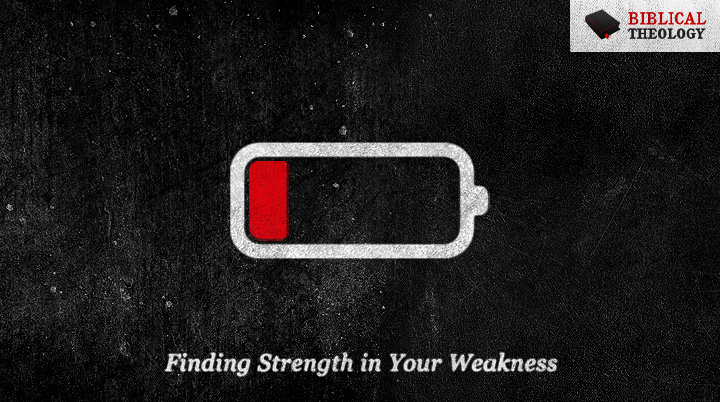
Bragging Rights


battery

“Three times I begged the Lord to make this suffering go away. But he replied, “My kindness is all you need. My power is strongest when you are weak.” So if Christ keeps giving me his power, I will gladly brag about how weak I am.”

2 Corinthians 12:8-9

This is a very crisp idea, Paul flips things upside down and then gives it a shake.  His attention is directed at bringing clarity and understanding about these issues of pain, weakness and conflict.  There is an understanding that Paul passes on that has personally worked its way through his own heart.  Truth that has taken that pathway is very precious.

Paul shares a conversation he had with the Lord Himself.  It really does seem that this subject was a continual topic between them.  He mentions it to Jesus three different times.  This tells me,  that suffering and pain are issues where it’s hard to get resolution.  When we hurt, we want Jesus to intervene, asap.  It is a real riddle to us, “Why am not healed?”

It seems to me that Paul comes to the point over and over and its not resolved to his satisfaction.  When the Lord does bring Paul to an understanding; it is basically the whole dynamic of the Christian experience.  And it is this, when a believer is sick, or weak–it’s then the strength and power of Jesus can be accessed.  Simply put–No pain, no power.

Paul ‘begged’ for resolution, and the ultimate response was the Lord was showing him the secret for his strength was in that presence of pain.  It gave him a power and force and might that he would not have otherwise.  Now Paul had a very intense ministry.  He would deal with issues and conflicts that would shrivel up most believers.  The list is long (see 2 Corinthians 11:23-28) and painful.  But the gist of it was Paul being abused and attacked by other people, over and over.

Paul had to have an extra boost to fulfill his ministry.  He needed affliction and weakness to connect him to a  huge ‘underground river’ of grace and love that flowed under his feet unseen and unknown.  The difficulties that Paul dealt with were actually what propelled him in his ministry.

There can be no power without pain; no discipleship without some kind of ‘disability.’

Paul tells the truth, “I boast in my weaknesses.  Just tap me into His power”.  Trials are the power outlet for the believer.  When he says things like that, it is good to pay attention.  The earnestness of Paul’s language in these verses gives us a sense of what is real, and how we should trust these ideas, as we are propelled into our ministry to the Lord.

“The power of the Church is not a parade of flawless people, but of a flawless Christ who embraces our flaws. The Church is not made up of whole people, rather of the broken people who find wholeness in a Christ who was broken for us.” –Mike Yaconelli


bry-signat (1)

cropped-christiangraffiti1.jpg