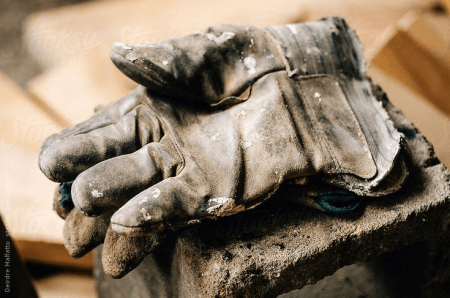
Sinners Get Priority

17 Jesus heard this and said to them, “It is not the healthy people who need a doctor, but the sick. I did not come to invite good people but to invite sinners.”

Mark 2:17, NCV

“The true Christian’s nostril is to be continually attentive to the inner cesspool.”  

–C.S. Lewis

How ironic!  Today, religious people are seen as a sort of an elite, an upper crust. The seem like they have it together, or at least they think so. Somewhat superior to those of us who live hard, and know all about sin.  The hearts of the lower level don’t make any pretension to any kind of spirituality.

They understand that they are the ‘dregs.’  They have adapted to living in an ugly and twisted world that gives nothing.  There is a sense that they know they are on ‘the highway to hell.’ They aren’t surprised by this.

The gross sinner, and the spiritually debilitated, have been brought into a very special place.  Jesus intends to escort us into glory, even in spite of our and unsightly infection.  He is wonderful, and yet we see that He really does specialize in losers.  He ‘homes in’ on them and then connects with those who have no ‘religious’ sense to speak of.

This seems quite counter-intuitive, especially if you’re trying to start a religious movement.  It is quite necessary to have a strong base, to seek out good people, and with finances– obviously.  And ‘the sick’ have blown it all on sex, drugs and rock & roll.  They will never finance the ministry of Jesus.  The disciples all have grasped this, especially Judas.  They are full of practicality.  They approach discipleship as a business. (And truly, these are the dangerous ones.)

The sick, the defective, and the infirm have now been elevated by Jesus’ new focus.  They have ‘zero spiritual’ value, with absolutely nothing to contribute — they are more of a liability then anything.  People like us who are very ill really can’t contribute to what is really happening.  More often then not, they require intensive care from the healthy and whole, sapping the strength of the work. Truly God is not against us because of our sin. He is with us against our sin.

I have a blue handicapped placard. This really helps and gives me preferential parking. And in much the same way spiritually, if you are a loser– you have dibs.   Jesus shines on you specifically (even if the Church won’t.)

There is a kind of a loving triage that He uses as He draws people into His domain and influence.  Hearts and lives that are black receive His eager attention.  Of course, there will be voices that object to this perceived inequity.

But Jesus has no favorites, only intimates.  Remember this, the sinner who has been “forgiven much, loves much.”

*


cropped-christiangraffiti1-2

When Faith Doesn’t Seem to Work

by Terry Powell

I am not a Christian because my faith “works” for me. Talk to a devout Mormon, Muslim, or Buddhist and he’ll extol the here-and-now benefits of his faith. He’ll cite a serenity of spirit, or a sense of order that believing brings to his life. Yet his belief system contradicts mine, so logically these various faiths cannot all be true!

If I were a Christian just because faith has utility for me, because my days are more likely to unfold in a smooth, trouble-free manner, I’d be a pragmatist, pure and simple. And I’d be prone to shuck my commitment to Christ the moment a different philosophy or religion appeared to offer me more.

Don’t get me wrong. Following Christ is not without rewards in the present. My faith often sustains me, provides perspective for decision-making, and injects happiness rooted in a biblical worldview.

But not all the time.

There’s the inevitable warfare with the world, the flesh, and the devil to contend with. And in my case, either chronic depression or other weaknesses of temperament sometime get the best of me. I’ll keep praying for relief and I’ll strive for sound mental health, yet I don’t want to be among the growing number of Christians who expect God to give them on earth what He only promised for heaven.

From a theological perspective, I’m a Christian because God chose me and initiated a relationship with me (Eph. 2:1-10). From a human perspective, my faith is in Christ not because it works, but because I believe Christianity is true. And truth is objective reality, not a subjective experience. No matter how I feel, or how my day goes, truth doesn’t change. Truth just is. I wrote this poem to convey this point.

Nature of Truth

When all hope yields to despair

and I doubt that God is there;

when my heart is cold, unfeeling,

and my prayers bounce off the ceiling;

when depression takes its toll

and winter winds assault my soul;

when the race seems all uphill

and dying grows in its appeal;

when things don’t go as expected—

still, God’s Truth is unaffected.

In the long run, faith works in the sense that I’ll enjoy eternity with my Savior (thanks to His works, not mine). But being a Christian doesn’t shield me from affliction in the here and now. It does assure me of God’s compassion and healing presence: “He heals the brokenhearted, and binds up their wounds” (Ps. 147:3).

Love, Terry


Terry teaches in the areas of Church Ministry and Ministry Leadership at Columbia International University in South Carolina. He has served as a Christian Education staff member for three  churches, and he’s a licensed preacher in the Presbyterian Church of America.  His current books in print are Serve Strong:  Biblical Encouragement to Sustain God’s Servants, and  Now That’s Good A Question!  How To Lead Quality Bible Discussions. Terry has been married for 46 years, and has two sons, a daughter-in-law, one grandson, and a dachshund.  His constant prayer is, “Lord, make me half the man my dog thinks I am!”

Check out his blog at https://penetratingthedarkness.com/. His ministry is focused on Christians experiencing clinical  depression and other mental issues.


Does Your Sickness Bless You?

“A man was lying there who had been sick for thirty-eight years.”

John 5:5

That’s an incredibly long time to be sick. It must be difficult to be an invalid year after year, with no real hope of ever being healed. This passage describes the scene, (see John 5:1-15). Apparently there was a large group of invalids waiting for the stirring of the waters. That misplaced hope was all they had.

I’ve often wondered why Jesus didn’t heal them all. Why just one when there were so many?

Perhaps the issue was their spiritual state. Most were focused on the pool, they felt that this was their only hope. They could see nothing else. So many today are distracted, we look at those things that might save us instead of looking at Jesus.

Perhaps Jesus would return to the Pool of Bethesda on another day. We’re not told but we know Jesus did quite a few miracles that aren’t recorded. (John 21:25.)

It was the Sabbath, and the healing violated the religious rules of the Pharisees. Jesus refused this man-made edict, and did the will of God. This decision meant healing this paralyzed man.

God doesn’t make mistakes in dealing with His own children.

Our Father does His will, and as believers we must trust in Him and what He promises. By faith, we however believe in His goodness and love. We reject the lies the evil one tells us about our spiritual Father.

My confidence is that He knows in which school I will learn the best lessons

He knows what experiences are necessary for me to grow up. Knowing this doesn’t make it easier, but it does make it eternal. There’s a graduation day coming soon.

We have no power in ourselves to do Christ’s will, but if we do begin to obey what He asks the needed grace is given. Young people often say that they are afraid to enter into a Christian life because they can not do what will be required. In their own strength, they cannot. Plain and simple. 

Human strength in itself is basically inadequate for what life throws at us.

I’m convinced that sick-rooms should be seen as holy places, especially set apart for believers who are becoming more like Jesus everyday. It’s hard, but we remember that God has summoned us there for some special work upon our souls. We must be very careful here or we will miss the good He wants us to receive.

It’s really only those who are trusting Christ and crying out for grace that become blessed by their sickness. I hate to say it but as a believer I’ve found pain to be the best teacher I ever had. I’ve also wasted these opportunities.

But even in that hard place, look for His lessons.

“Too many invalids grow discontented, unhappy, sour, and fretful. Sickness oftentimes fails to do good to those who suffer. There are few experiences in which we so much need to be watchful over ourselves and prayerful toward God.

Be sure to keep the sickness out of your heart, and keep Christ there with His love and peace.”

JR Miller

Crooked Kisses

kiss-596093_960_720

“The Son of Man has come eating and drinking, and you say, ‘Look at him! A glutton and a drunkard, a friend of tax collectors and sinners!’”

Luke 7:34

God, in some profound way accommodates Himself to your ‘sickness.’ He will never turn away from you.

We discover that Jesus has a beautiful quality–He becomes quite tender and gentle around any spiritual disease. He gravitates to the broken and sinful. His love for sinners is a fact we must consider over and over. It’s absolutely critical that we recognize this.

And if we can only understand this, it’ll change us forever.

In his book Mortal Lessons (Touchstone Books, 1987) physician Richard Selzer describes a scene in a hospital room after he had performed surgery on a young woman’s face:

“I stand by the bed where the young woman lies. . . her face, postoperative . . . her mouth twisted in palsy . . . clownish. A tiny twig of the facial nerve, one of the muscles of her mouth, has been severed. She will be that way from now on. I had followed with religious fervor the curve of her flesh, I promise you that. Nevertheless, to remove the tumor in her cheek, I had cut this little nerve.”

Her young husband is in the room. He stands on the opposite side of the bed, and together they seem to be in a world all their own in the evening lamplight . . . isolated from me . . private.”

“Who are they? I ask myself . . .

“He and this wry mouth I have made, who gaze at and touch each other so generously. The young woman speaks. “Will my mouth always be like this?” she asks. “Yes,” I say, “it will. It is because the nerve was cut.” She nods and is silent. But the young man smiles. “I like it,” he says, “it’s kind of cute.”

All at once, I know who he is.”

“I understand, and have to lower my gaze.”

“One is not bold in an encounter with the divine. Unmindful, he bends to kiss her crooked mouth, and I am so close I can see how he twists his own lips to accommodate to hers. . . to show her that their kiss still works.”

This is your Savior. He has always been there for you. He is seeking a kiss of spiritual intimacy.

But if you think somehow you are getting to be a great kisser, or you think maybe you’re looking desirable, I feel sorry for you. For it’s He who wraps himself around our hurts, our brokenness, and our ugly and our ever-present sin. He loves the unlovable. He kisses those who shouldn’t be kissed.

I guess I’m starting to know who I am.

I need Jesus so much to love me like I really am: brokenness, memories, wounds, sins, addictions, lies, death, fear….all of it. (Take all it, Lord Jesus.) If I don’t present this broken, messed-up person to Jesus, my faith is dishonest, and my understanding of it will become a way of continuing the ruse and pretense of being “good.”

God truly loves the unlovely. I am learning this. Slowly. Far too slowly.

He is passionate about those who have been disfigured by sin. And for those playing “make-believe” and are trying to find some sort of ‘spiritual Botox’ are not being truthful. Only by clinging to Him can find real healing and true acceptance.

For some reason, and I don’t really understand quite why, but He delights in kissing lips that are crooked.

I’m glad because that is really who I am.

     Henry Ward Beecher