He Despises Our Hypocrisy


“This people honors me with their lips, but their heart is far from me.”

Matthew 15:8, NASB

“Of all bad men, religious bad men are the worst.”  C.S. Lewis

This singular verse is set in a series of other verses– it certainly does not stand alone.  When these come together, we realize how much the Holy Spirit despises hypocrisy. He hates it, I suppose, because of the destructiveness wreaked on our spirits.

A father or mother may feel a hatred at the dealers who sell the drugs to their child. It’s not that they have any special animosity toward the pusher, but rather, they love their son so much. They will do whatever it takes to protect him.

I really think this is what Jesus feels when it comes to the purveyors of religious legalism, or hypocrisy. He burns with a holy hatred against this particular form of darkness. His vehemence seems reserved, not for sin so much as these lies of “religious pretending”. His repeated “roughness” has to be considered– why?

This should jar us into what is real, and all that is not. The word for hypocrite is “two-faced”. It was used in the Greek theaters for the masks worn by the actors. They would wear whatever the script called for. The audience never knew what was real, and what was only theatrical props.

With our lips (speech) we will honor God. We’ll only speak good things, and words (and actions) become an issue of being appropriate. We put on the particular mask of the moment, and enter the theater. Our hearts are hardly touched, and the deepest part of us becomes inoculated to the real presence of God.

The deep hatred Jesus has is due to the enormity of this sin. It is spirituality gone bad. Twisted and confused, with the shallow veneer of “respectability”. It seems to work for many of us. When our discipleship gets used to wearing masks, things can get very religious.

“Beware of no man more than of yourself; we carry our worst enemies within us.”

Charles Spurgeon


Judas Speaks

Matthew 27:3-10

My name is Judas Iscariot, and I betrayed my Lord. It really had nothing to do with avarice or greed. The money was fine, don’t get me wrong, but that isn’t why I turned Him in to the authorities. I simply did what they couldn’t. I wanted to force Jesus’ hand, so he had to drive the Romans out of our country. I was mistaken, I see that now.

Jesus loved each of us, including me. But I didn’t see it at the time.

When Jesus knelt to wash my feet, I was profoundly disturbed. And when He stripped down to his underwear, I really began to have serious doubts. Behaving like a common slave wasn’t really in my thinking. It would take extra work to shape Him, and to deaden such strange behavior. But it would be worth it in the end, if only Jesus would cooperate.

In my mind I knew that Jesus only needed the right moment to become the next ruler of Israel. That was His true destiny–and I was going to help him bring it to pass.

I knew that God had called me–this was my real purpose. I would do the work of God. I would be the kingmaker, and Jesus would certainly reward me.

Some have said that Satan was inside me.

But I hardly noticed. Instead, I was filled with excitement. Finally, the other disciples would come to my side, and together we could make it happen. Enough kneeling, no more groveling–we were going to rule Israel and end the wicked Roman occupation. I truly believed this. He was our Messiah, our deliverer.

The tricky part was to convince Jesus, to manipulate him if necessary, to get him to take control.

He had to see the opportunity that was waiting for him. He was already immensely popular among the people. We could quite easily turn all of this enthusiasm into a full-blown insurrection. But we obviously needed Him to lead us, and I could help him find His way. I knew we could do it. This was God’s will for me.

My plan was fairly simple–after I met with the Pharisees, I’d lead them to the garden where Jesus was staying. They insisted on an armed escort, just in case there was trouble among the disciples. I suppose that was prudent, but my part in all of this was simply to give Jesus a kiss on the cheek, to signify that he was the one to the soldiers.

I assumed he would resist and fight. I was wrong.

You see nothing went as planned. Jesus didn’t take charge, and he certainly didn’t overthrow the government. As a matter of fact, you could say that the opposite happened–He was silent and refused to answer most of their questions. I did hear Him say, “My kingdom is not of this world.” I should have listened.

I realized way too late, that I shed innocent blood. I went back to the priests who hired me, and I insisted they take back the silver. They refused. I threw the bag at their feet and left the temple. Ugly thoughts now filled my mind, and I knew without a doubt that I was completely lost.

How Well Do You Suffer?

John Newton, Exodus 3:2

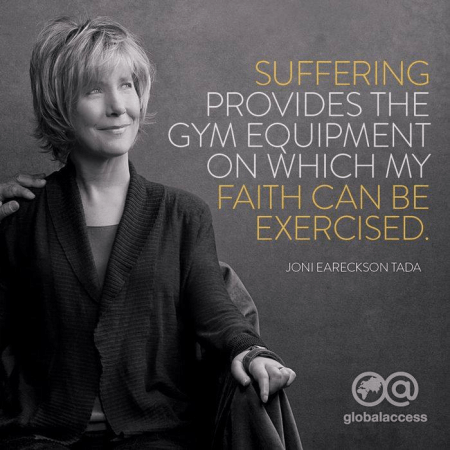
It seems that pain is the best teacher. We learn the hard way to come under God’s direction, and we finally learn to love others. Maybe it’s our pain that communicates His grace–is this how God changes us?

After all, the crushed grapes make the wine.

C.S. Lewis once made the comment, (and it’s worth thinking about), that “experience is the most brutal of teachers. But you learn, my God do you learn.” We face many obstacles, run into quite a few dead ends, and along the way we learn that when we really hurt, we start to teach something that the Church desperately needs.

My discipleship has been chock full of challenges. I’ve lost the use of my right arm, I have struggled with depression. I had a brain tumor removed, and must walk with a cane. I struggle with intense fatigue. I now have severe issues with pain. (I no longer pastor a church or teach in a Bible college.)

In November 1999, my wife and I lost a child.

I have prayed earnestly for a complete healing and had others pray for me. It’s funny, but all of this has happened after I became a Christian disciple! I often ask myself why? Why did God allow this to happen?

What did I do to deserve all of this?

Paul and Barnabas came into an interesting place (we can read about it in Acts 14.)

“Strengthening the souls of the disciples, encouraging them to continue in the faith, and saying that through many tribulations we must enter the kingdom of God.”

Acts 14:22, ESV

Some Bible teachers we listen to on the internet choose to minimize suffering, and of course we adopt a lot of our own theology to factor out pain and difficulty. But is this what the Bible teaches? If we read Hebrews 11, we find that life could be pretty grim for those with faith in God.

“Women received back their dead, raised to life again. There were others who were tortured, refusing to be released so that they might gain an even better resurrection. 36 Some faced jeers and flogging, and even chains and imprisonment. 

37 They were put to death by stoning; they were sawed in two; they were killed by the sword. They went about in sheepskins and goatskins, destitute, persecuted and mistreated— 38 the world was not worthy of them. They wandered in deserts and mountains, living in caves and in holes in the ground.”

Why does it have to be so hard for us as believers in Jesus?

Common sense suggests that things should get easier for those who believe. We somehow think that God rewards faith with instant glory. But I painfully discovered that my discipleship, my faith, doesn’t mean some wonderful existence on this planet. It seems that pain becomes the way we grow up and mature in Him.

I honestly believe, after over 40 years of following Jesus, that suffering is part of God’s plan for me.

It has never been easy. It never was. And I wish it was different.

My God, I wish it was different.

No matter what you are going through, remember that God always loves you. He has chosen us to navigate us through much difficulty. We must however, convert these painful things by our faith in Him. And only our faith does this.

And we know that in all things God works for the good of those who love him, who have been called according to his purpose.”

Romans 8:28

We must learn to regard people less in light of what they do or omit to do, and more in the light of what they suffer.

Dietrich Bonhoeffer

Bitter Water

In Exodus 15 there’s an incident that carries weight for today. Israel has come to the springs of Marah. The water is bitter. The people turn to Moses. They challenge him and the complaint voraciously. “Why have you brought us here?” They press Moses to the point of mutiny. They are furious.

Some commentators believe this bitter water was a laxative, and anyone who drank this “bitter” water made many trips to the outhouse!

Moses is shown a branch of a common tree. The Lord speaks a word of ďirection he’s to throw the branchaďirectly into the spring. It’ll cure the water, and make it sweet.

It seems to me that Jesus’ awful cross cures the bitterness we absorb as we make our way through life.