
How Well Do You Suffer?

John Newton, Exodus 3:2

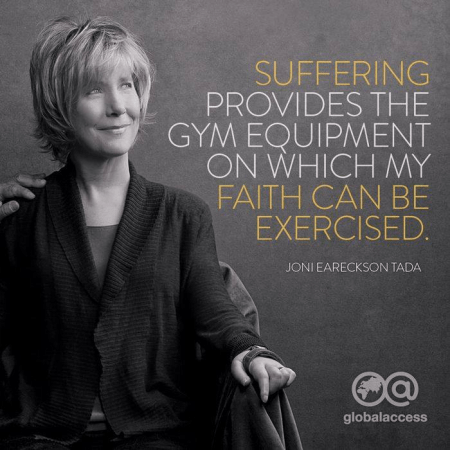
It seems that pain is the best teacher. We learn the hard way to come under God’s direction, and we finally learn to love others. Maybe it’s our pain that communicates His grace–is this how God changes us?

After all, the crushed grapes make the wine.

C.S. Lewis once made the comment, (and it’s worth thinking about), that “experience is the most brutal of teachers. But you learn, my God do you learn.” We face many obstacles, run into quite a few dead ends, and along the way we learn that when we really hurt, we start to teach something that the Church desperately needs.

My discipleship has been chock full of challenges. I’ve lost the use of my right arm, I have struggled with depression. I had a brain tumor removed, and must walk with a cane. I struggle with intense fatigue. I now have severe issues with pain. (I no longer pastor a church or teach in a Bible college.)

In November 1999, my wife and I lost a child.

I have prayed earnestly for a complete healing and had others pray for me. It’s funny, but all of this has happened after I became a Christian disciple! I often ask myself why? Why did God allow this to happen?

What did I do to deserve all of this?

Paul and Barnabas came into an interesting place (we can read about it in Acts 14.)

“Strengthening the souls of the disciples, encouraging them to continue in the faith, and saying that through many tribulations we must enter the kingdom of God.”

Acts 14:22, ESV

Some Bible teachers we listen to on the internet choose to minimize suffering, and of course we adopt a lot of our own theology to factor out pain and difficulty. But is this what the Bible teaches? If we read Hebrews 11, we find that life could be pretty grim for those with faith in God.

“Women received back their dead, raised to life again. There were others who were tortured, refusing to be released so that they might gain an even better resurrection. 36 Some faced jeers and flogging, and even chains and imprisonment. 

37 They were put to death by stoning; they were sawed in two; they were killed by the sword. They went about in sheepskins and goatskins, destitute, persecuted and mistreated— 38 the world was not worthy of them. They wandered in deserts and mountains, living in caves and in holes in the ground.”

Why does it have to be so hard for us as believers in Jesus?

Common sense suggests that things should get easier for those who believe. We somehow think that God rewards faith with instant glory. But I painfully discovered that my discipleship, my faith, doesn’t mean some wonderful existence on this planet. It seems that pain becomes the way we grow up and mature in Him.

I honestly believe, after over 40 years of following Jesus, that suffering is part of God’s plan for me.

It has never been easy. It never was. And I wish it was different.

My God, I wish it was different.

No matter what you are going through, remember that God always loves you. He has chosen us to navigate us through much difficulty. We must however, convert these painful things by our faith in Him. And only our faith does this.

“And we know that in all things God works for the good of those who love him, who have been called according to his purpose.”

Romans 8:28

“We must learn to regard people less in light of what they do or omit to do, and more in the light of what they suffer.”

Dietrich Bonhoeffer

Bitter Water

In Exodus 15 there’s an incident that carries weight for today. Israel has come to the springs of Marah. The water is bitter. The people turn to Moses. They challenge him and the complaint voraciously. “Why have you brought us here?” They press Moses to the point of mutiny. They are furious.

Some commentators believe this bitter water was a laxative, and anyone who drank this “bitter” water made many trips to the outhouse!

Moses is shown a branch of a common tree. The Lord speaks a word of ďirection he’s to throw the branchaďirectly into the spring. It’ll cure the water, and make it sweet.

It seems to me that Jesus’ awful cross cures the bitterness we absorb as we make our way through life.

A Retrograde Faith

Loveonthewall

ret·ro·grade

  [re-truh greyd]  (ret·ro·grad·ed, ret·ro·grad·ing.)

adjective

1. moving backward; having a backward motion or direction; retiring or retreating.
2. inverse or reversed, as order.
3. Chiefly Biology. exhibiting degeneration or deterioration.
*
Dictionary.com Unabridged. Random House, Inc. 16 Jul. 2013. <Dictionary.com http://dictionary.reference.com/browse/retrograde>.
%
flourish1
*

24 “But my people would not listen to me. They kept doing whatever they wanted, following the stubborn desires of their evil hearts. They went backward instead of forward.”

–Jeremiah 7:24, NLT
*
I seldom seek out things like this to write about. In my 30 years following the Lord Jesus, I have been bludgeoned more than a few times by people wielding Jeremiah like a cudgel. Mostly, these are good people who I liked and honored. (But maybe they had too much coffee that day, IDK.)
W
But there is a real issue here. Many who start out strong and brave end up on the scrap heap. Somehow, I suppose they were never able to tune their “ear” to His voice. But to be really honest– this can be a hard thing. And many of these dear ones end up with a retrograde walk in the Spirit. They would deny this, but if we look for a passion, we will see that a “first love” it will be absent.
W
That passion is the pulse, the blood pressure of a walk that is so vital and so authentic. We can measure our own walk by this singular means– “first-love.”  Rev. 2:4-5 shouts to us,
w
“But I have this against you, that you have abandoned the love you had at first. 5 Remember therefore from where you have fallen; repent, and do the works you did at first.” 
w
A retrograde faith may not deny Him, but it can often draw us into the place where our denial isn’t necessary. And that I suppose may be the scariest part of becoming apostate. We just slip; we slip right off of the map into an “almost-discipleship.” We would never dream of speaking an outright denial (never, ever) but we end up in this grey zone, nevertheless.
W
I have no desire to manipulate you through nice sounding words and phrases. But I feel duty bound to tell you up-front. Having a “first-love” will protect you. A “first-love” will cover you and lead you through many diverse issues. Revelation 2 was the Father’s plea to a Church that had seemingly advanced in every way. (As a pastor I would have loved to oversee this Church.) But the Father spoke a clear word of correction to them. And  I’m sure that it was hard to accept.
W
The “retrograde Church” exists. Unfortunately, it is alive and well, but we must share with these dear ones about the true freedom which comes from the “first-love” relationship with the Lord Jesus. Our love for Him, and His love for us will protect us from something that goes “backward” and not forward. I can only say, love Jesus, and make Him your “first-love.”
*
“Whom should we love, if not Him who loved us, and gave himself for us?“  –Unknown

*W

ybic, Bryan

kyrie elesion.

How Things Happen

burst=fireworks

31 He put another parable before them, saying, “The kingdom of heaven is like a grain of mustard seed that a man took and sowed in his field. 32 It is the smallest of all seeds, but when it has grown it is larger than all the garden plants and becomes a tree, so that the birds of the air come and make nests in its branches.”

33 He told them another parable. “The kingdom of heaven is like leaven that a woman took and hid in three measures of flour, till it was all leavened.”

Matthew 13:31-33, ESV

These are perhaps the three most potent verses in the entire Bible. And whenever you find “potency” you will find a strong possibility of exponential growth. It may be a steady synergy, or an explosive fission. Either way, it’s going to grow!

Both the seed and the yeast have so much in common. They are two sides of the same proverbial coin. And they represent explosive growth. If they are unleashed, watch out! They are both “pep and power” and now set loose they will take off.

The seed is put in the ground and the yeast in the flour. And the farmer and the baker both do their initial work of planting or kneading, and then they just stand back, their work is pretty much done. They now just let “nature” take its course.

These parables Jesus taught here are small— but hardly less significant because of their brevity. These two can bury you with all they imply and mean. When we think clearly about yeast in your cupboard and that single seed in its package, we should see the “life” that resides in them, and the potential that waits.

I think much about the Church. At times, I admit I get frustrated with it. I get judgmental, and fearful that it won’t survive into the next century.  I truly understand that I can be critical. At times my friends must deal with my “ugliness,” but still they put up with me. (They are true friends.)

The kingdom is growing, and advancing. I love the wonderful promise in Isaiah 9:6, (usually read at Christmas time only. A mistake.) But Isaiah 9:7 is also pretty amazing too,

“His government and its peace
    will never end.
He will rule with fairness and justice from the throne of his ancestor David
    for all eternity.
The passionate commitment of the Lord of Heaven’s Armies
    will make this happen!”

Let it grow, let it grow! 

*

ybic, Bryan

kyrie elesion.