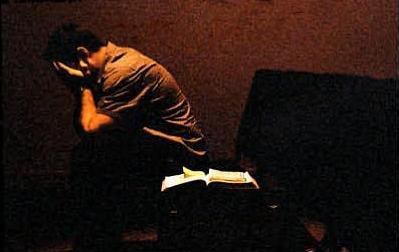
How to Die Well

“Even though I walk through the valley of the shadow of death,
   I will fear no evil,
for you are with me;
   your rod and your staff,
 they comfort me.”

Psalm 23:4, ESV

“Precious in the sight of the Lord is the death of his saints.”

Psalm 116:15, ESV


“Death is like my car. It takes me where I want to go.” 

Pastor John Piper

Our generation simply doesn’t know how to die well.  There are so many conflicting messages and attitudes which have steered us away from the reality of dying.  Much of it is the natural development of unbelief.  Our pop culture develops this and gives it momentum.  We are trying to convince ourselves that “death is impossible, my life will not end.’  But we’re escaping into a delusion.  We are running from what is real.

There is a Latin phrase,  Ars moriendi  (“The Art of Dying”) which the Church practiced in past generations.  In past time, Christians would be buried as close as possible to the Church building.  Many would be interred within the very walls of the Church.  The understanding was that the dead were part of the congregation.  That there was only a thin veil that stood between the living and the dead.  The dead didn’t just vanish.  They are with us.

My generation is confused.  We have forced death to wear a mask.  We insist on a significant camouflage to hide the reality of sickness and death.  No one really ever talks about it, and so no instructions are given on how to die well. So we don’t, we die poorly–in ICUs and LTCs, completely sedated, separated and unable to process it or help our families process it.  There can be no solid connection between the living and the dying. And to be very honest, this is not working.

For many, the fear of dying is intense and paralyzing.  Death brings us a terror that twists us; we don’t know how to respond to it.  Additionally there seems that there is no one available to direct us.  Death is a spooky taboo that no one really explains.  The implication is that we are simply to avoid death, ‘it may not come for you’.  But that is not what is real.

“Death avoidance” pretends to lift us above the issue, where we can imagine that we will stay separated somehow from its obscenity and ugliness.  Funerals are nothing more then an aberration.  We have become ‘teflonized’, these things just slide on and off.  We just refuse to calculate, or accept what is happening.  We have ‘molded’ our fear into a more desirable shape.  We simply cannot function in the steady gaze of what is real.  We just shut down and refuse to function. We simply pretend.

Its time for the Church to step up and guide us to our next step.  Our pastors and elders have got to prepare us to die well.  It is a part of being a disciple.  It is discipleship, and dying is inclusive.  We need somebody to prepare us for the inevitable and the certainty that is approaching us.  I need someone that will help me face my own death.

You know what?  No one escapes.  And the reality of that drives some of us mad, or addicted, or psychotic.  The idea of filling a casket up for forever is incomprehensible.  We cannot live with this sick idea of dying.  It disturbs us on the deepest level possible.  It is completely evil.

Psalm 23 has been pure comfort and healing for generations.  And it is an excellent starting point for us.  Verse 4 develops the idea of traversing death.  The writer has incredible insight of passing through death.  This verse alone is worth “billions of dollars in gold”.  Psalm 23 has made me a very wealthy man.  His Word has become my rich treasure.


Understanding Your Cross

There can be no resurrection power without crucifixion weakness. There can be no power unless you die to self, taking up your personal cross. Many are frustrated by this. This teaching is not fully understood or really preached.

Mark 8:34; Matthew 16:24

Crosses hurt, for they are a way of dying to self, plain and simple. Every spirit-filled believer must die to his agenda. If you want a resurrected life, overcoming sin and death, you must carry your cross. Death comes first, and then is resurrection. There is freedom to all who obey.

Simply put, there’s no other way for you to be holy but a cross.

Whether you’re struggling with a physical ailment (think pain), or a mental illness (also pain), you still must carry a cross. Our issues can be formidable, I understand, but you’re not exempt from the terms of discipleship. All must follow Jesus.

“He that hath no cross deserves no crown.”

    Francis Quarles

Jesus fully understands Calvary. He recognizes agony. His pain was real. I believe that He knows this intimately. I also think Jesus understands our weakness and confusion. His grace meets every believer. No matter if they struggle and stumble. The Spirit teaches us. All who really come are redeemed.

I think He understands our reluctance and hesitation.

I want to follow Him. I’m pretty sure that you do too (you’re reading this which tells me something). So what cross are you called to carry? They seem to be custom made–designed uniquely for you. But it’s also true that others have been tempted, just like you.

Your cross must be deliberately chosen.

It’s often a path of brokenness and humility. It may involve shame and pain–a reproach to those who can’t understand. But if you take it up you can expect the world to belittle you. If they abused Jesus, you can count on them belittling you.

Avoiding your cross means you have been conformed to what the world thinks, and that’s an awful place to be. You really can diminish your cross without doing harm to your spiritual walk. Honestly, there is not another way.

His resurrection power is given to those who have already expired. Struggles with sin and doubt often evaporate when He abides in you. He’s the power given to overcome. He’s the only one who can give it to you.

“To take up the cross of Christ is no great action done once for all; it consists in the continual practice of small duties which are distasteful to us.”

    John Henry Newman

Depression: A Few Questions

Here are things I’ve heard over the years that we must take a second look at. Here are some possible answers.

“There must be something wrong with your spiritual life.”

Yes, depression CAN be a result of sin. BUT depression is NOT always a result of sin! If it is, God will tell you loud and clear what the problem is. This saying piles on the guilt for the depressed Christian. It’s unlikely that their depression has a spiritual cause, and this implies that they are not good enough spiritually.  

“Repent and ask forgiveness for your sin!”

Depression is a result of sin, in that if there was no sin in the world depression wouldn’t exist. But then, neither would diabetes, cancer, or any other illness… Sin caused the world to be not-perfect, therefore illness exists. It’s a sin to be depressed, any more than it is to have any other illness. Depression can be used by God to encourage repentance, but in that case, it will be crystal clear exactly what sin you should repent of. If you don’t know or have just a vague sense of guilt, your depression is not the result of sin. 

You need to have more faith.” or  “Have faith in God.”

Hebrews 11:1, “Now faith is the substance of things hoped for, the evidence of things not seen.” How much faith does it take to hold onto the Christian faith when emotions scream at you daily to give up, get out and turn against God? Very often a depressed Christian will be hanging onto faith by their fingernails in something that requires a ton of faith.  

“Taking antidepressants is playing God, He can heal you.”

Yes, God can heal. Sometimes he doesn’t just flick a switch to make the illness vanish, sometimes the healing comes through the conventional ways of doctors, psychiatrists, counselors, therapists, and medication. By persuading someone not to take their medicines in preference for a quick, supernatural healing that God may not have in store for them, the sufferer is being denied something that will help them, right now. 

“Scripture says everything that happens is for your own good!”

The actual verse found in Romans 8:28, “And we know that in all things God works for the good of those who love him, who have been called according to his purpose.” This verse in no way implies that the sufferer should sit back and accept the illness for the rest of their life. It also does not say that illnesses are not to be fought with the intention of a cure. While God may well have things to do with a depressed person, the illness is not a good thing itself, and it may take years before you see positive results from it.  

“You’ve been prayed for, why has nothing changed?”

This can be expressed in several ways and spoken by one of two different groups of people: either the person who asked for prayer or those who prayed for them. We’ll break the underlying situation into two areas: something definite was experienced in the prayer time: chains were obviously broken and new freedom gained, or, nothing apparently happened at all. That is, “I know God set you free,” why aren’t you free yet?

“Depression is a self-discipline problem.”

Self-discipline is important to a Christian. We have to be disciplined enough not to break the laws of the land, and to obey our God. But no amount of discipline will get rid of a medical problem. This statement implies that the sufferer is lazy and could become better by sheer force of will. This is not possible and causes a lot of guilt.

“You’re depressed because you choose to be.” 

Why would anyone choose depression? It is hell on earth. It destroys everything it touches. Families, marriages, jobs, churches, and ministries- faith, peace, hope, and love. Depression corrodes all that it touches.

Does a diabetic or cancer patient choose their disease? Does the blind or the deaf person wake up in the morning and decide they aren’t going to keep being handicapped? These are the questions I would ask.

This image has an empty alt attribute; its file name is image-12.png

“You just need to rebuke that spirit of depression and tell it to leave you. Don’t let Satan steal your joy.”

There are two problems with this statement. One problem is the assumption that depression is caused by demonic oppression. The other problem is the assumption that joy and happiness are the same things. Blaming a “spirit of depression” can be a wonderful cop-out. Just cast out the spirit and you’re cured! No need for long-term support, prayer, counseling, or anything at all! And with this statement comes the implicit assumption that once again it’s your fault you’re depressed, this time because you’re not “spiritual” enough to get rid of the troublesome spirit yourself.

Yes, it is possible that demonic oppression can cause depression. No, demons are not responsible for every case of depression. Imagine what would happen if this statement was directed at someone with cancer, hemophilia, or osteoporosis (“Just cast out that demon attacking your bones and be strong again! God wants to see you running marathons!”).

The second problem with this statement is that joy is equated with happiness. People with depression are not going to be the happiest souls in the church. I’ve heard it said that happiness depends on what happens, whereas joy can exist in very unhappy situations.

“There’s no such thing as mental illness, it’s all in your mind”

Saying this denies that there is anything actually wrong with the depressed person, and implies that they are just making it up. This piles on the guilt again! A mental illness can be defined as one that affects the mind; the brain is allowed to get ill, just as the liver and lungs are.

“It’s your own fault you’re depressed”

This is the kind of thing that Job’s “comforters” said, and it didn’t help then either. Bad things can happen to good people. Denying this hurts the sufferer.

“Pull yourself together”

If you’ve been trying, someone saying this to you comes across as “You haven’t been trying hard enough, do more, and more, and more until you get it right.” So back you go, pushing more and more, and still getting nowhere because you cannot pull yourself out of depression by your bootstraps, and you can’t fix a medical problem by force of will.

bry-signat-1

Becoming a Steward of Your Pain

Some time ago I read a story that connected. A visiting speaker stood in front of a congregation and shared a painful incident from his childhood. He wanted to bring healing. After he spoke, an elder came up and spoke to him–

“You have learned how to become a proper steward of your pain.”

The visiting speaker was profoundly touched by this. Something came together in his heart and soul. Yes, he did learn how to deal with those ugly things from his past. And yes, he was starting to become a proper steward of his pain.

The word for steward in the original Greek is oikonomos. It literally means “a keeper of a home.” It describes a manager, or a superintendent to whom the head of the house or proprietor has entrusted the management of his affairs.

Managing these awful things for the Kingdom of God is now our ministry.

No question about it, we live in a world of darkness. Each of us has been touched by hard things. Scars are part of our lives. When we come to Christ they come with us. All of these grim things are a real piece of us; we have been hurt, or we’ve wounded others by our sinfulness.

Are you a good steward of who you are? Maybe it’s a trauma, a physical, sexual, or perhaps a mental illness. It’s a scar you carry from your past, and no one is immune from them it seems.

I believe that you’ll find freedom if you can use these things for Him and his Kingdom.

We must see and understand that Jesus has taken everything and fully redeems it all for His glory.

He understands us fully–our past, present, and future. He ‘knows’ us–the real and hidden us. The challenge is to take these sad events to the throne. He alone can heal and then use that which has devastated us. He uses our pain to touch others deeply.

But Jesus intervenes to save. As we grow to accept this, the Holy Spirit comes as our comforter and guide. He starts to teach us true redemption, and the incredible healing that takes place inside us.

It really is his work, not ours. It’s then we finally understand. It’s then we become the broken healers that God can finally use.

And it’s then we can finally say: “The light has truly overcome the dark.

Becoming a steward of our pain is His doing. We’re able to touch others with these things that cripple and destroy. He has made us “managers” of these things, and we are taught to teach others, declaring that God has completely saved us. He works miracles!

“Therefore, if anyone is in Christ, he is a new creation; the old has passed away, and see, the new has come!”

2 Corinthians 5:17

We’ll meet those who are waiting to hear our story. They’re walking through terrible pain and they don’t know what to do.

We’re being transformed into authentic witnesses. Yes, at times these awful things still hurt, and I suppose that’s to be expected. But we’re learning to manage them. We’ve become real-life stewards of our pain.

To every believer still struggling about the sin of the past or sickness of the present–keep turning it over to Him. He will make it into something quite wonderful.