On Your Knees

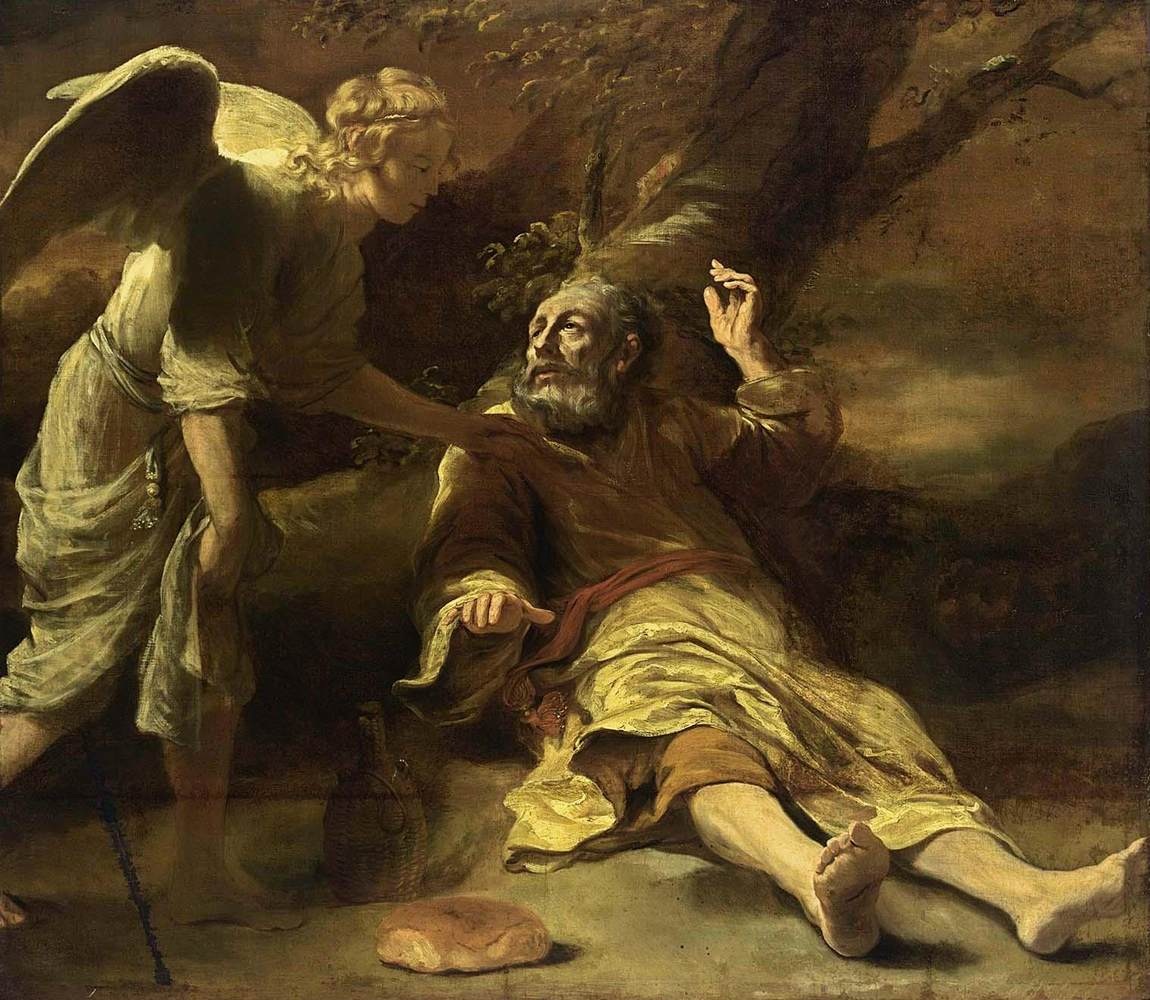
kneelingprayer

“Come, let us worship and bow down.
    Let us kneel before the Lord our maker,
    for he is our God.
We are the people he watches over,
    the flock under his care.”

Psalm 95:6-7

I can think of nothing more significant than to pray. I especially like it when the Holy Spirit gives me a tug, and then reels me to Himself. Sometimes I respond, not always. I mentally assent to the idea of praying everywhere, and at all times. But yet the posture of kneeling is special. It smacks of humility and need, and fixes me on the Lordship of my Father. And that is good.

I guess kneeling has fallen out of favor among today’s believers. I hope that this isn’t the case of you.

In the olden days, common people would kneel in the presence of their sovereign king. It was an affront if you didn’t kneel. It spoke of disrespect and lack of submission to the king. I suppose it could be overdone; exploited by some. But these misunderstandings do not nullify what is true about this custom.

I know that kneeling prayer is not the only way one can approach God. But it seems that verses in Psalm 95 carry the implications of the believer having the following relationship:

  1. a maker or creator
  2. a God who is real and all-powerful
  3. and a shepherd who tenderly cares for us

Perhaps these special needs that we have are channeled through a saint on his knees. It could be kneeling prayer is where we encounter these three answers to our needs. When I’m in need of His tender shepherding, the venue becomes a prayer that kneels. This might transmit to us just to meet our ‘need of the moment’ (Today, I feel like I need a shepherd.)

Kneeling to pray is often the only thing that keeps me strong enough to stand. It humbles me before my maker, my God, and my shepherd.

I’m thinking of Peter after experiencing the miraculous catch of fish. Kneeling becomes the only response he could really make.

“When Simon Peter realized what had happened, he fell to his knees before Jesus and said, “Oh, Lord, please leave me—I’m too much of a sinner to be around you.”

Luke 5:8, NLT

“And Satan trembles when he sees
The weakest saint upon his knees.”

– William Cowper

bry-signat (1)

cropped-christiangraffiti1.jpg

The Awful Pain of Job

job-and-his-friends

“Oh, why give light to those in misery,
    and life to those who are bitter?
21 They long for death, and it won’t come.
    They search for death more eagerly than for hidden treasure.
22 They’re filled with joy when they finally die,
    and rejoice when they find the grave.
2Why is life given to those with no future,
    those God has surrounded with difficulties?”

Job 3:20-23, NLT

Job begins to curse his existence and his words are saturated with frustration. He grieves for all of his dead children and is sickened by his afflictions. Job is a man pushed beyond the edge.

Job is the “poster child” of human suffering. He is completely without pretense as he openly grieves. He voices exactly what is in his heart.

Let us be clear about this; He is devastated, ravaged by Satan’s grim ministry. Job to his credit, is oblivious to Satan’s wager with the Almighty God. He has no clue that he has been chosen by God in this matter. The Lord keeps His secrets.

All Job knows is the pain, and there is the endless grief that even his tears can’t help.

In Job’s first speech he asks some basic questions:

  • Why is light given to those who are full of pain?
  • Why does life unfold to the one who rather not live anymore?

Death has a powerful influence in this three verses, He wants to die, and end the charade. He wishes for non-existence and laments that he can not die fast enough.

People with disabilities and chronic pain can understand Job’s desire for release. Once they were “whole” people. Death was something to be avoided at all costs. But now it is seen as an escape.

Hurting people will often turn to drinking and drugging as a way of coping. We’ll try anything to numb our thinking. It’s what gets us through the day. Oblivion has become my best friend.

For Job (the patron saint of pain) finds that nothing will fix him. His friends have come, but they seem to only accuse and confuse job. Honestly he is better when they just sat with him in silence.

“God wants us to choose to love him freely, even when that choice involves pain, because we are committed to him, not to our own good feelings and rewards. He wants us to cleave to him, as Job did, even when we have every reason to deny him hotly.”

–Philip Yancey

“Come quickly, Lord, and answer me, for my depression deepens. Don’t turn away from me, or I will die. Let me hear of your unfailing love each morning, for I am trusting you. Show me where to walk, for I give myself to you.”

Psalm 143:7-8

ybic, Bryan


cropped-christiangraffiti1 (3)


Present Tense Prodigals

prodigal-podcast-1

“So he returned home to his father. And while he was still a long way off, his father saw him coming. Filled with love and compassion, he ran to his son, embraced him, and kissed him. 21 His son said to him, ‘Father, I have sinned against both heaven and you, and I am no longer worthy of being called your son.

Luke 15:20-21, NLT

The Parable of the Prodigal Son has typically been taught as a ‘once upon a time’ event in the life of one wayward youth. We understand it to be such. The prodigal returns to his Father, case closed. It is a remarkable story that resonates to every broken believer.

But what if I told you that this parable is present tense. That we are continuously wandering, spending our inheritance and living off the wealth of our Father. We feel bad about this, we repent and return, only to embark on another foray into sin of our own choosing. It happens all the time.

My point is this. We seem to be always the prodigal. We never seem to outgrow this. We are constantly coming to our senses, and returning home. We seem to never get the point that our personal sin as eternal consequences. We live like there is no tomorrow, except we have to sober up and realize we have wandered far from our home.

The story of the prodigal is written to us who have repeatedly (that means very often) find themselves a good distance from where we should be. We find ourselves feeding the pigs again. We abhor our choices, and wonder again if our Father will take us back just one more time. Reason says ‘No!,’ but faith says ‘Yes!’

God’s love for us is greater than all our evil wanderings. It extends to the ups and downs of our vacillating discipleship. He sees it all and fully accepts us as His returning son. We will never tire out His constant love. We can feel ashamed of our recent behavior, but that changes nothing. We belong to Him, even if we feel wretched.

There are belivers who are overwhelmed by their sense of sin. Some of this is inflated by the devil. And yet they feel estranged from the Church. They know what they’ve done, and they can find no excuse for their actions. They’ve wandered again (for the 100th time).

The Father’s love is not subject to your obedience.

Grace is not some meager thing doled out in some stingy manner. It is given outrageously to each son or daughter without limits. Rascals are included. God is not a miser.

“But his father said to the servants, ‘Quick! Bring the finest robe in the house and put it on him. Get a ring for his finger and sandals for his feet. 23 And kill the calf we have been fattening. We must celebrate with a feast, 24 for this son of mine was dead and has now returned to life. He was lost, but now he is found.’ So the party began.

Luke 15:22-24

‘One, and your done’ doesn’t apply to your heavenly Father. His love for you can’t be reduced to this level. Pick yourself up, leave the pigs, and come home again.

bry-signat (1)

cropped-christiangraffiti1.jpg

A Jubilate Discipleship: Psalm 95

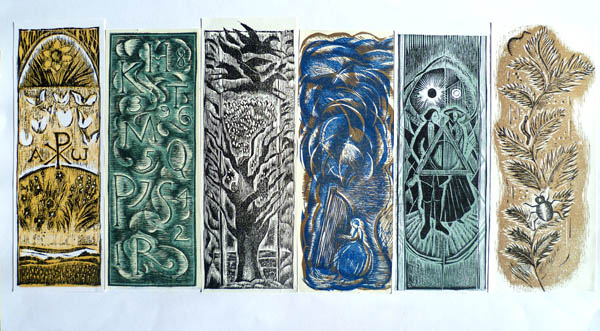
Montage-Jubilate

A Psalms Study

“Come, let’s sing for joy to the Lord.
    Let’s shout praises to the Rock who saves us.
Let’s come to him with thanksgiving.
    Let’s sing songs to him,
because the Lord is the great God,
    the great King over all gods.
The deepest places on earth are his,
    and the highest mountains belong to him.
The sea is his because he made it,
    and he created the land with his own hands.

Come, let’s worship him and bow down.
    Let’s kneel before the Lord who made us,
because he is our God
    and we are the people he takes care of,
    the sheep that he tends.

Today listen to what he says:

Psalm 95:1-7, NCV

Such joy: it just bubbles through the words. This is a psalm saturated with excitement. These first seven verses are ‘carbonated joy.’ They pronounce an excitement of a living God that excels in every way. These are simple words made to escort us into a true worship, unlike any other. We might use the word, “jubilant” when hearing this psalm. And we wouldn’t be far off.

“The Lord is the great God,” and He is the King of any ‘so-called’ gods. Everything concerning the earth is His doing– for He created it, with His own hands! And our creating God is also our Shepherd, tending and caring for us as His very own flock.

These verses extol our God, to the point of exuberance. It channels us to the point of worship upon our knees, with the realization of the greatness of God. But this Psalm continues for four more verses.

Today listen to what he says:
“Do not be stubborn, as your ancestors were at Meribah,
    as they were that day at Massah in the desert.
There your ancestors tested me
    and tried me even though they saw what I did.
10 I was angry with those people for forty years.
    I said, ‘They are not loyal to me
    and have not understood my ways.’
11 I was angry and made a promise,
    ‘They will never enter my rest.’”

Psalm 95:7-11

There are two parts to Psalm 95. The first is of jubilant worship. But the second part emphasizes a solid obedience. The phrase, “Today listen to what he says:’ welds these two sections together.

Worship must always lead to obedience. You can do ‘cartwheels’ on Sunday morning, as long as you follow Him on Monday.

The issue is an history lesson that goes back to Israel’s days of Moses and the days following the Exodus. Because they were so hard and stubborn, they would wander for forty years in the desert. Their continued ‘stubbornness’ not only closed off the Promised Land, but also closed off their relationship with God— a relationship that would’ve been ‘jubilant’ and  profound (at the same time). They missed out on verses 1-6 and settled on verses 8-11. How tragically sad.

There is a thread that works through scripture called “the rest of God.” The book of Hebrews uses in 12x usually as a warning:“Now, since God has left us the promise that we may enter his rest, let us be very careful so none of you will fail to enter.” (Heb. 4:1).

 “Let us try as hard as we can to enter God’s rest so that no one will fail by following the example of those who refused to obey.”

Heb.4:11

To be in God’s rest is to be in harmony with Him. It is a mixture of confident faith mixed with a careful obedience. When you combine these two, you have the recipe for joy.

I believe this rest is the believer’s place of joy, peace and confident faith. It obeys because it really wants to. It is Psalm 95:1-7 in action. It is for the jubilant Christian.

bry-signat (1)

cropped-christiangraffiti1.jpg