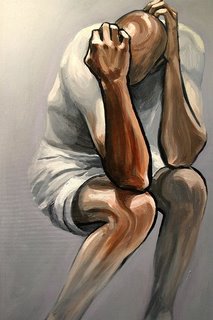
Book Review: “When the Darkness Will Not Lift”

There are Christians for whom joy seems unattainable.

What will we tell them . . . “When the Darkness Will Not Lift?”

…………………………………………………………

“It is utterly crucial that in our darkness we affirm the wise, strong hand of God to hold us, even when we have no strength to hold him.”

–John Piper

The title of this reviewed book is terribly unyielding, but with a quick glimpse into its contents, and you realize what you hold in your hands is worth its weight in gold.  “When the Darkness Will Not Lift: Doing What We Can While We Wait for God—And Joy“,  John Piper gives guidance and hope to suffering believers and to those whom God has given to walk beside them.  The father of Christian hedonism reminds readers that joy is a duty even as he teaches them how to fight for it. At eighty pages, this slim volume commends itself to readers who, struggling under the weight of spiritual darkness, might be daunted by an exhaustive treatment of the subject.

Because the book starts from despair, it is a uniquely accessible tool for those who hurt. In the pastoral tone for which he is beloved, Piper shows that joy begins with despair in oneself. In “When the Darkness Will Not Lift”, Piper tackles difficult issues including:

• The physical nature of depression and the role of medication

• How to wait on the Lord through darkness

• The relationship between obedience and thanksgiving

• How unconfessed sin can clog our joy

Piper also provides insight for those who love depressed Christians—showing them how to exhort without crushing, and how they can help the struggling believer to distrust the “certainties of despair.”

PiperbookWhen the Darkness Will Not Lift: Doing What We Can While We Wait for God—And Joy Publisher Crossway Books, Author John Piper, ISBN 1581348762 Price $7.99, Released, January 2007

Available through your Bookstore, or just go to www.Amazon.com, like me.

John Piper’s website, http://www.desiringgod.org/

flourish15

Bedlam: Prisons and the Mentally Ill

Taking a Stand for Our Brothers and Sisters

 By Mark Earley, Christian Post Guest Columnist, Wed, Aug. 08, 2007
The least of these is my brother

In the 16th century, London’s mentally ill were often kept at Bethlem Royal Hospital. The conditions inside the hospital were notoriously poor. Patients were often chained to the floor and the noise was so great that Bethlem was more likely to drive a man crazy than to cure him. The conditions were so infamous that the nickname locals gave the hospital—Bedlam—has come to mean any scene of great confusion.

Unfortunately five hundred years later, we’re still treating the mentally ill more like prisoners than patients. Fifty years ago, more than 550 thousand people were institutionalized in public mental hospitals. Today, only between 60 and 70 thousand are, despite a two-thirds increase in the country’s population.

Since there’s no evidence that the incidence of mental illness has dropped precipitously, the mentally ill who previously had been institutionalized had to have gone somewhere. While some are being treated successfully in their communities, at homes and groups homes, but for many that “somewhere” is behind bars. This last part shouldn’t come as a surprise.

Five years ago, the Washington Post told the story of “Leon,” a one-time honor student, who had 17 years in and out of jail on various drug-related charges. It was only after several suicide attempts, including drinking a “bleach-and-Ajax cocktail,” that Leon was diagnosed with bipolar disorder. Leon’s story was a microcosm of a larger problem: “Prisons and jails are increasingly substituting as mental hospitals.”

As one advocate for the mentally ill told the Post, “a lot of people with mental illness are charged with minor crimes as a way to get them off the streets.” In effect, they are behind bars for “being sick.” Fast forward five years and little, if anything, has changed. A few weeks ago, another piece in the Post discussed the same problem.

Psychiatrist Marcia Kraft Goin told readers something that should shock and outrage them: “The Los Angeles County Jail houses the largest psychiatric population in the country.” As with the earlier Post piece, the conclusion was inescapable: “People with [untreated] mental illnesses often end up with symptoms and behaviors that result in jail time.” You don’t have to be a “bleeding heart” to understand that this is an injustice—any kind of heart will do.

Not only are the mentally ill not getting the help they need, they are as lambs to the slaughter in our crowded and violent prisons. They are being victimized twice over. They’re not the only ones being victimized.

At a time when most state prisons are unlawfully overcrowded, there are better uses for prison beds than as makeshift mental hospitals. As Goin wrote, “treating” mental illness as a criminal justice problem costs “more than treating patients appropriately in their community.”

As part of its ministry to prisoners and their families, Prison Fellowship supports community-based alternatives to incarceration. Not only because it makes “financial sense” but because it’s what Christ would have done. In Matthew 25 he called the ill and the prisoner his “brothers” and he expects us to offer them something more than bedlam.

“There but for the Grace of God go I…” –Bryan

 __________________________________

From BreakPoint®, August 6, 2007, Copyright 2007, Prison Fellowship Ministries. Reprinted with the permission of Prison Fellowship Ministries. All rights reserved.  “BreakPoint®” and “Prison Fellowship Ministries®” are registered trademarks of Prison Fellowship.

Good Links:

http://en.wikipedia.org/wiki/Bethlem_Royal_Hospital

http://www.bethlemheritage.org.uk/

http://www.pbs.org/wgbh/pages/frontline/shows/asylums/etc/faqs.html

http://www.afscme.org/publications/6042.cfm

On Being Tied to the Mast

 mast

“The heart is but a small vessel; and yet dragons and lions are there, and there poisonous creatures and all the treasures of wickedness; rough, uneven paths are there, and gaping chasms. There likewise is God, there are the angels, the heavenly cities and the treasures of grace; all things are there.”

~St. Macarius

 OK, I admit it.  I am fully capable and fully able to do just about any sin or deceit.   It’s my dubious claim to fame.  I can easily think of a 1000 things that I could do rather than serving God.  It seems my name is ‘Legion.’ To add to this, I have a chorus of support that wants me to give up my faith.  Demons are really plotting to destroy me, while all along my flesh insists on being fed with ‘fresh sin’.  (And I wonder why I’m getting gray hair.)

Within each of us is the potential and capability of doing great evil.  Each of us is contested ground, with eternal decisions hanging in the balance.

My mental illness does not give me “a get-out-of-jail-free card.”  I am just as responsible as anyone else when it comes to choosing good vs. evil.  Somehow I’d like to think that since I am deeply flawed because of my depression, it can actually make it somewhat easier to admit the truth. Maybe? (Perhaps that’s about the only edge I get.)

In Greek mythology there were three beautiful, but dangerous bird-women called “Sirens.”  With their music and voice they seduced sailors to shipwreck on the rocks.  It was said that there was few or any could resist them. Since they had to be neutralized somehow; some would plug their ears with beeswax, while others tied themselves to the mast.

The Bible has promised us the Holy Spirit.  The very presence of God has reached out His hand to hold me against the onslaught of evil forces. He truly does hold me in place, and His Word gives me the things I need to defend myself. Yes, the darkness can be very strong–but is no match to what God can do for me. We live in a very difficult age.

The intensity of seduction has increased. Tying yourself to something is probably a good idea.

“Keep yourself pure.”

1 Timothy 5:22

When the voices begin to lure you, you had best be ready with a plan.  The spiritual mast we have before us is the person of Jesus Christ.  Call on Him and then tether yourself to His mast (the cross.)  He has all power and all love for you.  You can resist the darkness, you can!

bry-signat (1)

cropped-christiangraffiti1.jpg

*

The Curious Case of Being Job

XIR84999 Job (oil on canvas) by Bonnat, Leon Joseph Florentin (1833-1922) oil on canvas Musee Bonnat, Bayonne, France Lauros / Giraudon French, out of copyright
Image by Bonnat, Leon Joseph Florentin (1833-1922) Musee Bonnat, Bayonne, France French, out of copyright

One of the most intriguing characters in the Bible is Job. Tempted and accused, ignored and maligned– he maintained a faith in God’s goodness when hell wanted to destroy him.

His goodness should not be questioned oe diminished.

“In the land of Uz there lived a man whose name was Job. This man was blameless and upright; he feared God and shunned evil.”

Job 1:1

Job becomes an oblivious participant in a cosmic exchange. God and Satan lock horns over Job’s faithfulness. God is sure of his love, while the Adversary thinks Job will fold when repeatedly tempted. But keep in mind, Job hasn’t a clue of who or why. He has to deal with life that is an enigma wrapped in a mystery. Job will soon become intimate with pain and suffering.

“Then the Lord said to Satan, “Have you considered my servant Job? There is no one on earth like him; he is blameless and upright, a man who God, and shuns evil.”

Job 1:8

Satan is like a pit bull. And God has pointed out the character of Job, and what an enticing “meal” he would make. It’s a bit like slathering bacon grease on him and turning him over to the nearest pack of wolves. Satan now pursues his prey.

Again, Job is completely unaware of this contest. No one has bothered to consult him directly about this. Job knows nothing about this ”wager.” And it’s hard to be kept in the dark. I contend that had Job  known what was going on, this all would’ve been far easier. However, everything would be “unscripted” and  Job would suffer in complete ignorance. And that is doubly hard.

“At this, Job got up and tore his robe and shaved his head. Then he fell to the ground in worship and said: “Naked I came from my mother’s womb, and naked I will depart. The Lord gave, and the Lord has taken away; may the name of the Lord be praised.” In all this, Job did not sin by charging God with wrongdoing.”

Job 1:20-22

But there was no sin! Job will not travel down that road. Yet he loses everything– all of it. And things are going to get even worse for him. He will be visited by three “friends.” However, they won’t help him. They will only make things worse.

The life of Job, and the “total war” on his soul must be our consideration and our precedent to order our lives.

The pain of Job should become the blackboard where we practice our figures. In the New Testament book of James, (5:11) we are told to think about Job. And in our deliberations, to consider the compassion and mercy of God. Ironic, in some wild cosmic way, our trials of faith are significant.

We should realize that if you or I are going to come out clean in this, we will need to emulate the faith of Job. I think that this what James meant in 5:10-11. We understand that Jesus absorbed all our sin and pain, completely. When we see that, we can come through just about any nastiness. It won’t make the trials any easier, but it will frame the full goodness of God.

bry-signat (1)

cropped-christiangraffiti1.jpg