Our Worship Comes First

In 2 Chronicles 20, King Jehoshaphat received terrifying news: a vast army was coming against Judah.

They were outnumbered. They were afraid. And they didn’t know what to do.

So Jehoshaphat called the people together and sought the Lord.

And God gave them a powerful reminder:

“The battle is not yours, but God’s.”
— 2 Chronicles 20:15

Then came the most unusual battle strategy.

When Judah marched toward the enemy, Jehoshaphat sent singers ahead of the army.

Not the warriors.
Not the strongest men.
The worshipers.

They went before the soldiers, praising God and declaring His goodness before they ever saw the victory.

And as they began to praise, the Lord set ambushes against their enemies, and the enemy armies turned against one another.

By the time Judah arrived, the battle had already been won.

What a picture of faith.

They praised before the breakthrough.
They worshiped before the victory.
They trusted God before they could see what He was doing.

Maybe you’re facing a battle right now that feels bigger than you.

You may not know how God will make a way.
You may not know when the answer will come.
But you can still praise Him.

Because praise isn’t pretending the battle isn’t real.

Praise is remembering that the battle isn’t yours to carry alone.

Put praise on the front line.
Let worship speak louder than fear.
And trust the God who fights for His people.

“The battle is not yours, but God’s.” 🙏🏻🤍

📖 2 Chronicles 20:15–22

Battle Belongs  · Phil Wickham ·Salt and Light, https://www.facebook.com/saltandlight.words

Running Together

running

“And let us run with endurance the race God has set before us.”

Hebrews 12:1

 “For where two or three gather together as my followers, I am there among them.”

Matthew 18:20

It is easier to run alone, rather than run in a group. Running with others means keeping pace with those around you. Not so fast that you outpace the slower ones, and not so slow that you slow down the group. There are many who simply prefer running without the ‘constraints’ of others. Consider these:

  • Timing, learning the right stride so you won’t collide
  • Hydration, staying healthy
  • Muscle cramps, managing the pain
  • Encouragement, for those who are weary or limp
  • Finish line, keep everyone’s eyes on the final outcome

Perhaps this all seems difficult. To be consistent in this kind of running is far too restrictive. It seems more difficult than running alone; there are far too many issues. And yet, I have determined that running with others has its own rewards.

We were never meant to be alone— solitary persons. We were created to engage the personalities of others. We must either slow down or speed up to keep the cohesion of everyone. We may want to speed up the pace a little bit. But if we do, it would mean the separation of the slower runners. But we are meant to run with others.

We will make these decisions on the spur of the ‘racing’ moment. Yet they determine everything. Will I curtail my desire to win, without you? Can I stand at the ‘winners line’ confidently after leaving you far behind?

We belong together. We simply can’t run solo anymore. Mental illness (as well as a physical illness) has a strong tendency to isolate. We find ourselves alone, far more than what is healthy. We make excuses, far more than is appropriate. We determine to advance, or to just ‘give up’ without affecting the other runners.

At times we must ‘gear down’ if we are to run with others. We must stop thinking ‘me’ and start thinking ‘you’. This so militates against our personal preferences. We don’t want to give up our own quest for glory. We still ascribe to the virtue of the ‘first gets the best.’ But at other times an inner voice insists we must speed up to keep the pace.

Yet there is nothing in the scriptures about ‘going it alone.’ There is nothing that would suggest this. Yes, there are individuals, and yes they stand out. But the glacial mass is toward a corporate understanding of the truth– that we will arrive together (carrying one another into Church.)

I would simply suggest that we become aware of our brother and sister who are trying to run next to us. They are working so hard to keep pace. Some even limp trying to keep up. We can’t ‘blow them off.’ We realize that we’re linked with them. We can’t turn away from that. When we do cross the finish line, it will be together.

“All of you together are Christ’s body, and each of you is a part of it.”

1 Corinthians 12:27

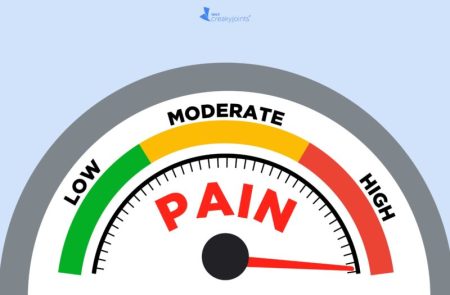
Meet My Friend, Pain

I’ve gone through many awful things—stuff that should have destroyed me. Things so bitter and hard it’s a wonder that I’ve even survived. I’m not overstating and not melodramatic. I know that I’m still standing because of grace and mercy that God has given. 

The other day I stepped into a gym where a Church potluck was happening. Now I’ve been in constant pain for several months and it’s been terribly hard. Standing and waiting on the line to get shorter, I distinctly heard something that seemed to come out of the blue. 

“Pain is now your friend.” 

That thought definitely did NOT originate from me. Initially, it was absurd. Bizarre. I stood in that crowd, rocked by that idea, “pain is now your friend.” I can’t explain it, nor can I diminish it. Obviously, the idea was not conjured up or produced by my conjecture or reasoning. It is exactly what it is. 

A day later I came across this thought. 

“I have learned to kiss the wave that throws me against the rock of ages.” 

C.H. Spurgeon 

Can I kiss that wave? Can I discount all the difficulties that pain has caused in my life? Now I admit I had been praying quite earnestly for God to take me. That may be a shock to some, I know. But I’ve had enough of this misery. Enough! Bring me home. I’m so tired of this. 

What crushed me did not crush God’s purposes for me. 

Much could be said about this, but what could not destroy me needs to make me aware. I have been given a “hard” gift. I have endured much hurt. And even now, as I typed out this post, I still am in pain. Why? 

There is a definite purpose why. That pain is my friend, my companion. For how long, I do not know. But I do know that I will kiss that wave, for it presses me to my Savior. I cannot explain it, because it’s foolish and counterintuitive. I’m not trying to ignore its presence, nor am I trying to paint “a happy face” on it. 

“During this time now, we have troubles and pain. But I am sure that these troubles are not really very great. One day God will show us all the great things he has prepared for us. That will make the troubles that we have now seem very small.” 

Romans 8:18, RB 

Yes, dear one, pain is one of my best friends. Nothing else could have reached me, I needed some hard “medicine” because I could not understand this any other way. 

2 Corinthians 1:4, ESV 

I think I now know why.

Some will not understand, that’s ok. I’m glad they don’t.

“Suffering is unbearable if you aren’t certain that God is for you and with you.”

Tim Keller

I Know He Loves Me (But is that Enough?)

Gods-love

Yet Jerusalem says, “The Lord has deserted us;  the Lord has forgotten us.”
Never! Can a mother forget her nursing child?  Can she feel no love for the child she has borne? But even if that were possible,    
 I would not forget you! 16 See, I have written your name on the palms of my hands. Always in my mind is a picture of Jerusalem’s walls in ruins.”

Isaiah 49:14-16, NLT

Some of us need to be persuaded of God’s love. We are unconvinced. But Isaiah understands. We grasp the theology, but not the meaning. Our own native ideas keep us in disbelief. Perhaps the greatest liability we have as believers is this doubt that God really feels this way about us. But, He does.

Isaiah claims the impossible, yet grounds himself in what is real. The Father loves us and we’re His very own. Even if we don’t seem as holy as we ought to be. In His out reached hands, we discover scars.  This is the price He has purchased us with. We once were blind, and very lost— but now we are His own children and can see.

God may love me. But does He like me?

We are given the impression that He more than ‘loves’ us; He ‘likes’ us. That dear ones, is not a point I’m prepared to support it with scripture, but that isn’t the truth, it doesn’t exist except in my own thinking. I know that He theologically loves me. But to be really honest I sometimes think that God is irritable with me, and He just gets tired of having me around.


But I also must believe God also likes me as well. Surely, there is such a fine line here, between ‘like’ and love. The more I walk with the Lord, and it’s been over 50 years now, the more I love/like Him. I have learned to like Him as much as I love Him. And if God doesn’t like me, I think it actually diminishes His love.

Isaiah speaks for the Lord using tender metaphors. Among the people some had the mindset that God had somehow forgotten them. They thought that they were ‘the lost ones.’

God then uses the analogy of a mother. A nurturing mother. This metaphor is strong and sure. No, God hasn’t forgotten His people. Look at His hands, your name is ‘tattooed’ on them. You’re His, forever. (I hope you like that truth.)

“In math, if you divide an infinite number by any number, no matter how large, you still have an infinite quotient. So Jesus’ love, being infinite, even though it is divided up for every person on earth, is still infinitely poured out on each one of us!” 

Charles Spurgeon

bry-signat (1)