
Antidepressants for Believers?

What do you think of Christians taking antidepressants?

By Pastor John Piper, given on March 30, 2010

The following is an edited transcript of the audio.

What do you think of Christians taking antidepressants? I have been on them and have been accused of not relying on God.

That relates to an earlier question about how any physical or personal means that you use can signify that you’re not relying on God. So eating might be a failure to rely on God, because he might just fill your stomach by miracle, and you don’t have to eat. Or not sleeping would be a way of relying more on God, since you don’t have to have your psyche made stable by sleep at night. And so on.

God has ordained physical means. Aside from the ones that seem more natural, like food, there’s medicine: aspirin, Nyquil, etc. This water is helping my throat right now. [Sips it.] Was that sip a failure to rely on God?

Could be. “Just throw this away and rely on God! He will keep your throat moist. You don’t need to be drinking. You’re an idolater, Piper. You’re idolizing this because you’re depending on it.”

Well, the reason that’s not the case is because God has ordained for me to thank him for that. He created it and he made this body to need a lot of fluid. And it’s not a dishonor to him if I honor him through his gift.

Now the question is, “What medicines are like that or not like that?” Taking an aspirin?

My ophthalmologist told me about 4 years ago, “Take one baby aspirin a day and you will postpone cataracts or glaucoma or something.” He said, “I can see just the slightest little discoloration, and the way it works is that circulation helps.” So he told me to pop one of these little pills in my little vitamin thing. And I take it every day. And I just said, “Lord, whether I have eyes or not is totally dependent on you. But if you would like me to use this means, I would.”

My answer is that when you start working with peoples’ minds, you are in a very very tricky and difficult situation. But I think I want to say that, while nobody should hasten towards medication to alter their mental states—even as I say it I think of caffeine, right?—nevertheless, I know from reading history, like on William Cooper, and by dealing with many people over the years, that there are profoundly physical dimensions to our mental conditions.

Since that’s the case, physical means can be appropriate. For me it’s jogging. I produce stuff in my brain by jogging. But that might not work for somebody else, and they might be constantly unable to get on top of it emotionally. I just don’t want to rule out the possibility that there is a physical medication that just might, hopefully temporarily, enable them to get their equilibrium, process the truth, live out of the strength of the truth, honor God, and go off it.

When I preached on this one Easter Sunday a woman wrote me, thanking me that I took this approach. She said, “You just need to know that I live on these things, and I know what it was like 20 years ago and the horrors and the blackness of my life. And now I love Christ, I trust Christ, I love my husband, our marriage is preserved, and I’ll probably be on these till I’m dead.”

So I’m not in principle opposed. I just want to be very cautious in the way we use antidepressants.


© Desiring God

Permissions: You are permitted and encouraged to reproduce and distribute this material in any format provided that you do not alter the wording in any way and do not charge a fee beyond the cost of reproduction. For web posting, a link to this document on our website is preferred. Any exceptions to the above must be approved by Desiring God.

Please include the following statement on any distributed copy: By John Piper. © Desiring God. Website: desiringGod.org
The Blessings of a Long Battle, part 2

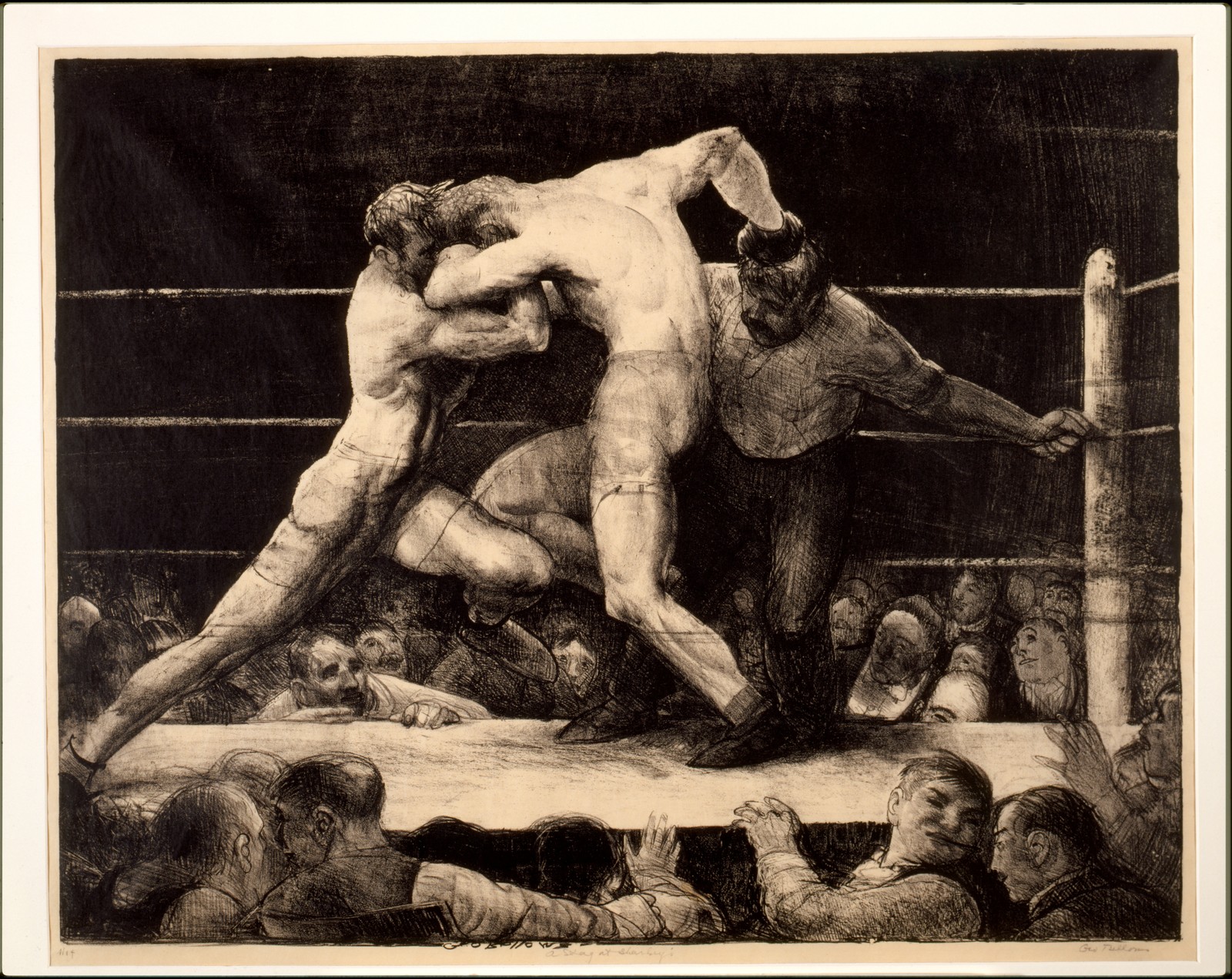
brutal-boxing

 “Do not fear the conflict, and do not flee from it; where there is no struggle, there is no virtue.”   John of Kronstadt

Part 1 of this post highlighted how God can bring good out of a long struggle with a sin, weakness, and/or problem by helping the Christian make the transition from putting their faith in formulas (e.g., “Do these three things and your problem will go away”) to a restful trust in Christ. Again, no sane Christian advocates habitual sin but the benefits of a protracted battle are numerous:

(1)  After a long battle, in making the transition from formulas to faith in God, a new brokenness develops in the believer. They’ve come to the end of themselves, run out of “self–effort fuel”, and are beginning to learn what Christ meant when he said, “…apart from me you can do nothing” (John 15:5).

(2) During a long battle with sin or weakness, there is a pattern of falling down and getting up. Proverbs 24:16 says that a righteous man falls seven times but keeps rising again. In this process many Christians report that a new intimacy has emerged in their relationship to God. They’ve come to know the God of mercy and compassion as never before because they’ve been repeatedly forgiven after their many stumbles.

(3) “He who is forgiven much loves much.” Along with a new intimacy, a greater love for God can also develop, after a long battle, because we’ve been forgiven over and over.

(4) And since God has extended his tender mercies to us over and over, we then can extend his mercy and compassion to others who have a protracted struggle with some issue. If our heart is right, a long battle can inoculate us from self–righteousness and judgmentalism in relation to others who fall over and over. How can we not extend to them the same grace that God extended to us?

In extending this grace to others, we may become a wounded healer to them. The healing we received from Christ during our struggle is graciously passed on those often struggling with similar issues. Healing emerges from your wounds just as resurrection emerges from death.

(5) After a war, the soldier of Christ often emerges battle–tested and wise to the schemes of the enemy. If a person has been pulled down into the dust 27 different ways by the devil, then, if he or she is paying attention, they’ve learned 27 strategies the enemy of our soul uses to try to destroy us.

In Twelve Step programs, one often hears the acronym H.A.L.T. mentioned in discussing relapse back into addiction. These four letters stand for hungry, angry, lonely, and tired and emphasize how these conditions create fertile soil for relapse.

If you frame the issue a different way, these are four strategies the devil uses to bring us back into bondage. How was this acronym learned? By people relapsing over and over when these conditions were present. Recovering people became wise through their failures in their long battle with addiction.

*

Jonathan

posted from http://www.openheavensblog.com/

A Retrograde Faith

Loveonthewall

ret·ro·grade

  [re-truh greyd]  (ret·ro·grad·ed, ret·ro·grad·ing.)

adjective

1. moving backward; having a backward motion or direction; retiring or retreating.
2. inverse or reversed, as order.
3. Chiefly Biology. exhibiting degeneration or deterioration.
*
Dictionary.com Unabridged. Random House, Inc. 16 Jul. 2013. <Dictionary.com http://dictionary.reference.com/browse/retrograde>.
%
flourish1
*

24 “But my people would not listen to me. They kept doing whatever they wanted, following the stubborn desires of their evil hearts. They went backward instead of forward.”

–Jeremiah 7:24, NLT
*
I seldom seek out things like this to write about. In my 30 years following the Lord Jesus, I have been bludgeoned more than a few times by people wielding Jeremiah like a cudgel. Mostly, these are good people who I liked and honored. (But maybe they had too much coffee that day, IDK.)
W
But there is a real issue here. Many who start out strong and brave end up on the scrap heap. Somehow, I suppose they were never able to tune their “ear” to His voice. But to be really honest– this can be a hard thing. And many of these dear ones end up with a retrograde walk in the Spirit. They would deny this, but if we look for a passion, we will see that a “first love” it will be absent.
W
That passion is the pulse, the blood pressure of a walk that is so vital and so authentic. We can measure our own walk by this singular means– “first-love.”  Rev. 2:4-5 shouts to us,
w
“But I have this against you, that you have abandoned the love you had at first. 5 Remember therefore from where you have fallen; repent, and do the works you did at first.” 
w
A retrograde faith may not deny Him, but it can often draw us into the place where our denial isn’t necessary. And that I suppose may be the scariest part of becoming apostate. We just slip; we slip right off of the map into an “almost-discipleship.” We would never dream of speaking an outright denial (never, ever) but we end up in this grey zone, nevertheless.
W
I have no desire to manipulate you through nice sounding words and phrases. But I feel duty bound to tell you up-front. Having a “first-love” will protect you. A “first-love” will cover you and lead you through many diverse issues. Revelation 2 was the Father’s plea to a Church that had seemingly advanced in every way. (As a pastor I would have loved to oversee this Church.) But the Father spoke a clear word of correction to them. And  I’m sure that it was hard to accept.
W
The “retrograde Church” exists. Unfortunately, it is alive and well, but we must share with these dear ones about the true freedom which comes from the “first-love” relationship with the Lord Jesus. Our love for Him, and His love for us will protect us from something that goes “backward” and not forward. I can only say, love Jesus, and make Him your “first-love.”
*
“Whom should we love, if not Him who loved us, and gave himself for us?  –Unknown

*W

ybic, Bryan

kyrie elesion.

How Things Happen

burst=fireworks

31 He put another parable before them, saying, “The kingdom of heaven is like a grain of mustard seed that a man took and sowed in his field. 32 It is the smallest of all seeds, but when it has grown it is larger than all the garden plants and becomes a tree, so that the birds of the air come and make nests in its branches.”

33 He told them another parable. “The kingdom of heaven is like leaven that a woman took and hid in three measures of flour, till it was all leavened.”

Matthew 13:31-33, ESV

These are perhaps the three most potent verses in the entire Bible. And whenever you find “potency” you will find a strong possibility of exponential growth. It may be a steady synergy, or an explosive fission. Either way, it’s going to grow!

Both the seed and the yeast have so much in common. They are two sides of the same proverbial coin. And they represent explosive growth. If they are unleashed, watch out! They are both “pep and power” and now set loose they will take off.

The seed is put in the ground and the yeast in the flour. And the farmer and the baker both do their initial work of planting or kneading, and then they just stand back, their work is pretty much done. They now just let “nature” take its course.

These parables Jesus taught here are small— but hardly less significant because of their brevity. These two can bury you with all they imply and mean. When we think clearly about yeast in your cupboard and that single seed in its package, we should see the “life” that resides in them, and the potential that waits.

I think much about the Church. At times, I admit I get frustrated with it. I get judgmental, and fearful that it won’t survive into the next century.  I truly understand that I can be critical. At times my friends must deal with my “ugliness,” but still they put up with me. (They are true friends.)

The kingdom is growing, and advancing. I love the wonderful promise in Isaiah 9:6, (usually read at Christmas time only. A mistake.) But Isaiah 9:7 is also pretty amazing too,

“His government and its peace
    will never end.
He will rule with fairness and justice from the throne of his ancestor David
    for all eternity.
The passionate commitment of the Lord of Heaven’s Armies
    will make this happen!”

Let it grow, let it grow! 

*

ybic, Bryan

kyrie elesion.