Susanna Wesley’s Prayer of Repentance


“Pray constantly”

1 Thessalonians 5:17

When Susanna Wesley prayed, God listened. I came across this and knew it was meant to be shared on Brokenbelievers. I hope you read it and it spurs you to pray as well. We all need encouragement and this is pretty potent stuff. I know of no higher call than to pray and then teach another believer how to pray.

flourish12 (1)

Heavenly Father,

“I have much need in humbling myself before you, the great and holy God because of the sins I am daily guilty of, in thought, word and deed against your holy majesty.  Help me overcome the levity and to shun vain and impure thoughts which, though they do not make their abode for any long period of time, yet in their passing through leave a tincture of impurity.”

“Enable me to keep my heart with all diligence, my thoughts, and affections, for out of them are the issues of life.  How often I have offended in this kind!   Cleanse me from secret faults, for out of the abundance of the heart the mouth speaks.  Help me to guard against vain and unnecessary words, and to speak of you, O my God, with that reverence, that humility, that gravity that I ought.”

  Amen.”

Susanna Wesley

Susanna_WesleyFrom Wikipedia:

Susanna experienced many hardships throughout her life. Her husband left her and the children for over a year because of a minor dispute.

To her absent husband, Susannah Wesley wrote:

“I am a woman, but I am also the mistress of a large family. And though the superior charge of the souls contained in it lies upon you, yet in your long absence I cannot but look upon every soul you leave under my charge as a talent committed to me under a trust.”
 
“I am not a man nor a minister, yet as a mother and a mistress I felt I ought to do more than I had yet done. I resolved to begin with my own children; in which I observe the following method: I take such a proportion of time as I can spare every night to discourse with each child apart. On Monday I talk with Molly, on Tuesday with Hetty, Wednesday with Nancy, Thursday with Jacky, Friday with Patty, Saturday with Charles.”
**

“Only God Himself fully appreciates the influence of a Christian mother in the molding of character in her children.”

-Billy Graham

bry-signat (1)

The Art of Being Found

Jesus entered Jericho and made his way through the town. There was a man there named Zacchaeus. He was the chief tax collector in the region, and he had become very rich. He tried to get a look at Jesus, but he was too short to see over the crowd. So he ran ahead and climbed a sycamore-fig tree beside the road, for Jesus was going to pass that way.

When Jesus came by, he looked up at Zacchaeus and called him by name.“Zacchaeus!” he said. “Quick, come down! I must be a guest in your home today.” Zacchaeus quickly climbed down and took Jesus to his house in great excitement and joy. But the people were displeased. “He has gone to be the guest of a notorious sinner,” they grumbled.

Meanwhile, Zacchaeus stood before the Lord and said, “I will give half my wealth to the poor, Lord, and if I have cheated people on their taxes, I will give them back four times as much!” Jesus responded, “Salvation has come to this home today, for this man has shown himself to be a true son of Abraham. 10 For the Son of Man came to seek and save those who are lost.”

Luke 19:1-10, NLT

Zacchaeus was a very resourceful man.  Jericho was a prime toll center in the entire region, and Zacchaeus would’ve been the richest man in the entire region. He was very wealthy, being an overseer of other tax collectors (in a region with a major export of balsa wood.) He was well on his way to becoming a millionaire (at least, the ancient Judean version of it.)

We should know two things about Zacchaeus:

  1. His Hebrew name meant “pure.” This was an ironic moniker for a despised man who had sold out to the Roman tax business. (Perhaps he had had a ‘godly mother?)
  2. He was very short in stature. (I suppose we could call him ‘vertically challenged’?)

I suppose there is one other thing, my guess is it’s the main one. He simply wanted to see Jesus. He was so short that he couldn’t see over the crowds. Perhaps he could’ve bribed his way to the curb, but apparently, there wasn’t enough time. Jesus was coming this way!

He looks and sees a tree. It grew on the side of the road, its branches hanging over the well-traveled path. He clumsily climbs up (in a robe!) and finds a clear spot to get a good look at Jesus. He is a simple man, and this is all he wants is just to see Jesus!

Within the Christian faith over the many centuries, there has always been a heart’s desire to get closer to Jesus. Many of the established ‘disciplines’ such as:

  • prayer
  • the study of scripture
  • fasting
  • evangelism
  • simplicity
  • solitude
  • service
  • confession
  • worship

Think of each as simply branches of the tree. Each discipline comes as one of several. But they are futile, or worse if they don’t lead us to Jesus Christ. 

It is critical to grasp the end result; they are merely the methods we use to see Jesus clearer. Its folly to climb the tree, just for the sake of climbing. No. The branch we are sitting on is just a means to an end. To behold our Lord, to somehow get closer to Him is priceless.

For example, I usually don’t pray for ‘prayers sake.’ I must pray like Zacchaeus climbed, just to see Jesus. I know He is always watching and yet I want Him to see me.

We also are not to build tree houses. Rather we’re meant to see Jesus, come down, and have a wonderful time with Him in close fellowship.

aabryscript


Flourish-61

“Fine, I’ll Do It Broken” Link

Fine, I’ll Do It Broken

“Fine, I’ll Do It Broken

If you want a woman torn apart inside, weeping at the drop of a pin, confused in her own identity, disqualified in every sense of a leader…you got it!

A great link to a special teaching by Cheryl Meakins. This will bless you.

Fine, I’ll Do It Broken

The Blessings of a Long Battle, part 2

brutal-boxing

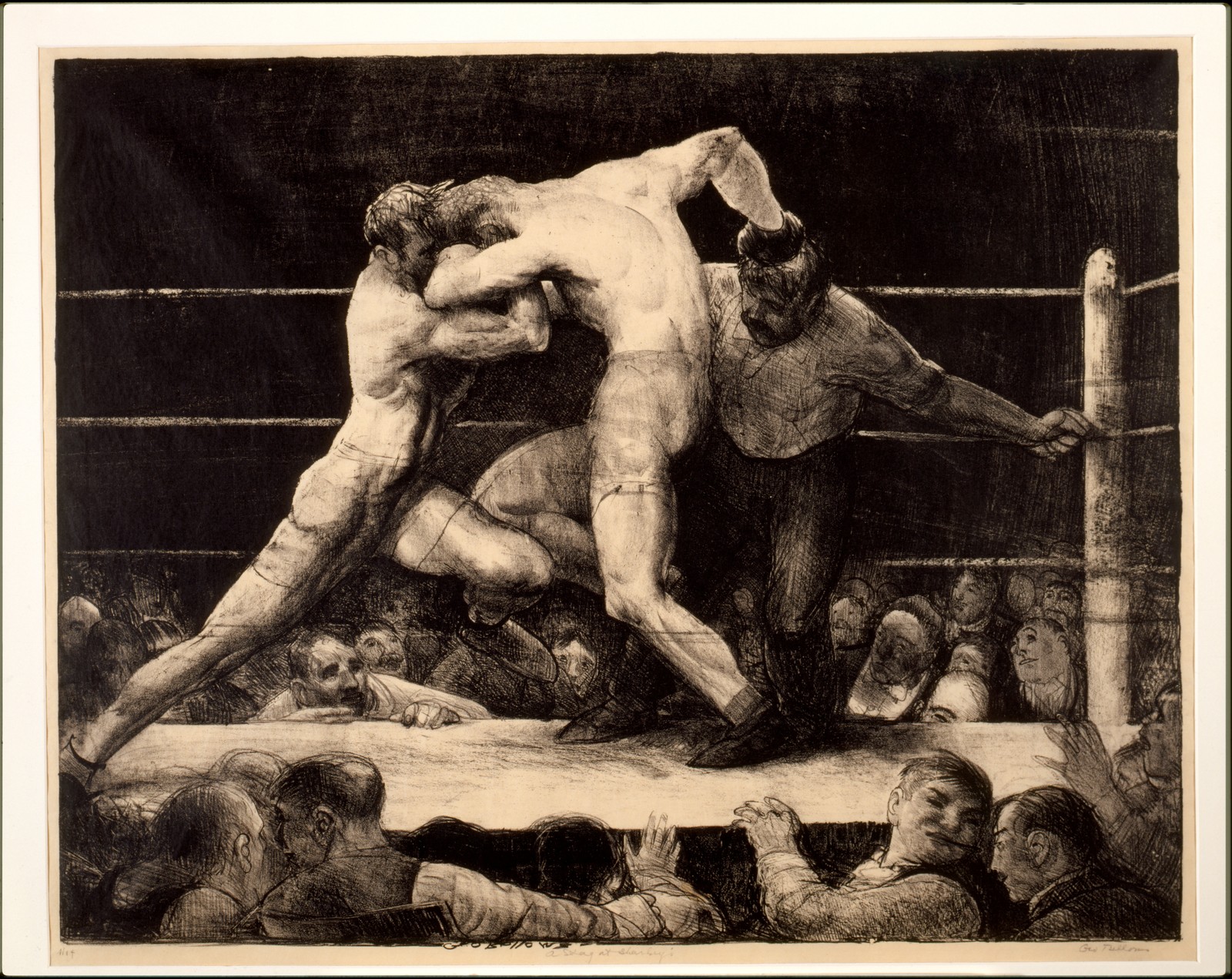
 “Do not fear the conflict, and do not flee from it; where there is no struggle, there is no virtue.”   John of Kronstadt

Part 1 of this post highlighted how God can bring good out of a long struggle with a sin, weakness, and/or problem by helping the Christian make the transition from putting their faith in formulas (e.g., “Do these three things and your problem will go away”) to a restful trust in Christ. Again, no sane Christian advocates habitual sin but the benefits of a protracted battle are numerous:

(1)  After a long battle, in making the transition from formulas to faith in God, a new brokenness develops in the believer. They’ve come to the end of themselves, run out of “self–effort fuel”, and are beginning to learn what Christ meant when he said, “…apart from me you can do nothing” (John 15:5).

(2) During a long battle with sin or weakness, there is a pattern of falling down and getting up. Proverbs 24:16 says that a righteous man falls seven times but keeps rising again. In this process many Christians report that a new intimacy has emerged in their relationship to God. They’ve come to know the God of mercy and compassion as never before because they’ve been repeatedly forgiven after their many stumbles.

(3) “He who is forgiven much loves much.” Along with a new intimacy, a greater love for God can also develop, after a long battle, because we’ve been forgiven over and over.

(4) And since God has extended his tender mercies to us over and over, we then can extend his mercy and compassion to others who have a protracted struggle with some issue. If our heart is right, a long battle can inoculate us from self–righteousness and judgmentalism in relation to others who fall over and over. How can we not extend to them the same grace that God extended to us?

In extending this grace to others, we may become a wounded healer to them. The healing we received from Christ during our struggle is graciously passed on those often struggling with similar issues. Healing emerges from your wounds just as resurrection emerges from death.

(5) After a war, the soldier of Christ often emerges battle–tested and wise to the schemes of the enemy. If a person has been pulled down into the dust 27 different ways by the devil, then, if he or she is paying attention, they’ve learned 27 strategies the enemy of our soul uses to try to destroy us.

In Twelve Step programs, one often hears the acronym H.A.L.T. mentioned in discussing relapse back into addiction. These four letters stand for hungry, angry, lonely, and tired and emphasize how these conditions create fertile soil for relapse.

If you frame the issue a different way, these are four strategies the devil uses to bring us back into bondage. How was this acronym learned? By people relapsing over and over when these conditions were present. Recovering people became wise through their failures in their long battle with addiction.

*

Jonathan

posted from http://www.openheavensblog.com/