A Finder’s Fee of Joy

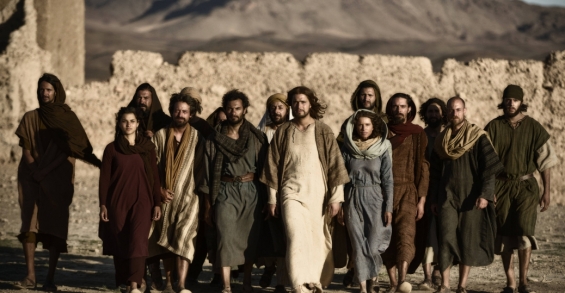
New Testament 3 Production Still Photography Tax collectors and other notorious sinners often came to listen to Jesus teach. This made the Pharisees and teachers of religious law complain that he was associating with such sinful people—even eating with them!” (Luke 15:1)

“If a man has a hundred sheep and one of them gets lost, what will he do? ” (v. 4)

“Or suppose a woman has ten silver coins and loses one.” (v. 8)

“For this son of mine was dead and has now returned to life. He was lost, but now he is found.’ So the party began.” (v. 24)

flourish10

The lost sheep, the lost coin, and the ‘lost son’ tell us that this is a time for recovery. This is a unique period for the Church. It is a season of special grace that allows us to seek and find things that are valuable to us. It is a time of finding out things about ourselves as well.

What is precious to you? With the woman, it was a lost coin (probably a part of her dowry) and she made a substantial effort to get it back. With the shepherd, what was valuable was a lost sheep, and he would take a calculated risk to find it, and rejoin the flock. And the father lost his son, and he had to wait for him to return to his senses.

These three parables were directed to the different issues that effected the “notorious sinners.” But they also spoke to the pharisees who were present. Both groups understood and there were plenty of implications for everyone.

It’s a funny thing, Jesus never minced words. No one could be neutral around him. That is still the case today. I think God is seeking His lost children. This is what He is up to, this is His passion. Understanding this salient fact should enlighten us,

  1. to His will,
  2. to know His passion and love, (His pleasure in finding what was lost)
  3. and the true purpose of His Church.

As the Parable of the Prodigal Son develops, we see the pharisees equated to the ‘grouchy’ older brother. He begrudges his newly returned brother, and he really can’t see what is happening all around him. The idea of grace eludes him. Perhaps that is far more common than we think. Whenever ‘religion’ exerts control over a person or group, duty is almost always elevated over joy.

The Church is only as relevant as when it’s seeking out the lost.

The Church is meant to extend to the lost ‘sons’ of Adam, and the ‘daughters’ of Eve. This is God’s passion, and we must find out what He wants us to do to share His heart. It’s almost as if He wants to give us a chance to taste His joy.


aabryplain


Putting It Simply

10565197_10152631028653385_42394872681436879_n

“But the Lord answered her, “Martha, Martha, you are anxious and troubled about many things, 42 but one thing is necessary. Mary has chosen the good portion, which will not be taken away from her.”

Luke 10:41-42, ESV

I tend to over-think things a lot. Everything gets so darn complicated. Often there is ‘a paralysis of analysis’ that gels into something stagnant and murky. I am definitely not the decisive person I admire from a distance. My illness is such that I can easily become “immobilized” in making simple decisions.

But I am aware of my desperate need of Christ Himself. My many issues demand a ‘heavy duty’ Savior, one who is capable of handling them. I guess I have tried many ‘gods’ and I haven’t found any of them who can take the load like Jesus can.

All that He has done in the Gospels, and all that He does presently declares to me his trustworthiness and power. My admiration for Christ as my Savior and Deliverer is written on the pages of the Bible. His present day ministry to me (and many others) is consistent with what I read about him in the Word.

And it is amazingly simple, when you think it through. He lived, died, and rose again for those ‘rebels’ who deserve death. The simplicity is profound. I do not have to be a Nobel Prize winner to understand. Without cheapening ‘redemption’ He has reduced things to a straightforward idea. He dies in my place, and now gives me his life to live.

I want to listen to Him. I want to come so close that I can hear the very inflection of his voice when he does speak to me. You see, we are built as communicators, and that is the part that ‘small gods’ can’t provide. They’re merely ‘dead idols.’

I so want to please him, even if he corrects me.

I want to learn at his feet, just as Mary did at her home in Bethany. Often I feel like I will probably be ‘the least of all the disciples’, but I’m okay with that. After all, it’s all about Him.

aabryscript

“Behold, I stand at the door and knock. If anyone hears my voice and opens the door, I will come in to him and eat with him, and he with me.”

Revelation 3:20

flourish-bird

Walking With the Lord Jesus, [Humility]

jesuschrist_mary_marymagaleneandthedisciples_20130319

The subject and emphasis on is becoming obscure— “just like Jesus.” I suppose my main contention is this– our understanding of discipleship has too much “me, and not enough Him.” This can be a gentle error of a young believer.

When Jesus who was the fullness of God in bodily form came, He came as a lowly slave. We see Him stripping down, filling a basin, and scrubbing dirty feet. He actively made Himself a broken and humble servant. It was deliberate and conscious.

Read Philippians 2. It will blow you away!

I think we learn this from Him. The disciple never exceeds his master. He made it very clear that we were to follow Him in this. It’s processed by us when we are very firmly aware that the One who knows us. To be loved by Him is enough (or is it?)

Exceptional effort is made by the Holy Spirit to help us understand. There is a repeated thought given to us in various permutations. In one of my favorite verses King David, standing in front of God, and his people, declared,

“But who am I, and who are my people, that we could give anything to you? Everything we have has come from you, and we give you only what you first gave us! 15 We are here for only a moment, visitors and strangers in the land as our ancestors were before us. Our days on earth are like a passing shadow, gone so soon without a trace.”

1 Chronicles 29:14-15, NLT

“We don’t remember what happened in the past, and in future generations, no one will remember what we are doing now.” This is the cheery assessment found in Ecclesiastes 1. This view irks us big time. Especially if we have invested so much in our wealth, gifts, experiences and accomplishments.

“Our days on earth are like grass;  like wildflowers, we bloom and die.  The wind blows, and we are gone— as though we had never been here.”

Psalm 103:15-16, NLT

In the New Testament, the emphasis is only stronger. Remember when James and John tried to get the corner on the authority and honor of being on “the right and left?” (My, but they were ambitious lads!)

“When the ten other disciples heard what James and John had asked, they were indignant. 42 So Jesus called them together and said, “You know that the rulers in this world lord it over their people, and officials flaunt their authority over those under them. 43 But among you it will be different. Whoever wants to be a leader among you must be your servant, 44 and whoever wants to be first among you must be the slave of everyone else. 45 For even the Son of Man came not to be served but to serve others and to give his life as a ransom for many.”

Mark 10:41-45, NLT

There are two certain issues here:

  • The first is authentic discipleship.
  • The second is a decided and eager servanthood.

Both ideas are often missing in our churches, and in our teaching. Somehow we are not communicating the real transferable concepts. Their simplicity evades us.

I intend to return to this fairly soon. Again, I appreciate any constructive criticism, your own thinking on this, and your prayers.

*

1brobry-sig4


cropped-christiangraffiti1 (1)


A Towel, Not a Title

There are no shortcuts in discipleship
“Jesus knew that the Father had given him authority over everything and that he had come from God and would return to God. 4 So he got up from the table, took off his robe, wrapped a towel around his waist.”  

John 13:3-4, NLT

Jesus was always constant.  Nothing could erode His place or position.  The authority had been His Fathers, and it had been given to Him.  He carried it as a special burden, treasured and separating Him.  Jesus had the freedom to act like the servant.  It didn’t bother or confuse Him, He understood perfectly who He was.

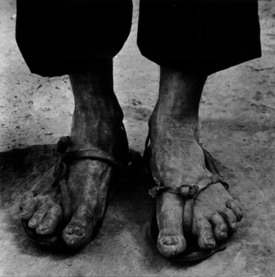
With the supreme authority given to him, he got down on His knees, and began to wash dirty feet.  I can offer no magic or flair to adjust this scene.  He washed off dirt, cleaned between toes, making filthy feet clean.  And all of this ‘as God in human flesh’.  This staggered the disciples, perhaps a baseball bat on the side of the head, would’ve been more compassionate.

This was revolutionary, it completely devastated the disciples.  They just couldn’t grasp what was happening.  Jesus, who was ‘God in flesh’, had decided, in a moment of time, to clean their feet.  Outrageous!  Not really happening!  No way! Never!

The reality.

This spun them around.  They tried as fast as possible to process what had just happened, and ‘who’ it had happened from.

Essentially, it buried them.  Jesus Christ, as Servant pounded them into the ground.  Servanthood was to take the supremacy from this point forward.  Becoming an indentured slave was now the way of Christlikeness.  This servanthood was to now guide us to a point of slavery.

Gone are the days of Zebedee, when one can ask for a position, on the right or the left.  We can ask, most certainly, but we haven’t been the first.  We can ask but the sheer weight is against us.  So very many have gone before us.  We must become a people who accept, and then presses into His grace, His specialness, His presence.

Today, more towels are what we need.

We have got to turn over our ‘need’ for recognition and pick up from the pile the rag of servanthood, we must ‘ask’ our brother/sister if we can scrub their feet.  We must get on our knees and do the unspeakable.  We must find a way to clean off their feet. This dear one, is what you’ve been told to do.

“There are many of us that are willing to do great things for the Lord, but few of us are willing to do little things.”   D.L. Moody

bry-signat

flourish91