The Extraordinary Breath of Jesus

“Jesus said to them again, “Peace be with you. As the Father has sent me, I also send you.” 22 After saying this, he breathed on them and said, “Receive the Holy Spirit. 23 If you forgive the sins of any, they are forgiven them; if you retain the sins of any, they are retained.”

John 20:21-23 (19-23)

This is the second “peace be with you” in this passage. So why the duplication of this peace proclamation? The disciples are sequestered and scared in the upper room (v. 19; and Luke 24:36. Having peace is being emphasized–the disciples were afraid of the Pharisees, but they also were undone by Jesus’ surprise visit.

Peace was definitely a precious commodity for them.

Jesus gives his disciples a mission to do, and they must be as ‘familiar’ with Jesus just as Jesus is with God. The disciples had followed him for three years–seeing incredible miracles, and hearing profound teaching, they’re ready, they just need power.

In track and field, there’s a relay race where a baton is passed from runner to runner, and maybe that’s how it’s working here? We see the same idea in John 17:18.

The baton has now been passed to the disciples.

The breath of the risen Jesus is necessary (and yes, he’s breathing.) What went down here, I don’t know exactly. But Jesus recognizes that his 12 followers will need this to do his work. Also, we might consider Adam in Genesis 2:7 where God’s breath brought him to life, which is pretty awesome when you think of the parallels.

The Holy Spirit energizes these men to do this new work.

The disciples were pretty much observers, but now they are to take up the ‘mantle’ of Jesus’ work. This is a definite duplication, which connects with the idea of one seed producing many others (John 12:24.) That’s how the Kingdom will come to people.

Verse 23 intrigues me. It seems that our life comes from the breath of Jesus. And it’s the Holy Spirit that gives both power and the authority that’s needed to function like Jesus. We now have the ability to pronounce forgiveness to the new believer, and yet that doesn’t seem a function of the Church today.

I wonder why this is so?

This entire passage as a doozy. It clearly declares the Churches new role as we follow in his footsteps. Disciples are to do exactly what Jesus does–with his breath and authority–filled with the Holy Spirit.

If we neglect these things (it seems anyway) we’re going to fall flat on our face.

“The work of Jesus for His disciples on resurrection Sunday gives an ongoing pattern for His work among His people. Jesus wants to continue this fourfold ministry of assurance, mission, the Holy Spirit and authority to His people today.”

From David Guzik’s website

Pastors Who Can Pastor

PASTORING

“The authority by which the Christian leader leads is not power but love, not force but example, not coercion but reasoned persuasion. Leaders have power, but power is safe only in the hands of those who humble themselves to serve.”

    John Stott

I think that most of us fail to get a real grip on what pastoring is all about. And that is spiritually dangerous. Not only do we stunt our pastor’s growth, but we cripple ourselves, and we all flunk some important spiritual lessons. I want to share three basic things (there are more, believe me).

1) Our pastors are sinners.

Surprise! They are just like you and me– definitely not superheroes and certainly not always saintly. They will have their moments and struggles. We really need to understand this to fully receive their gifts. Just knowing this about them, prepares us to receive deeply and sincerely from their ministries.

It seems that their own battles are necessary to do a work of brokenness inside of them. Humility happens inside, and it often happens deep within.

2) Our pastors need to be prayed for.

What they do is probably one of the hardest, most challenging work on planet Earth. Deep down the good pastors know this. But they still wade courageously into the thick of things. Our real prayers can buttress and stabilize their lives. Pastors substantially encounter the darkness and do warfare for us.

Most have a family to pray for, but they also have a Church they must cover too. A local pastor must have solid elders and active intercessors, or they will certainly stumble and fall. Pastors need your grace, not your gripes–prayer, and certainly not your complaints.

(For a background read the story of Moses and his intercessors.)

3) Our pastors must be empowered by the Holy Spirit.

God’s work must be done His way. And the Lord repeatedly insists His leaders be filled with the Spirit. They receive power right from the true source. Again, Jesus, the True Shepherd gives power and wisdom and grace for each singular moment. A good pastor, over time and much prayer– develops discernment and an awareness for his flock. He learns to love them as he watches over them.

Much, much more could be written. There are so many facets to consider. I only want to encourage you to love and honor your pastor. When you do this, it will probably activate his gift, and fresh ministry will become available.

I suppose that the main thing is make sure you find a way to encourage them.

Real work will be done inside of you, and inside your pastor as well.

“Then I will appoint responsible shepherds who will care for them, and they will never be afraid again. Not a single one will be lost or missing. I, the Lord, have spoken!”

Jeremiah 23:4

ybic, Bryan

My own pastor–David and Karen Taylor, CCC, Homer Alaska

The Throne of Mega Grace

“Let us then with confidence draw near to the throne of grace, that we may receive mercy and find grace to help in time of need.”

Hebrews 4:16, ESV

As verses go, this is one of the more significant. There are plenty of promises to be found in the scriptures but Hebrews 4:16 has a meaningful spot in my walk. When I think about it, and consider its implications, I have very little to say but “hallelujah!”

Jesus is our great High Priest. That word “great” clearly underscores His value to us. It shouldn’t really surprise us: the word in Greek is “megas” which means preeminent, all intensive and all abundant. (The idea can also mean ‘weight.’)

Some versions of the Bible use “boldness” instead of confidence. I like boldness but confidence is good too. Both words are wonderful. (One version uses “bravely!”).

His absolute power as a Priest is forever and ever.

He is now our precious mediator. Jesus is now our go-between of our ugly sin and His incredible holiness. He has created a spiritual super-highway for those who chose to come to Him through a saving faith. He has done this all by Himself. It was what He wanted.

The throne He sits on is now known as our “throne of grace.”

“Ancient Jewish Rabbis taught that God had two thrones, one of mercy and one of judgment. They said this because they knew that God was both merciful and just, but they could not reconcile these two attributes of God. They thought that perhaps God had two thrones to display the two aspects of His character. On one throne He showed judgment and on the other throne mercy. But here, in light of the finished work of Jesus, we see mercy and judgment reconciled into one throne of grace.”

David Guzik

Mercy and grace. Help in our time of need. If you’re anything like me, my neediness is perpetual. I need Jesus all the time, and He has made it clear through His Word that He’s always available to us. His throne room is never off-limits. He has given us the keys!

“The greatest privilege God gives to you is the freedom to approach Him at any time.”

    Wesley L. Duewel

I have a new site and I hope you visit: alaskabibleteacher.com

Setting Yourself on Fire

Difficulty and pain sometimes come from others, and challenges to the Lordship of Jesus often come from our unique circumstances.

But what if it was something we’ve done?

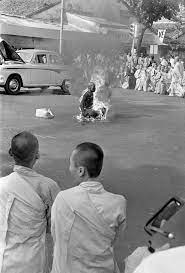
I remember the classic picture of a Buddhist monk who sat in the middle of a street. He was serene as he soaked himself with gasoline, and lit himself on fire as a protest against a war he believed was wrong and evil. He burned himself in front of the cameras.

All too often we’re pretty much responsible for our own self-immolation. It is we (and we alone) that set ourselves ablaze. Sin affects our minds and hearts. We set ourselves on fire.

When we sin– when we walk in ‘known’ disobedience we always put ourselves in an awful place. We love it but learn to hate it too. But we continue to do it regardless of the awful death that ensues.

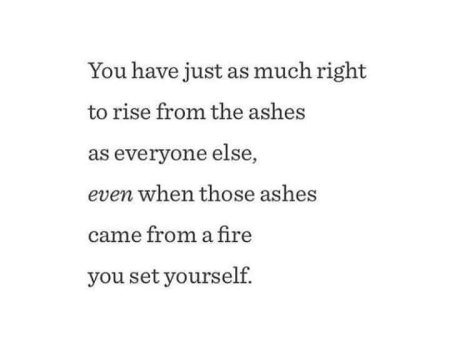
God promises to forgive us. Out of our ashes, He keeps bringing us life and hope.

You can be forgiven. You can find life again, even if you’re fully responsible for the evil we’ve done to yourself. Yes, we all sin, and yes we walk in our own personal rebellion. But Jesus knows it all. These awful things we’ve all done can be forgiven.

As a man and a preacher of the Gospel, I realize that I often choose to sin. In spite of all I know and teach I realize that I can live in the ashes of my own making. As one who also struggles with bipolar, I understand that I’m even more susceptible to doing awful things. I understand that I choose darkness even though others will call me “a man of God.”

As you read this I’m praying that you find His forgiveness and mercy. You’ve come a long way it seems, but you must see His blood that was ‘released’ from His veins and arteries for you.

He desperately loves you–even if you’ve set yourself on fire, and sit in the ashes of your doing.

“To appoint unto them that mourn in Zion, to give unto them beauty for ashes, the oil of joy for mourning, the garment of praise for the spirit of heaviness; that they might be called trees of righteousness, the planting of the Lord, that he might be glorified.“

Isaiah 61:3